










How to catalyze 5G network value with OSS: A forward-thinking approach

Head of Digital and OSS Engineering, Vodafone

Global Head of Sales, Service Management and Orchestration - Ericsson

Marketing Director Network Automation and AI

Head of Digital and OSS Engineering, Vodafone
Global Head of Sales, Service Management and Orchestration - Ericsson
Marketing Director Network Automation and AI
Head of Digital and OSS Engineering, Vodafone
Global Head of Sales, Service Management and Orchestration - Ericsson
Marketing Director Network Automation and AI
With 5G, network owners can deliver more than just a best effort at connectivity. The new network generation unlocks a world of innovative new use cases. However, it also brings added complexity. Dealing with both elements, the complexity and new potential use case, means the overhaul of the behind-the-scenes OSS systems.
This overhaul will include many components. Notably, we will see things like new policy and orchestration engines to automate the management of the network which can take over the burden of low-level decision making and execution of life-cycle operations from human users. Alongside managing these increasingly complex systems, the automation of OSS creates an opportunity for operators like Vodafone and others regarding the role these systems have in commercial and technical strategies.
A platform for growth
Looking at 5G as a platform for business growth brings us to a point where this complex but automated and well-managed OSS may be ‘transparent’ from those who will ultimately derive most value from it. We’re looking towards a goal of customers gaining access to the most advanced 5G network services and capabilities with a high level of assurance without the need to understand or engage with the technical complexity – enabling them to focus on the business cases they want to push forward.
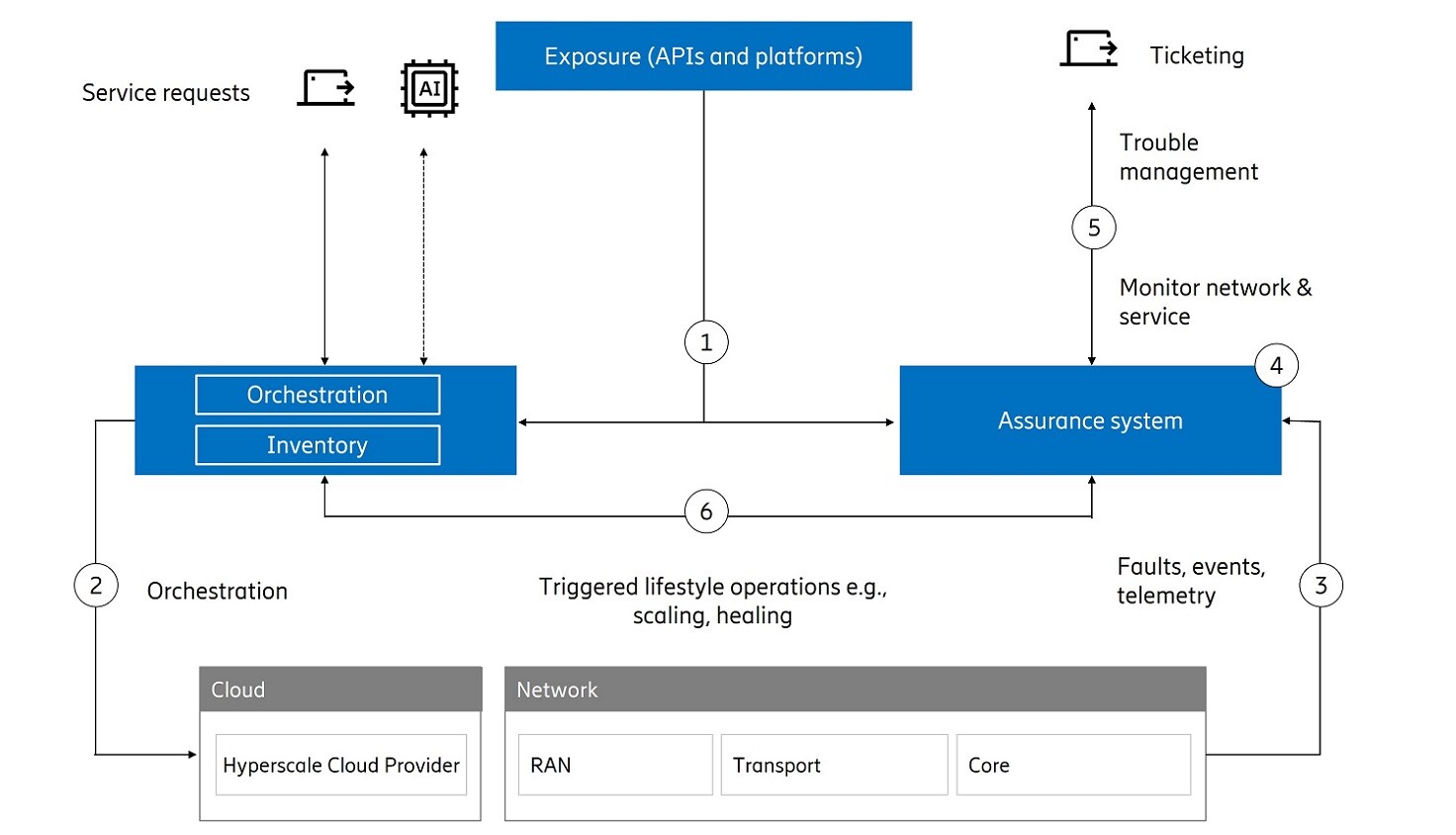
Fig 1. Developers and enterprises can be shielded from OSS complexity via exposure through APIs
The guiding principles for modern OSS architecture are that it is: service oriented, automated, policy-driven and provides cloud-based virtualization and abstraction of network functions. In practice, the effort it takes to adhere to these principles is dependent on overall complexity. This includes things like the intricate disaggregation of the infrastructure, network functions and OSS capabilities in telecoms operations. In this context ideas like separation of concerns between architecture layers become more and more central in the discussion, for instance the evolution of Element Management Systems into Network Function Management Function (NFMF), as defined by 3GPP.
The principles enable key capabilities such as agility, automation, scalability and faster time to market, which are very difficult to achieve in legacy OSS systems. The simplification of the OSS estate, and evolution of these systems is fundamental to operators’ transformation plans, with new ideas like model-driven automation, and real-time and near-real-time analytics redefining support system functions and performance.
Next-Gen OSS can be leveraged by operators like Vodafone to ensure they’re placed higher in the value chain for their customers. It helps deliver faster time to market and time to monetization for new services. It does this by:
- Exposing network capabilities and services that will enable new types of business models – especially to interface with enterprise vertical partners
- Securing real-time monitoring of the services to support SLA-based commercial agreements that should open the door to new revenue streams.
One clear area where those revenue streams may spring from is network slicing. OSS is key to the commercial success of this: providing the dynamic orchestration of network slices that can automate the slice design-to-deployment-to assurance cycle, including closed loop control – and making it easier for enterprises to access this functionality to enable new use cases. With the right OSS and BSS stack in place, the capabilities for consumers (like incredible VR and AR experiences) or businesses (like healthcare applications, from remote video assessment by doctors in emergencies, to remotely-assisted surgery) will multiply.
OSS and network slicing
For those serving 5G networks to enterprises and consumers, network slicing provides an enormous business potential. The technology opens many different opportunities and possible go-to-market roles – especially in the enterprise segment. The market in this segment alone for network slicing is projected by Ericsson to be worth 200 billion USD by 2030[1] – about 25 percent of the 5G service estimated revenue of 710 billion USD in the same time period.
For slices and slicing to be ‘marketable’, and for revenue to be created from network slicing, means providing slices with certain characteristics and qualities that are closely defined by service level agreements (SLA). OSS plays a fundamental role in providing four key multi-domain capabilities which will enable SLA-driven monetization. The capabilities are to:
- Fulfill the request for a specific slice-based service setup. This can be location-specific or quality-specific. This can require going beyond the traditional CSP domain, as in the case of deploying virtual resources or Apps in public cloud infrastructure. This is mainly supported by two central capabilities that typically belong in the OSS: Orchestration and Inventory.
- Ensure that the service provided is provided at the requested level (this is what makes the extra revenue possible). This is enabled by a service assurance system that is informed at runtime, when the slice is being instantiated, of all the information required to be able to perform monitoring on that slice specifically. As an example, we now can link user-plane monitoring KPIs and insights with Network Slice Instance (NSI) identifier.
- React in response to non-compliance with defined SLAs, so that the OSS and network systems can adjust dynamically to changing conditions to keep SLAs whenever possible.
- Expose all the above in API form, so that commercial systems can include “slice types” as part of the commercial packages.
Network slicing use cases
The top ten use cases, and the market opportunities they represent, for network slicing are laid out in detail in Ericsson’s report Network slicing: Top 10 use cases to target. Below we will give an overview of two examples Vodafone and Ericsson see as promising, healthcare and gaming, and lay out how OSS supports the use cases.
Healthcare – patient services: A USD 23 billion market opportunity
Technical and medical advances are also driving growth within this segment and realizing the full requires a collaboration between all players in the digital ecosystem. The technological transformation of the healthcare sector offers numerous opportunities for telecom operators to penetrate new value chains and initiate partnerships that benefit the entire ecosystem. Technical and medical advances are also driving growth within this segment and realizing its full revenue potential requires a collaboration between all players in the digital ecosystem. In the near term, those use cases with highest commercial and deployment readiness include emergency remote assessment of potential life-threatening conditions through video, service robots supporting senior citizens, data collection for early detection of diseases through precision medicine, as well as using robotics for rehabilitation with real-time control. In the future, remote procedures like robotic surgery are potential use cases.
As we are talking about potentially life-threatening situations, a connection drop for a few seconds might not be a big deal for a consumer, but during a remote surgery it could have major ramifications.
These types of innovative use cases, with an unquestioned need for reliability, need a strict SLA. A typical model for this will see mobile network operators aligning with a go-to-market partner like a systems integrator, who will manage the customer and guarantee SLAs. A typical revenue model will likely be based on the number of connected endpoints, the level of the SLA and the geographical area that is covered – the operator would receive a share of the whole service revenue for providing assured connectivity.
One of the most popular models for customers, such as the healthcare industry, will be the network slice as a service (NSaaS) model. This model depends on the operator’s OSS to configure, orchestrate, and assure the quality of service.
Gaming: A USD 7 billion market opportunity
The number of mobile gamers numbers is in the millions today, and growing fast. The rise in cloud gaming and the demand for better connectivity among cloud gaming subscribers is driving potential revenue growth for service providers that can leverage upcharges from gaming slices. The performance guarantees needed to satisfy please these customers (gaming providers and gamers themselves) can be met through slicing with standardized functions in the RAN and Core plus assurance functions in OSS where the performance is constantly monitored end-to-end.
A guaranteed mobile performance (20-40 ms latency, >20-25 Mbps) will drive demand. Future AR/VR types of games will require significantly higher speeds and shorter latency possibly <10 ms. This requirement will demand agility and performance in the OSS from operators who wish to take advantage of the market. For example, if a gaming company asks for a certain level of latency, OSS means it can be guaranteed and operators will be able to charge more for the assurance of specific services and network characteristics, not only for providing the connection.
In particular for the gaming industry, Dynamic Network Slice Selection will enable new opportunities through its flexible separation of services and enhanced traffic steering to maximize quality of experience on a single device. As an example, it will enable coming generations of smartphones to support separated user profiles with their own network deals. Operators may use this separation to charge a premium for more advanced capabilities delivered through a network slice with tailored characteristics for gaming. Dynamic Network Slice Selection is a vital new way of handling network slicing that will lead to innovation in how operators cooperate with ecosystem partners.
Looking ahead with OSS
OSS are – and need to be – seen as fundamental enablers of added value for advanced services, moving firmly beyond the view some currently have of the area as “enabler of efficient operations”. Telecoms operators exist in a market that is looking for ways to go beyond commoditized mobile broadband and help businesses create use cases that will push them, and our global digital world, forward. The ability to create advanced services, instantiating them in real-time when and where they are required and adapting them dynamically in response to changing conditions to keep SLAs, has become a vital component of the modern telco landscape.
The whole OSS ecosystem has a part to play: an operator’s OSS will need to take care of those critical requirements for its partners, and OSS suppliers need to ensure their products are evolving at pace to enable it.
[1] Ericsson Report - 200 billion reasons to explore network slicing
Learn more
Join us at the OSS Summit 2022 (November 8 – 9) to get the latest and greatest on OSS trends and advanced use cases to help you organize the OSS evolution
Discover Ericsson’s Service Orchestration Solution
Read more about network slicing
Read our blog post: Network slicing: A USD 200 billion opportunity for CSPs