Skip navigation
Hands holding a gaming device.

5G cloud gaming drives service provider revenue growth

Capturing gaming revenue opportunities

Cloud gaming subscriptions are rising fast in North America. Our latest report explores how this segment represents huge revenue potential for service providers.


Report

The rise of cloud gaming steers growth for service providers

Cloud gaming is changing the content distribution dynamics in the gaming industry. The technology promises affordable ways for gamers to play anywhere, without users continuously purchasing hardware upgrades or expensive games. Early adopters praise the advantages offered by cloud gaming, while also demanding their internet providers improve the overall gaming experience. Service providers can leverage the benefits of 5G networks to capitalize on the connectivity needs of this captive and growing market segment in North America.

Download the report
Cloud gaming is a revolutionary technology, enabling gaming on any device via an  internet connection with quality of experience (QoE). Gamers will no longer require a  physical copy of a game or need to download a digital copy to their consoles, PCs, or  smartphones. Instead, for a subscription fee, cloud gaming enables enthusiasts to play  games from anywhere, using their current devices, without the need to buy expensive  high-end equipment. Although cloud gaming has only recently emerged, subscriptions are expected to pass  the 15 million mark in North America alone by the end of 2022. In the next decade, this  figure is expected to pass 99 million, propelled by five key drivers – increased focus on  mobile gamers, attractive gaming subscriptions, a shift in gamer preferences, a  maturing cloud services ecosystem and rapid adoption of 5G.  This boom in cloud gaming represents significant potential for service providers because  they can provide, and monetize, several capabilities such as network slicing and edge  computing which banish the enemy of all gamers – lag.

Unlocking the next level path to monetizing 5G

Cloud gaming is a revolutionary technology, enabling gaming on any device via an internet connection with quality of experience (QoE). Gamers will no longer require a physical copy of a game or need to download a digital copy to their consoles, PCs, or smartphones. Instead, for a subscription fee, cloud gaming enables enthusiasts to play games from anywhere, using their current devices, without the need to buy expensive high-end equipment.

Although cloud gaming has only recently emerged, subscriptions are expected to pass the 15 million mark in North America alone by the end of 2022. In the next decade, this figure is expected to pass 99 million, propelled by five key drivers – increased focus on mobile gamers, attractive gaming subscriptions, a shift in gamer preferences, a maturing cloud services ecosystem and rapid adoption of 5G.

This boom in cloud gaming represents significant potential for service providers because they can provide, and monetize, several capabilities such as network slicing and edge computing which banish the enemy of all gamers – lag.


In this paper, inCode, the strategy consulting arm of Ericsson North America,
evaluated the market trends of this technology in the region and estimated the potential benefits for service providers.

Read the report
Hands holding a gaming device.

The game-changing opportunity for service providers

InCode studied the major drivers of cloud gaming and forecasted its adoption in North America:

  • Cloud gaming is expected to account for approximately 23 percent of 5G subscriptions in North America by 2031
  • inCode identified two cloud gamer segments for enhanced 5G connectivity: one willing to pay USD 10.99 more for an advanced performance gaming slice, and another willing to pay USD 5.49 more for a moderate performance gaming slice, on top of a 5G subscription
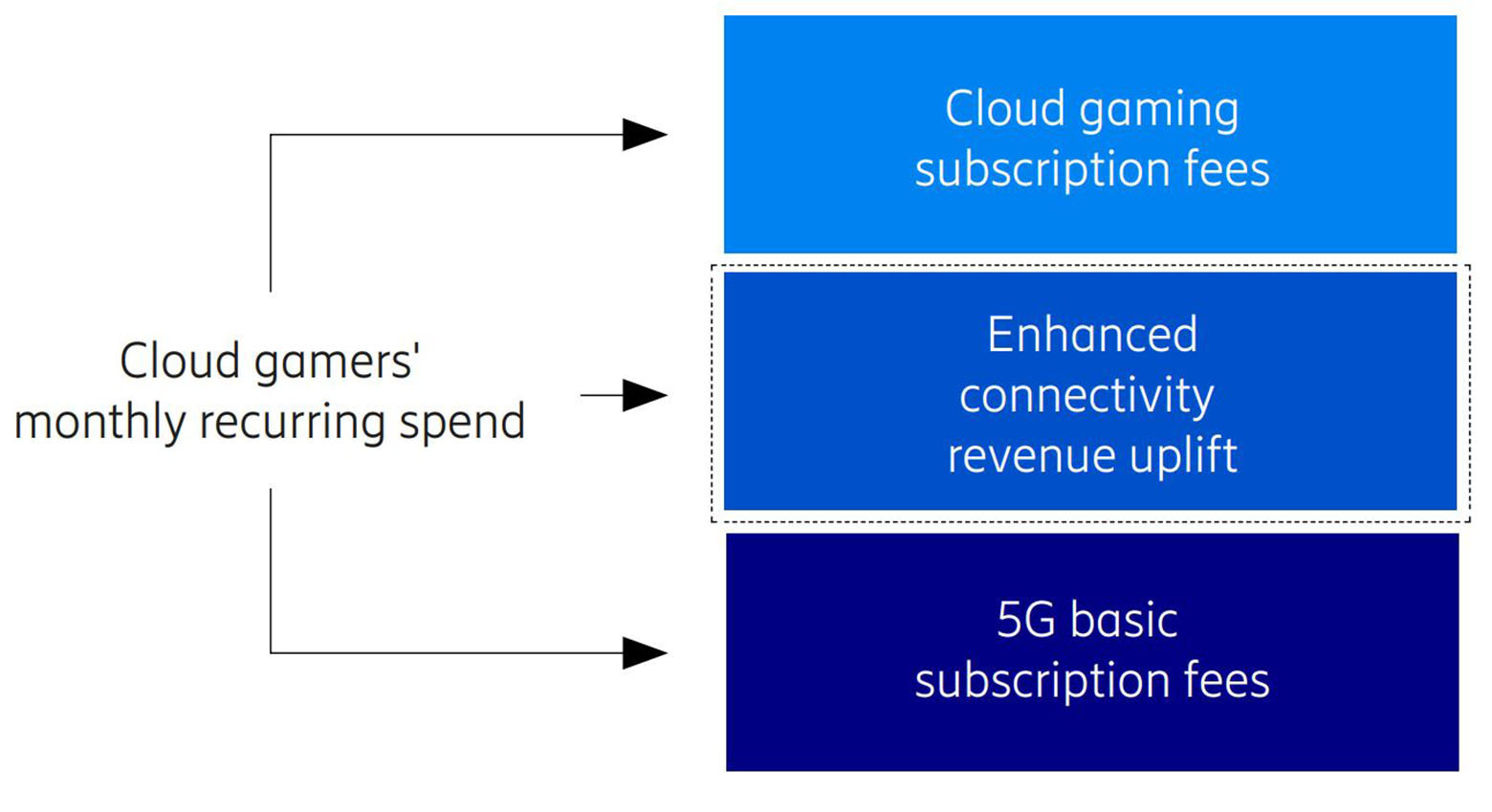

To estimate the business opportunity for service providers, inCode simulated a 5G network that serves cloud gamers and mobile broadband subscribers through three slices, each with specific minimum speeds, latency requirements, and traffic contribution in a sample market. The simulation found that:

  • The modeled capacity growth plan of the 5G network supports the traffic contribution of both gaming slices and the mobile broadband slice without further capacity expansion and investments
  • Service providers can expect a 4 percent service revenue increase by leveraging estimated upcharges for enhanced 5G connectivity from gaming slices only by the end of the decade
Download the report

Related content

5G for gaming

Launch a new era of lag-free mobile gaming.

Mobile cloud gaming

An evolving business opportunity

Ericsson 5G Talks

Our series for tech leaders exploring the biggest topics in 5G.

Related resources