










Why CSPs should level up to serve the 5G mobile gaming market

5G mobile gaming represents a serious enterprise market play for communications service providers (CSPs). In a recent report published by Ericsson, Game Plan: BSS for 5G Enterprise Customer Experience, this growing segment is projected to reach USD 138 billion by 2025. The esports audience is expected to reach about 577 million people worldwide by 2024. It is important for CSPs to serve this market (gamers and gaming companies) and serve it well.
The increase in mobile gaming activity will persist indefinitely.
During the pandemic, mobile gaming was one way I stayed connected with my family and friends. We could jump on our phones to play games together. IDC and LoopMe surveyed 3,850 mobile gamers in six countries and found that 63% increased their mobile gameplay during the pandemic.
In their research, IDC also determined that “75% of the pandemic-driven increase in mobile gaming activity will persist indefinitely.” Over 2.6 billion users around the world currently play games on their phones, and that number is growing fast.
According to Ericsson’s Rayane Chahine, co-author of Game Plan: BSS for 5G Enterprise Customer Experience, “Multiplayer games will benefit enormously from 5G’s new network capabilities. These games thrive on 5G quality of service (QoS), fast speeds, low latency, and cloud edge delivery.
At the same time, game creators, and gaming tournament organizers want more engagement with CSPs, more control over 5G services, and the power to drive new games. Many Tier 1s are partnering with major esports leagues and gaming companies to capitalize on the booming market.”
Good 5G enterprise customer experience tailored for gaming companies, oftentimes means a good gaming experience for players.
Jonas Klar, senior game designer for Critical Ops explains it this way, “When it comes to Quality of Experience (QoE), the most important aspect for players in competitive games is the core gameplay experience. Gameplay is king. If the game does not perform, this experience does not exist, and new players will not return to the game after trying it once. When it comes to running a competitive live ops shooter game like Critical Ops, which also provides a top esports experience, every detail that improves game and network performance for as many players as possible matters.”
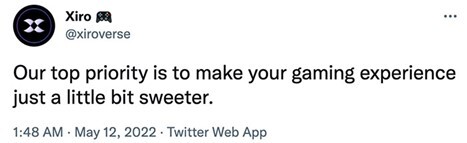
Roshan George, founder of Xiro, a Web3 “play and earn” app for mobile gamers with over 2 million games from the App Store and Playstore onboarded, agrees. He added, “The future of gaming lies in the hands of innovators who are finding creative and interesting ways to give gamers ownership of their experience. At Xiro, we are trying to do precisely that. “Play and earn” games, so far, have not been successful in giving users a satisfying gaming experience. We believe gamers can be rewarded without diminishing their gaming experience.”
Why is the gaming experience so important?
Jonas Klar continues, “The gaming experience is what holds competitive players long term. It keeps bringing them back day after day. It gives them the confidence to spend money on the game. If a game can’t provide a great, sharp and stable long term gaming experience, it can’t grow a core player community for esports. Luckily, we have been focusing our efforts at Critical Force on these areas for years, and that is showcased by the continuous development of our main product Critical Ops.”
Roshan George has big goals for Xiro, and it’s focused on the gamer’s experience. “We want to create a space where gamers can share ideas with one another, host gaming tournaments on their own and livestream their favorite games. We want to give them a marketplace to earn rewards, and allow artists and producers to collaborate to build their own projects.”
In the mobile gaming and esports industry, self-service capabilities in the network are crucial.
An interesting aspect in Ericsson’s eBrief: Game Plan: BSS for 5G Enterprise Customer Experience is the focus on self-service. In today’s world, CSPs are expected to empower their enterprise customers with self-service capabilities. But in the mobile gaming and esports industry, self-service capabilities are crucial.
Tournament and esports organizers need the ability to assess and access their network services and most importantly, do configurations as needed. Game companies want to manage their own services and applications. They want to handle the entire onboarding process without the CSP getting involved.
The ebrief explains, the CSP’s offerings can be co-created with their customer. This empowers customers to select the features they need, and even set their own KPIs. Enterprise customers want more control of their network’s performance, monitoring and optimization. With increased 5G network programmability and cloud native architecture, which makes the network more visible, these customers can get exactly what they want.
Jonas Klar explains this from a senior game designer’s perspective. “For most players who are looking for competitive gaming experiences, it is important that the core experience works great so they feel good about investing money into the game. This means that as game developers, we have to constantly invest in improving gameplay performance, but we also have to provide continuous live ops support to the game in the form of new features and content.”
How will mobile gaming evolve over the next few years?
Jonas Klar believes mobile gaming will undergo a significant transformation. “Overall, I believe that with the help of 5G and cloud gaming services, game companies will be able to completely rethink the way games are optimized for cross-play and cross-platform experiences. Most importantly, competitive esport-focused games will be able to provide a much better and stable experience for their audiences.”
Similarly, Roshan George believes the best is yet to come. “With the introduction of 5G, the metaverse will become even more accessible for many. With big brands like Gucci and HBSC joining platforms like Sandbox and Decentraland, the next evolution of gaming is just getting started. At Xiro, we are excited to see how gaming production houses build from here, and as gaming enthusiasts ourselves, we're super excited to be along with them on that journey.”
Final thoughts
After speaking to Jonas Klar and Roshan George, and learning from their valuable experiences and insights, I have an expanded view of BSS for 5G enterprise customer experience. This article only scratches the surface of what’s involved in empowering your enterprise customers in the mobile gaming and esports industry. I hope you will download your copy of the eBrief below so you can gain a deeper understanding of the details and see a proposed roadmap for success.
“CSPs need to level up on enterprise customer experience and empower enterprises and partners with increased self-service, tailored connectivity with network slicing orchestration, and automation for speed.” - Rayane Chahine, Ericsson
Learn more
Game Plan: BSS for 5G Enterprise Customer Experience
Monetizing enterprise 5G with a simplified customer experience
Unlock the $3.8 trillion 5G B2B opportunity with better CX in BSS
Omdia - Telco BSS: The 5G B2B CX challenge
The 5 Secrets of 5G B2B customer experience success
Why the 5G B2B customer experience must evolve
More on digital BSS for the 5G era
Telecom BSS: monetize your 5G offerings - Ericsson
5G Monetization: unlock new revenues and services - Ericsson