










Why meeting diversity and inclusion targets is good, but not enough

Global Head of Diversity and Inclusion

Global Head of Diversity and Inclusion
Global Head of Diversity and Inclusion
“As we take this company into the next decade, it’s every leader’s obligation to build high-performing, inclusive teams”
– Jonas Ygeby
At Ericsson, we have targets around diversity and inclusion, including some that directly impact executives’ pay. The headline target is that as an enterprise we need to achieve 30 percent representation of women at all levels by 2030 and for many leaders it will take significant investments to reach this goal.
So, you might imagine that leaders whose teams have already surpassed this threshold would be breathing a sigh of relief and focusing their attention elsewhere having ticked the box. This is not so for our Head of Group Supply, Jonas Ygeby. 42 percent of Jonas’ team is comprised of women, a percentage comfortably past our target, and yet he is doubling down on his efforts to enhance diversity and inclusion.
But why?
I interviewed Jonas during International Women’s Month and here’s what he had to say:
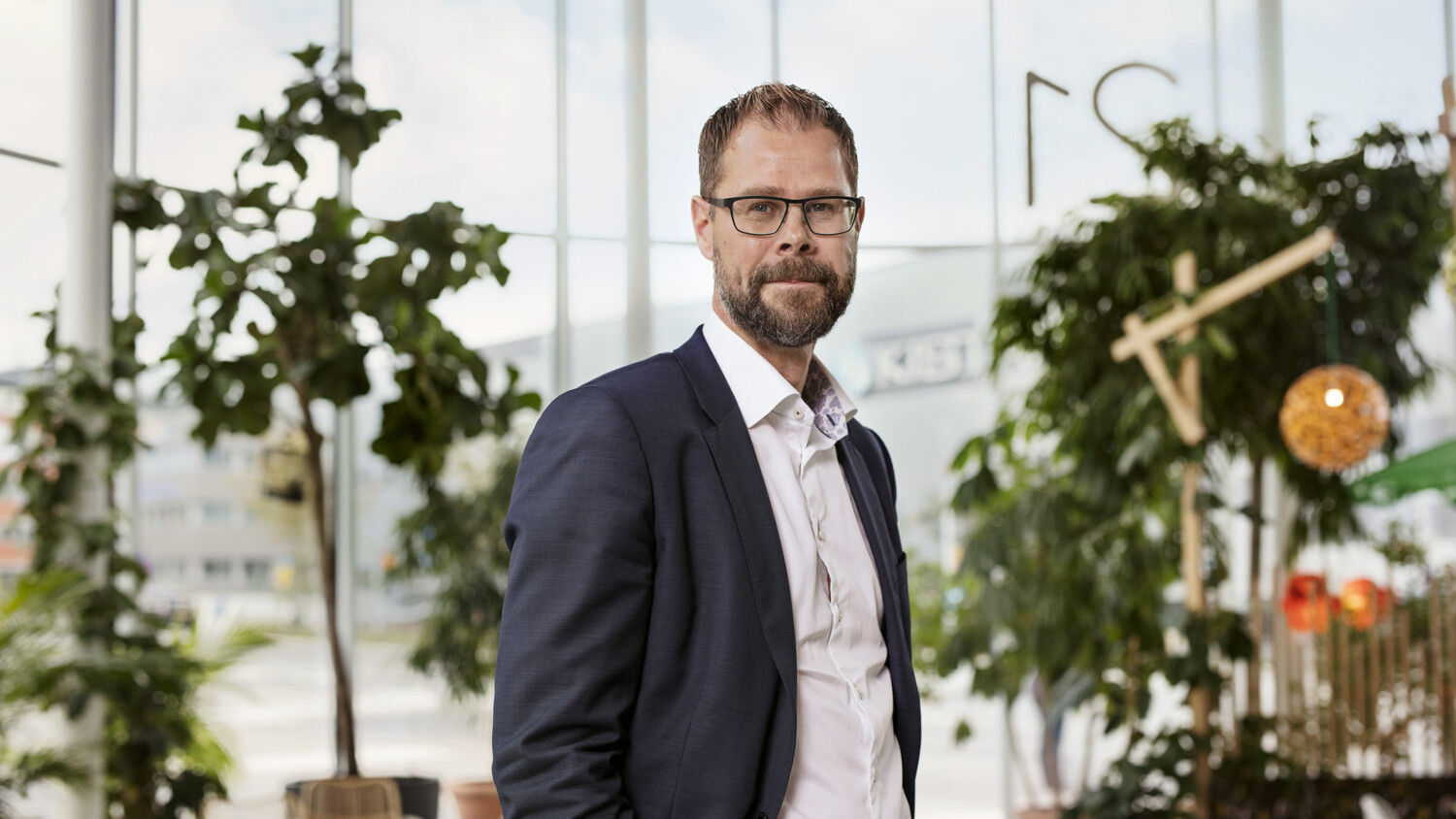
‘I want to build a high-performing team, and I know that diversity and inclusion drives performance. If, like me, you believe the research, then you won’t stop investing simply because you’ve hit the target.’
For Jonas, if you are driven by this central belief then the next steps are straightforward. You apply the same critical thinking and analytical rigor as you would to any other business challenge: ‘When I saw the numbers on gender representation, they looked good on the surface, but I had a gut feeling there was more to this story. I challenged myself and my team to go deeper and find out what lay behind the numbers.’
The team reviewed everything they could, looking at age, gender, nationality, tenure, and the intersections between these demographics. They found that indeed, hitting the target did not mean there were diverse teams throughout their whole organization. In fact, there were big differences between units. And when they looked at who was involved in decision-making, the results were even more stark. In some units, representation of women in decision-making forums was just 14 percent, far below the impressive figure for overall representation at 42 percent.
Armed with these insights, Jonas decided his next challenge was to ensure that all leaders were aware of the situation: did they know that decisions were being made by an unrepresentative group, and the risks that presented? Did they understand that this was a business challenge, not a side project?
Jonas put diversity and inclusion metrics such as “women and early career employees at higher job levels”, “belonging” and “speak my mind” on leaders’ dashboards right next to the other tactical, strategic, and operational metrics that they habitually reviewed and prioritized. To ensure that all units were making progress, he asked each one to work out their targets on a local level, linked to the overall Group Supply OKRs. He made it clear to his leadership team that it was their obligation to take this company into the next decade by building high performing, inclusive teams, and set a goal for all leaders to complete Ericsson’s Leading for an Inclusive Future Training program over the next few years. So far, one in five leaders have completed the course, alongside a series of workshops which focus on ways to drive progress. Group Supply has also been active in nominating future leaders to ALTitude, Ericsson’s accelerator program for underrepresented talent, to ensure that the diversity of the leadership pipeline is strong. A practical example of their success is that 50 percent of the Factory Supply Site Heads today are women.
To embed these aspirations beyond the leadership team, Group Supply have augmented their normal ways of working. This started with reviewing talent and succession planning by identifying and supporting talent on their journey, for example by looking at the need for global exposure/global assignments, mentorship, or coaching. They created the Group Supply Advisory Board, including people from different backgrounds who would not normally have direct access to top decision makers, but who could bring a new perspective to the leadership team. They also created the virtual job rotation/job shadowing program Eager2Grow. The Supply Advisory Board is currently in its third year and is tasked with specific strategy projects, with direct influence on the business.
Finally, they addressed the ongoing challenge around inclusion data by running a separate inclusion survey within Group Supply. They had found that when it comes to diversity, there is enough data, but when it comes to inclusion, there isn’t enough. In 2022 the Group Supply Inclusion Survey elicited responses from 70 percent of employees who submitted more than 1,000 comments. And the findings are not always about traditional D&I topics. One survey finding showed that colleagues perceived Group Supply as oriented toward Kista, Ericsson’s headquarters in Sweden. This prompted a rethink when opening new positions on the possibility of embracing greater location flexibility.
Carina Hörstedt, Head of People Group Supply, says: ‘We are eager to hear the feedback from our employees in this third year’s survey results that will run in April 2023 and see if our efforts are really being perceived as a positive change. What I really enjoy in Group Supply is the spirit of always challenging the status quo and therefore, we have also taken the decision to look beyond the more traditional diversity measurements focusing now also on the gender and age distribution in our teams to enhance our innovation culture.’
The results of these efforts are already clear to Jonas, and the key to achieving them was ensuring that people felt safe to experiment and fail: ‘We’ve built a stronger supply team and that was particularly clear during the pandemic. We’re now seeing this reflected in our employee engagement survey scores. We need to have a culture where it’s OK to try and fail, to not be 100 percent all the time, as long as we learn from it and can adapt and change.’
What impresses me most about what Jonas and his team are doing is not any specific action or program, impactful though they are in this regard. Rather it’s their belief in the power of diversity and inclusion in creating high performing teams, and the power of that belief in simplifying everything that comes next—the planning, the leadership training, the metrics, and measurement. I’ve been reflecting on how easy it is for diversity and inclusion to become overly complex—a mathematical, value-focused, behavioral change puzzle that no one seems able to crack. But, if you reduce it down to its fundamentals and if you’re led by a genuine belief that diverse and inclusive teams make better and fairer decisions, it becomes surprisingly simple.
I’m confident that if we stay focused on this core belief, the next logical steps will come more easily, and we will create high performing, inclusive teams for the future. Find out more about diversity and inclusion at Ericsson.