Artificial intelligence is no longer a future network load. It is here — and it is changing traffic behavior at its core.
Communications are evolving from text, voice, and video to multimodal GenAI interactions. AI agents embedded in devices such as AR/VR glasses, personal assistants, industrial automation systems, and autonomous platforms are generating traffic that is fundamentally different from what networks were designed for.
Most notably, it is uplink-heavy. GenAI traffic today represents a small share of total mobile traffic, but its uplink ratio is significantly higher — roughly 26 percent compared to around 10 percent for conventional applications.
In fact, we expect networks to handle triple the amount of uplink traffic every 5 years.
This shift matters. Because uplink performance is not easily expanded through spectrum alone. It requires structural improvements in how sites are designed, optimized, and upgraded.
Impact, intelligence, immunity: antennas made for AI
If the network is to be AI-driven, the antenna must be its physical enabler. It is about boosting network KPIs, like delivering higher uplink, improving energy efficiency, and enabling new 5G SA services — where performance, latency and reliability expectations are significantly higher than in non-standalone deployments.
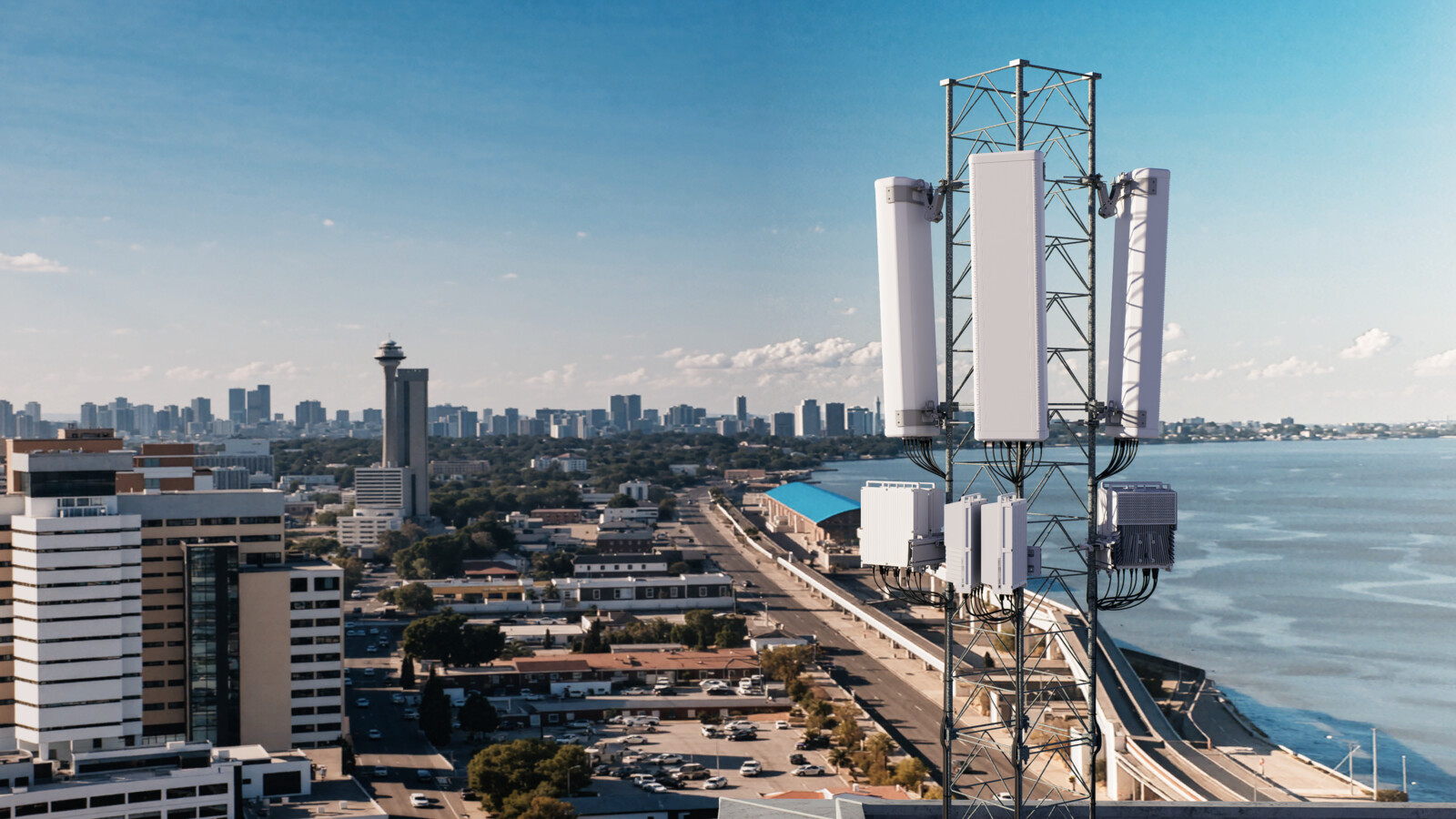
This shift is exactly what guided the development of our latest compact Trio Net antennas.
They bring impact, intelligence, and immunity to every site they touch — boosting uplink performance by as much as 30 percent and empowering AI algorithms with 100 percent accurate real-time insights. This enables the network to detect and act on everything from traffic shifts to emerging security threats in milliseconds.
We’re raising the bar again to deliver real network impact where and how it matters most
To unlock the next era of monetization, networks need antennas that deliver real impact where performance breaks today: wider coverage, stronger uplink at the edge, higher spectral efficiency and stable carrier aggregation across all layers.
This is the standard we deliver. Our antennas can extend reach and improve spectral efficiency by 25 percent, deliver 30 percent gains in uplink and downlink throughput, and enable 40 percent more users to benefit from full carrier aggregation.
These capabilities combine to give users real network impact where and how they need it: more consistent uplink at the edge, improved user experience across dense urban grids, reduced power consumption in suburban deployments, and higher ROI from the existing spectrum assets.
Antennas empower AI-driven networks with real-time, trustworthy data and the capability to autonomously act on them
To provide the stable throughput and consistent signal quality that tomorrow’s AI use cases require at the network edge, programmable networks require accurate, real-time data of everything from tilt to environmental conditions. Correct insights matter: a 1° tilt error can reduce cell edge throughput by as much as 25 percent, impacting both SLA assurance and energy usage.
To close this blind spot and ensure that programmable networks can act with precision, we are putting antenna intelligence at the core of our strategy. Through AMU-enabled accuracy integrated within each antenna and secure RET programmability, our antennas are capable of providing AI models with the exact information they need to dynamically adjust coverage in real time, responding to environmental changes and providing a closed-loop oprimization cycle.
With intelligent antennas, we are enabling better performance, lower TCO, and improved resilience.
We’re delivering built-in digital resilience to secure the network edge with a verified chain of trust
The more intelligence embedded in the network, the more the network edge becomes a target.
We are answering this concern by engineering antennas with immunity built in. We use signed and encrypted firmware on both the RET and AMU to create a verified chain of trust, keeping unauthorized code out. Furthermore, by delivering all updates via the RET port, we minimize the attack surface, while real-time tampering alarms ensure the physical status of critical infrastructure is always clear.
This allows programmable networks to act autonomously with confidence knowing that the data they rely on is accurate, the hardware beneath it is secure and the edge itself is protected from emerging threats.
What this means for CSPs:
- Modernize your antenna layer: Upgrade legacy antennas to unlock uplink capacity, improve spectral efficiency, and fully accomodate 5G SA and AI-driven traffic demands.
- Choose antenna designs built for real network impact: Select antennas precisely designed with digital twins, validated in complex network simulations, and proven through live field tests and benchmark studies — do not rely solely on datasheet specifications.
- Build antenna strategy from day one: Align antenna modernization strategy with radio evolution from the beginning to unlock the full potential of your network, future-proof investments, and maximize long-term ROI.
Long-term network leadership begins with smarter antenna strategy
As the industry enters the AI era, it has become even more clear that antenna strategy can no longer be reduced to a CAPEX decision. The demands emerging across coverage, uplink performance, spectral efficiency, site constraints, sustainability and supply resilience mean that the industry must now evaluate antennas through a multiyear, multidimensional value lens.
Next-generation designs with compact form factors and multi-band capabilities can fundamentally shift the economics of various sites – improving energy efficiency, reducing wind load, lowering failure rates, enabling new deployment options and unlocking higher returns from existing spectrum.
Long-term thinking driven by levers such as TCO, site strategy, carbon footprint and commercial performance provides a more accurate assessment of value over the entire investment cycle – and a stronger indicator of network leadership and sustained business growth in the years ahead.
At MWC 2026, we will demonstrate how this shift translates into measurable results – from uplink gains and spectral efficiency improvements to real-time antenna intelligence and built-in digital resilience. The AI era demands networks engineered for performance, automation and trust. The decisions made today will define who leads tomorrow.
Read more