










6G standardization timeline, key milestones, and RAN decisions
- English
- 简体中文
- 3GPP has decided that the first 6G specifications will be available early 2029 and has completed a list of early 6G milestones related to air interface and architecture design. The O-RAN alliance has also begun its 6G work and committed to a timeline aligned with 3GPP.
- In this blog post, you will learn about the most recent developments in 6G standardization, including the timeline for 3GPP and the O-RAN Alliance.

Principal Researcher, Radio Access Network standardization

Program manager, Radio access network standardization

Principal Researcher, Open RAN
Principal Researcher, Radio Access Network standardization
Program manager, Radio access network standardization
Principal Researcher, Open RAN
Principal Researcher, Radio Access Network standardization
Program manager, Radio access network standardization
Principal Researcher, Open RAN
6G standardization work is ongoing at full speed in 3GPP. 3GPP is finalizing the requirements for 6G and, in parallel, conducting technical studies to identify the foundations of 6G. At the plenary meetings held in Singapore in June 2026, 3GPP agreed on the dates for the finalization of the 6G specifications.
This agreement complements earlier decisions on the timeline for the study phase of Release 20 and provides a full picture for 3GPP’s 6G standardization process. In short, the 6G specifications will be written during Release 21, which will span from March 2027 to the end of 2028. Ericsson fully supports this commitment from 3GPP.
In addition, during the meeting in Singapore, several conclusions regarding specific milestones for the 6G study were reached, all of which build on the technical assessments made so far by the working groups during the study phase.
In this blog post, we will first describe the timeline for 6G specification following the June 2026 agreement and then provide an overview of the milestones. Having passed these milestones and with the timeline agreed, Ericsson expects the first commercial 6G systems to be introduced in 2030.
Timeframe of the 3GPP evolution to 6G
When the first 6G work in 3GPP started in 2024, we highlighted the initial agreements in 3GPP in our blog post 6G standardization timeline and principles.
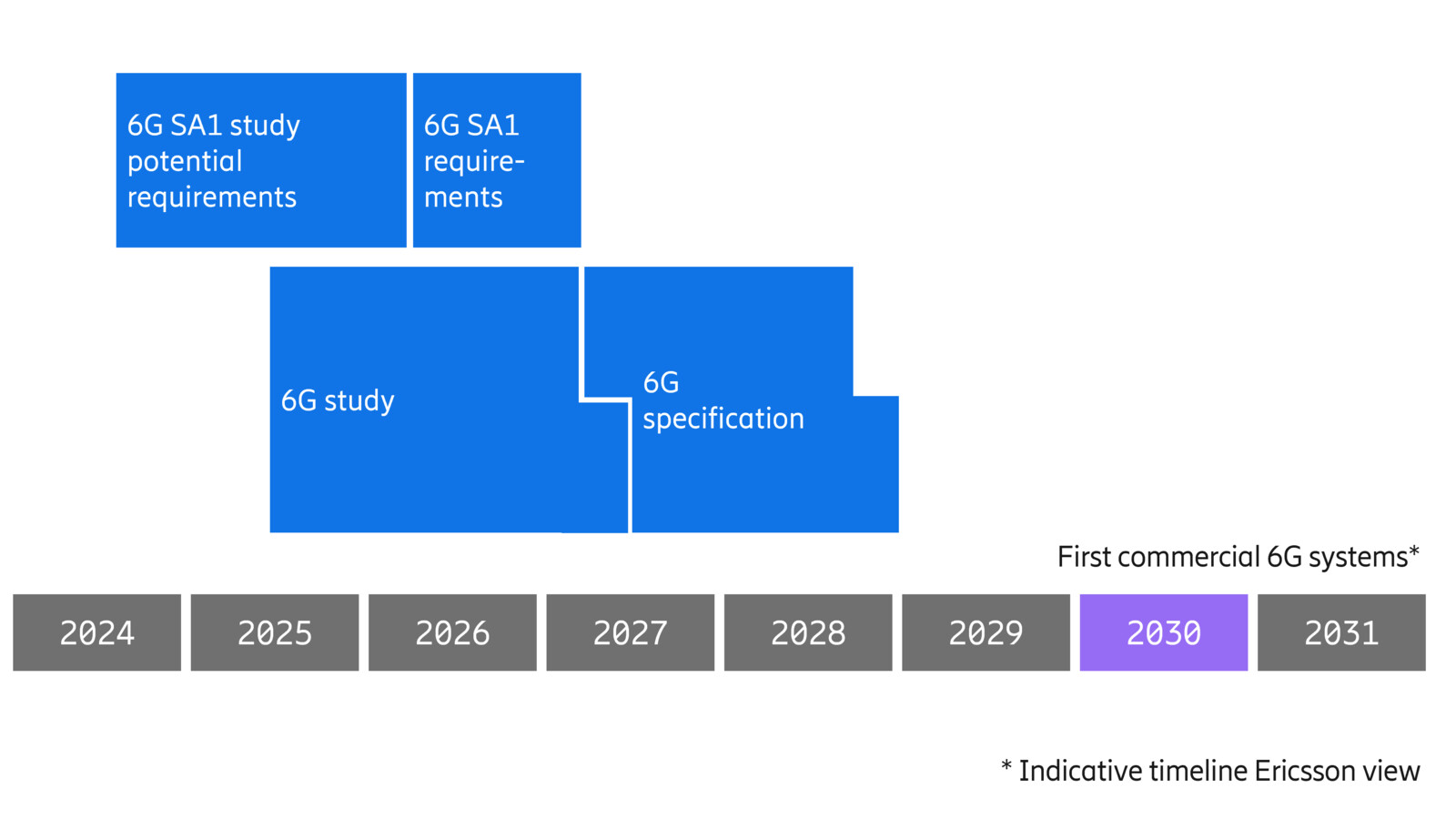
Fig 1. The 3GPP 6G implementation and evolution timeline
As agreed in June 2025 plenary meetings the study of the technical components of 6G, which started in mid-2025, is expected to continue until Q1 or Q2 2027, depending on the area in 3GPP.
After Q2 and Q3 2027, the work will move into the specification phase, or work item in 3GPP terminology, which will continue until the end of Q3 or Q4 2028 when all functionality from the 3GPP point of view should be in place. In certain areas, the work on the specification may start later or end earlier than indicated in Figure 1 due to dependencies between the different groups and technical areas involved. Technical areas are for example radio layer, radio access architecture, core network, operation and maintenance (OAM) and so on. The key point is that the specification will be ready by the end of 2028, followed by an additional quarter of extensive reviewing and correcting of APIs and configuration messages between different functions, such as phones and base stations.
RAN-focused 6G study milestones
The study of technical components for 6G is quite open-ended and exploratory, as it is crucial to identify key technologies by evaluating their merits. However, it is also important to make early decisions on aspects with significant implications for hardware and/or architecture.
Critical implementation and architecture aspects were identified before starting the study item, with the aim to conclude them by June 2026. They include choices of waveform, modulation, channel coding, a basic security framework, the basic structure and periodicity of reference signal, and supported bandwidths. On the architecture side, the topics relate to internal interfaces in the base station, such as the one for radio access networks (RAN), and the interface between the base station and the core network (CN), such as the RAN–CN interface.
Regarding waveform, 3GPP has agreed to use cyclic-prefix orthogonal frequency-division multiplexing (CP-OFDM) in the downlink. For uplink, two waveforms are supported: CP-OFDM and discrete Fourier transform spread OFDM (DFT-s-OFDM). The properties of DFT-s-OFDM result in better coverage for transmissions by the user equipment (UE). One key difference to 5G is that DFT-s-OFDM is supported for uplink multiple-input and multiple-output (MIMO). This will result in better uplink throughput, as the UE can utilize more of the available power in its radio due to the waveform’s inherent properties.
3GPP has also defined the minimum and maximum bandwidths supported by the system, which will vary in different spectrum ranges. The system bandwidth will range from a minimum of 3 MHz in some specific spectrum to 400 MHz in on the higher end. The largest bandwidth used for 5G in mid-band spectrum is 100 MHz, so the larger available bandwidth in 6G will enable higher data rates. This is also beneficial for the typical case with small data packages, as these will be transmitted quickly and efficiently. For massive Internet of Things (IoT), details for the supported terminal bandwidths have been decided to allow cost efficient implementation. 6G is being designed from the beginning to support massive IoT, which is a difference to 5G where the 4G massive IoT solution is still used.
For channel coding, it has been agreed that 5G channel codes will be largely reused. Some enhancements to data encoding will be included, enabling simplified terminal implementations. For control information, smaller enhancements will be discussed.
Regarding modulation, it has been agreed to adopt uniform quadrature amplitude modulation (QAM) as the basis. Studies will continue for specific enhancements, mainly targeting fixed wireless access (FWA) use cases and some additional types of modulation orders.
The basic structure for 6G radio frames has also been defined. It will be very similar to the one used in 5G, which is essential for supporting dynamic and efficient spectrum sharing between 5G and 6G. One key enhancement from Ericsson’s perspective that is still being studied is the support for longer periodicities for reference signals and system information sent from the base station to the UE, which is used by the UE to find the base station and connect to it. This would allow the base station to shut down parts of its radio equipment between transmissions, for example during the nights when the cells are often empty. This will lead to significant energy savings on the network side.
Finally, 3GPP is studying the security aspects of the forthcoming 6G RAN, particularly the security of control messages. The strong security posture of 5G forms the baseline, and 6G security enhancements are being developed based on risk analysis and performance requirements.
Fundamental architectural decisions have also been made by June 2026 about how the interfaces within a radio base station and between the radio base station and the core network should be defined.
Regarding the interface between the base station and core networks, it has been decided that connectivity services in 6G should follow a point-to-point (P2P) design, with the protocols realizing this interface to be determined later in the study. In such a design, the base station establishes an interface association directly with the corresponding network function in the core network, exchanging signaling specifically defined for communication between the base station and the core network function pair. For new non-connectivity services, for example sensing, the RAN-CN interface will be discussed alongside the definition of functionality. An example of such a service is sensing.
There will be two design options for providing a base station, excluding the purely radio parts. The first option is to treat the base station as a single unit, as agreed at the start of the 6G study. The second option, agreed in June 2026, is to implement a higher-layer split that, similar to 5G, divides processing into two parts: a distributed unit (DU) and a centralized unit (CU). The discussion on the split of functionality between DU and CU will continue until September. Ericsson maintains that both options can be implemented in a cloud-friendly way.
Coming back to the radio parts, 3GPP has already acknowledged that a lower-layer split (LLS) – a multi-vendor interface between the base station’s processing part and the radio unit (RU) – may also be present. The LLS will be defined in a schematic way in 3GPP, with details defined by the O-RAN Alliance.
The baseline 6G design assumes a standalone 6G deployment, without any form of aggregation – for example, dual connectivity – between 5G and 6G. To allow a smooth migration to 6G, it is assumed that on the network side that a carrier can be dynamically shared between 5G and 6G. There is ongoing activity in 3GPP to assess the overhead of this approach, with the goal of significantly reducing the overhead compared to spectrum sharing between 4G and 5G. This study will continue until September 2026.
For the introduction of 5G, it was a require that terminals accessed both 5G and 4G at the same time. Terminals were connected to the old 4G core network and 5G carriers could be added to increase data rate. That approach, known as non-standalone operation (NSA), hindered market introduction of more advanced features that are only available with a 5G core network. To avoid repeating the same mistake, 3GPP set out to design a standalone system from the start, which is expected to enable a smooth introduction with the capability to deliver 6G day-1 performance without impacting legacy networks and compromising on limitations imposed by tight interfaces with legacy 5G.
To ensure that all options are considered, 3GPP also conducts a study from March to September 2026 to determine whether a 6G standalone solution with carrier aggregation will be sufficient for operators’ migration from 5G to 6G. In addition, 3GPP is assessing how to aggregate millimeter-wave (mmW) and Frequency Range 1 (FR1) spectrum. The reason is that there are two solutions for aggregating spectrum in 5G – carrier aggregation and dual connectivity – and the study asks whether a single solution can support any possible aggregation scenario in 6G.
Timeline for 6G in the O-RAN Alliance
The specifications prepared by the O-RAN Alliance complement those of 3GPP. The O-RAN specifications do not cover a complete end-to-end system, instead, they mainly focus on two things:
- Disaggregating the RAN by specifying RAN internal multi-vendor interfaces, with open fronthaul LLS being the most prominent.
- Steering RAN automation through the O-RAN specified service management and orchestration (SMO) and the associated SMO rApps.
The 6G discussions within O-RAN started in 2025 with a joint workshop with 3GPP, at which the two parties agreed on a high-level work split. In particular, it was agreed that the air interface between base stations and terminals will remain completely in 3GPP, while open fronthaul between radio and baseband in the base station will be specified by O-RAN.
The technical work on 6G in O-RAN started in February 2026, when the first study item (SI) on use cases and requirements was kicked off. At the O-RAN face-to-face meeting in June that year, additional SIs were initiated, including architecture” and open fronthaul.
The 6G O-RAN work will be an evolution, not a revolution, of what is already specified for 5G – ensuring a smooth migration path for, for example, an SMO to also support 6G. It is agreed between O-RAN member companies to align with the timeline defined by 3GPP. A slight delay of three to six months is possible, given that O-RAN specifications complement rather than run in parallel with those of 3GPP, but this is not expected to have a significant impact on 6G implementation. Maintaining this alignment is very important to avoid any time-to-market disadvantage for O-RAN compliant products and deployments.
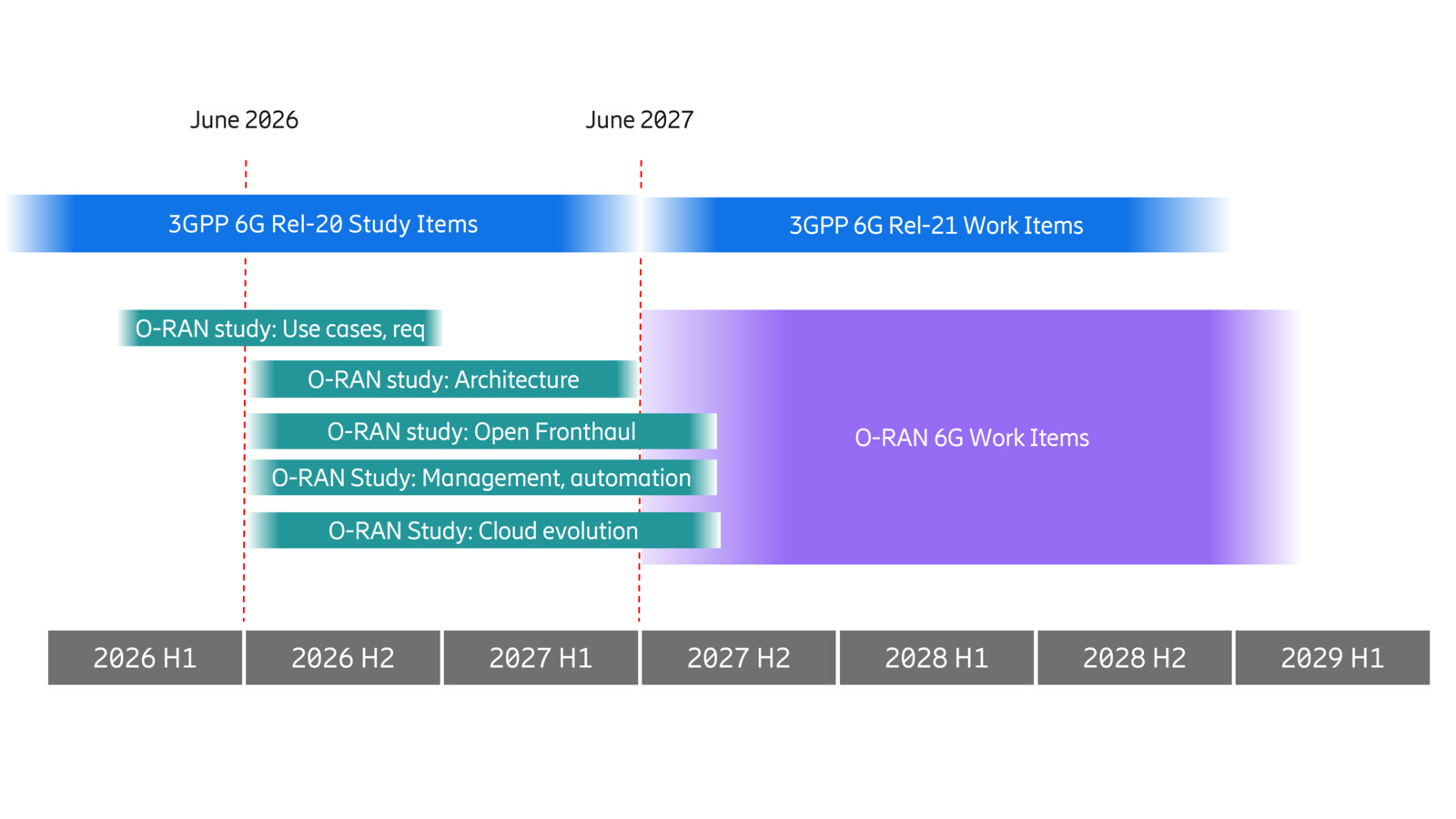
Fig 2. A high-level picture of the O-RAN 6G timeline
Takeaways
6G standardization is in full swing. 3GPP has agreed that the first 6G specifications will be available early 2029. Further, 3GPP has completed a list of early milestones for 6G, establishing key design decisions at both the air interface and architecture levels. The O-RAN Alliance has also started its 6G work and is committed to the timeline aligned with the one defined by 3GPP.
More reading
Network architecture functional and physical