










IMS in 6G: From telephony foundation to intelligent communication platform
- The IP Multimedia Subsystem (IMS) has been selected as the communication engine for 6G, ensuring continuity for telephony, emergency services and roaming across the next generation of mobile networks.
- Continuity is only one part of the story – with data channels, exposure APIs and AI integration, IMS is quickly evolving into a robust foundation for intelligent, real-time communication services.

Expert, Service architecture and use cases

Expert, End-to-end communication architecture
Expert, Service architecture and use cases
Expert, End-to-end communication architecture
Expert, Service architecture and use cases
Expert, End-to-end communication architecture
First standardized by 3GPP in the early 2000s, the IMS (IP Multimedia Subsystem) was conceived as a framework for delivering “any service, any time, anywhere, over any network.” However, when IMS was introduced in 4G (VoLTE), its role was relatively narrow, focused mainly on telephony and emergency services for billions of devices worldwide. Since then, IMS has grown through generations, and now, as the selected communications engine for 6G, it has the potential to make its biggest step yet toward realizing its broader potential.
The decision to continue with IMS is not just about keeping voice services running. Communications sit at the heart of how mobile communication service networks connect and operate. Emergency calling, roaming, regulatory compliance, trusted identity and interoperability all rely on an architecture that is standardized, stable and globally deployed. Replacing the IMS ecosystem would create major disruption without solving any obvious problem.
But continuity is only part of the story. IMS is not just making the jump into the 6G era – it is already evolving into something much more capable. Technologies such as IMS data channels, exposure APIs and AI integration are starting to enable real-time translation, fraud prevention, AI-assisted calling and richer, more interactive experiences delivered natively within the communications layer.
The industry isn’t just deciding how voice fits into 6G – it’s redefining what communication services can be.
A platform built to expand
The original idea behind IMS was very ambitious. For many years that vision felt ahead of where the industry was. In practice, however, IMS became the backbone of mobile telephony, and each generation since has further extended its reach.
Voice-over-LTE (VoLTE) was the first major milestone, enabling the move from circuit-switched (CS) voice toward packet-switched communication in 4G networks and bridging the transition from legacy 2G and 3G systems. Voice-over-NR (VoNR) in 5G Standalone (5GS) networks then established IMS as the native communication layer for modern mobile systems.
The ecosystem has evolved over time and continues to grow:
- Voice-over-Wi-Fi introduced seamless continuity between cellular and WLAN access.
- Voice-over-NTN is extending communication services toward satellite-based access, with foundational specifications already in place.
- IMS-based roaming and emergency services have matured globally.
- Voice in 6G is now being studied in standardization activity, with IMS confirmed as the continued foundation.
- CS sunset is a reality in many markets. As 2G and 3G networks are decommissioned, IMS stands as the sole platform for CSP-provided essential communication services.
The next phase of this expansion moves beyond telephony entirely. IMS architecture has developed in standards to support exposure capabilities that open the door to visual IVR (Interactive Voice Response), AI-powered fraud prevention and real-time translation, and XR/avatar-based services – the beginning of a much broader communication platform.
Why IMS is used in 6G
Rather than introducing a new telephony framework, 6G standardization work is building directly on existing IMS and 5GS voice architectures. The reasons are practical. By the time 6G deployments scale up, communication service providers (CSPs), vendors and device manufacturers will already have invested heavily in IMS-based communication services. Telephony also remains a regulated and contractually required service in most markets – emergency calling, roaming and interconnect all depend on frameworks that cannot simply be rebuilt for each new radio generation. The result is a clear industry consensus around a single path forward.
Carrying IMS into 6G delivers concrete advantages:
- One telephony service across access generations – a single voice engine spanning 6G, 5G (VoNR) and 4G (VoLTE), ensuring consistency across the network.
- Society-critical continuity – telephony must be robust and available for both daily use and emergency situations.
- Device ecosystem readiness – telephony capabilities in today’s 4G/5G devices carry forward into 6G without requiring new investment.
- Investment reuse – roaming solutions, IMS infrastructure and 5GS frameworks can be carried directly into 6G network and device implementations.
- Regulatory compliance – voice, emergency services and roaming support remain contractual and regulatory requirements under licensed spectrum.
Standardization is already underway. The industry has aligned on IMS as the communication engine for 6G, covering both 3GPP and non-3GPP access technologies including Wi-Fi and non-terrestrial networks (NTN), and building on existing 4G and 5G solutions without major architectural disruption.
One practical implication: operators should migrate to a 5G IMS-based voice solution before launching 6G services. This allows IMS to leverage 6G system capabilities – including quality of service (QoS), location retrieval and cross-generation mobility – from day one, while preserving roaming frameworks that will remain relevant given that 2G/3G networks are expected to remain in operation into the 2030s.
In early 6G deployments, where voice quality may not yet match 5G or 4G levels due to device or RAN maturity, calls should be established over 6G first, with handover to 5G or 4G triggered by the radio access network (RAN) when necessary. This reuses existing mobility procedures, prevents device fragmentation and keeps the industry on a single path toward native voice-over-6G. Emergency services require particular attention throughout: as legacy CS systems disappear, IMS-based emergency communication must remain robust at every stage of the transition.
IMS as an intelligent interaction platform
The more significant shift in 6G is not that IMS survives – it is what IMS is becoming. For years, communication innovation happened largely outside the telecom domain, through over-the-top (OTT) applications and hyperscaler platforms. The role of CSPs was to provide connectivity; the intelligence lived elsewhere. AI is changing that. Recent 3GPP releases have introduced capabilities that significantly expand what IMS-based services can support: IMS data channels, exposure APIs, avatar calling capabilities and integration with 5GC exposure frameworks and NEF (Network Exposure Function). These allow AI services to interact directly with communication sessions, media streams and service logic in real time – shifting IMS from a session control platform into a broader interaction layer.
Ericsson is actively working on how to take this further. A key focus is ensuring the IMS architecture can support interaction with AI agents, enable agent-to-agent communication, and connect with capabilities such as large language models and multi-modal models – allowing intelligent, context-aware service execution at scale. The goal is a unified IMS architecture where application logic can reside fully under CSP control when needed, while remaining open to third-party interaction through APIs and media. This gives operators both the flexibility and the control that a rapidly shifting service landscape demands.
What this unlocks is a new category of communication services that OTT platforms cannot replicate: AI capabilities anchored within the trusted, regulated, operator-controlled communication layer – with the reliability guarantees that telephony has always required.
AI-enabled communication services
The practical implications of AI-enabled communication services are significant. Some of the most compelling use cases are also the most immediately useful:
- Real-time language translation – speech-to-speech or speech-to-text translation enabling cross-language communication during live calls.
- Transcription and summarization – live captions during a call, along with post-call transcripts or summaries for record-keeping.
- AI-assisted call screening – filtering unwanted calls while allowing important conversations through, based on subscriber-configured preferences.
- Fraud detection – real-time analysis of calls to identify suspected fraud, with timely warnings delivered directly to the subscriber.
- Sign language translation – avatar-based, speech-to-sign-language translation supporting hearing-impaired users, including as an extension to emergency services where accessible communication is critical.
These services are distinct from generic AI assistant experiences available on consumer platforms. They are embedded within the communication session itself, under operator control, with the quality guarantees and regulatory safeguards that CSP-provided telephony requires.
Richer interaction with IMS data channels
A key architectural enabler behind these services is the IMS data channel. Traditionally, IMS sessions focused on audio and video streams. Data channels introduce a third media capability – enabling live captions, synchronized visual content, AI-generated prompts and transcription displays directly within the communication session, integrated into native clients without requiring separate applications.
As AI becomes more integrated into communication services, smooth interworking with the existing supplementary service chain is essential. Subscribers expect calls, forwarding, conferencing, transfer functions and barring to behave consistently regardless of what AI capabilities are active in the background. That predictability is non-negotiable.
Privacy and consent are equally fundamental. Subscribers must be able to govern and explicitly approve the invocation of AI services. CSPs need to enforce policy, manage consent and comply with regional regulatory requirements – including, in some cases, requirements that applications and data be hosted on operator premises or within national boundaries.
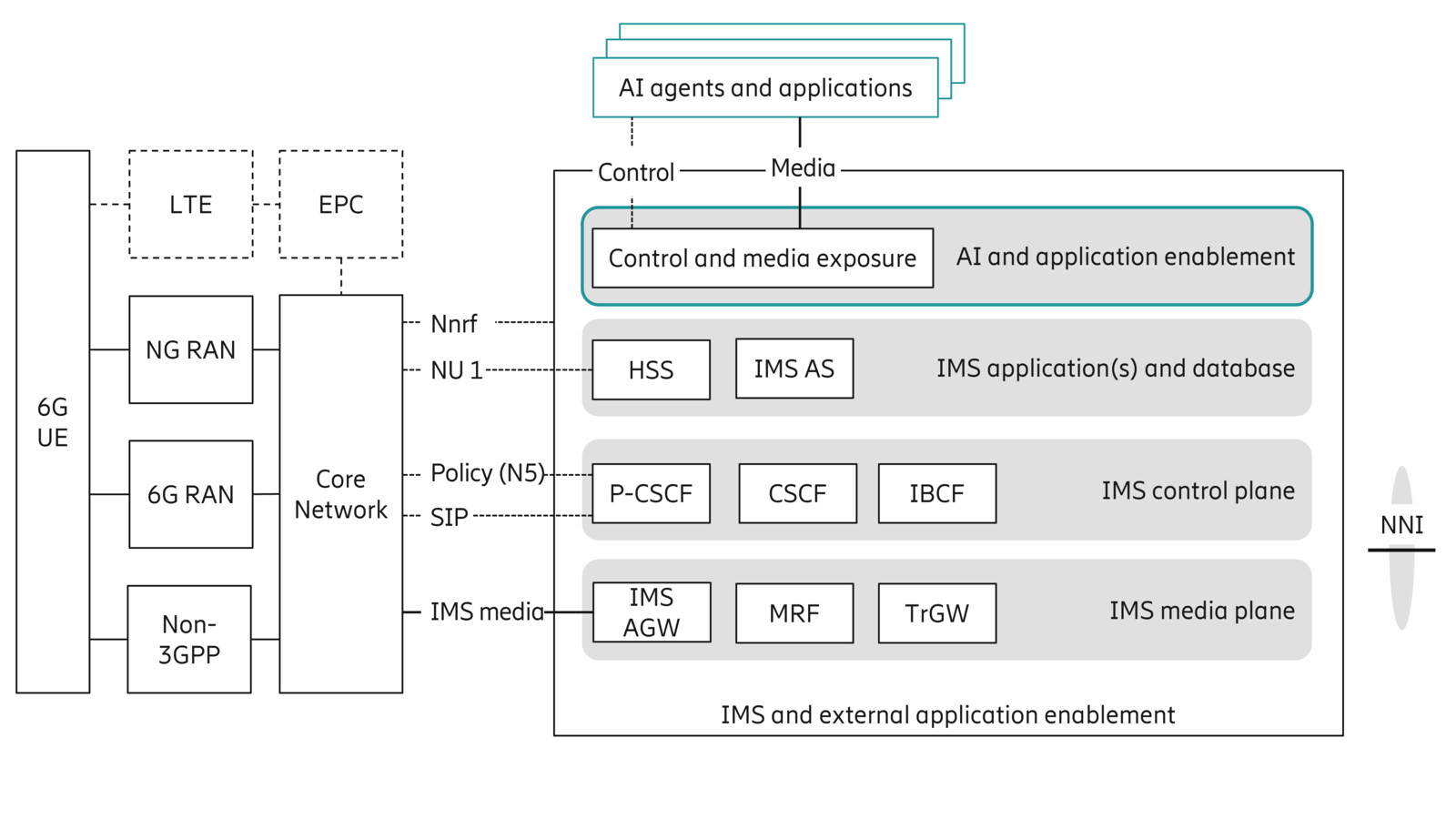
Figure 2. IMS architecture with AI and application enablement
An exciting new chapter
IMS has been part of the telecom industry for decades, and its role in 6G reflects something the industry has learned through each previous generation: trusted communication infrastructure is not rebuilt lightly. The investments, agreements, regulatory frameworks and device ecosystems that underpin IMS today are too deeply embedded – and too valuable – to replace without a compelling reason.
IMS is central to 6G because the architecture has continued to evolve in ways that position it to do far more than carry voice. With data channels, exposure APIs and AI integration now part of the picture, IMS is shifting from a telephony platform into the trusted interaction layer for intelligent communication services.