










Designing a 6G core network for AI agents, intents, and new services
- Artificial intelligence (AI)-native services open opportunities for communication service providers (CSPs) through traffic growth, differentiated connectivity, AI service consumption and platform monetization.
- An AI domain in the 6G core enables trusted intents and AI-agent collaboration while preserving the stability and evolution of the core network.

Expert, Core network evolution realization, Business Area Cloud Software and Services

Expert, Core network migration

Expert, Network architecture evolution (AI/ML), Ericsson CTO office
Expert, Core network evolution realization, Business Area Cloud Software and Services
Expert, Core network migration
Expert, Network architecture evolution (AI/ML), Ericsson CTO office
Expert, Core network evolution realization, Business Area Cloud Software and Services
Expert, Core network migration
Expert, Network architecture evolution (AI/ML), Ericsson CTO office
AI is already an important part of our daily lives. Its capabilities are increasingly embedded into devices and applications. AI agents simplify how we interact with our surroundings and impact communication patterns. However, when AI-enabled applications on devices interact with cloud services today, this interaction is largely treated as over-the-top traffic from the network’s perspective even though the connectivity could be differentiated from other services.
Looking toward the 2030s, the convergence of AI, cloud, and mobile technologies is creating fundamentally new requirements and opportunities for mobile networks. 6G is envisioned as an AI-native intelligent network that combines connectivity, computing, data, and intelligence into a common platform, enabling new classes of services and business models.
Future 6G systems are expected to support a broad range of AI-enabled devices, including smartphones with personal AI assistants, AI-powered smart glasses providing immersive awareness and real-time assistance, autonomous mobile robots collaborating with cloud and edge intelligence, AI-assisted drones, and industrial Internet of Things (IoT) devices controlled by enterprise AI systems. These devices continuously interact with AI models, AI agents, and cloud services and will generate new traffic patterns, especially in the uplink, while demanding predictable performance, trust, and security.
Unlike previous generations, the 6G system is expected to provide AI-related capabilities directly to user equipment (UE) and application functions (AFs). Examples of such capabilities include:
- intent-driven interaction with the network
- trusted communication between AI agents
- agent group communication
- exposure of network information and capabilities
- AI inference, training, and offloading support
- identity, positioning, and sensing services for AI applications
AI agents are becoming a new software paradigm in which systems can reason, plan, and execute tasks on behalf of users, enterprises, and network operators. Increasingly, these agents are expected to collaborate with other agents, access tools, and discover new capabilities dynamically.
Trust is a fundamental requirement. Agents consuming network services or interacting with other agents must be authenticated and authorized before access is granted. Similar requirements are increasingly discussed for agentic telecom architectures, where identity, security, capability discovery, and governance become critical parts of the solution.
A key design principle is that existing network and operational systems retain authority. AI-driven interactions must respect established operational constraints such as subscription data, security policies, network capabilities, and regulatory requirements. In other words, AI-enabled services augment the network rather than replace its existing control mechanisms.
Monetization opportunities for new AI-related services in 6G
The introduction of AI-native services creates an opportunity for CSPs to move beyond traditional connectivity revenues and open new revenue streams by participating in higher-value segments of the emerging AI economy. Recent Ericsson thought leadership highlights opportunities around differentiated connectivity, AI services and platform monetization. At the same time, the proposed AI-related services in the 6G core network create concrete monetization opportunities that go beyond those already identified for 5G.
Four monetization opportunities stand out.
1. Traffic growth from AI applications
AI assistants, smart glasses, autonomous robots, drones, and enterprise AI applications are expected to significantly increase new traffic. Continuous media streams, AI inference requests, and contextual-awareness functions will increase both downlink and uplink traffic volumes.
For CSPs, this creates a direct monetization opportunity through existing business models. As AI-enabled devices become more widely adopted, CSPs can largely monetize the resulting traffic growth through established connectivity offerings while also creating demand for higher-capacity and higher-performance subscriptions.
In this sense, AI-native services provide both a new category of services and an accelerator for traditional connectivity revenues.
2. Premium and differentiated AI services
AI applications often require predictable latency, reliability, and throughput. Future users, applications, and AI agents will increasingly request communication services adapt to the needs of a specific task.
This allows CSPs to monetize differentiated connectivity through premium service levels, dynamic quality of service (QoS) offerings, connectivity packages backed by service level agreements, and AI-specific service tiers.
In addition, AI-native services introduce opportunities for dynamic upselling and service personalization. Examples include:
- temporary activation of intent-enabled services
- premium AI-assisted connectivity packages
- event-based upgrades for gaming, collaboration, or immersive experiences
- enterprise enablement of intent-driven network interaction for selected device fleets
- temporary activation of premium AI capabilities for a defined time period or business event
Rather than permanently changing subscriptions, services can be enabled on demand when needed and removed when no longer required. This creates flexible commercial models while simultaneously enabling highly personalized service experiences.
Such service flexibility aligns naturally with the concept of hyper-personalized service delivery, where specialized AI agents automate decision-making across multiple workflows, making personalization possible at individual scale.
3. AI service consumption
Today, CSP monetization is primarily based on connectivity consumption. AI-native networks introduce the possibility of monetizing AI capabilities directly.
Examples of AI-related capabilities that may be exposed by the network include:
- AI inference service - run an existing model and return a result
- AI training / fine-tuning service - create, retrain or adapt a model
- AI workload execution service - execute a complete AI workload supplied by the UE/AF
- AI compute resources - provide compute capacity where workloads can be executed
Customers may consume these capabilities on demand and be charged based on resource usage, service duration, performance level, geographic scope, or subscription tier.
This introduces a new monetization model where network-provided AI capabilities become commercial offerings. The business model increasingly resembles cloud-service consumption rather than traditional connectivity charging.
4. Platform monetization
Perhaps the largest long-term opportunity is transforming the network from a connectivity platform into an AI platform that exposes trusted AI-related capabilities and services.
In this model, the network exposes trusted capabilities such as:
- intent handling services
- agent identity and trust services
- authentication and authorization services
- network insights and context services
- AI-assisted services
These capabilities can be consumed through application programming interfaces (APIs) and agent-friendly interfaces by applications, enterprises, and AI agents.
The resulting business opportunity extends beyond the traditional CSP-subscriber relationship. New value chains may emerge involving application providers, AI service providers, enterprise platforms, cloud providers, AI-agent ecosystems, and vertical-industry service providers. The network operator becomes an active participant in digital value creation rather than solely a provider of connectivity.
This represents an opportunity to establish entirely new revenue streams based on trusted AI interactions, contextual information, network intelligence, and AI service exposure.
Architectural impact of AI
While the opportunities described above are attractive, realizing them requires more than simply exposing additional APIs. Future AI-native services introduce new requirements around intent handling, trusted AI-agent communication, capability discovery, AI service exposure, authorization, and governance. Furthermore, these capabilities must evolve rapidly as AI technologies advance, without disrupting the stability and interoperability of the existing 5G Core (5GC).
This raises an important architectural question: How can a 6G system support AI-native services while preserving the robustness of existing core network functions?
The answer proposed in ongoing 6G studies in 3GPP is the introduction of a dedicated AI domain within the 6G core network. The AI domain is specifically designed to handle AI-related interactions, intents, AI capability exposure, and trusted AI-agent collaboration, while allowing the 5GC to continue evolving as a stable foundation for connectivity services.
The 6G Core Network AI domain: Overview and basic principles
Key drivers for the dedicated AI domain in the 6G core network architecture are as follows:
- Enabling independent and fast AI-powered innovation through a separate domain while leveraging a clear interface to a packet-switched (PS) domain as a stable foundation.
- Ensuring the PS domain as a stable foundation supporting 6G capabilities and which can use AI technologies in the implementation of functions.
- Managing complexity and scalability by consolidating AI-related functions for handling new UE and AF use cases into a defined domain rather than spreading them across all network components.
- Securing a flexible and future proof AI architecture through decoupling AI use case development, including intent and agentic communication, from the fundamentals of core architecture development. This is essential since these areas evolve at vastly different speeds.
- Protecting the PS domain from AI-generated overload caused by intent fulfillment and errors triggered by external actors, such as rogue AI agents.
A central principle is to focus on functionality rather than implementation details, acknowledging that AI technologies will evolve significantly over time and more rapidly than 6G standards. This approach allows the architecture to remain stable while still accommodating new AI capabilities as they mature.
Concept overview of the AI domain
The AI domain is proposed as an optional, separate functional domain within the overall 6G core network architecture.
This separation lets operators introduce AI capabilities into the functional architecture incrementally, based on demand and readiness, rather than enforcing a disruptive architectural change.
In 3GPP, the core network has traditionally been divided into logical domains such as the PS domain and the IP Multimedia Subsystem (IMS). For 6G, Ericsson’s view is that the PS domain will continue to build on an evolved 5GC, but with an additional AI domain introduced in the network architecture as seen in figure 1, hence a dual PS and AI domain model. The resulting 6G core network architecture can be summarized as follows:
- 6G core network – PS domain: Based on an evolved 5GC, it uses both 6G radio access network (RAN) and next-generation RAN. It supports existing services and functionalities over 6G RAN, including mobility and session management, and communication services.
- 6G core network – AI domain: This addresses AI-specific needs within and across the network. It introduces new functions to manage AI agents, intents, and AI-aware services at scale. It handles intents from UEs and AFs and supports the interaction between agents on different UEs.
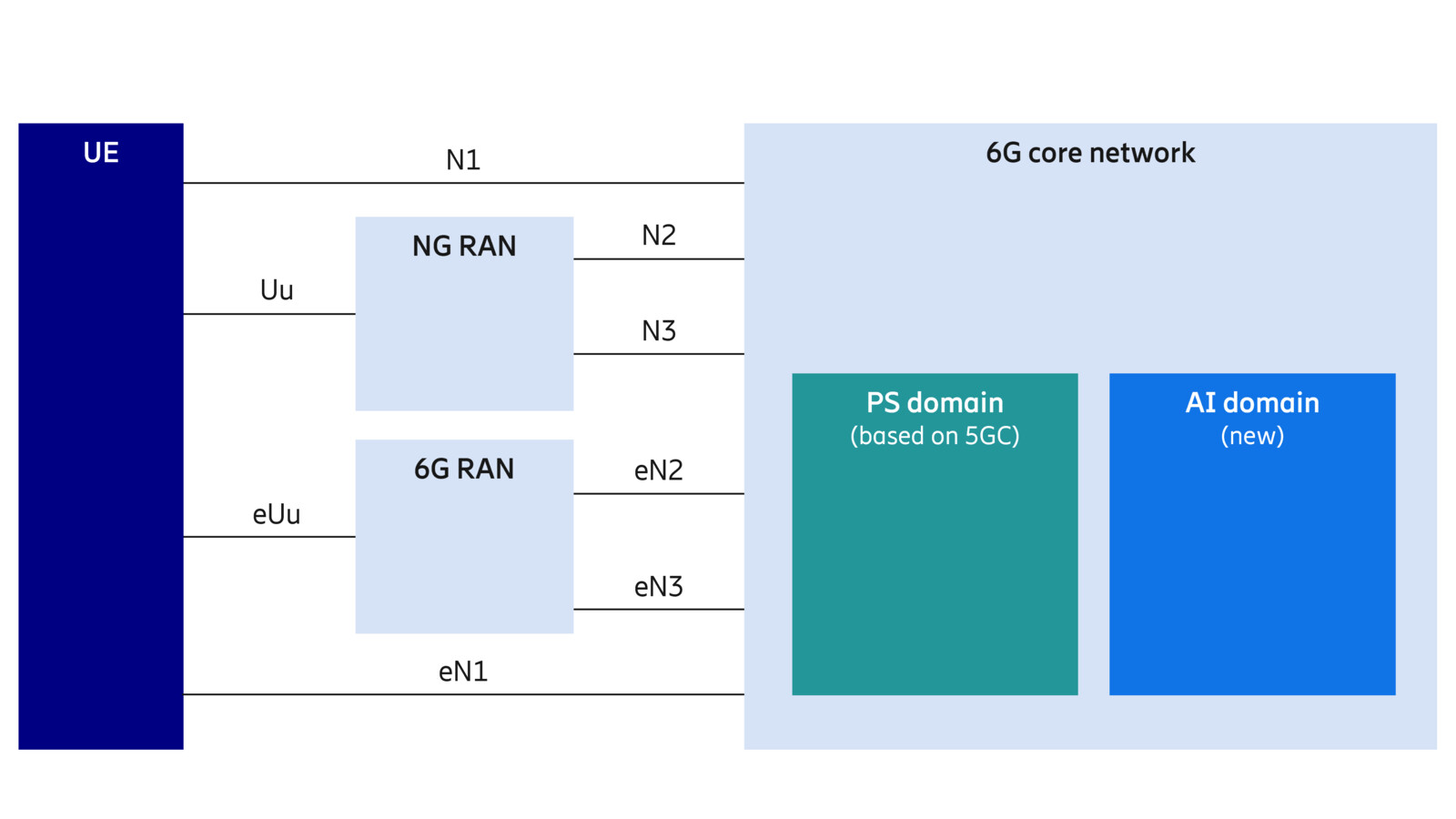
Figure 1: 6G core network: a modular core network
The PS domain provides what operators rely on today: robust, standards-based connectivity for people and things. The AI domain uses the PS domain for UE connectivity and adds AI-specific control, security, and orchestration.
New functionality provided by the 6G core network AI domain
The User Equipment (UE) may have an intent client and one or more AI agents that interact with the AI domain. An AF may host an AI agent that interacts with the AI domain, as shown in figure 2. At a high level, the AI domain:
- identifies, authenticates, and authorizes the intent client and the AI agent
- enables trusted, operator-controlled intent negotiation and fulfillment by intent clients
- enables trusted UE–AI-agent communication, including agent group communication
- handles intents from UEs and from AFs. These intents are solely intended for the 6G core network as seen on figure 2
- supports communication and collaboration between AI agents on the UE, as shown in figure 2
- exposes network capabilities through AI interfaces
- exposes AI training and AI inference capabilities
- interacts with the PS domain
A critical principle is that existing control systems retain authority, meaning that AI-driven decisions must respect established operational boundaries. In other words, UEs and AFs can access and request services from the AI domain. These services are granted only if the entity involved has been provisioned for the requested capability in advance. The AI domain is meant to neither replace the existing business and service layers nor be used as an additional provisional interface.
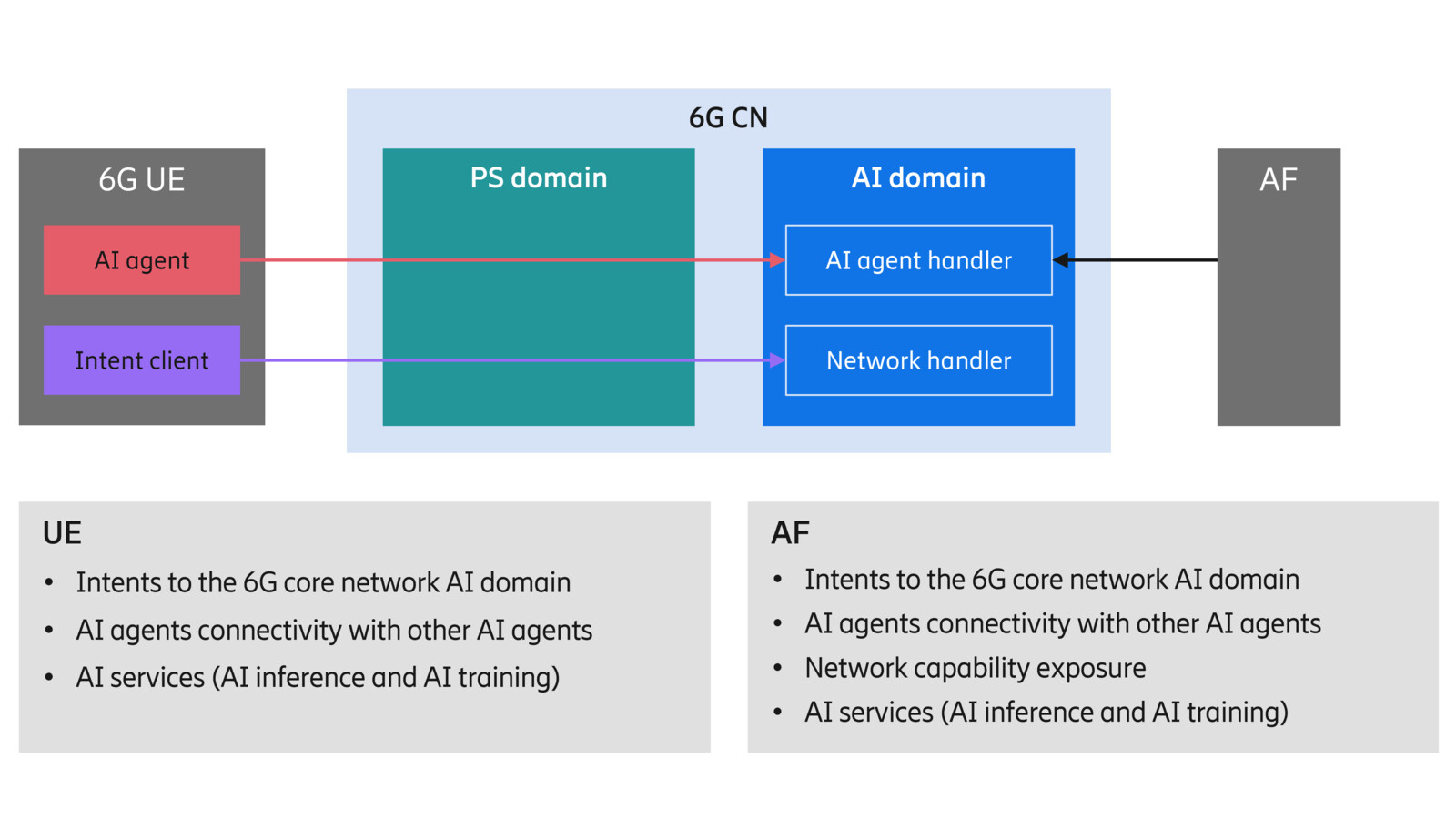
Figure 2: Intent and AI agent interaction with the AI domain
Intents handled by the AI domain
Intent-based interaction is widely regarded as a key enabler of autonomous networks. Rather than requesting specific network configurations, users, applications, and operational systems express desired outcomes while the network determines how to achieve them. This separation between business objectives and technical implementation enables higher levels of automation and autonomy.
The intents that support autonomous networks can be called operations, administration and maintenance intents. In 6G, these will be accompanied by new types of intents, expressed by the users of the network. They are labeled UE intents and AF intents, respectively.
UE intents
A UE intent expresses a desired outcome related to a specific subscriber and is provided by a UE. Examples include:
- connectivity assistance for a specific application
- temporary quality enhancement for gaming or collaboration sessions
- access to premium services on demand
- battery optimization support
- improved service experience for a time-limited activity
In many situations, these intents may be generated automatically by personal AI assistants operating on behalf of the user.
AF intents
AF in this blog post refers to the Application Function on the network side, interfacing the AI domain as shown in Figure 2. An AF intent expresses a desired outcome affecting one or more subscribers or devices managed by an application, for example, for an enterprise or other verticals. Examples include:
- dynamic QoS policies for enterprise users
- service assurance requirements for industrial operations
- subscription policy changes for a fleet of devices
- optimization of enterprise-managed AI workloads
- connectivity policies for autonomous robots or connected assets
AF intents allow enterprises and application providers to dynamically adapt service behavior without a detailed understanding of network implementations.
Together, these two intent categories enable coordination between users, applications, and network operations while maintaining operator governance and control.
AI agents on UEs and AFs in 6G
As AI agents become a new software paradigm, mobile networks also need to prepare to support them effectively. Future 6G systems are expected to serve an increasingly diverse ecosystem of AI agents operating across devices, applications, and cloud environments, making AI-agent interaction an important consideration for network architecture.
In a 6G environment, AI agents may reside on smartphones, smart wearables, personal assistant devices, and autonomous robots/vehicles, as well as in enterprise applications and cloud platforms, and within operator-provided service platforms.
The value of AI agents increases significantly when they can interact and cooperate. Examples include:
- personal assistants interacting with network services
- smart glasses accessing translation, navigation, and collaboration agents
- enterprise robots coordinating work tasks
- autonomous vehicles interacting with infrastructure services
- multi-agent enterprise workflows spanning several organizations
To support such scenarios, the 6G system can provide trusted AI-agent services including agent identification, authentication and authorization, agent discovery, capability registration, protected one-to-one communication, and secure group communication.
Trust is a fundamental requirement. Agents consuming network services or interacting with other agents must be authenticated and authorized before access is granted. Similar requirements are increasingly discussed for agentic telecom architectures where identity, security, capability discovery, and governance become critical parts of the solution.
Summary
The AI domain offers a structured, flexible way to introduce new AI services into the 6G core network architecture. By separating AI functionality into a dedicated domain, it enables fast-paced innovation while preserving the stability and evolution of the core network for legacy services.
This approach reflects a pragmatic balance between embracing AI’s potential, acknowledging its rapid evolution, and aligning with proven architectural principles.
The AI domain concept is still evolving, with active discussions ongoing in multiple working groups and industry collaborations. However, several themes are already clear.
- AI-native will mean AI everywhere: From devices and RAN to the core and all other layers, the AI domain will not only be part of the 6G core network but will also act as a coordination point for the intelligence in the functional core network architecture for use cases involving UEs and AFs.
- A dual, PS- and AI-domain model: Through this pragmatic evolution path, CSPs can continue to leverage their 5GC investments, extending the PS domain to support 6G RAN and next-generation services, while selectively introducing AI domain capabilities delivering the most value for customers.
- AI and networks are becoming mutually dependent: With its transformative potential for telecom networks already proven, AI will not be an external application consuming generic connectivity, but a native component of the 6G era that will actively shape the network’s architecture, capabilities, and services.
Ericsson’s initial prototyping of the AI domain concept has started. The promising results confirm our standardization direction and lay the foundation for future solutions for the AI domain as part of the 6G core network.