









The future of AI revolution depends on the convergence of three technology pillars: AI, cloud, and mobile. AI models are becoming more powerful, evolving into multimodal systems that use audio, images, video, and immersive media as both input and output. Mobile connectivity is well-positioned to connect existing AI-enabled devices and emerging AI-native devices where network availability, reliability, and security are vital.
Executive summary
In the first three years, generative artificial intelligence (GenAI) usage grew at a staggering pace to nearly a billion weekly active users. A significant share of total usage was on mobile phones—initially text-based queries but later shifting to more media-based engagements. Consequently, mobile networks must evolve to accommodate this shift.
The future of this evolution relies on the convergence of three technology pillars: AI, cloud, and mobile. AI models are becoming more powerful, evolving into multimodal systems that use audio, images, video, and immersive media as both input and output. Centralized cloud infrastructure plays a central role in model training, while more distributed cloud capabilities are emerging to support inference. Mobile connectivity is well-positioned to connect existing AI-enabled devices and new AI-native devices where network availability, reliability, and security are vital.
Network performance thus becomes a defining factor in the AI experience. This convergence creates a powerful economic and technological flywheel where AI drives new network demands, and advanced networks unlock new AI use cases for consumers and industries:
- Consumers: AI enables hyper-personalized recommendations and content creation for smartphone users. Furthermore, the product-market fit for AI/augmented reality (AR) glasses is consolidating with on-device cameras providing immersive awareness. Importantly, on-device personal agents are emerging that could trigger high adoption and usage rates in the future.
- Enterprise: Autonomous vehicles (AVs) require the network, particularly the uplink (UL). Droids and drones are also emerging as industrial applications with growing adoption. Knowledge workers adopting AI on enterprise-managed smartphones and laptops will require dependable networks. We also anticipate a renaissance in Internet of Things (IoT) where on-device AI will drive new applications in the field.
The consolidation of existing and emerging applications is predicted to drive traffic growth: downlink at 15 percent compound annual growth rate (CAGR) and UL at a significant 30 percent CAGR. Furthermore, using networks as a data source is a new development where networks not only provide connectivity but also generate valuable data to drive enhanced experience.
Networks are responding to rising demand through three technical enablers: enhanced UL, differentiated connectivity, and programmable network exposure:
- 5G standalone (SA) and 5G Advanced introduce UL coverage and capacity improvements via radio software features, site and spectrum upgrades, and UL quality of service (UL QoS). Mid-band and centimeter-band spectrum, including the future 7 to 12 GHz range, is pivotal for AI-enabled traffic.
- Differentiated connectivity uses slicing, user equipment route selection policy (URSP), advanced scheduling, and “Quality on demand (QoD)” and “Dedicated network on demand” application programming interfaces (APIs) to deliver service level agreement (SLA)-grade throughput, bounded latency, and reliability per AI session.
- Network exposure APIs provide agent-friendly access to positioning, authentication and network insights, enabling AI applications to dynamically request the right connectivity and tap network data sources. Examples include radio-based sensing and device positioning.
With more details provided in this white paper, these capabilities turn the network into an AI platform and create new business models built on premium UL with API-based differentiated connectivity and premium service offerings.
Emerging consumer and enterprise AI use cases
Significant network impact will stem from applications that are both data-intensive and widely adopted. Ericsson’s objective is to deliver industry-leading networks optimized for the growing demand of AI applications for consumers and industry. Therefore, we will first examine the emerging AI use cases, and in subsequent sections propose suitable networking solutions to support such new applications.
AI as the universal catalyst for transformation
AI, specifically GenAI, is turning into a universal catalyst of transformation, underpinning a wide set of applications today: from consumer applications to industry use cases such as AI-driven diagnostics in healthcare, dynamic pricing algorithms in retail, predictive maintenance in manufacturing, and AVs in transportation[1].
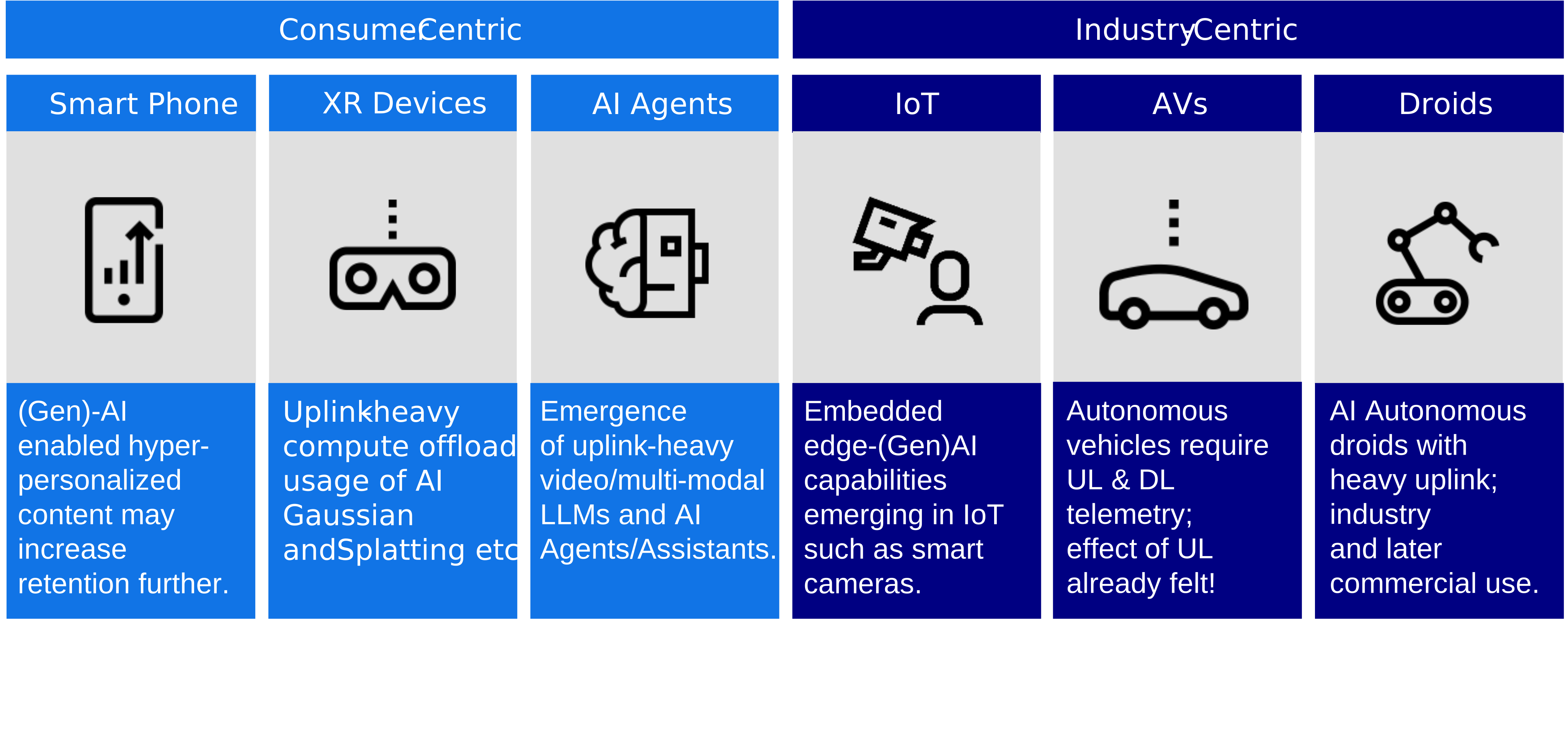
Figure 1. An illustration of the emerging use-cases underpinned by AI for industry and consumers.
Shift in consumer behavior
On the consumer side, AI quietly rewires how users produce and consume content, and this shift directly shows up in traffic patterns.
- AI-enabled hyper-personalized content: AI editing, translation, and image and video generation turn almost every user into a content producer, driving a material increase in downlink traffic with video already dominating mobile data traffic at 70 to 75 percent. While GenAI currently represent approximately 0.06 percent of the network today, GenAI sessions drive a significantly higher UL ratio—26 percent compared with about 10 percent in conventional networks. A significant change impacting UL schedulers, time-division duplex (TDD) patterns, and mid-band cell density for radio planning[2].
- AI encourages adoption of new devices, creating new UL pressure: AI-native wearables, such as Ray-Ban Meta smart glasses, generate significant new always-on UL demands as they capture audio and image. They rely on cloud-based assistants for live translation and real-time visual understanding [3]. These devices stream brief but high-value data upstream, that is often adapted in resolution depending on the context. This requires robust UL capacity, low latency, consistent round-trip times (RTTs), tight jitter control, power efficient performance for the companion device for on-demand or always on Multimodal AI and reliable per-device QoS, especially during handovers or under variable network conditions.
- Personal agents coupled to cloud-edge fabrics: Persistent personal agents are replacing conventional phone-only applications by seamlessly integrating across devices such as phones, laptops, glasses, cars, and home systems. These assistants prioritize handling basic tasks locally using small on-device models and escalate complex queries to advanced AI cloud infrastructures. Innovations such as Apple Intelligence and other private AI compute clouds exemplify this architecture [4].
For AI-native consumer use cases mentioned above, the network requires the following characteristics:
- a rising number of short, latency-sensitive control exchanges between devices and nearby edge or regional AI clusters
- strong pressure for local breakout to regional data centers close to large populations, so that personal agents do not incur transcontinental RTTs [5]
- additional features, such as positioning information or sensing, as well as auxiliary capabilities, such as security and trust.
AI powers emerging enterprise applications
5G, on-premises edge computing, and low-latency AI inference converge to create monetizable opportunities for industries and enterprises. The common framework involves data generation from sensors and machines and real-time interpretation by edge AI, followed by action via reliable 5G connections. Below are some of the key use cases:
- AVs: These rely on 5G for high-rate ULs of camera and light detection and ranging (LIDAR) data for training and insurance purposes, teleoperation commands when vehicles are stalled, and optional vehicle-to-everything (V2X) signaling for safety and coordination. These AV applications require UL speeds of 5 to 30 Mbps, end-to-end latency under 100 ms for video, and below 20 ms for control traffic.
- 5G-native laptops: Solutions such as Ericsson’s Enterprise Virtual Cellular Network (EVCN) enable secure, always-on cloud access for hybrid and AI-powered workflows across devices. These laptops drive increased UL traffic from video sharing and cloud-based AI interactions, enhancing overall workplace mobility and productivity [6].
- IoT renaissance: Emerging technologies such as small and quantized large language models running on embedded devices allow local data preprocessing. This results in compute-heavy bursts for updates and inference, while 5G service categories—enhance mobile broadband (eMBB), ultra reliable low-latency communications, reduced capability, and massive machine type communications—accommodate diverse IoT needs and behaviors.
- Network as a data source: As AI applications increasingly need to understand real-world events, the network’s role as an additional information source becomes more important, leveraging services such as positioning or the emerging 6G capability for radio-based sensing.
- Edge-cloud in vertical industries: Sectors such as manufacturing, logistics, and utilities increasingly leverage private 5G networks integrated with edge AI for real-time video analytics, autonomous operations, and predictive maintenance. Smart warehouses and ports exemplify this, utilizing 5G-driven solutions to optimize operations efficiently [6].
These use cases require local breakout to edge AI for timely response, time-sensitive networking for e.g. sub-20 ms control-loop deadlines, and per-slice observability for SLA-grade outcomes.
Key enablers for a network powered AI
To meet the growing demands of AI-based applications, the adoption of 5G SA technologies is essential. These capabilities enable features such as session breakouts, network slicing, and optimized radio dimensioning. Today’s 5G networks already deliver seamless performance for applications such as smart glasses with AI assistants that rely on UL and downlink multimodal traffic. Ongoing enhancements to network infrastructure further strengthen the performance and efficiency of AI-driven applications, including improved UL communication, differentiated connectivity, and network exposure APIs
Enhanced UL
UL performance is critical for emerging AI services such as GenAI and agentic AI applications and augmented, mixed, and virtual reality use cases. These are key drivers of differentiated connectivity and 5G monetization. UL performance can be improved by advancing its coverage and capacity, as well as the UL QoS.
Ahead of 6G, cellular operators can already deploy 5G and 5G Advanced features and solutions that can improve UL capabilities:
- Coverage and capacity: there are four ways to improve the UL performance:
- applying software features in radio and baseband
- improving the site configuration
- adding new sites such as macro, street, or indoor to improve the UL link budget
- adding suitable new spectrum for more overall UL coverage and bandwidth
- UL QoS: several advanced network features are crucial to support the responsiveness needed by the emerging AI use cases for UL communication such as low latency, low loss, scalable throughput (UL L4S), UL delay status reporting (DSR), UL refined buffer status reporting (BSR), and low latency mobility.
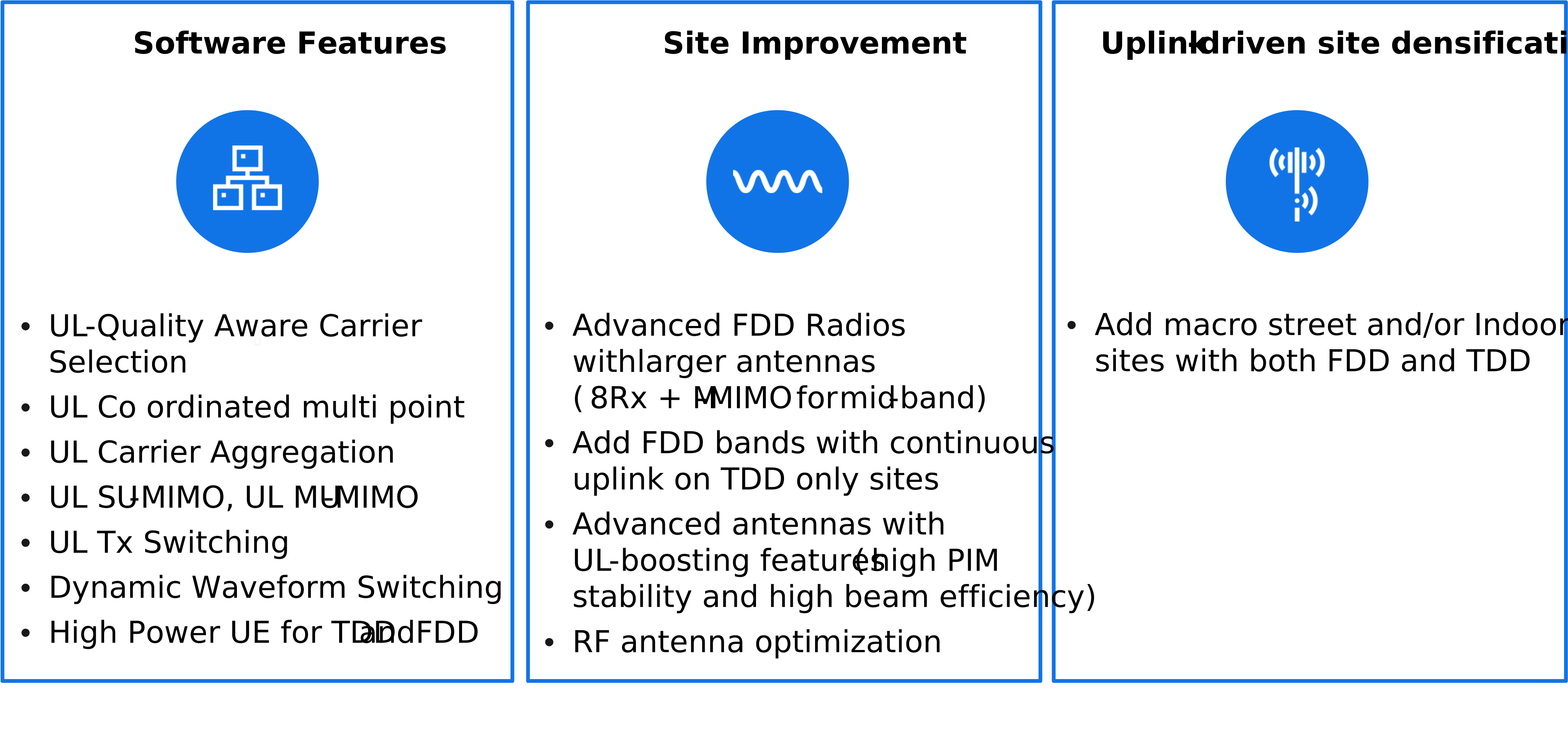
Figure 2. Uplink capacity and coverage enhancement solutions.
Spectrum allocation: a vital resource for AI evolution
As additional spectrum is allocated, network features will consider how to best take full leverage of each band’s characteristics for the optimal balance of UL and downlink scheduling, accounting for propagation, antenna design, and use case requirements such as battery efficiency, low latency, etc.
Spectrum allocation is critical to enable AI functionalities akin to energy needs for data centers. Followings are the key spectrum considerations:
- The right mid-/centimeter-band spectrum: Licensed full-power mid- and centimeter-band spectrum is essential to support AI-driven traffic and for future connectivity demands. 5G spectrum advancements, along with emerging 6G developments in 7 to 12 GHz range, will significantly shape AI network functionality.
- More spectrum: Up to 1GHz mid-/centimeter-band spectrum per operator will be required for emerging use cases mentioned above to support the right economic growth.
- Right regulation: The framework should allow flexible use of spectrum per band in terms of net neutrality and usage per generation (G) to get best economic returns.
Differentiated connectivity: solutions and approaches
AI applications depend on network information to function effectively, but networks further enhance their value by dynamically adjusting the communication services to meet application-specific needs—referred to as differentiated connectivity. This capability is particularly valuable for real-time, multimodal communication, such as video feeds from smart glasses to AI engines, where optimized network performance is critical. By leveraging differentiated connectivity, AI applications can dynamically adjust network configurations, ensuring an optimal balance between user experience and network efficiency.
Differentiated connectivity brings together key 5G SA capabilities—including advanced radio scheduling, resource partitioning, network slicing, URSP, Network initiated QoS and core APIs—to deliver tailored, end-to-end performance across devices, applications, and the network.
High-performance programmable networks combine capabilities such as advanced massive multiple-input multiple-output (MIMO), beamforming, and intent-driven, service-aware automation. These capabilities allow communication service providers (CSPs) provision and manage performance dynamically, delivering assured throughput, bounded latency, and high reliability tailored to AI applications. This creates opportunities for differentiated connectivity offerings, and enables AI applications to direct critical traffic to the appropriate performance level for enhanced user experience and efficient network utilization.
Network exposure APIs
Network APIs provide access to capabilities such as differentiated connectivity, positioning, security and authentication, and network insights, effectively transforming the network into a platform for innovation. By leveraging these APIs, AI applications can build network-augmented services with improved responsive service and make better decisions and recommendations with the additional information provided by the networks.
AI workloads can use informational APIs such as position, connectivity status, transactional APIs such as slice reservation, UL scheduling request or messaging, or chain multiple APIs together. This can address the needs of the application by integrating them directly into the workload logic.
Differentiated connectivity APIs – such as the “Dedicated NW on demand” and “Quality on Demand” APIs – are also transactional. These APIs support a wide range of AI and non-AI applications and can enable communication quality even in high load conditions and SLAs for specific connectivity needs such as speed and latency.
Today, network APIs can be accessed directly in their traditional form, or through agent-friendly mechanisms such as agent-tool interfaces implemented using interfaces such as Model-Context Protocol (MCP) or Agent-to-Agent Protocol (A2A). Application programmers value AI-based assistance in finding the right APIs, and its information about developer ecosystems and tools matter in addition to the actual interfaces.
Over time, such support for agent-friendly interfaces can evolve to telco grade agentic AI platforms, built on top of the existing networks to integrate network data sources and exposure APIs, in addition to AI services and interfaces to network automation. This platform would enable building collaborative applications that benefit both the application and network owners.
We expect AI applications, regardless of where they are, to be aware of information sources and connectivity they need and be capable of using APIs to meet these needs. These applications have consistent latency and quality requirements and want to operate on the most accurate and latest information. For operators and cloud providers, this opens new business models to serve AI applications such as tiers of connectivity or premium UL services.
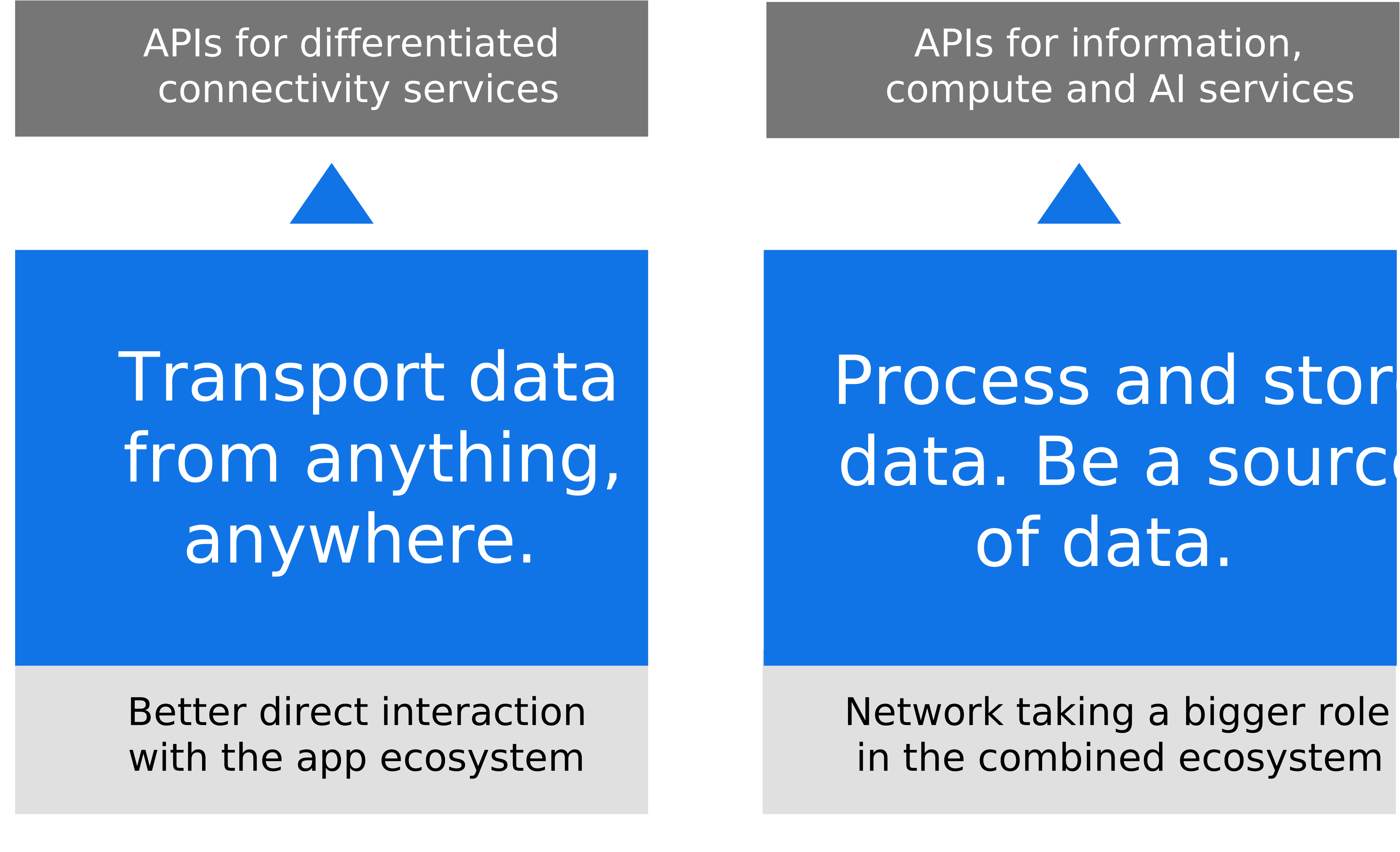
Figure 3. Network Exposure APIs
Network as a data source: using network data and insights as context or service for various applications
CSPs can expose network-related data, such as mobility trends, connectivity status information or congestion, by exposing them through APIs for use in inference, or even fine-tuning and optimizing AI models.
CSPs can also expose real-world information such as device positioning information, trajectory data, the number of users in an area, or radio-based sensing information. Radio-based sensing such as Integrated Sensing and Communication (ISAC) is an emerging mechanism in 6G where the network can determine the characteristics of the environment or observe objects within it. More information about sensing can be found in [7].
Additionally, CSPs can support exposing enterprise sensor data in real time for enterprise customers.
Network capability expansion: Identity and positioning
Outdoor positioning of connected devices unlocks new monetization opportunities in consumer, enterprise, automotive, airspace, and robotics segments based on physical location of connected 5G devices. It complements global positioning system (GPS) by offering a more reliable, robust, and cost-efficient 5G technology for mission critical applications.
The solution is based on device-agnostic software for any 5G device to lower the entry barrier and increase addressable market. Position accuracy with 5G cellular advanced feature set (in line-of-sight) is suitable for consumer-based use cases. In addition, higher position accuracy can be achieved using real-time kinematic (RTK) broadcast advanced feature set, using enhanced GPS-assisted precision [8]. With high-precision and network-verified location data, AI applications get better context, improved decision-making, and safer, more accurate real-time operation.
Industry digital twins: collaboration with network digital twin
Today, the industries are embracing digitalization and the digital twin concept to accelerate product design and development, production, and assembly engineering automation in the virtual world. Through AI accelerated predictions and simulations in industrial metaverse, several multi-site industry use cases are managed via XR simulations. Industrial digital twins and network digital twins collaborate to create a comprehensive digital replica of a physical system, merging industrial processes with their supporting communication network and compute infrastructure. This collaboration enables optimized performance, predictive maintenance, and counterfactual analysis for simulations, considering both industry scenarios and the communication network which is required for same.
This integration is more than optimizing a single entity but rather optimizing the end-to-end system, including the adaptability between industrial IoT, physical assets, environmental dependencies, and the network that connects them [9].
Conclusions and call for action
AI usage is scaling rapidly, becoming richer in media and more UL heavy, and shifting closer to the user across devices and cloud edges. This white paper has shown how the convergence of AI, cloud, and mobile technology is transforming from best effort broadband pipes into programmable AI platforms.
These future networks must deliver an enhanced UL, differentiated connectivity, rich network exposure, among others, to underpin the scale of consumer and enterprise AI applications. To realize this vision and capture the emerging AI economy, we need to act on these priorities:
- Prioritize UL centric network evolution: Fast track 5G SA and 5G Advanced deployments with a focus on UL coverage and capacity. Redesign planning, optimization, as well as networking KPIs to treat UL performance as a primary benchmark that is the new currency.
- Operationalize differentiated connectivity as a product: Implement slicing, URSP, QoD, and advanced scheduling to offer session level SLAs for AI workloads. Create commercial offers for premium UL and differentiated connectivity targeting key segments: GenAI apps, XR/AI glasses, AVs, drones/droids, and AI enabled industrial IoT.
- Expose the network as a data and capability platform: Deploy and standardize network exposure APIs that make positioning, authentication, sensing, and network insights easily consumable by AI agents and application developers. Build privacy preserving data products that allow CSPs to contribute value far beyond raw connectivity.
- Mobile network evolution: As illustrated in Figure 4, mobile networks evolve from differentiated broadband toward an open platform that exposes advanced capabilities and ultimately enables applications to run on the network through distributed compute and AI services, that is to transform the network from a bare connectivity provider to a strategic ecosystem partner.
- Adopt AI native operations: As illustrated in Figure 5, introduce AI driven automation to continuously optimize for dynamic AI traffic patterns and service levels. Through programmable and cloud native network functions, align network evolution to enable network for AI experiences. By taking these actions, mobile operators can move through the multi step transition outlined in this paper: from enhanced connectivity to a programmable AI ready platform, and ultimately to AI native networks.
Those who lead this evolution will not only sustain network performance under the coming AI traffic surge but also secure a strategic role in the global AI economy.
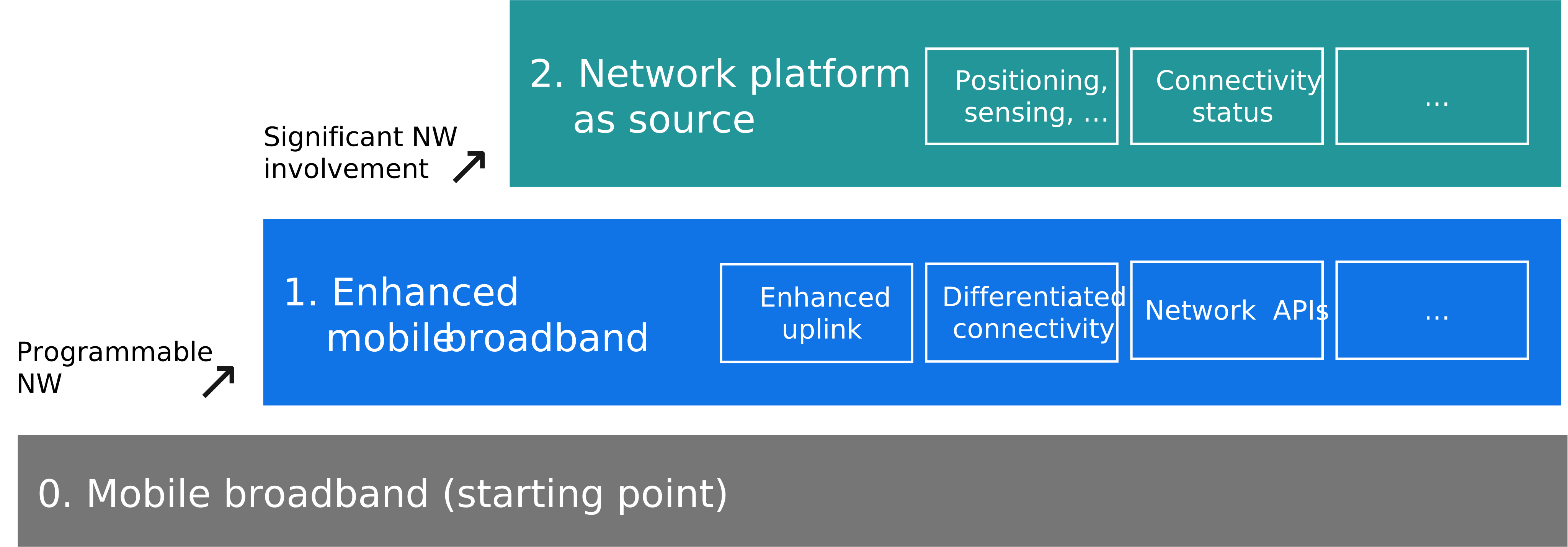
Figure 4. The multi-step transition networks will have to undergo to underpin a growing AI economy.
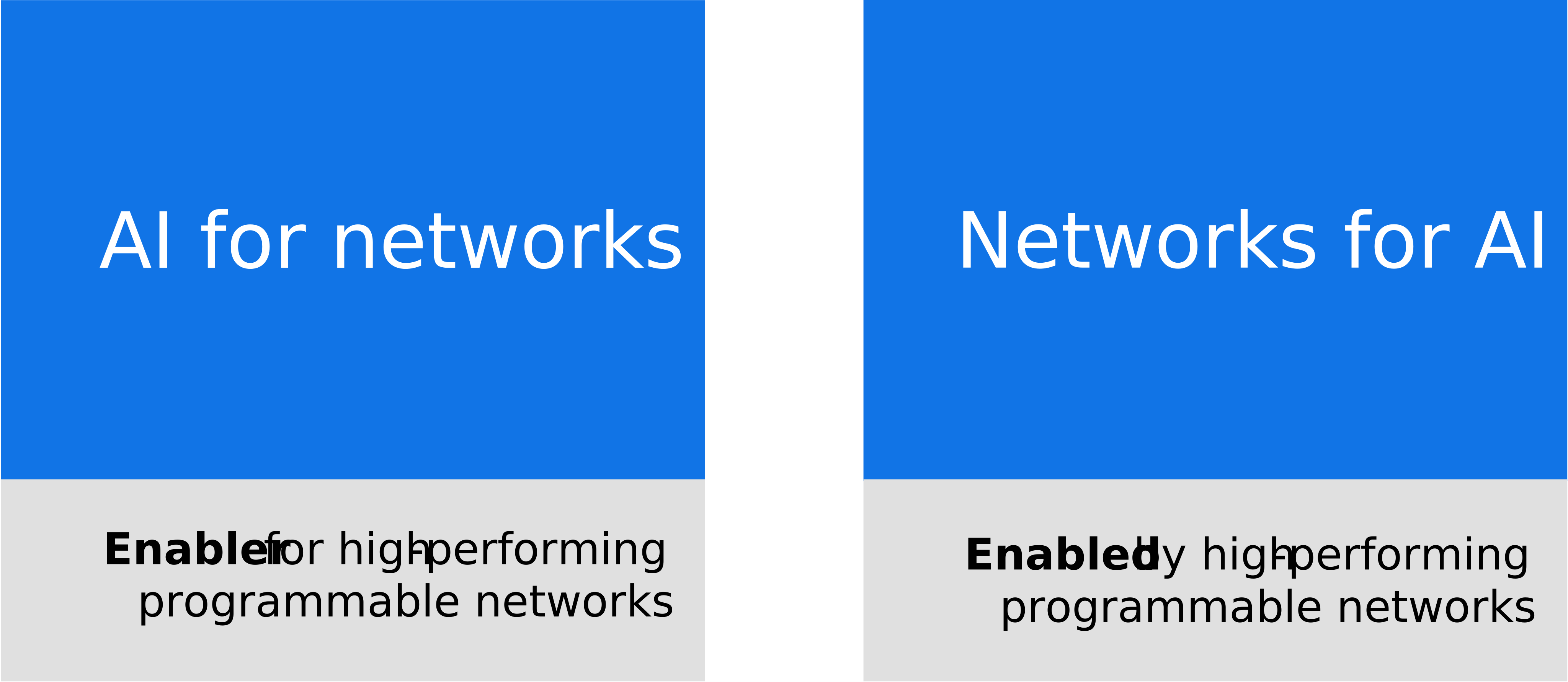
Figure 5. The pillars of supporting AI in telecoms, where an AI-native network supports the emerging AI applications.
Authors

Elena Fersman
Elena Fersman is a Vice President, Head of AI Innovation and Incubation and Head of Ericsson Silicon Valley Site. Elena is a docent and an adjunct professor in Cyber-Physical Systems specialized in Automation at the Royal Institute of Technology in Stockholm, holds a PhD in Computer Science from Uppsala University, and did a postdoc at the University Paris-Saclay. At Ericsson, she had various positions ranging from product management to research leadership. Elena is a member of the Royal Swedish Academy of Engineering Sciences. Elena has co-authored over 50 patent families and several books on technology and leadership.

Jari Arkko
Jari Arkko is a senior expert at Ericsson Research who joined the company in 1991. During his career, he has worked on internet technology, mobile networks including 6G, artificial intelligence, security protocols and software development tools. Arkko holds a Lic.Tech. in computer science from Helsinki University of Technology in Finland.

Mischa Dohler
Mischa Dohler is now VP Emerging Technologies at Ericsson Inc. in Silicon Valley, working on cutting-edge topics of 5G/6G, AR and Generative AI. He serves on the Spectrum Advisory Board of Ofcom and on the AI/ML Technical Advisory Committee of the FCC. He is a Fellow of the IEEE, the Royal Academy of Engineering, the Royal Society of Arts (RSA), the Institution of Engineering and Technology (IET); the AP Artificial Intelligence Association (AAIA); and a Distinguished Member of Harvard Square Leaders Excellence. He is a serial entrepreneur with 5 companies; composer & pianist with 5 albums on Spotify/iTunes; and fluent in several languages. He has had ample coverage by national and international press and media, and is featured on Amazon Prime.

Niti Bhatt
Niti Bhatt is a solutions director under Ericsson Americas Strategy & Technology division. Niti has an impressive career of 22 years in the technology and communications industry. Niti earned a post graduate degree in Computer Science from UT Dallas and joined Ericsson in 2004. Starting her career journey in software design and development, Niti continued to progress in her career becoming a technical lead, senior architect, product manager, solution manager and now serving as a director for key emerging technologies such as AI, cloud, and 6G. During her tenure at Ericsson, Niti has worked on many complex Tier1 customer engagements delivering OSS/BSS, cloud, 5G core, and orchestration solutions in a multi cloud environment. In her previous work as a Hyperscale cloud CTO, Niti drove the strategic & technology partnership with AWS globally at Ericsson. In her current position, Niti continues to drive technology innovation working closely with the business areas, product units, as well as customer account teams. In addition, Niti contributes to several thought leadership contents for both internal and external industry forums in the field of AI and Autonomous Networks, with recently authoring a whitepaper on Intent Driven Autonomous Networks for 5G Americas.
In her time outside of work, Niti enjoys traveling with her husband and two kids.

Paul Chan Tse
Paul Chan Tse is recognized within his career in telecom at Ericsson for his multi-disciplinary leadership and adaptability on projects ranging from technical solution development in 4G and 5G, to business processes in acquisitions and partnerships. Extensive Wireless Telecom career experience with roles from Systems Design through to Cellular Network Field Deployments in USA and Latin America, Proof of Concepts (including mmWave for FWA), and extensive customer and end-user engagements in 3G, 4G, and 5G. In this journey, Paul has been granted 5 patents in the field. Paul has been a Product Manager across several product lines from radio basestations to customer premises equipment, collaborating with Tier 1 operators and their 3rd party ecosystem partners in North America for product definition, development, and commercialization of wireless solutions. Paul has recently specialized in developing use-cases for new cellular capabilities (e.g. eMBMS, mmWave, ISAC) with operators and key customers.

Peter Linder
Peter Linder is Head of Thought Leadership for Ericsson in the Americas. In this role, he drives region-specific thought leadership initiatives, contributes to major global Ericsson initiatives, and develops the thought leadership profession. He is a versatile speaker, fluent in English, Spanish, and Swedish, and skilled in both theatrical and cinematic deliveries. He joined Ericsson in 1991 after graduating from Chalmers University of Technology in Gothenburg, Sweden, with two Masters’ degrees, in electrical engineering and in International Business Management. Outside work, he is a passionate motor racing fan, a world traveler, and enjoys skiing and golfing.

Abid Salem
Abid Salem is a seasoned technology leader with 27+ years of experience in the Telecom and ICT industry, spanning R&D, customer delivery, business development, and program management. He currently works in AI Program management in Ericsson’s Group Functions Technology Leadership organisation, focusing on autonomous networks and Network Digital Twin research. Over the course of his career, Abid has held diverse leadership roles at Ericsson (since 2015) and Alcatel-Lucent, designing and delivering innovative solutions
across Cloud Native Telco framework and Infra analytics, Next Generation fixed and wireless networks, Multiscreen IPTV, and Content Delivery Networks. He has a proven track record of steering complex technology initiatives from concept to deployment, bridging cutting-edge research with commercial applications. He holds a B. Tech in Electronics and Communication Engineering and a Post-Graduate Diploma in Artificial Intelligence from IIIT-Bangalore.

Ursula Challita
Ursula Challita is an AI Strategy Manager in Ericsson’s Group Function Technology Leadership organization. She joined Ericsson in 2018 as a researcher focused on AI for RAN optimization and has since held several roles including AI technical lead for CloudRAN and AI strategic driver across multiple portfolio offerings. She holds a PhD from The University of Edinburgh, UK, where her research focused on applying AI to radio resource management optimization in wireless networks.