Skip navigation
""

Purdue University Airport and Ericsson

Pattern Labs and private 5G power autonomous tugs at Purdue University Airport

Purdue University Airport and Ericsson private 5G

See how Pattern Labs' Pathfinder autonomous vehicles — powered by Ericsson private 5G — are transforming airport ground handling at Purdue University Airport, keeping workers safer while making every movement smarter.

Case

Ground handling hasn't changed in decades. That changes now.

Airport ground operations are among the most complex and physically demanding environments in aviation. Ramp workers navigate active movement zones in extreme weather, under relentless time pressure, coordinating across dozens of vehicles, flights, and stakeholders — all at once.

Pattern Labs, along with Purdue University Airport and Ericsson are changing what that work looks like. Not by removing people from the equation, but by giving workers better tools, safer environments, and smarter support — so human judgment can go where it matters most.

Pathfinder in action at Purdue University Airport

Video: Watch Pattern Labs' Pathfinder autonomous vehicles operating live at Purdue University Airport — the world's first autonomous baggage handling system serving plane-side commercial flights. Powered by Ericsson's private 5G network, this is real-world ground handling transformation in action.

Want to explore what this could look like at your airport? 

Talk to our team

Challenges

The cost of how ground handling works today

Today's airport ground operations carry well-documented inefficiencies and risks — and the people on the ramp bear the brunt of them.

Worker exposure in high-risk environments

Ramp personnel routinely operate in active movement areas around aircraft, service vehicles, and heavy equipment while working through heat, rain, cold, wind, and reduced visibility. These conditions increase fatigue, slow response times, and elevate operational risk.

Ramp personnel routinely operate in active movement areas around aircraft, service vehicles, and heavy equipment while working through heat, rain, cold, wind, and reduced visibility. These conditions increase fatigue, slow response times, and elevate operational risk.

Manual coordination limits operational agility

Most ground handling operations still rely heavily on radio communication, fixed routing patterns, and manual dispatching. These processes become increasingly difficult to manage when gates change, flights are delayed, or irregular operations disrupt schedules.

Without real-time orchestration, vehicle movement, routing, and resource allocation can become inefficient and difficult to adapt dynamically.

Connectivity gaps disrupt critical coordination

Large airport environments create persistent communication challenges. Underground tunnels, terminals, service roads, and heavily trafficked ramp areas can produce connectivity dead zones that interrupt coordination between personnel, vehicles, and operational systems.

These gaps become especially problematic for systems that depend on continuous situational awareness and real-time decision-making.

Infrastructure built for a different era

Modern airports are expected to move more passengers, baggage, and aircraft faster than ever before — but many ground handling systems were not designed for today’s operational demands.

The result is increasing pressure on workers, tighter operational margins, and growing complexity across every part of the ramp environment.

The solution

A smarter system built around the people who run it

Pattern Labs' solution starts with Pulse, an AI-powered orchestration platform that routes both autonomous vehicles and human operators — optimizing every movement in real time while giving workers the information and control they need to make great decisions.

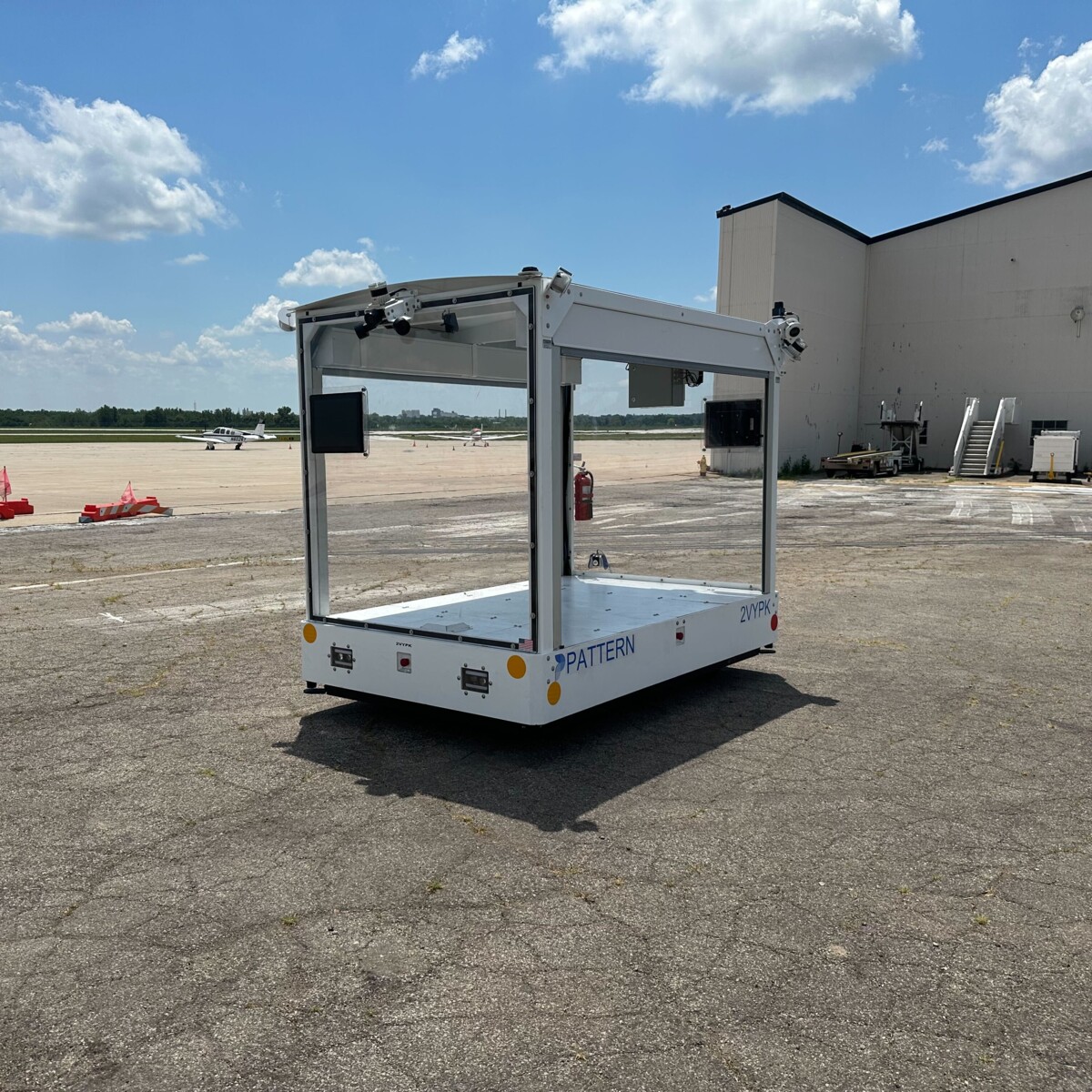
At the heart of the operation: Pathfinder autonomous vehicles.

What makes Pathfinder different

A new vehicle architecture

Unlike systems that automate tugs pulling traditional cart trains, Pathfinder combines the tug and cart into a single unit. Individual vehicles move directly to their destinations — no waiting for full trains to form, no bottlenecks, continuous flow.

Full 360-degree situational awareness

Integrated LiDAR, radar, and cameras give every Pathfinder complete awareness of its surroundings — detecting personnel, vehicles, and obstacles in real time.

Three modes, always under human control

  • Autonomous mode — Pathfinder completes missions generated by Pulse without intervention, handling routine movements reliably and consistently
  • Teleoperation mode — Remote operators take control for precision docking, unexpected situations, or any scenario requiring human judgment — from a safe, climate-controlled environment
  • Local control — Physical manual override is always available for maintenance, precise adjustments, or emergency scenarios

One remote operator can monitor up to 100 vehicles simultaneously — stepping in exactly when and where human judgment is needed.

Technology built to empower workers

This isn't automation for automation's sake. The Pathfinder model is designed on a simple principle: technology handles the repetitive tasks so people can focus on higher value work. 

Safer operations keep workers out of harm's way

Teleoperation allows personnel to supervise and control vehicles from safe, climate-controlled environments—reducing exposure to extreme weather, night operations, and high-traffic periods.

Human expertise stays in the loop

Operators supervise fleets, manage exceptions, and make critical decisions where human judgment matters most. Complex decisions, quality assurance, and operational oversight remain firmly in human hands.

A workforce model built for the future

Remote operation roles suit modern workers comfortable with technology interfaces — and expand the hiring pool beyond the airport's immediate geographic area, opening opportunities for a broader, more diverse workforce.

Skills development, not skills elimination

Rather than eliminating roles, this approach creates pathways for workers to grow into technology-forward roles, building competencies in robotics supervision, systems coordination, and operational oversight.

Pattern Labs baggage claim


"Technology handles routine movements and optimization, while humans manage exceptions and ensure service quality."

The network that makes it all possible

Pathfinder's three-mode operation — and the safety of remote teleoperation — depends on one critical foundation: reliable, low-latency connectivity everywhere on the airport campus.

Ericsson's private 5G network delivers this foundation.

Why private 5G, not public networks

Dedicated spectrum means guaranteed performance. Pathfinder operators rely on real-time multi-angle video, 3D mapping, and point cloud data to supervise vehicles safely. Any degradation in connectivity forces vehicles to slow or stop — and compromises the safety of remote operations. Private 5G eliminates that risk.

Coverage where airports need It most

From apron to gates to underground tunnel systems — the connectivity dead zones that cripple traditional coordination — Ericsson's private 5G delivers consistent coverage across the entire airport campus.

Built for mission-critical performance

  • Predictable, low latency for real-time teleoperation
  • Strong uplink capacity for multi-angle video and sensor data streams
  • Traffic prioritization and quality of service for safety-critical tasks
  • Seamless handoffs across wide-area airport environments

A platform for what comes next

The same 5G infrastructure that supports autonomous baggage handling today becomes the foundation for IoT sensors, smart infrastructure, unified communications, digital load control, and expanded ramp orchestration tomorrow.

From concept to live operations at Purdue University Airport

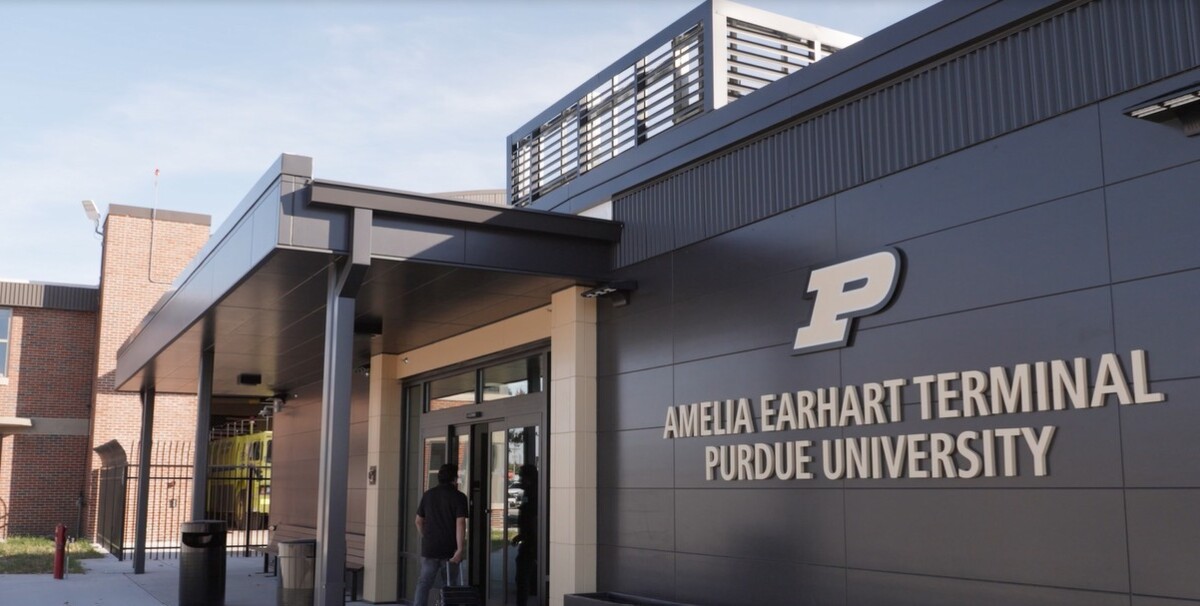
Purdue airport university entrance

The Pattern Labs and Ericsson deployment at Purdue University Airport isn't a controlled lab experiment. It's live operations of 5G-connected autonomous and tele-operated baggage tugs serving commercial flights plane-side.

Purdue's Lab to Life initiative provides the ideal proving ground: real flights, real baggage, real operational complexity — at a scale that allows careful validation before expanding to larger facilities.

What's already happening:

  • Pathfinder vehicles handling live baggage operations for commercial flights
  • FAA regulatory approval and operational validation
  • Pulse platform optimizing both autonomous and teleoperated vehicle routing in real time
  • Private 5G enabling remote teleoperation and continuous data collection for route and performance optimization

What's coming:

  • Expansion to early bag storage and ULD container handling
  • Integration with pushback vehicles and jet bridges
  • Comprehensive ramp orchestration across cargo, catering, waste, and aircraft servicing

Built for resilient, connected ground operations

Modern airport operations require resilience, safety, and scale. Together, Ericsson and Pattern Labs combine private 5G and teleoperation to enable more connected ground operations.

  • Resilient operations and worker safety by design Remote teleoperation moves personnel out of active ramp zones — maintaining uninterrupted operations and human control from safe environments
  • Up to 100 Vehicles, One Operator Teleoperation centers let skilled workers supervise at scale — intervening precisely when human judgment is needed
  • Private 5G Across the Entire Campus Consistent, low-latency coverage from across airport terminals, from check-in to gates — no dead zones, no compromised safety

About

About Pattern Labs

Pattern Labs is an automation software company with deep robotics expertise, building autonomous systems purpose-built for the demands of real airport operations. The Pathfinder platform and Pulse orchestration system are designed for aviation's uniquely dynamic environments — where weather, construction, flight changes, and constant vehicle-aircraft-personnel interaction make automation far more challenging than a warehouse floor.

Pattern Labs' mission: augment the capabilities of airport workers, improve their safety and working conditions, and build ground operations that are ready for the demands of modern aviation.

About Ericsson and Private 5G

Ericsson enables enterprises and communications service providers to capture the full value of connectivity through its portfolio spanning Networks, Cloud Software and Services, Enterprise Wireless Solutions, and more. Ericsson’s Private 5G solutions give airports the secure, reliable, high-performance connectivity needed to support mission-critical operations, automation, and safety across the entire airport campus.

Ready to modernize airport operations?

This is already working. At a real airport. On real flights.

The future of ground handling isn't a roadmap item — it's operating today at Purdue University Airport. Workers are safer. Operations are smarter. And the technology is ready to scale.

Watch the showcase video and see what human-technology collaboration looks like when it's built right.

View the showcase video
Connect with us

Curious how connected operations could work in your environment? Let’s start the conversation.
→ Request a Pathfinder Demo or talk to an Ericsson Aviation team member.

Connect with us