




Skip navigation
""

5G with differentiated connectivity in Australia

What do Australian 5G users expect from their networks?

Guaranteed performance for essential apps. Faster data speeds underground. Great coverage, regardless of the location. From the Melbourne Cricket Ground to the Sydney Metro, Ericsson ConsumerLab research reveals that Australian 5G users demand more from their networks. But how much might they pay for differentiated connectivity?

Report

5G differentiated connectivity

Between June and July 2024, Ericsson ConsumerLab surveyed over 1,500 Australian smartphone users, including more than 1,100 active 5G users, to gather insights around network performance satisfaction, emerging consumer expectations driven by application behaviour, and the revenue potential of differentiated connectivity for communications service providers.

Whether video calling mates while descending the escalators to the Metro’s underground platforms, trying to book an Uber after a sold-out gig at Optus Stadium, or catching up on some work from a café at Chadstone Shopping Centre, experiencing unreliable connections is a major source of frustration for many Aussies. As consumers become less happy with best-effort 5G, especially in high-traffic locations, interest rises for differentiated connectivity that guarantees consistency, responsiveness and service assurance.

Concert audience recording with phones

Key findings

Over one-third of 5G users in Australia now believe best-effort 5G isn’t sufficient for their needs

Despite 5G network performance satisfaction rising in Australia, many users still face connectivity problems in high-traffic locations, with 35 percent no longer willing to accept best-effort 5G.

Find out more

Almost one-third of Australian 5G users are willing to pay more for differentiated connectivity

Among 5G users in Australia, 32 percent are open to paying more for differentiated connectivity that guarantees better performance for essential tasks.

Find out more

In Australia, 15 percent of 5G users would pay up to 35 percent more for performance assurance on newer latency-sensitive apps than on established apps

As latency-sensitive app types like generative AI (GenAI), cloud gaming and augmented reality (AR) skyrocket in popularity, 15 percent of Australian 5G users would pay significantly more for guaranteed performance on these apps compared to established app categories.

Find out more

Australian service providers could increase ARPU for 5G consumers by up to 12 percent with differentiated connectivity

By moving from standard 5G services to differentiated connectivity through a five-stage process, service providers in Australia have the potential to increase average revenue per user (ARPU) by 6-12 percent.

Find out more

Key figures

Take a closer look at key figures from Ericsson ConsumerLab research to discover more about the potential of 5G differentiated connectivity in Australia.

19.00 %
Despite being satisfied with the performance of their network, almost one-fifth of Australian 5G users, known as “Assurance Seekers”, would still prefer to pay for elevated connectivity.
36.00 %
Over one-third of 5G users in Australia experience limited network coverage in indoor locations.
20.00 %
Among 5G users in Australia, one-fifth are looking for alternative payment models for differentiated connectivity.

Methodology

The ConsumerLab study aims to understand the current demand for performance assurance among Australian 5G users and highlights opportunities for service providers to increase 5G revenue growth by delivering consistent, high-performing network experiences through differentiated connectivity.

Between June and July 2024, Ericsson ConsumerLab surveyed more than 1,500 smartphone users aged 15–69 across Australia, including over 1,100 active 5G users. The research focused on three primary areas: user satisfaction with 5G network performance, emerging expectations driven by application behavior and consumer willingness to pay for differentiated connectivity.

The survey findings are representative of more than 13 million smartphone users in Australia, including over 9 million 5G users.


Female customer making mobile payment at shopping mall

Have you downloaded your report?

Read the full global report to explore what consumers around the world expect from their networks when it comes to differentiated connectivity and discover the unique opportunities for service providers.

Get my copy

Over one-third of 5G users in Australia now believe best-effort 5G isn’t sufficient for their needs

Ericsson ConsumerLab research reveals that the share of 5G users in Australia who are highly satisfied with network performance continues to grow, rising from 28 percent in 2022 to 39 percent in 2024. However, despite this increase, 5G users are still encountering network issues.

From underground public transportation hubs like Melbourne’s City Loop and shopping centers like Pacific Fair on the Gold Coast, to iconic event venues like the Forum and Sydney Opera House, 4 in 10 users still experience occasional or frequent connectivity issues in high-traffic locations. In fact, due to these challenges, 35 percent are no longer willing to accept best-effort 5G performance and demand more consistent, personalized network experiences.

For Australian service providers looking to unlock further 5G revenue growth, this presents an exciting opportunity. By enhancing 5G infrastructure to guarantee excellent coverage and sufficient capacity, service providers can deliver the network experiences that customers now expect. By ensuring positive experiences, service providers will also be able to boost customer loyalty and improve their net promoter scores (NPS).

Australian 5G users who experience network issues across different locations
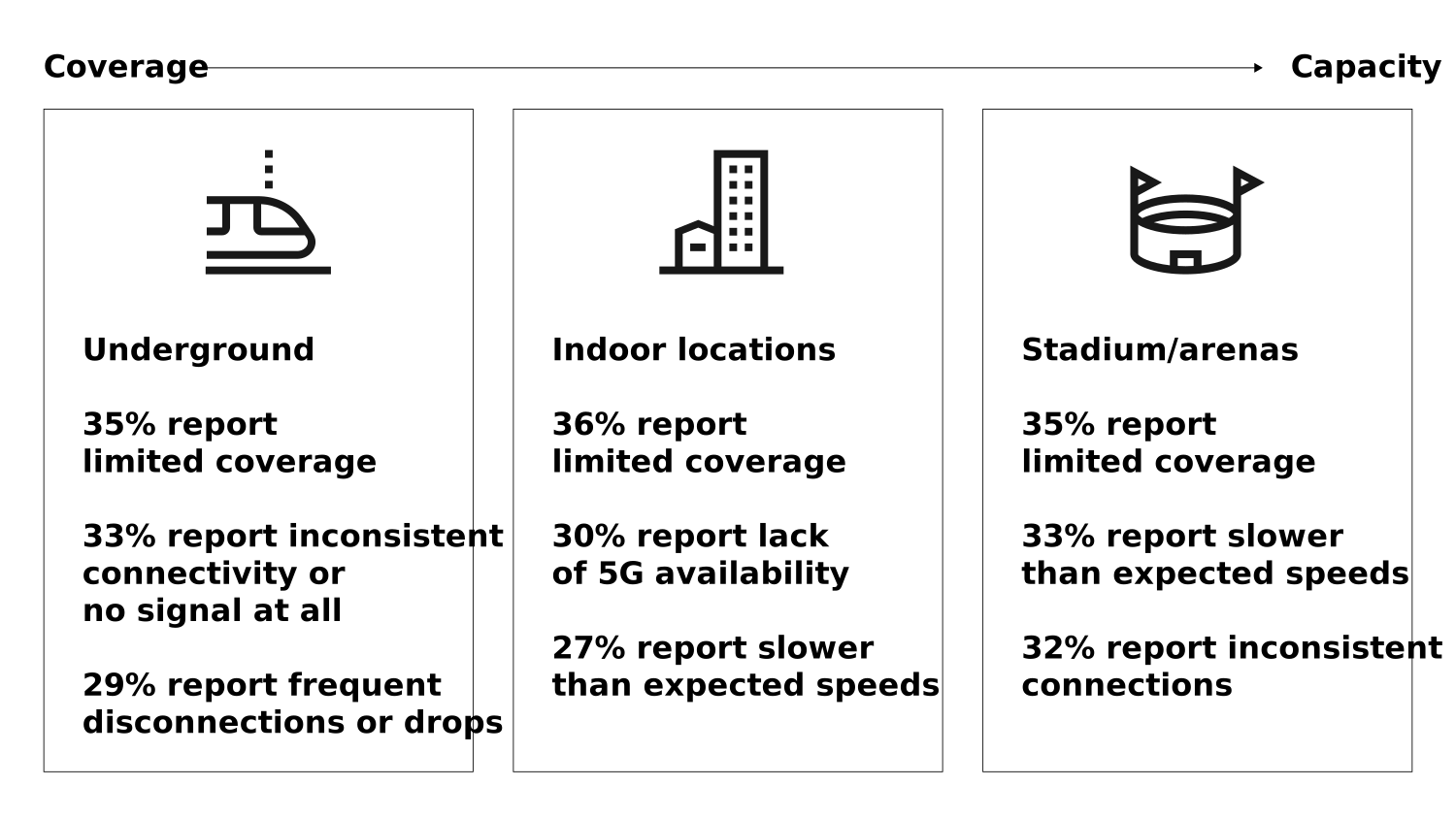

Base: 5G users in Australia, aged 15-69, who face connectivity issues at respective locations. Source: Ericsson ConsumerLab, Elevating connectivity with differentiated connectivity, 2024

Almost one-third of Australian 5G users are willing to pay more for differentiated connectivity

From Perth on the west coast to Brisbane in the east, 5G users in Australia are ready for differentiated connectivity. According to Ericsson ConsumerLab research, 32 percent would be open to paying a premium for differentiated connectivity that guarantees a reliable, seamless network experience, especially for essential tasks such as streaming the latest releases on Netflix and Stan, and using secure banking and payment apps like Apple Pay and Google Pay.
Notably, “Assurance Seekers”, which make up 19 percent of all Aussie 5G users, are already actively seeking and willing to pay for elevated connectivity for essential applications. This offers a direct path for Australian service providers to generate new revenue streams immediately.

To seize this market shift and fully capture the revenue growth potential of 5G differentiated connectivity, service providers must develop actionable segmentation strategies that identify and target high-value  consumer groups, such as the “Assurance Seekers.”

The graph shows the willingness of Australian 5G users to pay for differentiated connectivity compared to 5G users worldwide.

5G users worldwide who are interested in paying for differentiated connectivity
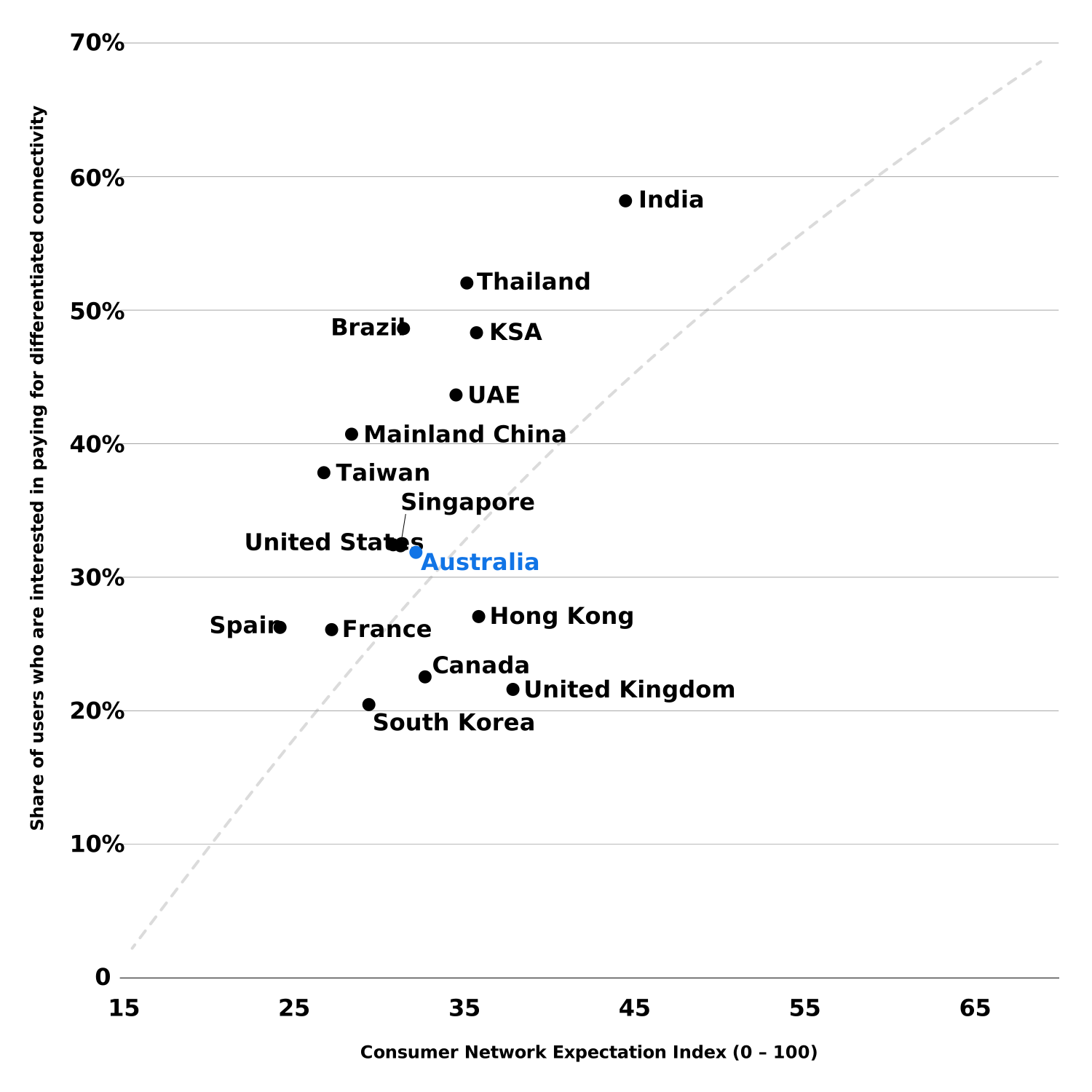

Base: 5G users. Source: Ericsson ConsumerLab, Elevating connectivity with differentiated connectivity, 2024

In Australia, 15 percent of 5G users would pay up to 35 percent more for performance assurance on  newer latency-sensitive apps than on established apps 

Ericsson ConsumerLab research shows that a significant segment of Australian 5G users are willing to pay more for differentiated connectivity that guarantees performance assurance for critical apps like banking and payment services, real-time communication and video streaming. Beyond established app categories such as these, 15 percent of 5G users would pay up to 35 percent more for performance assurance on latency-sensitive app types like GenAI, cloud gaming and AR.

With 62 percent of Australian 5G users forecast to use GenAI weekly in the next five years, the number of Aussies who will need a superior network connection that outperforms best-effort 5G is likely to rise significantly. By enhancing 5G infrastructure, Australian service providers can prepare for major shifts in network traffic and support the growing demand for differentiated connectivity.

The graph illustrates the interest among Australian 5G users for differentiated connectivity and the premiums they would be willing to pay for performance assurance across established and latency-sensitive applications.

5G user interest vs. premiums 5G users would pay for differentiated connectivity in Australia across app types
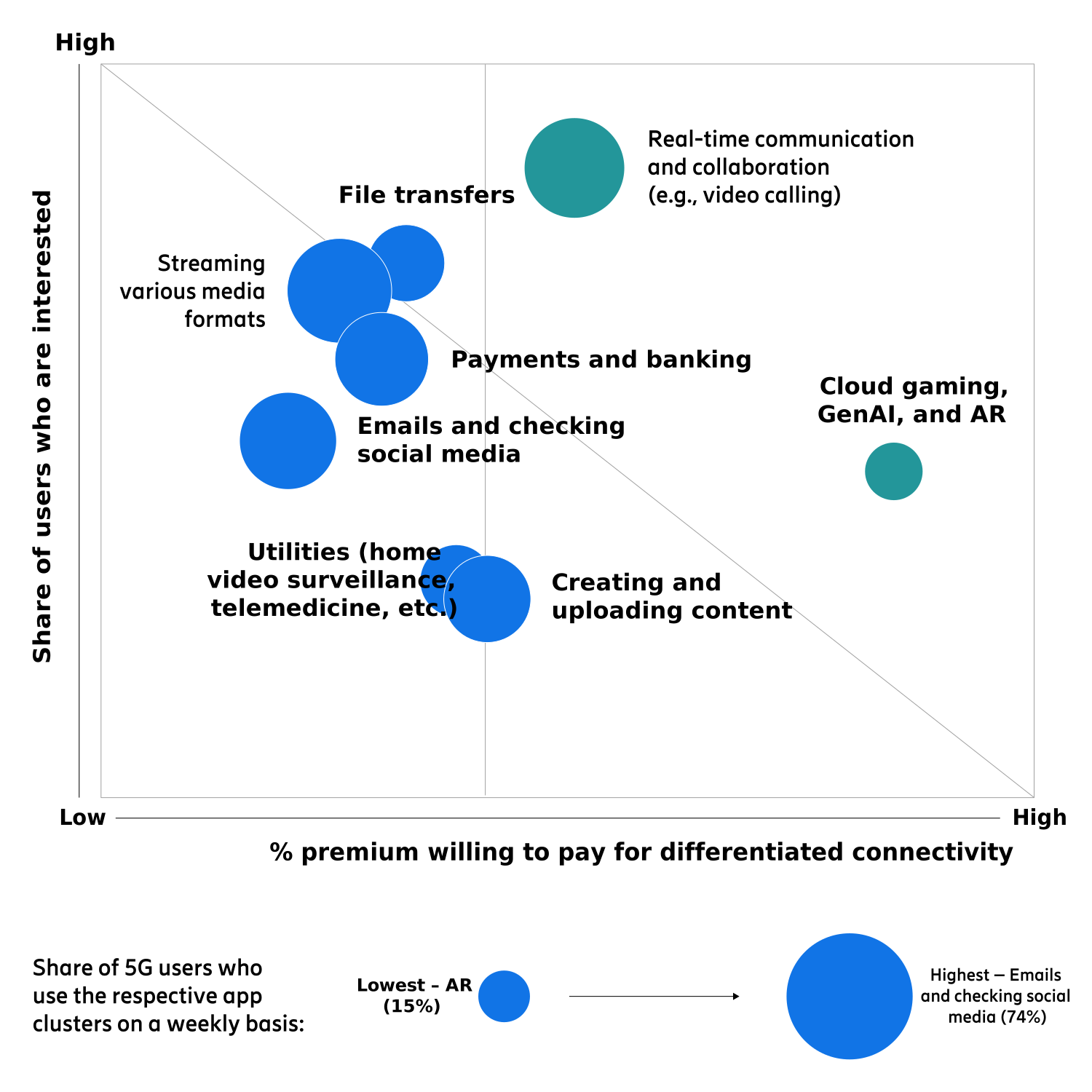

Base: 5G users in Australia who are interested in paying for differentiated connectivity. Source: Ericsson ConsumerLab, Elevating connectivity with differentiated connectivity, 2024

Australian service providers could increase the ARPU for 5G consumers by up to 12 percent with differentiated connectivity

Ericsson ConsumerLab research shows that Australian service providers could boost ARPU by 6–12 percent by targeting users who value network reliability and guaranteed service over best-effort 5G. To capture 5G’s full revenue potential, service providers will need to transition from standard services to differentiated connectivity through five non-sequential stages.

In Stage 3, service providers who move to 5G standalone (SA) networks and offer performance-based services – such as quality of service (QoS) passes, commuter network boost offerings and guaranteed-speed tier FWA using network slicing – could see ARPU increases of up to 4 percent. While in Stage 4, ARPU could jump by as much as 12 percent by leveraging evolving 5G SA networks to offer tailored QoS packages to high-demand segments like gamers and live streamers.
To sustain ARPU growth, service providers will eventually need to shift to a platform-based business model by exposing network APIs to app developers. This will create a marketplace for QoS apps with premium features that require guaranteed network performance.

The graph outlines these five stages of 5G revenue growth and shows the ARPU increases that are possible for Australian service providers who transition to new business models.

The five stages of 5G revenue growth for Australian service providers
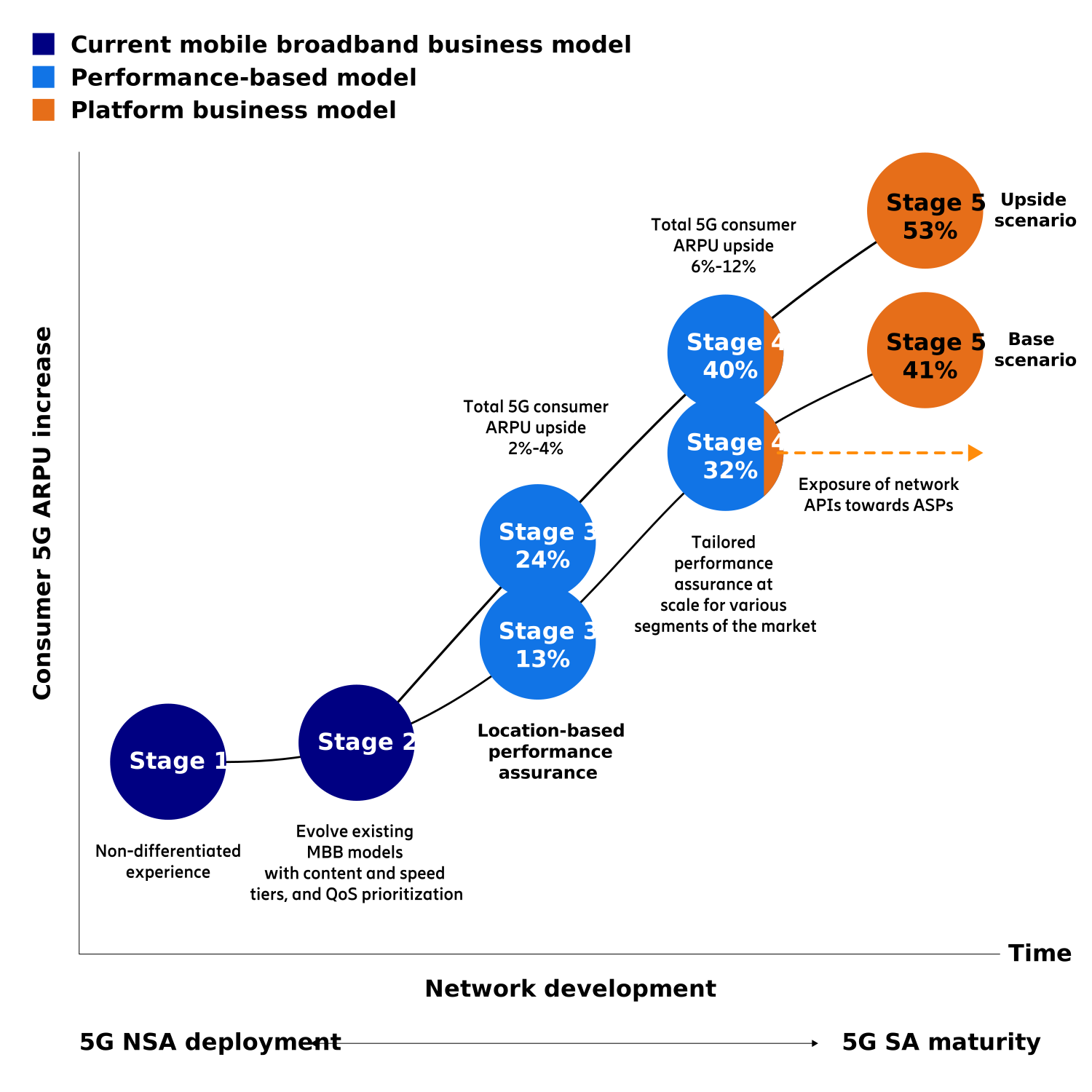

Base: 5G users in Australia. Source: Ericsson ConsumerLab, Elevating connectivity with differentiated connectivity, 2024

Subscribe to ConsumerLab reports

Ericsson ConsumerLab has more than 20 years’ experience in studying people’s behaviors and values, and provides unique insights into market and consumer trends.

Subscribe to reports