











Network deployment examples
Network deployment cases – Private networks / enterprise
Enterprises depend on business processes to govern their operations. These span across internal structures like organizations, departments of the enterprise, involving various assets, people, and operational systems (primarily IT – Information Technology, and OT – Operational Technology) of the enterprise.
An Enterprise Architecture typically consists of a business domain and a technology domain. Here we will focus on the technology domain. Figure 19 shows a combined view of the technology domain of the Enterprise Architecture and the 5G/6G Network Architecture, including a simplified representation of the main interfaces between the two, leaving out certain details for simplicity reasons.
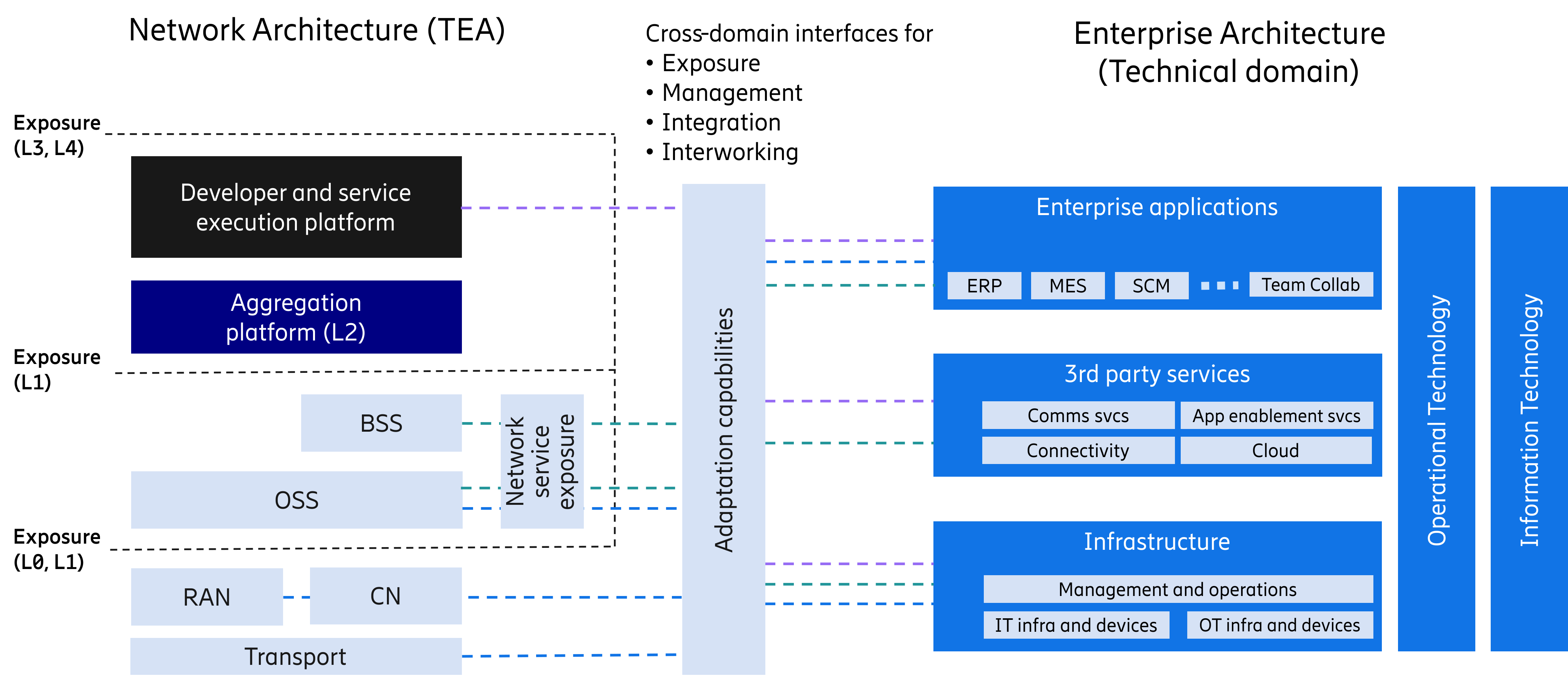
Figure 19 Summary of main interfaces towards an overall enterprise architecture
These interfaces can be summarized in three main categories:
- Networking, connectivity, and associated management (blue)
- Overall management functionality (green)
- Consumption of communication services, e.g. voice, video, messaging (purple)
3GPP based telecom networks are highly suitable as the base architecture to support the technical side of an Enterprise architecture for many different scenarios, enabling multiple use cases for several customer types.
Several deployment models are possible for cellular networks targeting enterprise customers and best suitability depends on the needs and requirements of the enterprise in terms of e.g. data privacy, ownership of network resources, level of operational control, geographical reach, etc. In some cases, a combination of deployment types may be relevant for a particular enterprise.
Network deployments for enterprise can largely be classified in four main models based on the amount of dedicated versus shared network resources as shown below in Figure 20.
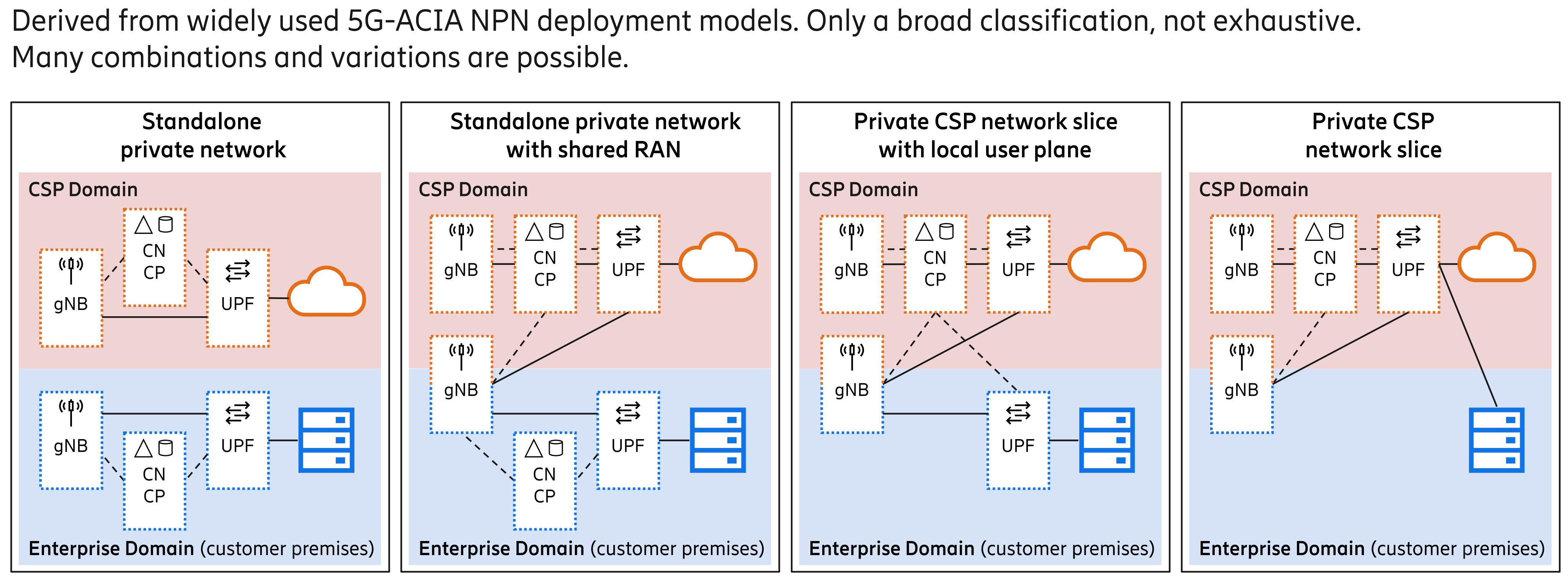
Figure 20 Deployment models for enterprise
In a standalone private network deployment, network resources and equipment are dedicated to the sole use of the enterprise, with sole authority to determine which users and devices can access the network. This type of deployment is typically confined to a localized area (e.g. within a building, port, etc.). The standalone private network with shared RAN is a variant where the radio infrastructure is shared (MOCN or MORAN) between the enterprise and CSP.
The two other deployment models are variants of network slicing provided by a CSP, sometimes referred to as virtual private mobile networks, which differ in the amount of dedicated network resources deployed at the customer premises. The variant with local user plane ensures that the data stays within the premises may be more suitable for time-critical applications. Both variants will typically have radio equipment deployed on-premises, however it may or may not be dedicated (i.e. restricted) to exclusive use by the enterprise.
A further variant of network slicing, not shown above, is the so-called infrastructure-light approach where the only dedicated equipment in the enterprise is the managed endpoints (laptops, smartphones, WWAN gateways) that connect directly to the CSP domain via a private slice.
Seamless operation when moving between different types of deployment is expected to become more important in the future, e.g., logistics-related use-cases in mining, factories, etc, where vehicles may move between a private network and a slice of a public network. This applies both to exposure- and communication interfaces.
The network should provide a unified experience to applications and users regardless of the type of deployment. This is very important from a developer perspective to facilitate portability of applications and use cases and to accelerate their development, or simply put, to enable scale.
Related articles/Additional reading:
Mission Critical Networks (MCN)
This chapter describes four MC segments; Public Safety, Defense, Utilities and Rail and three technology areas; ISAC, Non-Terrestrial Networks and Digital Airspace which are applicable both to MC segments and non-MC business. This architecture document is focused on architecture needs to meet MC driven demands.
What characterizes all MC segments is the criticality of communication service as they need to be able to rely on the networks and services provided especially in challenging scenarios with partial loss of e.g. infrastructure or power. If the network fails it is not only a matter of major business impact, but it may even be a matter of life and death.
There are commonalities across the MC segments as well as unique aspects for each segment, defined in below sub chapters.
Figure 21 shows some essential aspects, of several, which are applicable to all MC segments:
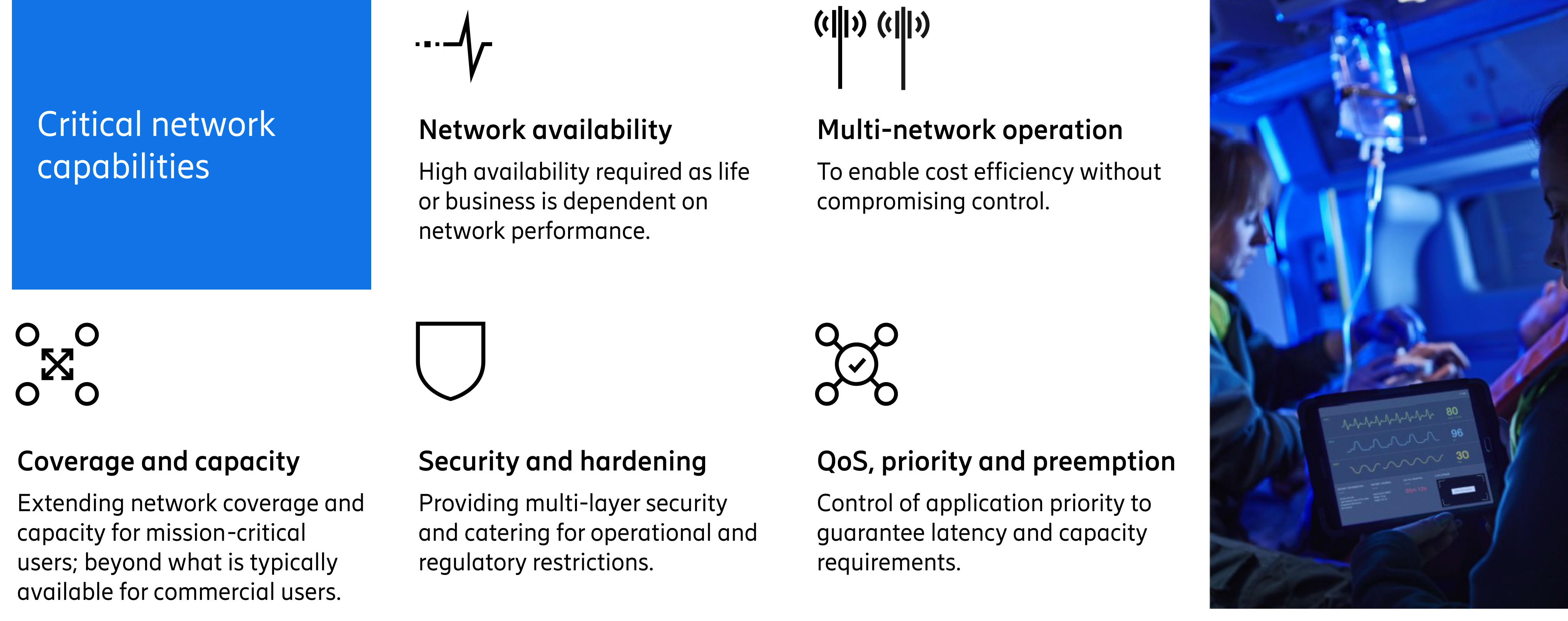
Figure 21 Essential aspects of Mission Critical Networks
There is a strong need for Network Reliability, Availability and Resilience (NRAR) for the end-to-end connectivity service, as well as non-connectivity services like ISAC, chapter Integrated Sensing And Communication (ISAC) and positioning, chapter Positioning.
Furthermore there are expectations of simplified deployment, maybe leveraging the self-x of Autonomous Networks and operations of small and flexible Mission Critical Networks especially in Defense Networks.
Security in MCN largely follows product security requirements MBB networks but with more strict demands on levels of maturity and compliance. Examples of security areas to consider are Post Quantum Cryptography, Zero Trust Architecture described in the chapter Security.
Needless to say, AI will play a central role also in these network for example in incident response, monitoring and alerting, etc.
Public safety
The Global migration from LMR (e.g., Tetra) to 3GPP based networks for nationwide Public Safety is steady but slow. The deployment models vary by country, driven by spectrum availability and willingness to reuse CSP infrastructure. We notice an emerging trend towards cooperation between governments and incumbent CSPs.
Early adopters drive a “digital office in the field” use case with additional improved situational awareness through real‑time video, location, and sensor data.
Most Public Safety spectrum/use today is LTE and as the ecosystem matures a migration path towards 5G will happen.
Some operators offer mission‑critical slices on 5G SA; however these are often premium offerings rather than full 3GPP‑standard MC services.
For 5G resilience, features such as NTN, Wireless Access Backhaul (WAB), UE‑NW relay, and disaster roaming can be combined. 6G architecture should further strengthen resilience for both society‑critical and mission‑critical needs.
Different deployment options are available to cater for different situations depending on several conditions like: Availability of spectrum, Spectrum Regulations, Operational model chosen by the government, etc as depicted in Figure 22.
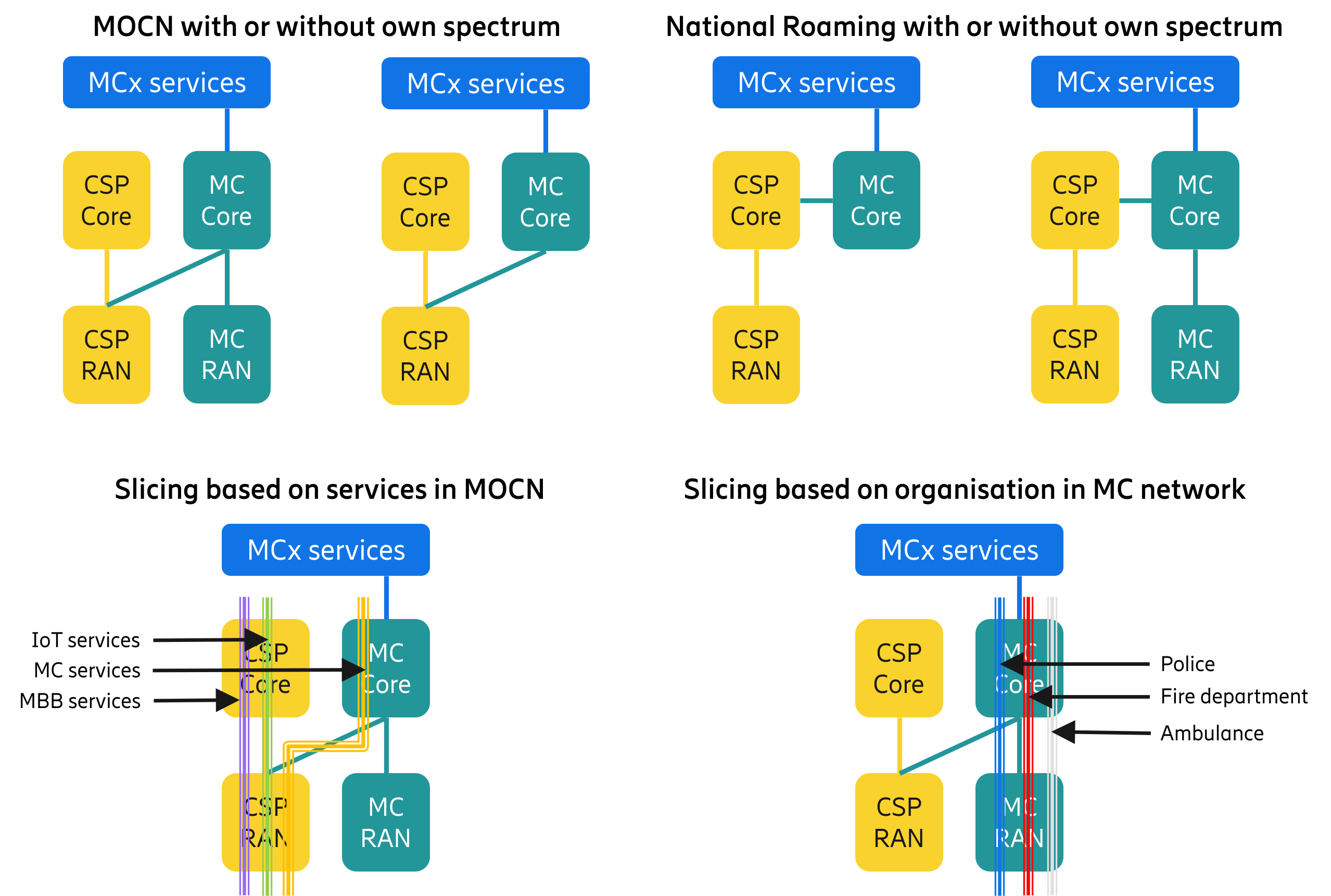
Figure 22 Deployment options, with or without slicing, non-exclusive
If there is no dedicated spectrum available, then RAN-sharing with a CSP is the only option. The operational model will dictate if MOCN, National roaming, slicing etc is possible and how.
There is a growing need for Cross-border collaboration between Public Safety organisations in different countries, e.g. wildfires or earthquakes or major events requiring support from different countries in a concentrated area.
Defense
Geopolitical volatility is driving increased focus on strengthening defense and resilience. Modern warfare is turning into an increasing use of technology (drones, sensors, satellites), making the battlefield more transparent with increasing detection/elimination risks.
Decision-making is becoming faster and more data/AI-driven, which increases the demand for high-throughput communications close to battle zones.
Above developments and experience from recent conflicts emphasize the need for severe improvement to the existing military communications.
Lessons from the Russia–Ukraine war emphasize digital transformation, use of commercial technologies, and federated communications for massive information exchange.
Armed forces use the PACE (Primary, Alternate, Contingent, Emergency) model; commercial cellular systems are expected to complement military comms as primary or alternate options depending on mission. This has led to exploration of partnerships with public MNOs jointly with own private networks. Military organizations like NATO are standardizing for cellular use to interoperate with legacy systems and enable Federated Mission Networking (FMN).
Needless to say ISAC will be an important technology, see Integrated Sensing And Communication (ISAC)
Utilities
Digitalization, decentralization, and demands for security, resilience, and flexibility elevate Mission-Critical Networks (MCNs) to the role of the grid’s operational backbone.
Current constraints include siloed OT/ICT stacks that inhibit deterministic control, real-time analytics, and coordinated automation. Utilities require nationwide reach with deterministic local performance (substation-level latency, reliability).
The resulting architecture converts a network‑centric MCN into an integrated system of connectivity, computation, and control optimized for grid operations that unifies data, control, and decisioning across the energy value chain, an intelligent Digital Nervous System, Figure 23.
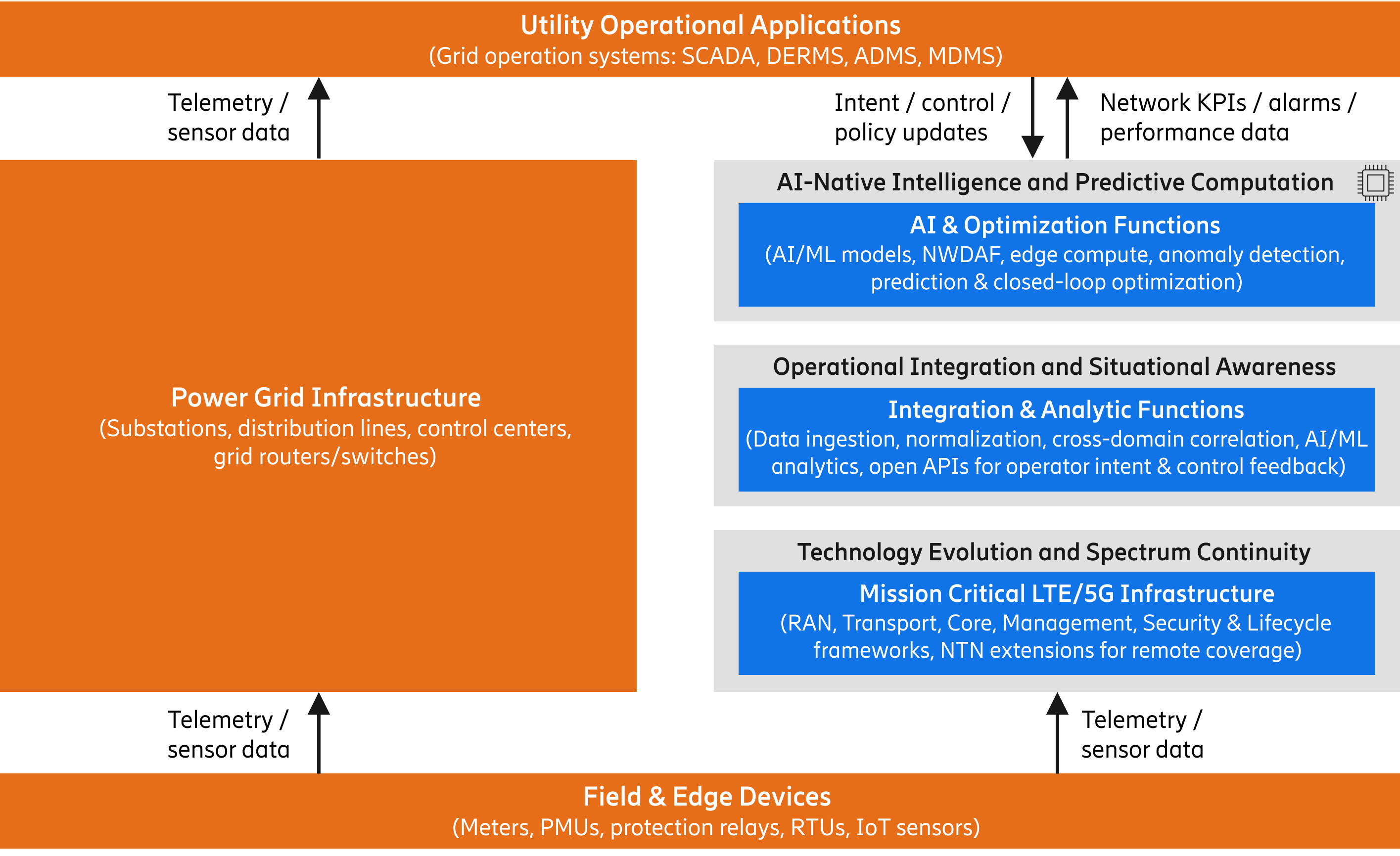
Figure 23 MCN as the Digital Nervous System of the Utility Grid
Rail
FRMCS architecture includes support for safety-critical train control, fully redundant deployments including baseband redundancy, precise positioning and supports gigabit passenger connectivity.
FRMCS standardization and validation is planned for completion in Q4 2027.
Cross‑Border Operations will demand seamless and instantaneous transition of train control across borders requiring local breakout Roaming for direct connection to visited core systems while retaining select home‑routed applications.