




Skip navigation
highway with cars

Innovations on top of the network

Manufacturing - Connected and automated driving - eXtended reality

Networks as a platform for innovation

With the evolution of 5G and beyond, we are moving technological boundaries forward to create the biggest innovation platform ever. New consumer and enterprise services, along with new use cases for the digitalization of industries, create business opportunities across all sectors. It is clear that 5G is more than a network — it is a platform for innovation, capable of exponential positive impact on our society.

Spotlight on

5G for connected vehicles crossing country borders

Free movement of people and goods across country borders is one of the cornerstones of the European Union. As vehicles, drivers, goods, and passengers increasingly use advanced services that rely on mobile networks, uninterrupted mobile connectivity becomes essential for when crossing from one country to another. Roaming has been a feature of cellular networks since 2G, but seamless service transition from one country to another is still not possible. When crossing a border, cellular devices hang on to their home network as long as possible until they eventually lose connection and search for a new network. Currently, such handovers between national mobile networks can result in several seconds, or even minutes, of service interruption.

What is inconvenient for services like web browsing or voice calls can render connected driving services in Europe infeasible. Services like hazard warnings, or HD Maps providing vital input to assisted and automated driving decision algorithms, should be available also in the many border areas in Europe.

To ensure this service availability, Ericsson engages in continuous innovation with its partners to achieve seamless handovers between national mobile networks. Once this cross-border service continuity is established, the work will continue to also enable network features, such as controlled end-to-end quality of service and mobile edge computing/cloud (MEC) across network service providers in neighboring countries.

5G cross-border handover at AstaZero proving ground. (Pic ©Volvo Cars)

Ericsson and Volvo Cars have carried out the first successful test handover of connected cars between two 5G networks. 

Read the news

First successful 5G cross-border trial on public roads

Ericsson, POST Luxembourg and htw saar demonstrated 5G service continuity on public roads in the German-Luxembourg border region.

Read the news

Where it all began: cross-border handover with 4G

Already in 2019, Ericsson and Daimler AG demonstrated service continuity across country borders with two 4G networks in AstaZero.

Read the blog post

Main focus areas

Smart manufacturing

Future smart manufacturing

Combined with IoT, cloud, big data, AI, and edge computing, 5G will be a critical enabler of the fourth industrial revolution, just as steam, electricity, and silicon were for the three industrial revolutions before it.

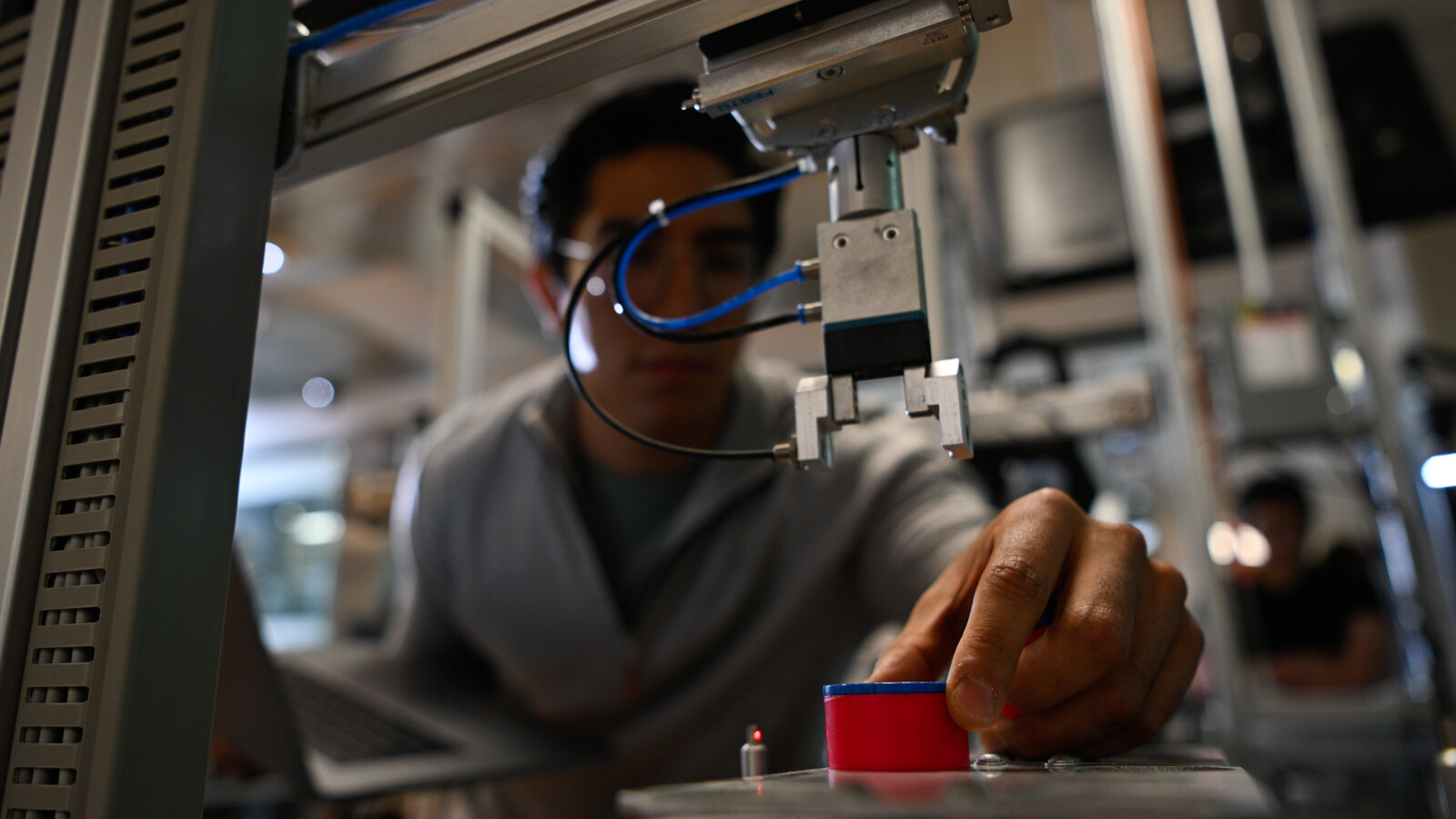
The manufacturing paradigm shift from mass production to mass customization requires a more responsive manufacturing system, where replacing wires with 5G wireless connectivity can deliver the full flexibility and production efficiency needed. Based on a global standard with global economy of scale, 5G can connect a variety of industrial devices with different service needs, including industrial sensors, video cameras, and advanced control panels with integrated augmented reality. In the world of manufacturing, 5G is the deterministic, ultra-reliable, low-latency communication needed to bring wireless connectivity to even the most demanding industrial equipment, such as industrial controllers and actuators.

Highway with cellular coverage

Connected automotive and transport

Vehicle manufacturers increasingly deliver services in addition to selling vehicles and therefore invest heavily in automation, architecture simplification, and new drivetrain technologies, such as electrification.

At the same time, traffic and road authorities look for new solutions to reduce carbon emissions, traffic congestion, and casualties. Meeting these diverse needs will require software-defined, network-aware vehicles combined with advanced network connectivity. Today’s 4G networks can already offer sufficient connectivity for many road transportation services, but with higher data rates, lower latency, and improved capacity, 5G and beyond systems are the ideal choice to maximize the safety, efficiency, and sustainability of road transportation.

Man with VR glasses

eXtended reality

Think of playing a high-fidelity VR game with other remote players without any lag, making you feel as if you are inside the game, on a neat lightweight device, wherever you go. 

Or think of remotely controlling a machine on a factory floor, with 360 video and an AR overlay of hidden details. Next, think of a full internet of senses, where interactions are not limited to sight and sound, but include touch and even smell and taste.  As consumers and industries step further into this sensory digital world, they will expect hyper-fast connectivity, imperceptible edge computing-based lag and advanced automation.

Read our blog for more about innovations on the network platform

Explore more

Beyond today’s 5G

Learn about the research and standardization that will evolve 5G for years to come.

5G evolution and 6G