




Skip navigation
Previous searches
    Suggested searches

      Ericsson Core Commerce by Appledore Research

      Explore the full report to uncover the key trends, risks and strategic priorities shaping the future of the telecom industry and discover how to accelerate your OSS/BSS transformation and unlock new growth opportunities.

      Introduction
      The telecommunications industry stands at a critical juncture. On one side, CSPs grapple with declining margins, weakening customer engagement, and limited access to emerging value chains, all while facing mounting investor pressure for improved returns and profitability. On the other side lies the unavoidable imperative to continue investing heavily in next-generation infrastructure—including 5G networks, fiber expansion, and mission-critical network capabilities—to deliver the differentiated connectivity that enterprises demand and remain competitive in evolving markets. This creates a fundamental tension between necessary capital expenditure and shareholder expectations for near-term profitability.

      Given these pressures, the transformation of customer experience and commerce capabilities has emerged as a strategic priority for CSPs across both consumer and enterprise segments. Consumer facing initiatives have focused on elevating the customer experience, expanding service portfolios with bundled offerings, and eliminating friction and inconsistencies throughout the purchasing journey. For enterprise customers, CSPs are reimagining their concept-to-cash workflows to minimize manual interventions and implement comprehensive end-to-end automation, ultimately creating more agile and responsive commercial operations.

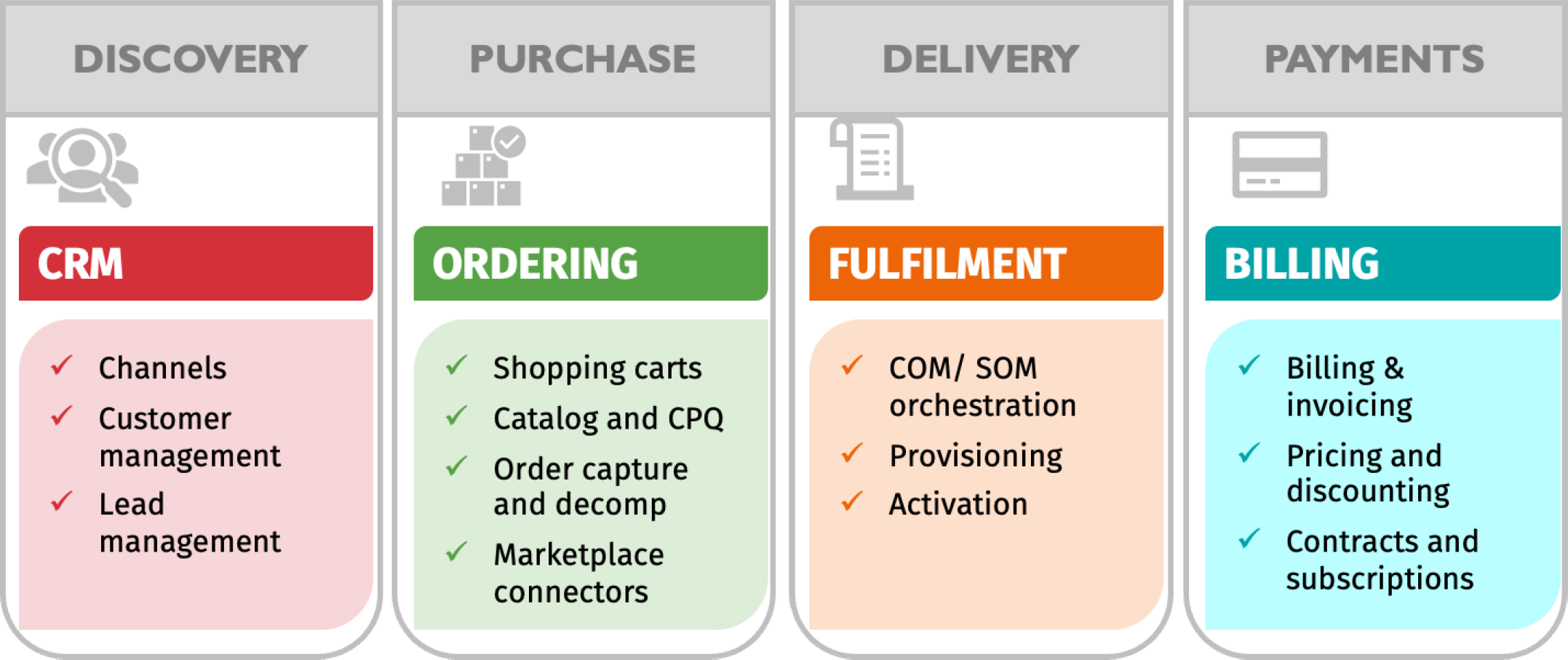
      The transformation of telco care and commerce care and commerce spans four fundamental systems (figure 1).

      Core-Commerce-Appledore-Solution

      Commissioned by Ericsson

      Overview of the key systems essential to telco commerce

      Figure 1: Overview of the key systems essential to telco commerce. Source: Appledore Research

      Further compounding this challenging landscape, Gen-AI and Agentic AI have emerged as potential game-changers, promising to fundamentally transform telco operations through unprecedented improvements in operational efficiency, cost reduction, revenue generation, and customer experience. Commerce and care transformation serve as the gateway to agentic AI for CSPs, establishing the cloud-native infrastructure, unified data models, and intelligent automation layers that autonomous agents require to operate. To enable agentic AI across the OSS/BSS stack that can autonomously manage customer journeys, optimize service delivery, and resolve issues, CSPs must first modernize their core systems to create an interoperable, real-time environment.

      Commerce and care solutions are critical enablers for CSPs to monetize advanced enterprise services like differentiated connectivity, which demand sophisticated product catalogs, flexible pricing models, and SLA-backed service assurance beyond standard consumer systems. This capability is especially crucial as IT-network convergence and maturing AI/automation technologies finally make it possible to bridge the long-standing gap between technical capability and business outcomes. The key is shifting focus to the intelligence layer—modern, cloud-native, AI-driven platforms that activate data, enable real-time multi-domain orchestration, and deliver differentiated customer experiences.

      Legacy systems and processes represent a significant obstacle for CSPs as they work to upgrade their commerce capabilities. The incumbent multi-vendor legacy systems exist as disparate silos with proprietary interfaces, resulting in high costs, poor customer experience, and missed selling opportunities. Additionally, limitations in the catalog hinder CSPs' ability to efficiently create, manage, and sell products and services, leading to limited partner engagement, huge IT overheads, and delayed sales cycles. Furthermore, inadequate digital automated systems prevent customers from effectively managing their accounts, services, and issues without direct interaction with agents, which contributes to poor customer experience, high support costs, and lower digital sales penetration.

      CSPs planning to upgrade their commerce and care systems should carefully consider three key factors:

      CSPs should prioritize applications that are purpose-built for telco, as opposed to generic cross-industry platforms that have been adapted to meet telco requirements. The ability to natively address telecom-specific complexities is one of the most critical factors determining the future-readiness of commerce and care capabilities. Few industries match the complexity of telecoms, which must navigate multiple network topologies, legacy multi-vendor environments, asset-based policy restrictions, and stringent regulatory requirements. Generic solutions have repeatedly fallen short in this environment, demanding expensive and continuous customization to keep pace with evolving needs.

      CSPs should prioritize network-ready solutions to enable seamless commerce flows across domains. A typical commerce transaction spans multiple software systems, each with distinct protocols, standards, and organizational owners. This complexity multiplies when integrating and fulfilling external partner services. The interface between commerce transactions and network assets has persistently challenged CSPs as network and IT systems operate on different standards and methodologies. While IT readiness matters, network-grade capability is more critical, as network failures are typically harder to diagnose and resolve.

      CSPs must prioritize solution scalability, especially in the AI era where 
      dynamic application scaling and real-time personalization drive unpredictable demand spikes. Solutions lacking sufficient scale create bottlenecks that degrade customer experience during critical moments, ultimately forcing expensive replacements or extensive re-architecture that undermines both operational efficiency and competitive positioning.

      Ericsson Core Commerce portfolio

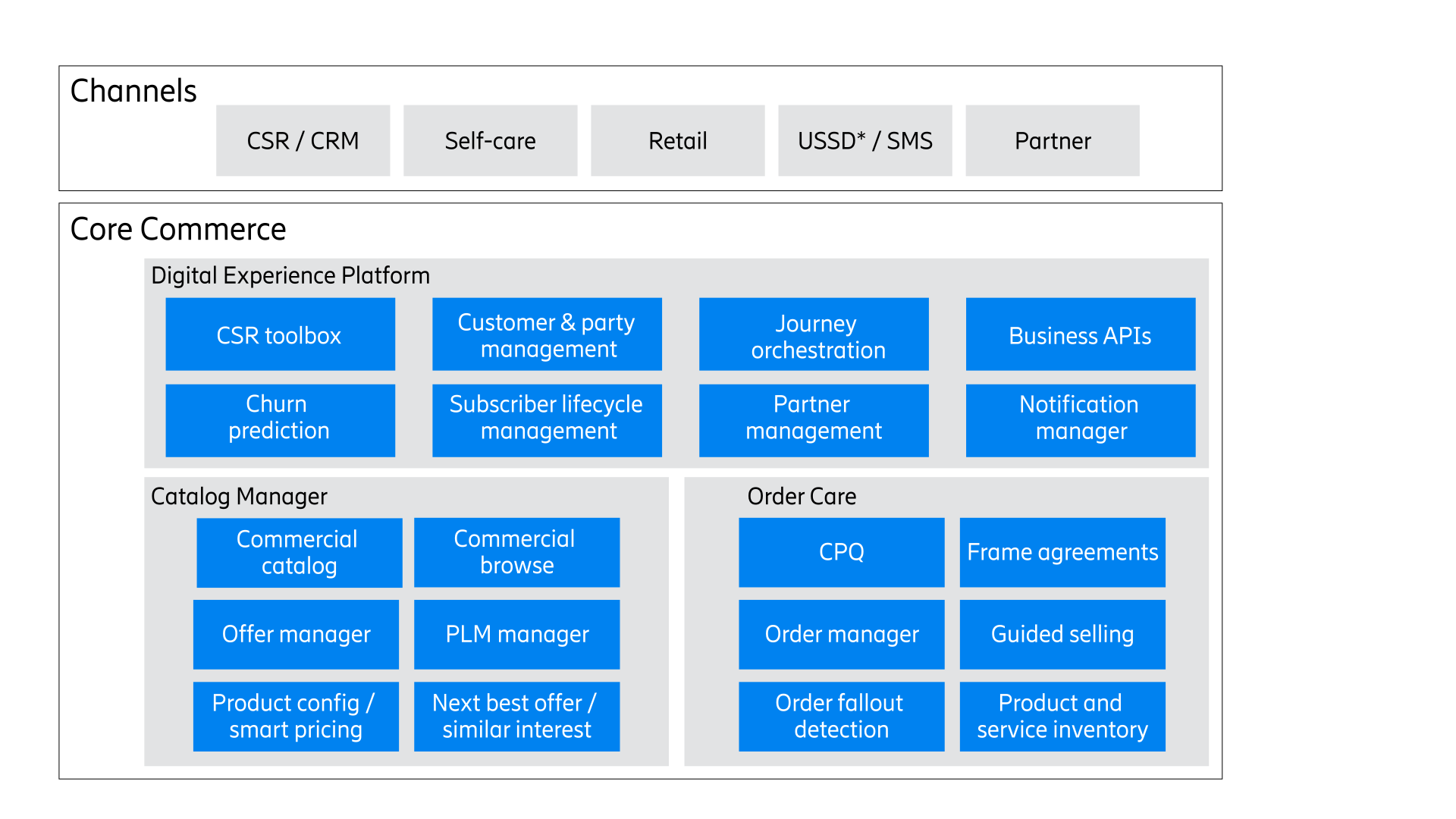
      Ericsson Core Commerce portfolio consists of three primary components (figure 2):

      Overview of Ericsson Core Commerce portfolio
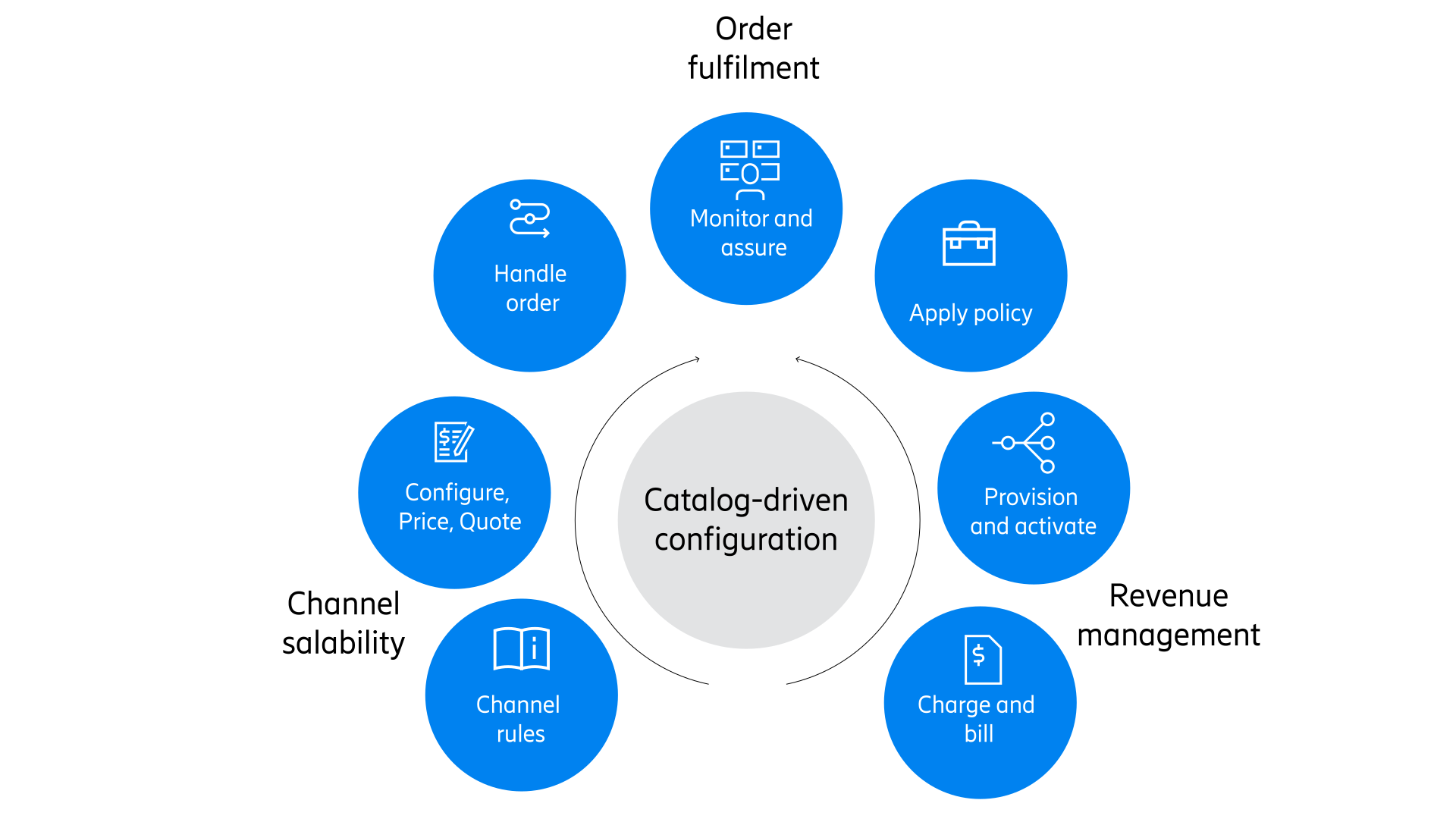
      Figure 2: Overview of Ericsson Core Commerce portfolio

      Ericsson Catalog Manager provides a unified product lifecycle management solution for complex B2B, B2C, and B2B2X offerings. Its AI-powered product modeling accelerates go-to market timelines while offering TMF and ODA compliance. Key benefits include significantly shorter time-to-market, rapid innovation capabilities, and enhanced market responsiveness that can improve CSP competitiveness. 

      Ericsson Order Care and CPQ solution enhances sales productivity through Gen-AI-powered guided selling, while enabling a seamless quote-to-order-to-cash journey across all channels. It facilitates effortless partner onboarding and integration via standardized integrations. Key benefits include simplified sales and delivery processes alongside significant operational efficiency gains.

      Ericsson Digital Experience Platform delivers omnichannel, catalog-driven experiences for both B2B and B2C customers. Its unified data model streamlines customer engagement across touchpoints, while a cloud-native, microservices-based architecture supports dynamic scalability to meet fluctuating demand. Key benefits are personalized and differentiated digital experiences that can be a key differentiator.

      The Core Commerce portfolio can be pre-integrated with Ericsson's Digital Monetization Platform (DMP), which delivers end-to-end monetisation through product catalog-enabled, convergent charging and billing. Built to handle complex enterprise and partner use cases at scale, DMP enables advanced offerings such as differentiated connectivity and mission-critical networks while leveraging AI-driven automation to accelerate deployments and optimize operational efficiency.

      Ericsson Core Commerce features a modular and open architecture designed to address rapid innovation cycles. This architectural approach establishes a robust single source of truth while enabling decoupled systems that facilitate faster migration and adoption of cloud-native solutions with shortened innovation cycles. The modular framework supports CSPs in rapidly adjusting customer experiences and experimenting with new monetization models, providing the agility required in evolving market conditions.

      A cornerstone of Ericsson's Core Commerce value proposition is its catalog-driven architecture framework. The solution provides a feature-rich, telco-grade commercial product and service catalog that enables centralized product definitions with a "model once, reuse everywhere" approach across quoting, channels, fulfillment, and monetization throughout the quote-to-cash journey.

      This architecture delivers several key benefits: zero-code offer launches that produce production ready offerings; marketing autonomy that reduces dependencies on technical teams, expediting time to market for new products/services, accelerated monetization cycles, and improved consistency that minimizes errors across sales and delivery processes.

      Overview of Ericsson’s catalog-driven ordering

      Figure 3: Overview of Ericsson’s catalog-driven ordering

      Ericsson adopts a CRM-agnostic approach, avoiding the constraints of mandatory CRM platforms that can limit best-of-breed solution selection, create vendor lock-in, and increase total cost of ownership through extensive customization requirements. The company positions this flexibility as a distinct competitive advantage, offering CSPs freedom in CRM selection while providing telco specific core commerce capabilities that deliver enhanced agility in B2B customer experiences.

      Ericsson’s approach to AI

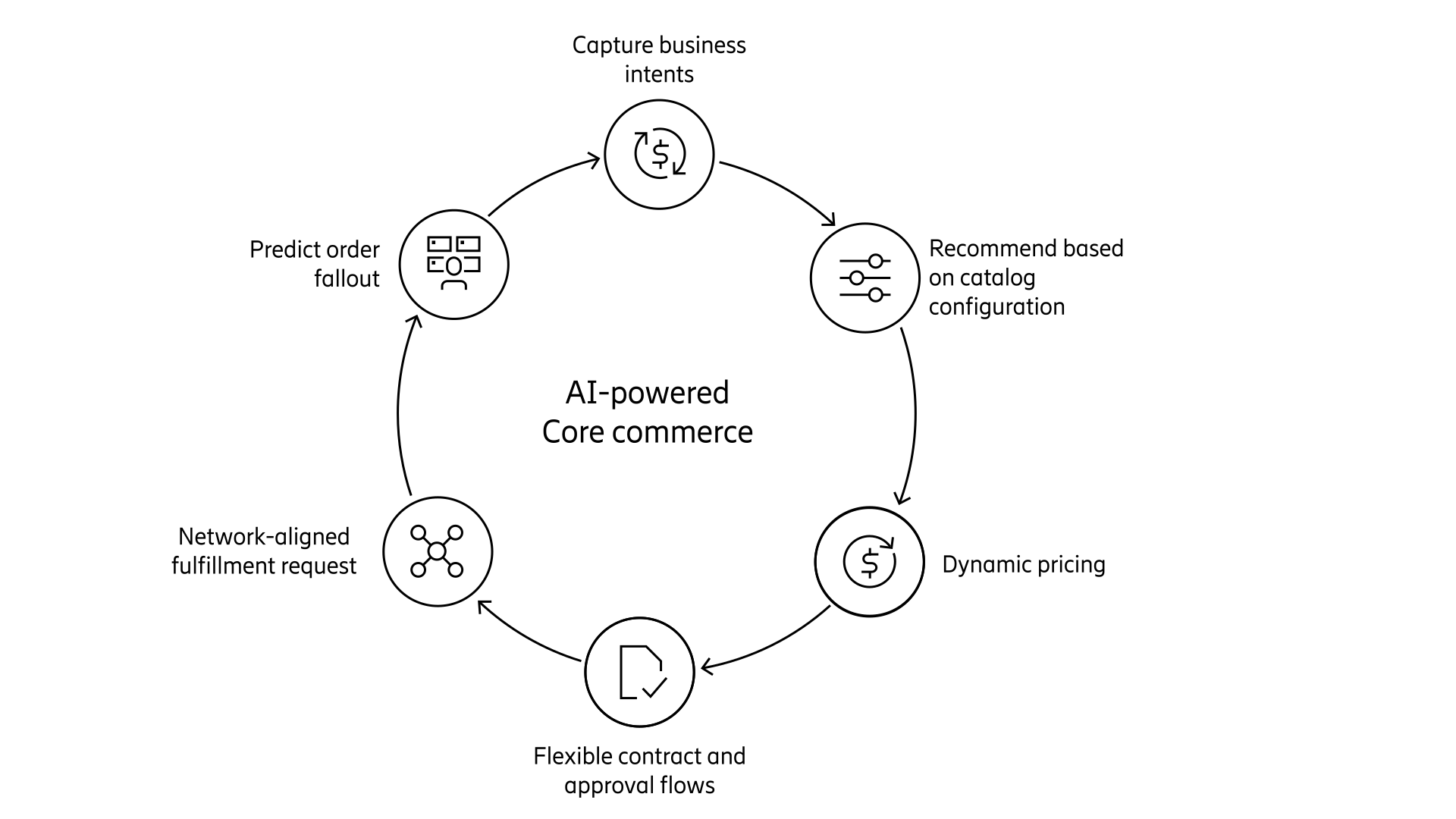
      Ericsson has implemented an AI-powered commerce approach featuring no-code configuration, automated approvals, and network-aligned orchestration. Key capabilities include accelerated time to-sell through AI-driven intent translation into accurate offering configurations, enhanced quote precision via catalog-embedded SLAs and pricing rules, zero-touch orchestration with automated fulfillment requests to BSS/OSS systems, and seamless alignment with service orchestration that eliminates manual handoffs.

      The Core Commerce portfolio includes pre-built AI applications designed to minimize revenue leakage, enhance marketing effectiveness, and reduce customer churn. These applications address critical use cases including churn prediction, next-best-offer, similar interest recommendations, guided selling, customer segmentation, order fallout detection and prediction, product configuration and smart pricing.

      Overview of Ericsson’s AI-powered core commerce

      Figure 4: Overview of Ericsson’s AI-powered core commerce

      Selected customer deployments

      AT&T launched its IoT Marketplace powered by Ericsson's Core Commerce platform. The platform was delivered by Ericsson as a turnkey solution built on cloud-native microservices architecture and hosted on Microsoft Azure. The marketplace is aimed at streamlining the process of selling, contracting, provisioning, and billing IoT offerings. The platform features a catalog, order management system, and TMF compliant API exposure.

      The IoT marketplace addresses key IoT challenges that has hindered AT&T's  customers and partners, such as complex integrations, fragmented product  catalogs, and inconsistent order management. AT&T reports the platform has  helped streamline how it delivers services to its IoT customers which has helped improve their time to market and response times for issues besides accelerating innovation in the IoT ecosystem.

      Further details can be found here.

      As part of its T22 strategy, Telstra partnered with Ericsson to digitize, automate, and simplify prepaid with the aim to improve time to market and reduce costs  while also improving agility. Telstra’s incumbent prepaid solution was complex requiring extensive human intervention and the telco wanted to shift to an open and end-to-end cloud-native solution to enable omni-channel experience across all Telstra’s channels.

      Ericsson DXP (part of Core Commerce) was deployed to achieve digitalization while Ericsson Charging replaced the incumbent legacy charging system. The solution also incorporated Ericsson Mediation. The project was delivered within 10 months by adopting an agile end-to-end delivery approach, including CI/CD methodology and automated testing.

      Read the full case study here.

      Grameenphone signed a six-year strategic IT transformation project with Ericsson, an extension and expansion of BSS delivered by Ericsson. The project includes the use of AI to enhance the BSS capabilities and Grameenphone will be able to offer personalized offerings and improve time to market.  Ericsson has already deployed its catalog-driven charging and mediation systems at Grameenphone, processing over 6 billion CDRs daily.

      Ericsson also announced that Grameenphone is the first CSP to use the new Gen-AI Lab—a collaboration between Ericsson and AWS—to develop an Agentic AI solution that automates migration from its legacy product catalog to Ericsson Catalog Manager.

      Read the announcement here.

      Case study

      Dutch telecommunication provider Odido embarked on a consolidation initiative in 2018 after identifying critical redundancies across their OSS. The telco was running multiple systems performing identical functions, creating a fragmented landscape inherited through years of acquisitions—from Tele2 to T-Mobile Netherlands, eventually becoming Odido.

      Odido's technical assessment determined that its OSS architecture required transformation to ensure future readiness. The transformation consolidates service order management into a single layer spanning Odido and its subsidiary brands—Ben, Tele2 Thuis, and Simpel—across all customer segments (consumer, enterprise, and B2B2X) in both fixed and mobile businesses.

      While cost efficiency was not the primary driver, it remained an important consideration for securing long-term stakeholder support. The project scope focused on consolidating the SOM layer along with the inventory system, with the COM layer excluded from this initial phase.

      Odido initiated a comprehensive vendor selection process in 2018, issuing an RFP that resulted in three shortlisted providers including Ericsson. The finalists participated in a hackathon challenge requiring them to build working solutions for real-world use cases. According to Odido, Ericsson was the only vendor capable of delivering a functioning prototype within the compressed timeframe, ultimately securing the SOM transformation project. The initial contract was signed in 2018, and Ericsson has since become deeply embedded in Odido's organization, more than doubling the team size since the start of the program.

      “We did a hackathon with the three shortlisted vendors and Ericsson was the only vendor who could build a real-time use case in 3 days time”

      - Luc Hose, Manager Digital Orchestration and OSS, Odido

      Despite significant challenges including corporate acquisitions and the COVID-19 pandemic, the project is on track relating to its major milestones.

      Odido has already realized tangible benefits: a single entry point to the network through SOM has simplified integration for IT teams and partners, reducing both time and costs. More importantly, execution speed has dramatically improved development teams that previously waited for systems to catch up can now deliver services faster, significantly improving time to market. For instance, Odido was able to launch its 5G FWA in under six months, and even then the initial sales projections were for selling 6,000 fixed wireless routers in a quarter. The company ended up moving that volume within the first week, demonstrating both rapid time-to-market and significant underestimation of market demand.

      The implementation of TM Forum APIs—compliance with which was a key selection criterion—has established clear process demarcation between commerce and order management layers, while the Ericsson SOM stack continues to expand its service coverage across Odido's operations.

      Appledore Research interviewed Odido to develop this case study. Overall, Odido is very satisfied with the project's progress to date and anticipates additional benefits as implementation advances.

      Appledore analysis

      The telecom industry faces an unprecedented inflection point. CSPs are navigating a perfect storm of challenges: eroding margins, continued infrastructure investment demands, macroeconomic volatility, and the promise and peril of artificial intelligence. These pressures intensify as CSPs pursue dual transformation agendas internally modernizing their technology stacks while externally reimagining business models, revenue streams, and ecosystem partnerships to remain competitive in an evolving digital landscape.

      Ericsson's reputation as a premier telecom network provider is well established with over 85% of the company’s $26 billion annual revenue (FY24) coming from telecom. However, while networks remain the company's primary revenue engine and public-facing identity, Ericsson has steadily built substantial capabilities in its BSS/OSS software portfolio. This evolution stems from sustained R&D investments and a unique vantage point: direct engagement with CSPs across all tiers globally, providing invaluable insights into operational challenges and technology requirements that have shaped its software solutions.

      Ericsson maintains a robust BSS presence with established portfolios in Service Orchestration, Monetization, Data and AI and Cloud and IT Services besides Core Commerce. The company stands as the only network equipment provider offering a complete BSS and OSS stack while retaining strong access to Western developed markets—a distinct advantage as geopolitical factors have constrained certain competitors' participation in these regions.

      In recent years Ericsson's core commerce portfolio has gained particular attention as the telecom market environment places increased focus on customer engagement and commerce enablement. Ericsson's customer engagement approach is CRM-agnostic, which proves attractive for CSPs already invested in a platform. Where Ericsson truly differentiates is in the catalog, CPQ, and ordering layers. Most vendors in the telecom concept-to-cash segment have approached it top-down—beginning with COM and flowing down to SOM. Ericsson has adopted a bottom-up approach, which is perhaps unsurprising given Ericsson's extensive exposure to telecom networks.

      This represents a significant difference, as one of the most common bottlenecks in the concept-to cash flow is the handover from COM to SOM layer. This cross-domain handover can be especially challenging for vendors with IT expertise but insufficient exposure to telecom networks. The bottom up approach is likely to position Ericsson well in the near to medium term as network designers increasingly become a dominant influence over how new services are designed, and especially as CSPs increase focus on network exposure to increase engagement with enterprises.

      SWOT

      Strengths

      • Highly regarded portfolio thanks to exposure and well-entrenched presence in real-time mission critical carrier-grade networks
      • Strong portfolio in BSS/OSS, can support full-stack natively
      • Broad customer based all markets and CSP tiers giving it a ringside view of telco strategies

      Weaknesses

      • Focus on BSS/OSS is considered secondary to core network
      • AI narrative in core commerce perceived to be in early stages, though Ericsson has prioritized a pragmatic, outcome-focused approach that emphasizes measurable business value.                                                                                                                                                                                                                                                                                                                                

      Opportunities

      • Broad network customer base provides opportunities for upsell and cross-sell
      • Differentiated, network-centered approach to commerce and care positions Ericsson well especially with influential CTO group

      Threats

      • Not sufficiently recognized for its Core Commerce portfolio when compared to competitors
      • Economic and AI related uncertainty may impact telco investment plans

      Conclusion

      Ericsson's Core Commerce portfolio is emerging from the shadow of its network-centric heritage at precisely the right moment. CSPs are actively transforming customer experience and interaction channels across B2B and B2C in response to changing consumer behaviors and complex enterprise applications—creating significant opportunities for commerce and care modernization.

      Ericsson brings distinct competitive advantages: an end-to-end network-grade portfolio; established relationships through network buying centers; and increasing emphasis on AI-driven automation and advanced enterprise use cases like differentiated connectivity. This combination positions Ericsson uniquely to help CSPs leverage AI across B2B and B2C, monetize 5G capabilities and close the gap between network innovation and commercial realization—a bridge that becomes  increasingly valuable as IT-network convergence accelerates and enterprise revenue opportunities expand.

      About the author

      John Abraham

      With over 18 years’ experience in the telecom industry, John Abraham leads Appledore’s Digital Enablement program. Previously he was at Analysys Mason for 11 years where, as Principal Analyst, he led the Digital Experience research segment. He has experience working with a varied client base on topics ranging from digitisation benchmarking and procurement for CSPs; strategy and go-to market for vendors and commercial and technical due diligence for financial institutions.

      Earlier as a consultant at a BSS vendor, he led implementation of BSS projects at multiple tier-1 telcos in Asia and Europe. John holds a bachelor’s degree in computer science from Anna University (India) and an MBA from Bradford University School of Management (UK).