Navigating a crisis
ICT has helped consumers handle the uncertainties of the COVID-19 crisis, with more and more activities carried out and time spent online. Given this, both fixed broadband and mobile networks are experiencing greater demand than ever seen before – so how have they coped?
How are consumers adapting to the new normal?
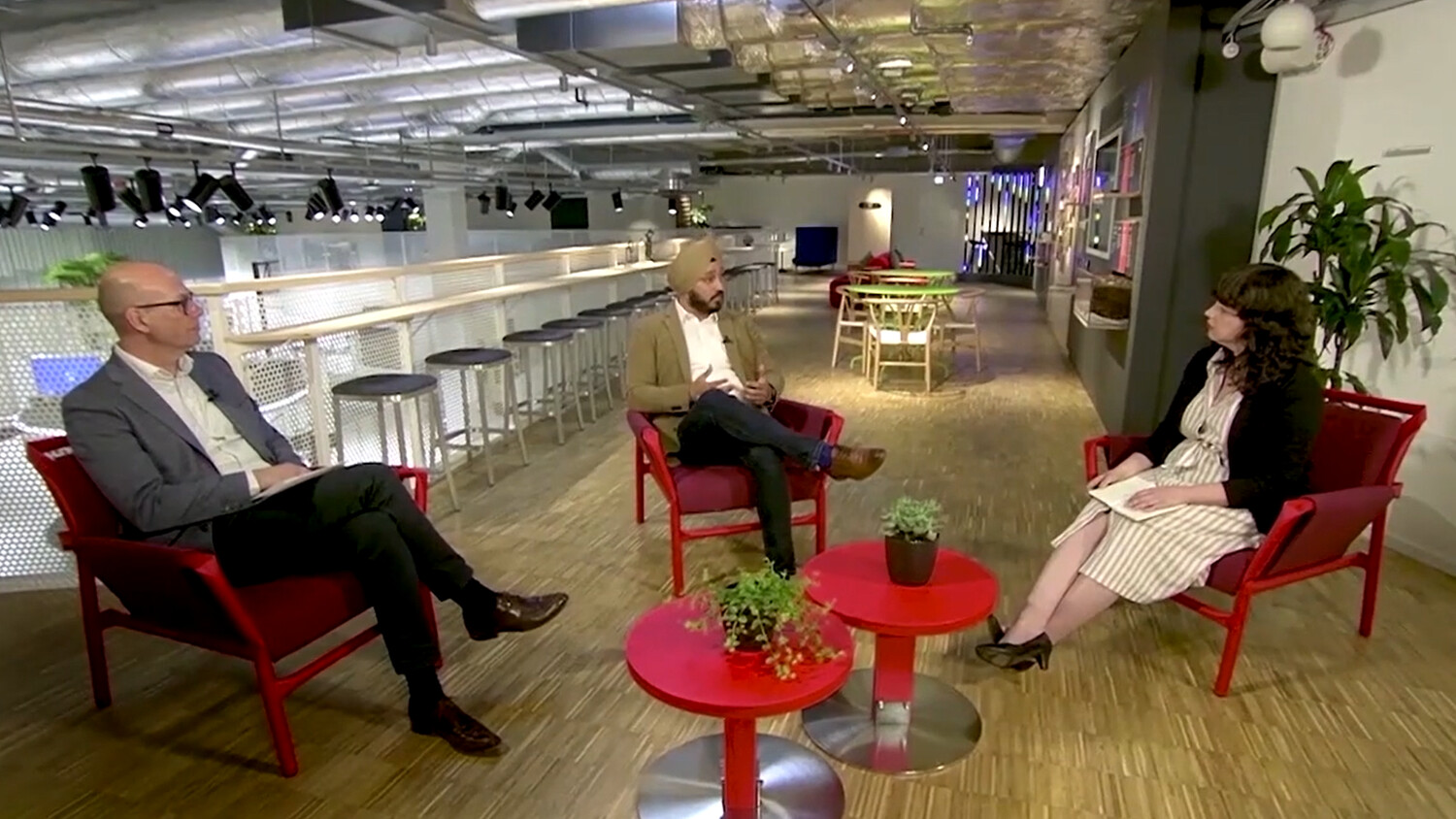
The crisis is having a large impact on consumers' daily lives (01:48)
Watch the rest of the series
How did networks perform in the eyes of the consumer?
Could 5G have helped in such a crisis?
Five consumer predictions for the post-COVID-19 world

Networks have been tested yet consumer perceptions are positive (01:18)
5G could have accelerated the push towards immersive technologies (01:52)
Five predictions for post covid world (02:05)
Keeping consumers connected
Changes in app usage behavior
With more and more activities being carried out online, and greater numbers of hours spent connected to both fixed and mobile broadband, the internet has become a fundamental part of daily life – as critical as access to food and electricity. The fastest-growing mobile app categories during the COVID-19 period have been those related to the crisis, remote working, education/e-learning and wellness. Meanwhile, the use of location, parking, weather and travel apps has seen a significant decline. These trends are a sign of consumers adapting to the new normal, and are unlikely to slow with the easing of the pandemic – 6 in 10 US workers are expecting to switch to video-based conferences after the crisis, and the same number believe online healthcare consultations will become more popular than physical visits to the doctor. These trends are based not only on consumer opinion on their changing usage, but also on concrete findings gathered using anonymous, crowdsourced, on-device data.
App usage evolves to new behaviors (US)

6 in 10
Working people in US will switch to video-based conferences after the crisis.
4 in 10
Students will continue taking courses and learningthings online in US.
6 in 10
US believe online healthcare consultations will become more popular than physical visit to the doctor
Increased mobile broadband consumption
Multitasking between devices and networks while staying at home, for everything from work to socializing, caused the amount of data consumed on smartphones to increase.
Globally, consumers claim a 25 percent average increase in smartphone data usage. Meanwhile, many in India say their monthly mobile data usage increased by at least 50 percent, which was significantly higher than the global average.

Globally, consumers claim a 25 percent increase in data usage on their smartphones.
Indian smartphone users claim mobile data usage has increased by 49 percent during the crisis.
How did networks perform?
The average time spent connected to fixed broadband rose by 2.2 hours per day, while those connected to 4G networks saw an average increase of 1 hour a day. In markets like India, where 4 in 10 relied primarily on 4G networks to keep them connected, this increase was twice as much per day on cellular networks.
It’s not just the amount of time spent online and the services used that have changed, but the time of day too. One-quarter of 15–19 year olds in the US say they started streaming videos on smartphones in the morning, while 22 percent began around lunchtime, 21 percent in the late afternoon and 15 percent around dinnertime. In fact, their only downtime during the crisis was when they were sleeping.

The role of 5G in the crisis

With 74 percent saying that mobile networks were performing better or the same than pre-crisis, it is safe to say that despite all odds they have managed to meet consumer expectations. But additional capacity offered by 5G could definitely have helped.
Despite the conspiracy theories and fake news surrounding 5G, our study found 63 percent to be positive towards the role 5G could have played during the crisis, while 4 in 10 wished 5G had been rolled out faster for them to benefit from higher speeds.
What could have been
Consumers recognize that 5G – via either fixed wireless access or enhanced mobile broadband – could have enabled them to benefit from improved speeds to meet their remote working needs. Beyond the home office, 5G-enabled robots could have helped during the crisis with tasks like taking temperature measurements or disinfecting spaces, reducing the time spent with infectious patients for medical staff, while immersive education using VR and AR technology could have helped children turn screen time into valuable learning time.
Will consumer interest in 5G decline?
There is much speculation about whether the pandemic will dampen the 5G consumer demand and derail service providers’ deployment plans. In general, with the impact of the economic downturn weighing on their minds, consumers are looking to cut down on discretionary spending to ensure financial security. Despite this, the increased reliance on resilient connectivity for work, entertainment and education has meant that ICT spending is still prioritized by consumers, so they can prepare for future crises.
With retail locations closed, 5G handset sales are likely to become less common, though demand is likely to pick up as countries ease restrictions. Around two in five consumers in India and China, and one in five in the US and Spain, say they will upgrade to 5G handsets to better prepare for the next crisis.
Data for good: telcos more trusted than internet tech giants
Track-and-trace systems are continually discussed as a viable way to control and navigate out of the pandemic. This involves the sharing of very personal data – and many people are understandably nervous about who accesses this information. When asked who they’d trust most, telcos emerged as a winner in terms of consumer opinion. Globally, they are trusted substantially more than tech giants (such as Facebook, Google and Apple), IT companies and app providers. In many countries, such as France, the US and the UK, telcos are trusted even above those countries’ own governments.
Consumers are open to sharing data for the common good, and authorities seem to be collaborating with service providers to access geolocation data to track the population. However, concerns are felt by 3 in 10 that governments could use, retain and harvest their personal data, even after the crisis. Thus, service providers need to be transparent about how, and for what purpose, consumer mobility data is going to be used, and comply with privacy by design.

Concerns are felt by 3 in 10 that governments could use, retain and harvest their personal data even after the crisis.
What is the ideal COVID-19 response expected from service providers?
Many industries all over the world took action to help consumers cope with the crisis, and service providers were no different. Actions such as waiving late fees and waiving data caps were generally positively received, with 52 and 48 percent rating these as very important, respectively. The reduction in streamed video quality to cope with capacity demands was slightly less welcome, with only 29 percent rating this as ‘very important’.
With the rise in home-working and digital communications, it’s perhaps natural that maintaining a high quality of service was the action most highly ranked by consumers. Over 6 in 10 considered this to be very important, with a total of 98 percent ranking this positively. However, service providers need to be more creative in catering to consumers’ emerging needs, both during and after the pandemic. To turn children’s screen time into valuable learning time during the crisis, 48 percent consider it is very important that service providers offer e-learning solutions. An equal proportion expect service providers to expand their content and media offerings, while 38 percent expect new workspace solutions that will allow for immersive collaboration to enable better remote working.
How consumers ranked the following actions during the COVID-19 crisis

Across Sweden, France, Germany, Italy and Spain, an average of 16 percent wish to upgrade to 5G to better prepare for next crisis.
Five predictions for a post-COVID-19 world
So what will the future look like? Consumers name a wide array of different activities as important, from quality of video calls with family and friends, to access to work documents in the cloud. Changes in behavior will most likely transcend into the future, with our study highlighting five consumer predictions for a post-COVID-19 world:

1. Networks redefined
3 in 4 value network resilience and say internet connectivity is not only most critical during this crisis but also future crises.

2. Autonomous commerce
55 percent believe automated delivery drones or fleets of driverless cars might replace delivery people as demand for contact-free interactions increases.

3. Borderless workplaces
6 in 10 working people believe working remotely will be the new normal and expect employers to encourage remote working as a fundamental business practice when the COVID-19 pandemic has passed.

4. Synchronous care
6 times more consumers in the US are expected to use real-time online health consultations versus during 2019.

5. Virtual experience economy
7 in 10 VR users think that, with more time spent online, virtual symbols will drive status rather than physical ownership of goods, while social VR will help ease isolation. Half of consumers might turn to AI-powered online virtual companions to entertain, educate and befriend them during isolation.
Methodology
Between 8 and 24 April 2020, we spoke to smartphone users from 11 different countries, statistically representing 700 million people. Our aim was to gather insights into consumer behaviors and attitudes around ICT and connectivity against the backdrop of the COVID-19 crisis.

COVID-19 has had a huge effect on consumers’ daily lives, leading them to rethink the future and worry about their financial situation. But the resilience of ICT has helped consumers navigate the crisis and ease the burden of working and studying remotely, as well as staying in touch with family and friends.
74%
Consumers’ daily lives have been rocked by COVID-19 – 74 percent say that they have been highly impacted, and the same number have increased their internet usage significantly.
Related content