Skip navigation

Tech insights Middle East & Africa

Discover the latest Tech insights from Ericsson Middle East and Africa – insightful sessions, reports and papers featuring expert insights and recommendations for communication service providers in the region.

Latest insights

Unlock the uplink

Mobile networks were built mainly for downloading content, but usage is shifting. Today, more data is being created and uploaded through user generated live streaming, video calling and conference, professional live streaming and broadcasts, online gaming, AR/VR.

Explore more

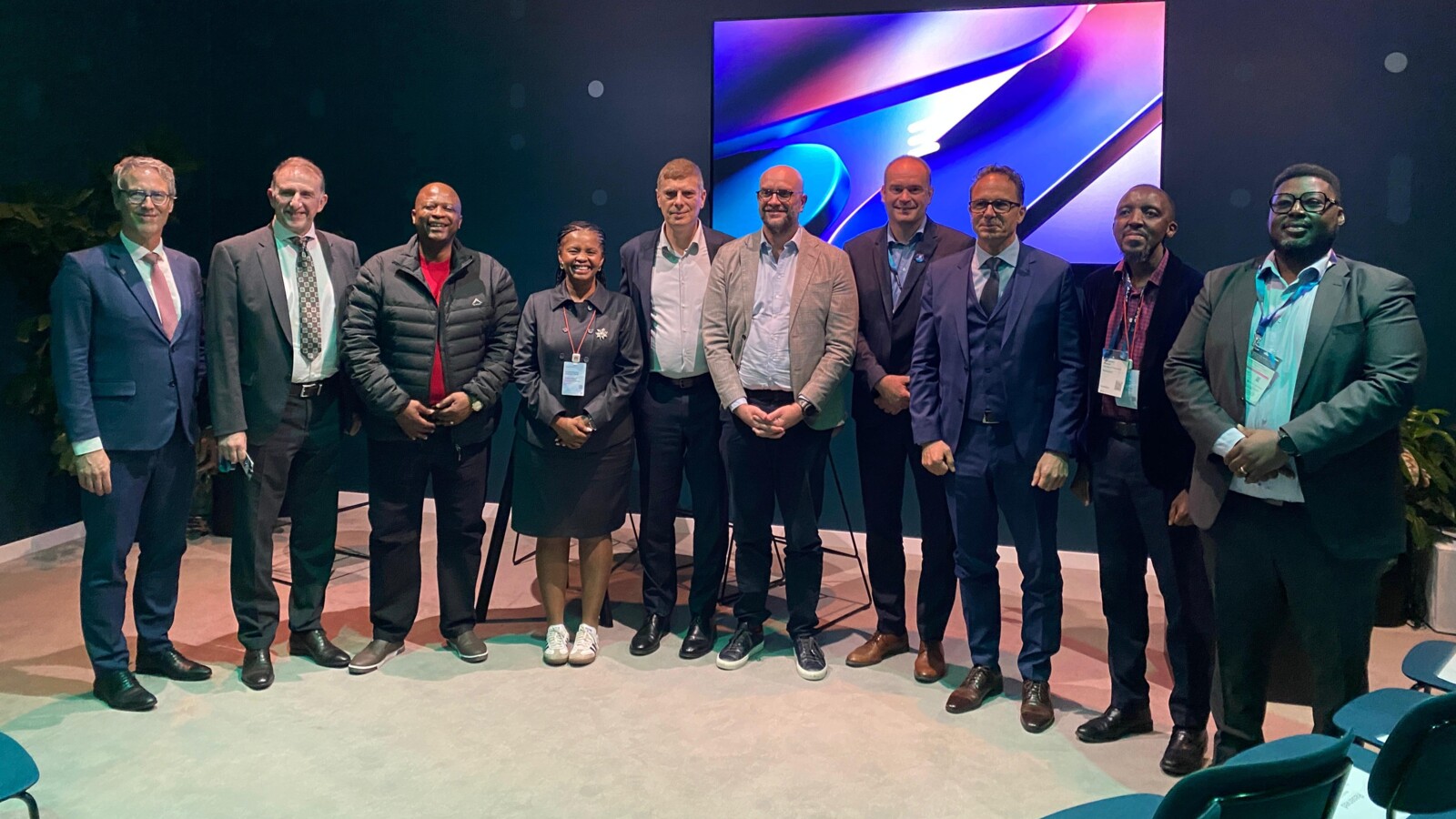
Step into Africa's digital future: Insights from MWC 2025

The Mobile World Congress (MWC) 2025 hosted a pivotal session, "Step into Africa’s Digital Future," as part of the Ericsson conference program. The session offered a deep dive into the transformative potential of digital advancements across Africa, featuring a lineup of industry leaders and experts who shared their insights on driving digital growth and innovation in the region.

Explore more

High-performing networks: proven success at mega-events

Recent advancements in 5G networks have significantly improved connectivity at large-scale events. AI-driven network optimization allows for real-time management of network conditions, ensuring uninterrupted service during peak demand. As consumer expectations evolve in Saudi Arabia, the growing demand for differentiated connectivity services offers service providers opportunities to meet these needs with advanced technologies.

Explore more

Monetizing network APIs: A new frontier for CSPs

APIs enable seamless communication between applications, serving as a crucial tool for Communications Service Providers (CSPs) to streamline operations and enhance service offerings. The paper highlights the role of APIs in enabling new monetization models through network exposure, the challenges faced by CSPs in the API market, and the potential of APIs in transforming CSPs into service enablers. It also examines industry solutions like Ericsson's API exposure models and the role of standardization bodies in developing a global API economy. Read more for in-depth information.

Expore more

Revolutionize your business with a cost-effective, high-performance radio network solution

Unlock efficiency and performance with cutting-edge radio technology

Transform your business operations with our innovative radio network solution that drastically reduces equipment needs while maximizing performance. By utilizing advanced triple-band multi-sector radios, our setup requires only seven radio units to support eight bands on a 3-sector site—compared to the traditional 24 units. Experience unparalleled efficiency with our combination of time division duplexing (TDD) and frequency division duplexing (FDD) technologies, complemented by Dual-band Massive MIMO. Read more in the paper!

Explore more

Sunsetting legacy technologies

The global technology shift towards 4G and 5G services is underway, with spectrums being refarmed to accommodate faster data speeds, lower latency, and improved connectivity. Service providers are optimizing spectrum utilization due to its scarcity and cost.

In the Middle East and Africa, the pace of sunsetting legacy 2G and 3G technologies is accelerating, driven by the increasing adoption of 4G and 5G devices. In this paper, we delve into a complex and phased approach to sunsetting as more providers announce plans to phase out older technologies, prioritizing major cities over rural areas to minimize disruptions.

Explore more

E-band’s role in meeting 4G and 5G network demands

The E-band presents a notable advantage owing to its wide channel spacing, facilitating substantial capacity. Its application extends to various scenarios including backhauling RAN sites and fortifying.

Explore more

Elevating connectivity: Role of synchronization in empowering 5G networks

Synchronization is the heartbeat of a mobile network to ensure the correct operation and service continuity in every corner. All synchronization requirements for 5G networks are defined by 3GPP. The requirements for Time Division Duplex (TDD) are even more stringent compared to that of Frequency Division Duplex (FDD) to which the operators are traditionally more accustomed. Global Navigation Satellite System (GNSS) is one of the main synchronization sources for the mobile network, however, relying on it as the sole source of timing leads to a single point of failure. Extended disruption of GNSS signals could render the network vulnerable, potentially resulting in service interruption.

To effectively enhance the robustness and resilience of mobile network synchronization, it is crucial to have a comprehensive understanding of all technology options for synchronization distribution in transport networks. The most suitable and cost-efficient sync solution may vary from network to network.

Explore more

Smart microwave expansion recommendations

Introducing Ericsson’s Microwave Smart Capex, an innovative service from the Ericsson Transport team to help with the CSPs’ yearly microwave investment planning, budgeting decisions, and justifications based on their RAN expansion forecasts.

Explore more

Time to accelerate Network Slicing monetization

5G network slicing adoption in the Middle East and Africa

Network slicing is emerging as a critical instrument to address the service gap between “good enough” public networks that cannot meet demands of today and future and specialized private networks, which require a higher investment and equipment on-premises.

In this paper, we aim to focus on network slicing technology as a differentiator while addressing Communications Service Providers (CSPs) questions and challenges to adopt a plan that works for their ecosystem and their competitive landscape.

Explore more

Spectrum sharing between 4G and 5G sites

By sharing the TDD spectrum between neighboring 4G and 5G sites, it is possible to gradually repurpose the spectrum from one technology to another following traffic demand. This way, CSPs can effectively utilize existing and newly acquired spectrum assets.

Explore more