










Network modernization – on the quest for Net Zero
- English
- 繁體中文
e& (formerly known as Etisalat Group) considers innovative mobile networks and ICT solutions to be crucial in supporting both direct and indirect reduction of carbon emissions across its own and other industrial sectors’ value chains.
- The telecommunications sector has a key role to play in addressing global sustainability goals, both by reducing its own emissions and through its potential to reduce carbon emissions across other industries.
- To break the trend of increasing energy usage in mobile networks, growing data traffic needs to be managed with smart modernization combined with a balanced approach to network performance and use of energy-saving functionality.
- Through initial site deployments, etisalat by e& has already proved it’s possible to reduce energy usage by up to 52 percent and save 7.6 tons of CO2 emissions per site, per year.
A fast-growing number of service providers and equipment vendors are committing to achieve Net Zero carbon emissions across their value chain by 2050. In October 2021, the UAE proclaimed its ”Net Zero by 2050” initiative, in line with the 2016 Paris Agreement targeting Net Zero1 greenhouse gas (GHG) emissions in the country by 2050. As part of the initiative, the telecommunications sector is playing an important role by contributing a sustainable infrastructure build-out and enabling new smart services for consumers, enterprises and industries that will contribute to the reduction of GHG emissions.
e& is committed to accelerating digital innovation in the marketplace toward a more sustainable economy, by providing end-to-end digital vertical propositions to enable smarter developments in areas such as education, healthcare and transportation.
Environmental management – committing to Net Zero operations by 2030
e& has pledged its commitment to achieving Net Zero within its Group’s own operations in the UAE for Scope 1 and 2 emissions by 2030, focusing on key initiatives to reduce its carbon footprint through improving energy efficiency and sourcing renewable energy, among other initiatives.1
Hatem Dowidar, Group CEO at e&, says: “To reach Net Zero, e& is committed to accelerating the decarbonization of activities while focusing on mobile network modernization with the deployment of the latest generation of energy-efficient radio equipment (both hardware and software), increased use of renewable energy sources and carbon-offsetting initiatives that are vital to achieve targets.”
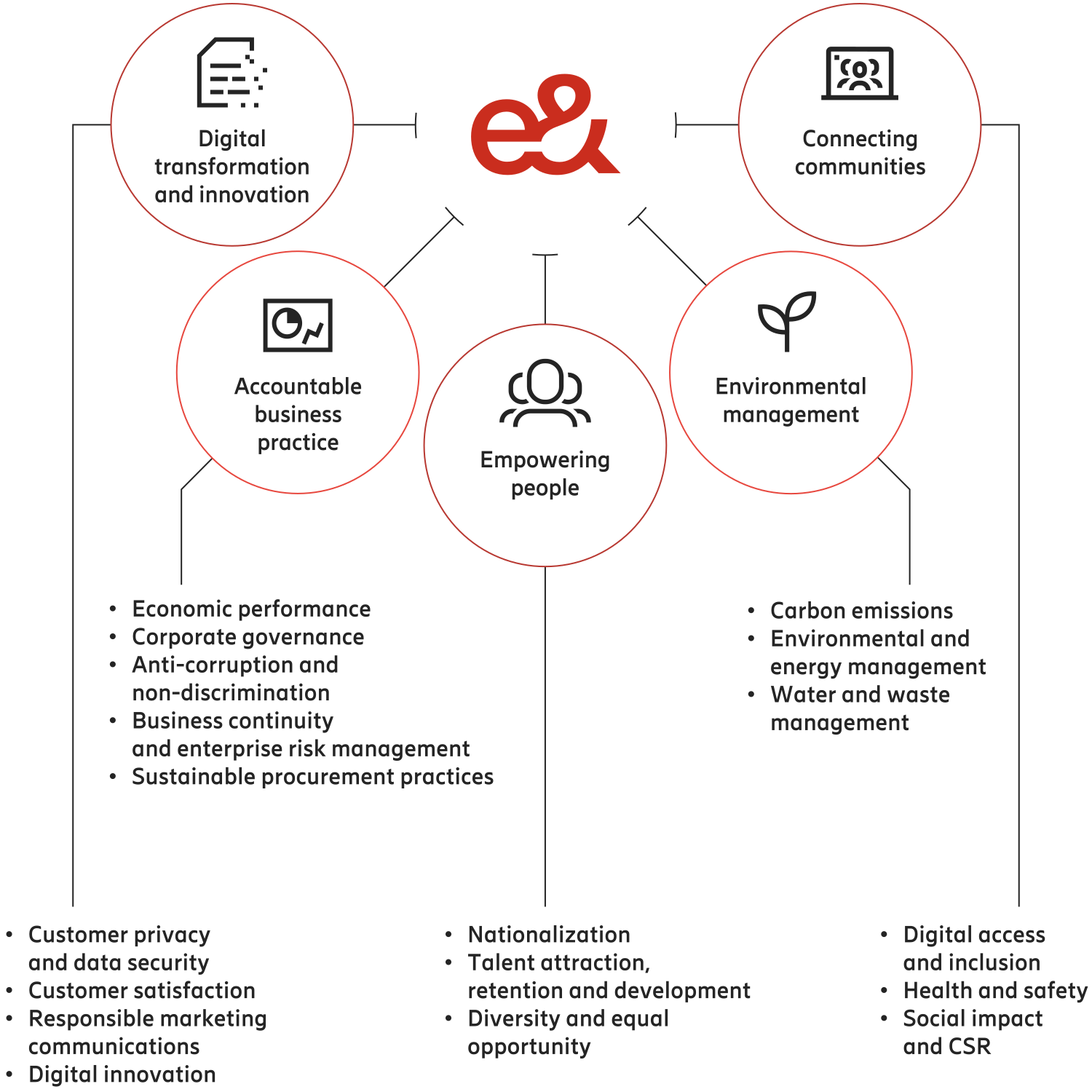
e& has a sustainability framework, supported by a set of improvement programs and KPIs, to guide its operating companies’ business strategies and operations across the Middle East, Africa and Asia. The framework encompasses a range of initiatives to contribute to the UAE climate action ambitions and United Nations’ Sustainable Development Goals (UN SDGs).
One of the five pillars of e&’s sustainability framework is environmental management, which aims to develop more sustainable products and enhance its operations for improved environmental efficiencies through energy, water and waste management. Mobile network modernization with deployment of more energy-efficient equipment and increased use of renewable energy sources is vital to achieve targets.
e& is addressing this by:
- deploying the latest generation of energy-efficient radio equipment (hardware, software)
- minimizing use of diesel generators in favor of renewable energy sources for off-grid cell sites
- maximizing use of hybrid technology for off-grid sites where diesel is already in use
- maximizing the number of sites with free cooling to reduce energy consumption
- replacing older rectifiers with new, highly efficient rectifiers
- utilizing site sleep mode during low-traffic periods

e& (formerly known as Etisalat Group) is one of the world’s leading technology and investment conglomerates. Founded in Abu Dhabi more than four decades ago as the UAE’s first telecommunications company, the Group now operates in 16 countries across the Middle East, Asia and Africa. e& provides innovative digital solutions, smart connectivity and next-generation technologies to a variety of customer segments through its business pillars: etisalat by e&, e& international, e& life, e& enterprise and e& capital.
Energy-efficient mobile networks
Mobile data traffic in the Gulf Cooperation Council region is currently growing at an average of around 20 percent per year,3 driven primarily by the rising number of connected people and an increasing use of data-intense services, such as media consumption. The uptake of new services as the digital society develops will further drive growth in data consumption in the coming years. e& considers 5G to be a cornerstone for building a digital economy, where new innovative services for consumers, enterprises and industries can be a catalyst for a sustainable development of society by optimizing the utilization of time and materials. In this context, network modernization is needed to manage expected growth and minimize increasing energy consumption.
For each new generation of mobile technology, from 2G through to 5G, the energy needed to transfer each bit of data through the network has lessened. For example, replacing 2G/3G with 4G is significantly increasing the capacity for the same spectrum. It also enables the use of more efficient energy-saving functionalities, offered by the 4G standard. 5G technologies are designed for high capacity and low network energy consumption, including significantly improved support for energy savings during low-to-medium traffic periods.
Modernized site equipment has already led to a 52-percent energy consumption reduction compared to previously deployed radios.
Minimizing the mobile network environmental footprint
etisalat by e& has devised an environmental management policy focusing on reducing energy consumption. Minimizing the environmental footprint of its mobile network is part of this policy, which is being addressed through the deployment of a state-of-the-art modern network resulting in high energy efficiency. etisalat by e& is deploying the latest generation of radio base stations and new software features to minimize environmental footprint while elevating network performance quality.
A range of improvements have been realized through modernizing an existing site that had 2G, 3G and 4G radios installed, with a new-generation, multi-standard, multi-sector, and multi-band radio that supports 2G-to-5G mobile standards. Under the same network coverage and performance requirements, the modernized site shows lower operational cost and reduced equipment footprint, while being ready for 5G. Initial deployment resulted in up to 52 percent energy consumption reduction compared to previously deployed radios at the pilot site. The reduction in energy consumption is equivalent to 7.6 tons of CO2 emissions per site, per year for the high-tier sites configured with 4 LTE carriers.
Recycling decommissioned, end-of-life electrical equipment is also considered an important measure to reduce the potential environmental impact from electronic waste when modernizing the network. e& will continue to work on reducing CO2 emissions across its operations, as part of its commitments to contribute to a greener ICT sector and its climate change mitigation efforts.
Initial deployments have proved savings of up to 7.6 tons of CO2 emissions reduction per site, per year.
Figure 24: e& sustainability framework
Balancing performance with efficiency
The increase in mobile networks’ energy consumption is closely correlated with building out geographical coverage for new radio technologies. Data traffic is not evenly distributed across a mobile network. Typically, 50–70 percent of radio base station sites carry 25 percent of the total traffic. These low-load sites are often over-dimensioned, that is, operating at sub-optimal capacity utilization levels with unnecessary high energy consumption. Precise dimensioning with the right radio site hardware for each traffic segment can reduce energy consumption while maintaining network performance.
Latest-generation radio base stations can have up to 50 percent lower energy consumption compared to the previous generation. Modernizing the network in this way leads to a smaller footprint and less weight while providing higher capacity and better performance, which all contribute to improved energy efficiency for transferring data traffic across the network. Modernization in low traffic areas can yield a short payback period even when only considering the energy savings.
Reducing energy consumption with maintained network performance
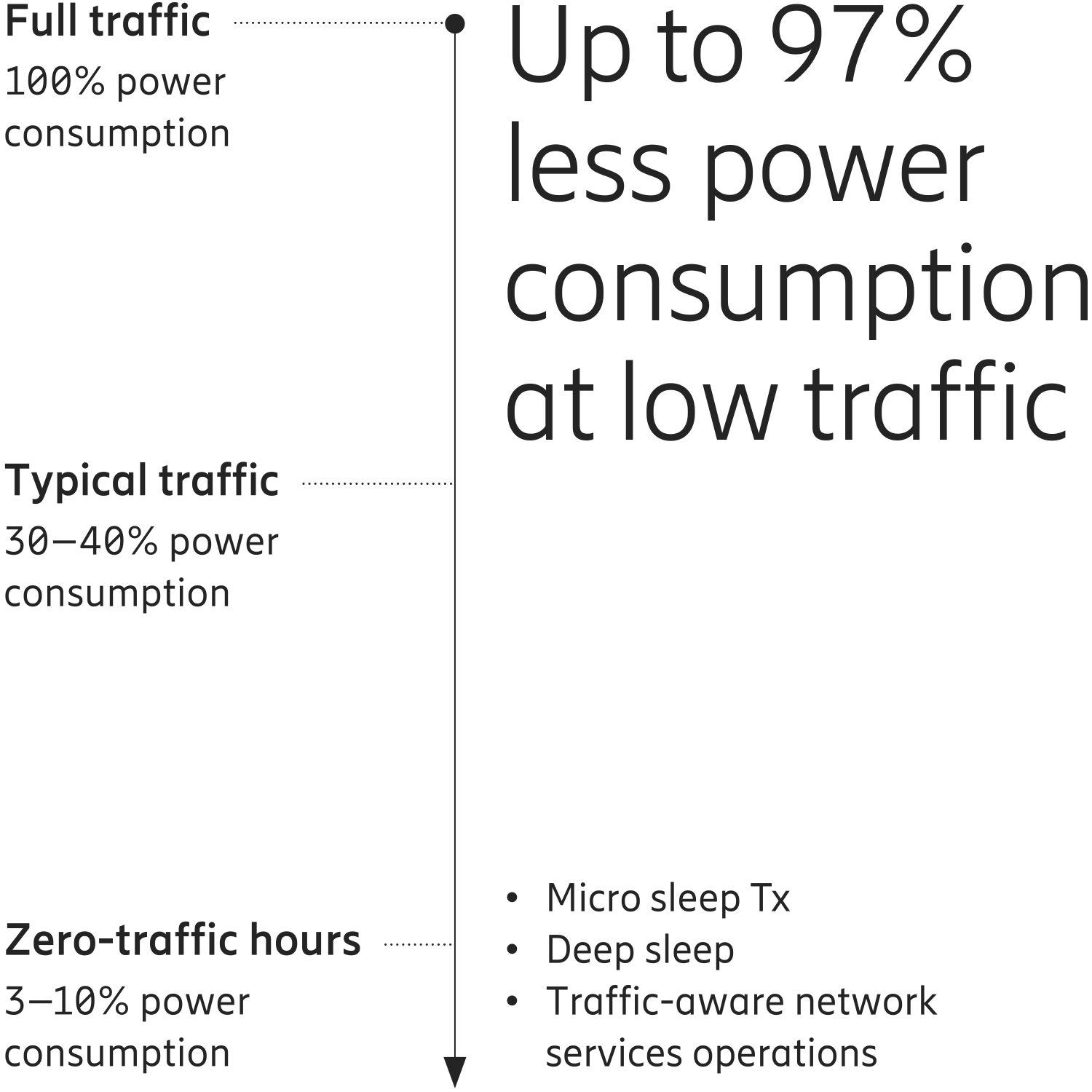
For service providers, energy is typically the third-largest network-related operating expense. A range of software features, such as transmitter micro sleep (switching off radio transmitters when no transmission is required), deep sleep (hibernating radios during low-traffic hours) and low-energy schedulers can enable huge energy savings without degrading network performance. These energy-reducing software solutions make use of load variations and allow the power consumption of modern radio equipment to vary up to 97 percent between full-traffic and no-traffic hours. Finding the right balance of network performance and energy performance/efficiency as data traffic grows and new services are introduced helps service providers to break the energy curve. This requires a combination of replacing old equipment with the latest technology and hardware, activating energy-saving software and operating site infrastructure intelligently, for example by implementing predictive maintenance methods on site.
Figure 25: Typical mobile network traffic distribution
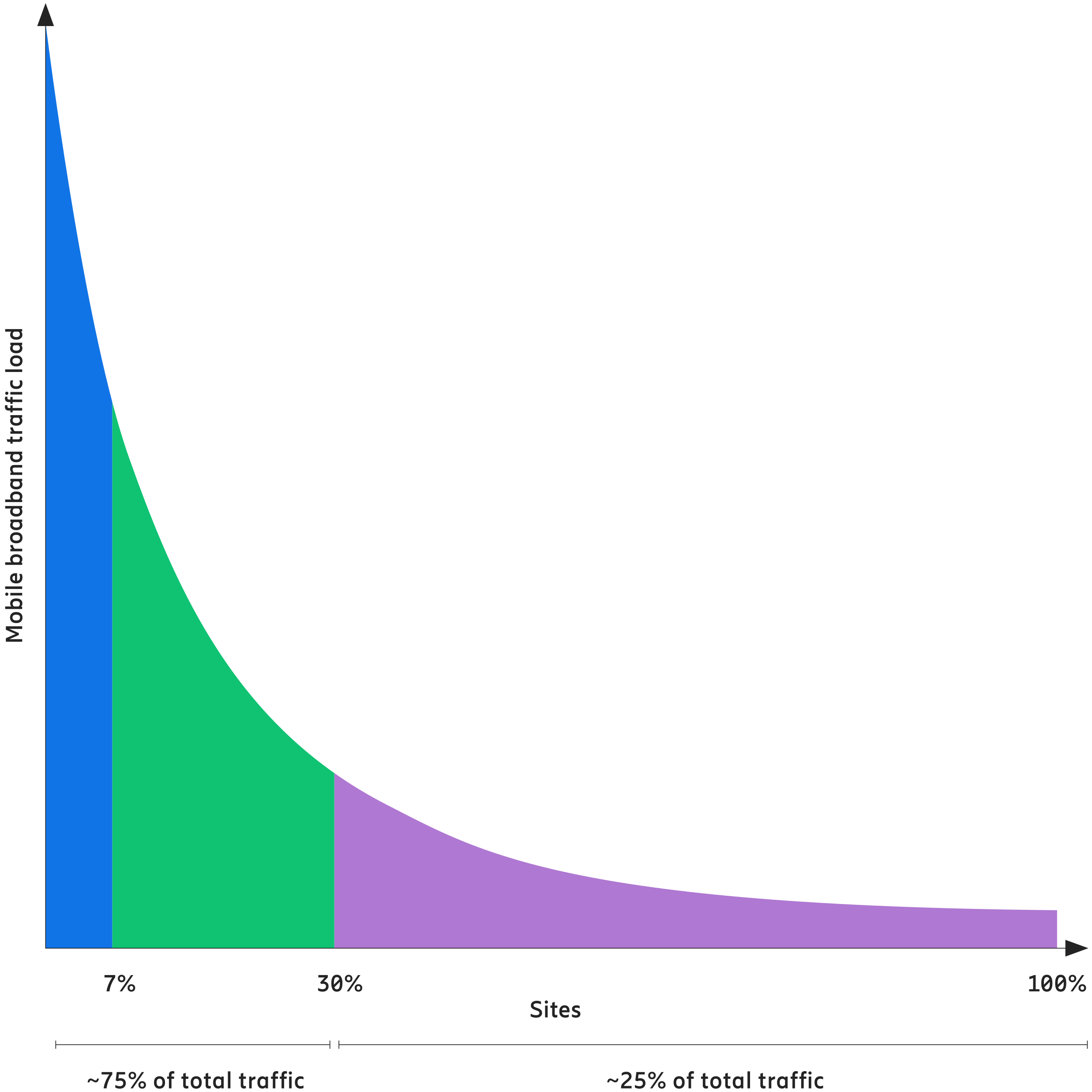
All available spectrum used (e.g. 5-7 frequency bands)
Some unused spectrum (e.g. 3-4 frequency bands)
Few bands deployed to support area coverage (e.g. 1-3 frequency bands)
Figure 26: Optimizing power consumption across different traffic loads
- ITU standard defines ‘Net Zero’ as a future state where all emissions that can be reduced are reduced, with like-for-like or permanent removals applied by carbon-removal technologies to balance the remaining emissions.
- Scope 1 refers to GHG emissions that occur from sources that are controlled or owned by an organization.Scope 2 emissions are indirect GHG emissions associated with the purchase of electricity, steam, heat or cooling.
- Source: Ericsson Mobility Visualizer.