








Cooperation and collaboration: Building Finland’s next-generation public safety network
- English
- 繁體中文
To protect society, critical situations demand cooperation, efficient organization and highly reliable communications between authorities. A resilient mission-critical network enables Erillisverkot Group to manage and control its broadband network, safeguard information security and protect data integrity.

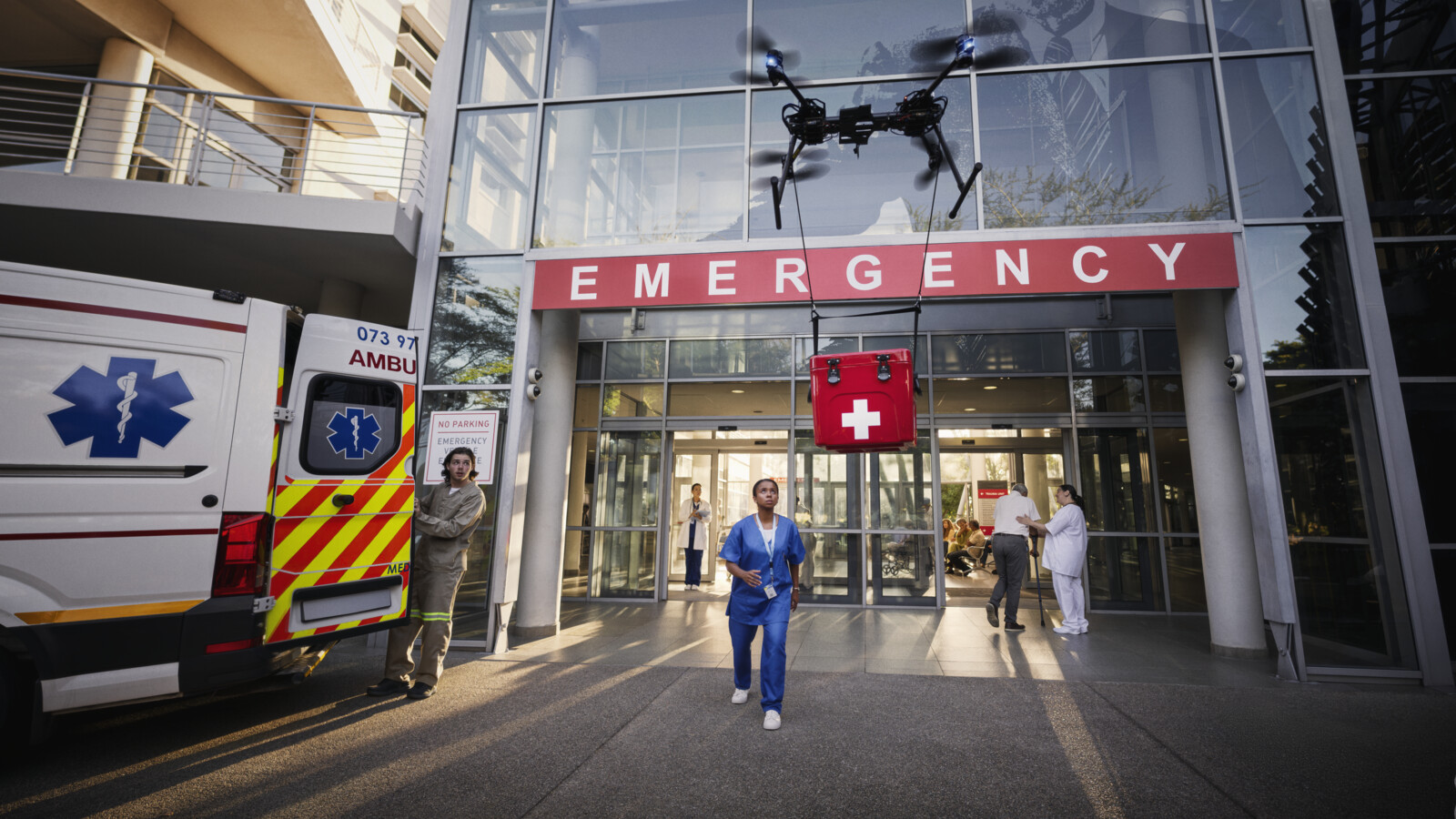
- First responders rely on voice, but this is evolving as mobile solutions over 4G and 5G enable additional capabilities such as video or data sharing, AR and drones for situational awareness.
- To deliver the same coverage and resilience as voice, Erillisverkot Group collaborated with partners to create Virve 2, a next generation Public Protection and Disaster Relief (PPDR) network initiative.
- Finland encourages cross-party cooperation between emergency services and other authorities and connectivity through Virve 2 is a key enabler for data sharing, transparency and accessing common systems.
The need for reliable mobile broadband
In any emergency situation, instant, reliable and stable communication is key to enable and support successful emergency operations. First responders like firefighters, emergency medical service personnel or police officers need to be able to rely on fast, secure connectivity to save lives.
Erillisverkot Group is a non-profit company owned by the state of Finland. It was founded in 1999 to operate and, at a later stage, to own the TETRA-based nationwide public safety mobile service, Virve. The largest user groups on Virve are the fire and rescue services, social and healthcare services, police, defence forces, Border Guard, customs, railway operators, the Emergency Response Centre Agency and other authorities and companies. Voice, especially group calling, is still very important, but public safety agencies are increasingly turning to mobile solutions due to the capabilities provided by 4G and 5G, such as the secure and speedy sharing of data, images and video. Virve is unable to offer these data services on a similar level as voice, leading end-user organizations to utilize commercial mobile broadband networks in operational situations. Commercial networks in Finland do offer high-quality mobile broadband services, but do not meet the demands of public safety when it comes to priority, coverage and resilience.
Virve 2: Building a safer Finland
To deliver the required data services in addition to and with the same coverage and resilience as voice, Erillisverkot Group, with selected partners, is building a next-generation PPDR network initiative. This is called Virve 2, and it is one of the most significant Finnish government ICT projects of this decade. It will safeguard the daily operational continuity of critical national infrastructure, and therefore ensure that the public safety authorities can operate smoothly in all situations now and in the future. The program expects all current Virve services to be completely migrated to Virve 2 during the second half of this decade, with the existing services running in parallel until the migration is complete.
Virve 2 will be based on 4G/5G technology, and is expected to provide improved cost efficiencies and more flexibility and agility in service delivery, as no longer will one size fit all requirements. For example, multiple subscription types will need to be supported including data only, voice and data, and IoT connections. The range of devices will also increase and continually evolve with service offerings from standard smartphones to fully ruggedized devices and in-vehicle devices. The network will be introduced in phases during the transition, from initial data-only services, to the migration of voice services for prioritized group calls and push-to-talk, then finally to serve as a platform for future innovations. That “one size does not fit all” is illustrated by the police force’s mobile offices that enable them to administer nearly all tasks at the roadside to avoid visits to the police station. To deliver the mobile office, they are currently utilizing the TETRA network for mission-critical voice and narrow-band data, supporting 2 million group calls and 70 million short data service messages per week, and an additional commercial mobile network for non-critical voice and data for in-vehicle computers and printers. Different subscriptions and devices are required from Virve 2 compared to the current situation, where one radio model is often the solution for every need.
This article was written in cooperation with Erillisverkot Group, a Finnish state-owned special-purpose company that provides services for organizations responsible for the safety and functioning of society in the fields of communications, mission control and securing critical infrastructure.
Building on 3GPP technologies
To meet those demands, public safety agencies are increasingly turning to mobile 3GPP-based solutions due to the capabilities provided by 4G and 5G along with many different applications for effective sharing and cooperation, such as the secure and speedy sharing of data, images and video. Erillisverkot Group is leading the way by evolving their PPDR network, Virve 2, which will be based on commercial mobile 3GPP technology with enhancements to meet security, availability and resilience requirements.
Globally, 3GPP technologies used to build commercial 4G and 5G networks today bring many advantages for public safety network operators. This includes the ability to take advantage of open competition in the supply chain, reusing commercial investments and leveraging the global economies of scale that will drive cost efficiencies, compared to bespoke solutions. Seamless integration with the established ecosystem built around 3GPP technologies brings tangible benefits, such as being able to access new and improving network capabilities like higher data rates and lower latency, built-in security and the vast range of devices within the ecosystem. The PPDR will place additional demands on the ecosystem, driving continuous growth to address specific needs, like ruggedized devices for operation in extreme climate conditions, like the sub-zero temperatures in Finland, and terminals with specific form and function for ease of operation in the field for applications like push-to-talk.
Reliable mobile broadband networks with sufficient geographical coverage are a prerequisite for effective cooperation when dealing with larger incidents. Building out the new data services on commercially deployed networks will bring advantages including faster service deployment and environmental benefits, as well as cost efficiencies. Today, Finland already has strong data networks that can be used to commence services much faster than building a new network, allowing resources to focus on the additional requirements for network hardening and build-out to meet coverage needs. There are both cost efficiencies and environmental benefits with a full migration through the removal of the legacy network, and better utilization of existing infrastructure compared to a new overlay network.
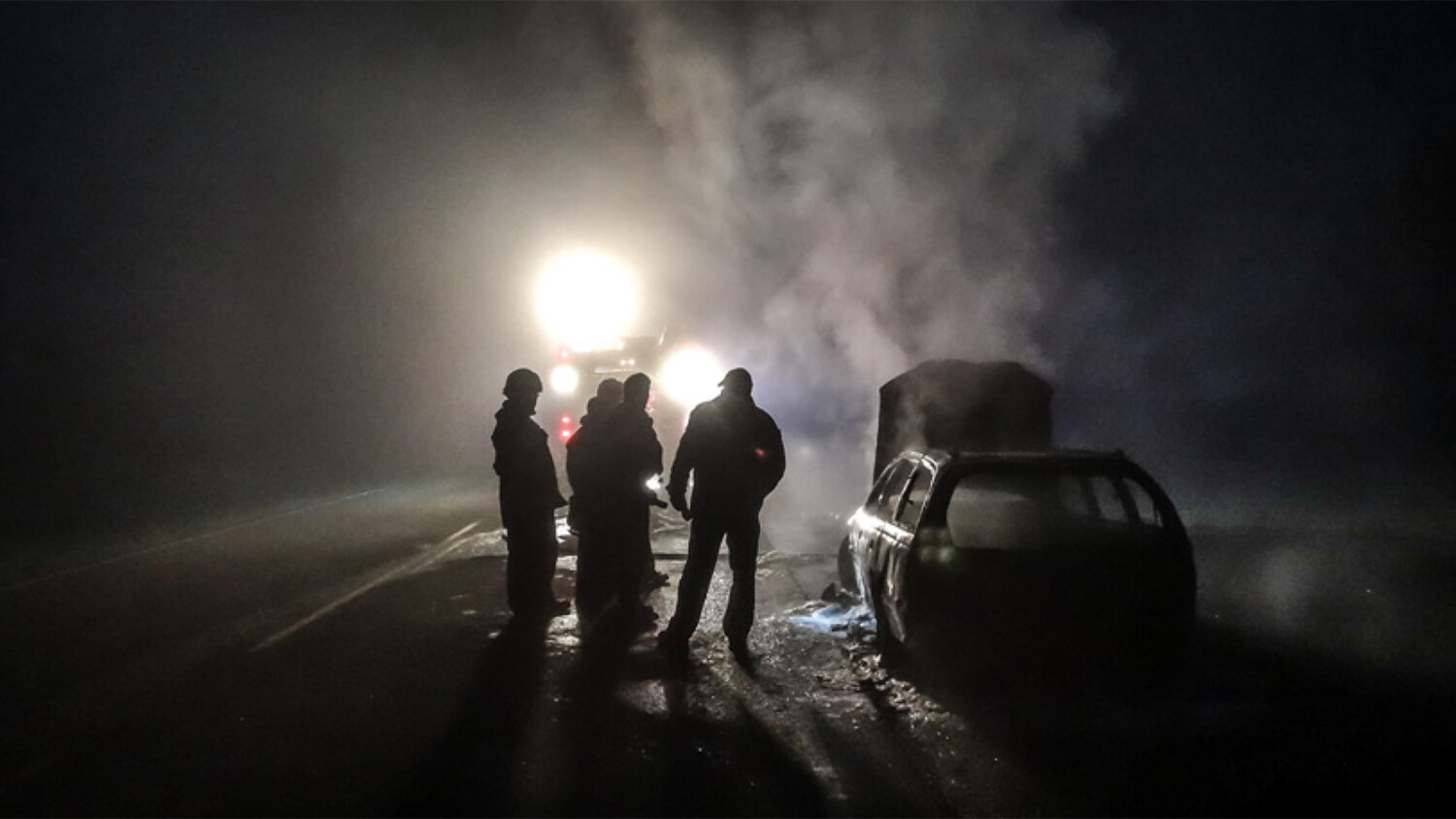
Importance of modernization across the ecosystem
Mission-critical broadband technologies play a key role in efficient public safety communications. But to fully realize the successful deployment and adoption of services, the whole ecosystem that these networks are designed to support must also evolve and align. Operations will become more efficient as the laws within which networks operate, trust between organizations, common ICT systems and transparent cooperation within the national ecosystem develop.
Legal framework
Finland is geographically large, but has a population of just 5.6 million people. Laws play a key role in enabling efficient operations and cooperation between parties, such as by enabling the police, Border Guard and customs to do each other’s work. For example, the Border Guard’s coastguard can carry out water transport traffic control in the Baltic Sea. In the same way, customs officers can carry out similar monitoring of drivers, vehicles and snow mobiles in sparsely populated areas like Lapland. Laws must also not limit effective public safety activities, for example by limiting the use of location information. The use of location information of patrols plays a key role in assigning available resources and patrols to a specific task. Another simple update to the law was changing the size of paper a police ticket could be issued on, enabling even motor cyclist enforcement officers to have all the resources with them to handle the full task at the site and avoid a visit to the local police office. However, it is always important when legislation is updated to ensure privacy protection and ethics are fully considered.
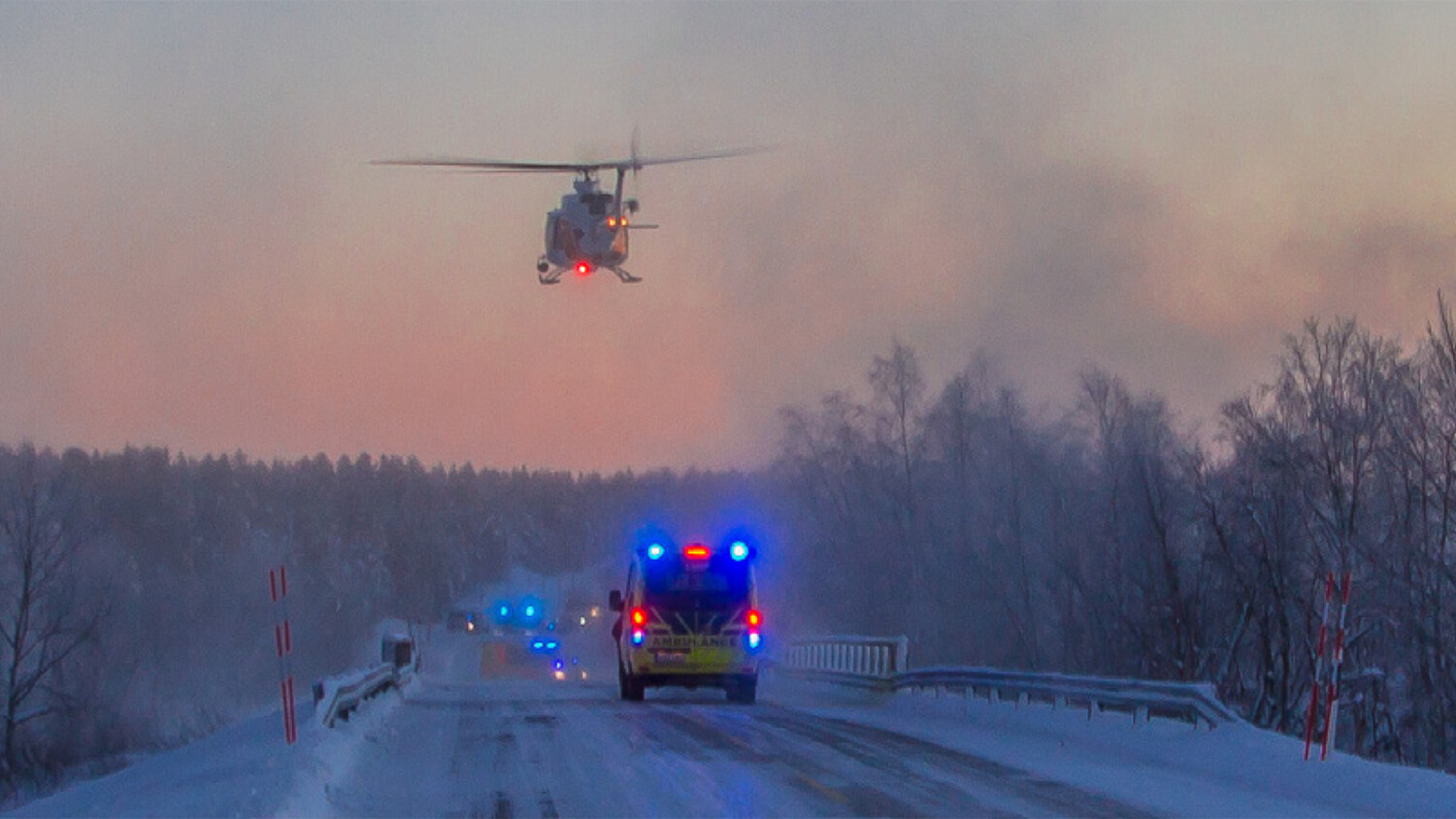
Trust between organizations
A good level of trust between individuals and organizations is a prerequisite so that different organizations can cooperate effectively to achieve efficiency in operations. If public safety organizations are created in a simple way with a clear purpose, this helps build trust and avoid any unnecessary competition between organizations. In Northern Europe, the level of trust in societies has traditionally been high, making it easy to build good cooperation between public safety authorities and individuals.
Common ICT systems
If several organizations (police, Border Guard and customs) do the same work, the best results are achieved if management and communication systems are common or deeply integrated and information is shared across organizations. In Finland, the police follow this model, operating as a single organization with common leadership and communication protocols throughout the entire country. With this model, lending resources to the other areas of the country is easier. The latest 4G and 5G networks and integrated IT systems combined with automated processes are enabling this efficient and effective cooperation across organizations.
Transparent cooperation
Better, closer and more effective cooperation is achievable if the points mentioned above support the work. The best cooperation results are also achievable if it is possible to work and solve tasks right away, on the road, without visits to offices or stations.
A platform for innovation
A key learning from the journey so far with Erillisverkot Group is that to be able to successfully deploy new solutions and service offerings, consideration for the full ecosystem of the environment within which it operates must be fully aligned. It is only when all the component parts are aligned that the full potential of the technology can be realized. The network has a priority in providing data services and migrating existing services to Virve 2, ensuring instant, reliable, and stable communication that safeguards information security and protects data integrity. However, once these capabilities are supported by advanced network features like higher data speeds, lower latency and positioning accuracy, it will open up new opportunities like AR in fire fighters’ helmets or drones building a clear picture of emergency situations in sparsely populated areas. Virve 2 will provide an innovation platform, addressing new and unknown use-cases; this is just the beginning of the journey.