











The state of 5G in Latin America: a closer look
Interest in 5G is growing in Latin America, and its deployment and adoption presents a real opportunity to promote economic recovery and social inclusion throughout the region.
During the COVID-19 pandemic, mobile broadband played a critical role in connectivity, often as an alternative to the limited availability of fixed broadband. There is a general interest in the adoption of 5G technology due to its relevance in promoting innovation, competitiveness and productivity in a digital transformation scenario.
A stable, ultra-fast and affordable mobile broadband service should be an overall priority in the region to help close the digital divide. Fixed wireless access (FWA), as a use case, can also be better leveraged for both business and social purposes.
Economics: 5G helping to kickstart recovery
Latin America is expected to achieve GDP growth of 5.2 percent in 2021, showing a partial recovery from the contraction of 6.8 percent in 2020 that was largely due to the COVID-19 pandemic. However, challenges to a full recovery remain, with persistent and widespread social and economic problems across the region. By 2022, the Economic Commission for Latin America and the Caribbean (ECLAC) projects that countries in the region will grow by an average of 2.9 percent, which implies a slowdown compared to the 2021 rebound.1
Spectrum
Latin American countries have scheduled several spectrum allocation processes for the end of 2021 and the first half of 2022. There is still an opportunity for spectrum harmonization on the mid-bands (3.3–3.7GHz) across Latin America, as well as opportunities for sharing low-band spectrum with previous technologies.
Rolling out 5G
There have been commercial 5G launches in countries such as Colombia, Brazil, Peru and Puerto Rico. New 5G roll-outs are expected in 2022 after the success of recent auctions in Brazil, Chile and the Dominican Republic. Many service providers – in at least 15 countries – continue to test 5G technology in preparation for upcoming auctions.
Outlook
By the end of 2027, 5G is expected to represent 44 percent of mobile subscriptions in Latin America and the average traffic per smartphone is forecast to be approximately 35GB per month.
The deployment of 5G networks represents a significant opportunity for development in the region. Last year, it was projected that the digitalization of industries in Latin America could develop into a market worth more than USD 21 billion annually, and in the long term this critical infrastructure could increase regional competitiveness and translate into a GDP increase of more than 5 percent.
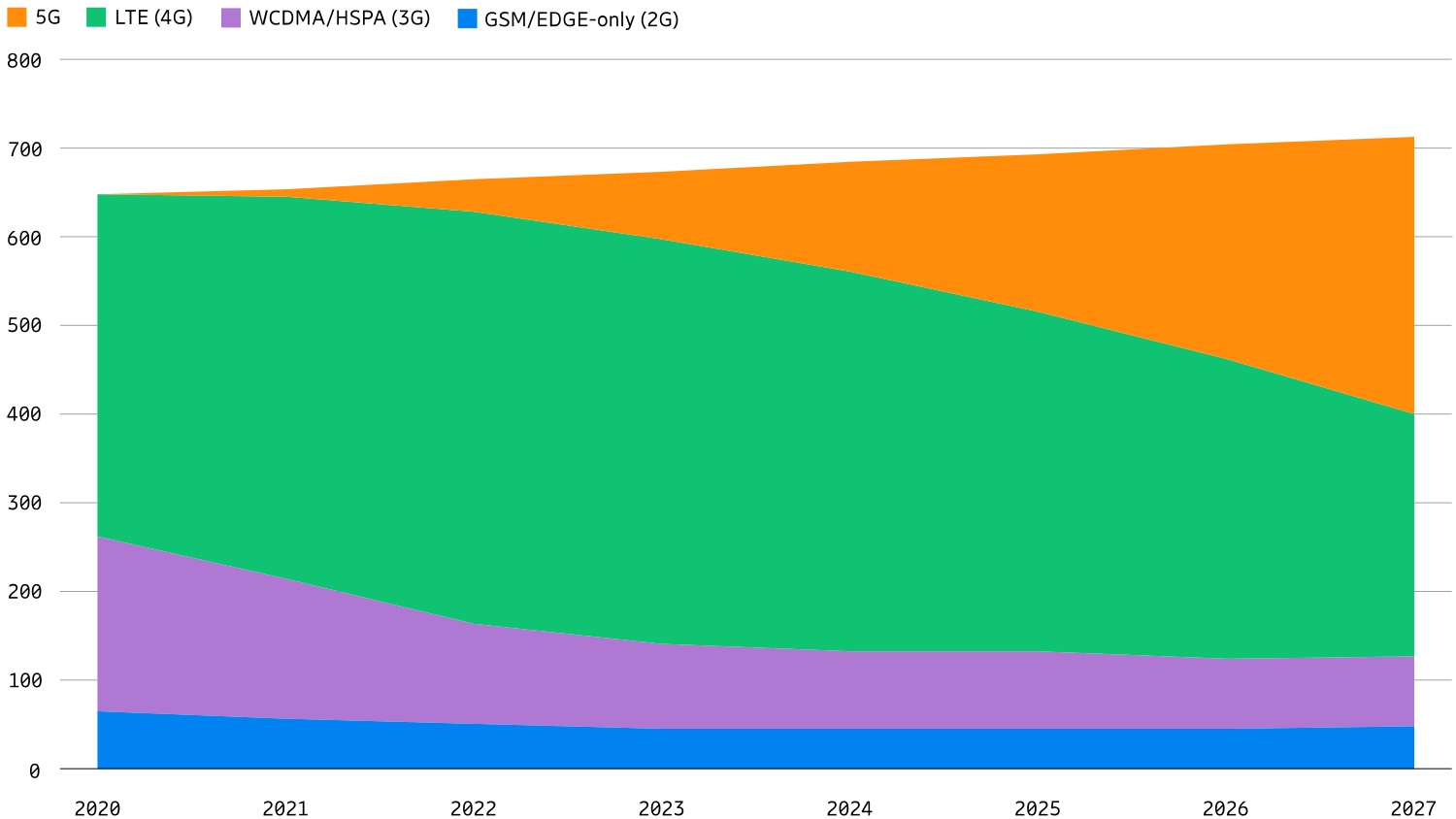
Figure 7: Latin America mobile subscriptions by technology (million)
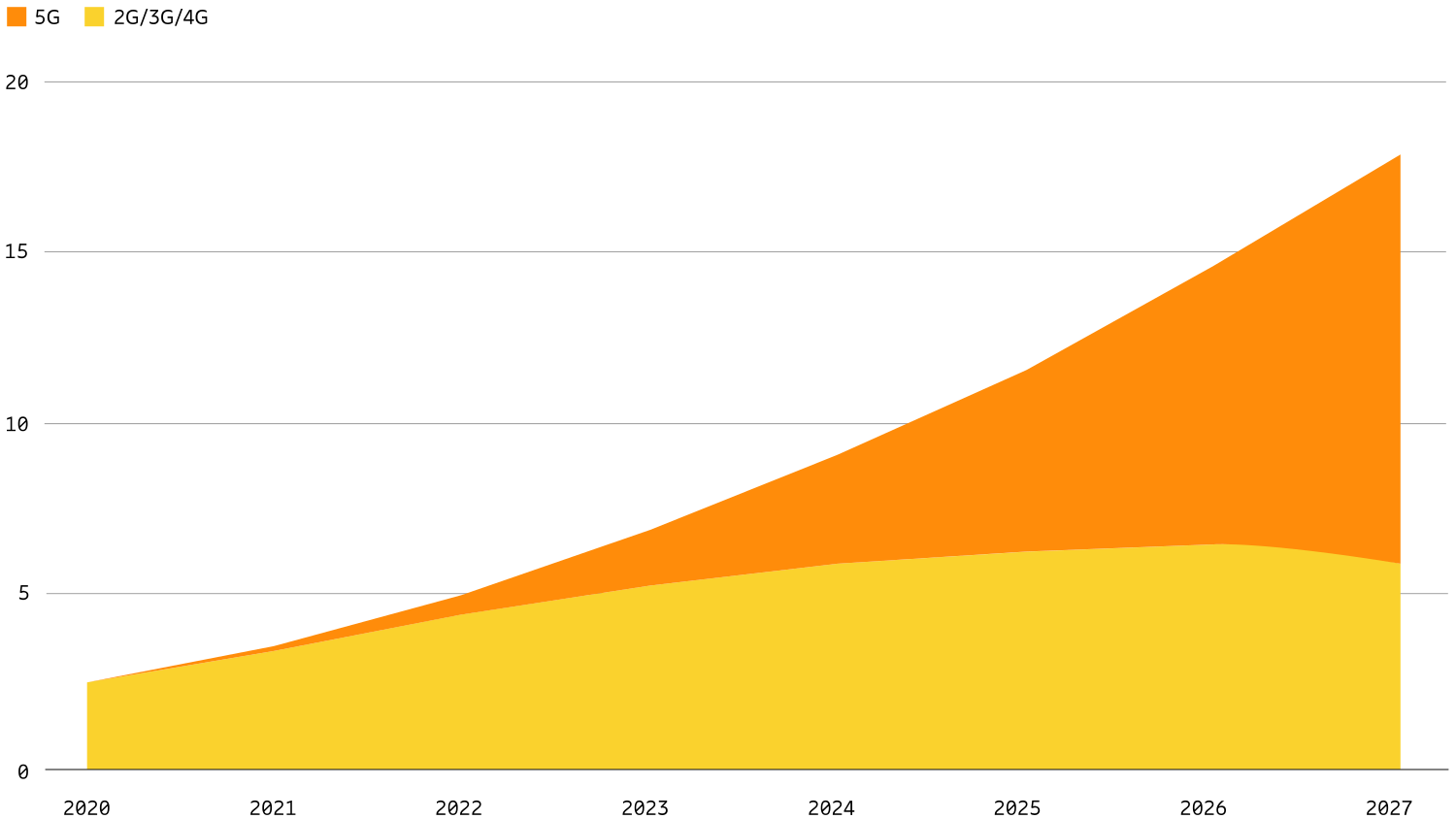
Figure 8: Latin America mobile data traffic (EB per month)
Bridging the digital divide in Latin America
FWA has been identified as a potential solution to help connect the unconnected. Many countries in the region have been testing technology and formulating plans, and now the roll-out is underway. FWA is ideal for places that are difficult to access with traditional fixed broadband. An estimated 244 million people in Latin America – one-third of the population – do not have access to the internet.2 The pandemic has had a huge impact on efforts to digitalize the region.
Countries such as Chile, Colombia and Mexico had a boost in the digitalization of companies and their employees, but there is still a wide gap between rural and urban areas in most of the countries that make up the region.
A study published by the Inter-American Development Bank (IDB) describes how Latin America and the Caribbean could dramatically increase employment while boosting sustainable economic growth if they succeed in promoting digital connectivity.3 According to the study, closing the gap with Organization for Economic Co-operation and Development (OECD) countries could generate more than 15 million jobs, boost regional GDP by 7.7 percent and increase productivity by 6.3 percent.
Despite multiple efforts to connect the region, there is still a lag that must be addressed. It is essential for governments, organizations and companies to collaborate to achieve the objectives of economic growth with social inclusion.
5G and private networks to enable Industry 4.0
The characteristics of 5G are ideal for new use cases in business and industry. Its deployment becomes a catalyst for digital transformation and Industry 4.0. Latin America is an industrial hub of global relevance. Mining, manufacturing, seaports, airports, warehouses and energy plants are examples of sectors developing innovative solutions to take advantage of the emerging opportunities for private networks.
A mining company in Mexico will deploy a private network covering 3 underground copper mines with operations down to a depth of nearly 1km.
It will be the first 5G-ready cellular network deployed in an underground mining production environment in Latin America and emphasizes the possibilities for private networks in the industry and the region. The mines will use the private network with 20MHz bandwidth in the 700MHz band to monitor in real-time the mining machines, sensors and energy system in 10s of kms of mining tunnels. The private network will also allow the mines to remotely control ventilation and locate workers in real-time through smart helmets, including sending emergency messages or mission-critical push-to-talk and push-to-video communications. All these use cases translate into significant improvements to employee safety, an increase in productivity and the reduction of operational expenses.
5G consumer potential
The Latin American 5G market is projected to generate over USD 28.4 billion annually by 2030 in enhanced mobile broadband revenues. In addition, the 5G FWA market has the potential to connect rural areas and expand broadband coverage. It is expected to be worth nearly USD 4 billion in 2030, with 21 million subscriptions. Maintaining this momentum and accelerating commercial deployments and adoption can help drive the region’s recovery from COVID-19.4
1 Economic Commission for Latin America and the Caribbean, www.cepal.org/es.
2 Ibid.
3 IDB: Banco Interamericano de Desarrollo, Informe anual del Indice de Desarrollo de la Banda Ancha (2020).
4 Ericsson Consumer and IndustryLab analysis, Harnessing the 5G consumer potential study, Latin America (November 2020).