








5G device outlook
AI’s rapid progression opens multiple scenarios for what will be possible in devices, even in the short term
Key findings
The foldable segment’s market share is expected to grow significantly, despite the flat or shrinking smartphone market.
Trials for eRedCap are underway, with full commercial potential expected from 2028.
Commercial 6G devices are expected within 3–4 years, with standardization discussions having already begun.
Smartglasses in the AI era
The smartglasses market is nascent but growing rapidly. Global shipments reached about 10 million units in 2025 and analysts project strong double-digit growth in the coming years. AI/audio glasses are expected to represent the largest share, while smartglasses with displays must evolve to achieve mainstream adoption, affordability and all-day battery life. Already, early smartglasses integrate 4G connectivity, with 5G reduced capability (RedCap) modems expected within the next three years.
Smartglasses volumes are expected by analysts to grow 2–3 times in 2026, and are leading the way toward 6G for large-scale network use. The always-on aspect requires optimized uplink performance, paired with intelligent compute distribution between the device and network assets. Distributed compute is starting in 5G and expected to excel in 6G.
Foldable devices evolving
Foldable smartphones have become a flagship device, with offerings expected from all major vendors. Initial issues with hinges and display creases have been addressed and the segment is maturing, with volumes fluctuating but trending upward. Two distinct models exist: The “flip” currently drives volume, while the “fold” is expected to lead in innovation and AI differentiation, as the format is better suited to multitasking. In a flat or shrinking smartphone market due to memory constraints, the foldable segment’s market share is expected to grow significantly. Foldables are memory-intensive, but are still expected to be only moderately impacted by the memory crisis.
eRedCap coming to market
RedCap is now supported by most chipset and module vendors, with growth expected primarily in industrial devices and use cases. Market demand for RedCap sensors and other appliances continues to build. The first RedCap smartwatch has emerged, and this segment is anticipated to grow as 5G standalone (SA) deployments increase. To make 5G fully relevant for low-cost IoT, enhanced RedCap (eRedCap) will be introduced, with lab trials starting this year and full commercial potential expected from 2028. At least five chipset vendors have committed to commercializing eRedCap. The key aspect is to be on par with LTE Cat-1bis pricing of a few USD per module, to become the 5G IoT solution of choice.
Differentiated connectivity in devices
The focus of network slicing has been on developing revenue-generating use cases for service providers. Major smartphone vendors now support UE Route Selection Policies (URSP) across OS platforms, enabling communication apps to benefit from network slicing. Service providers are combining this with Low Latency, Low Loss, and Scalable Throughput (L4S) in the application layers to create differentiated commercial offerings that can be monetized.
6G taking shape
Commercial 6G devices are expected within 3–4 years, and planning for the first 6G mode chipset feature content has started in parallel with the 3GPP standardization discussion. Decisions on hardware-affecting features are the most time-critical. As chipset development takes years, initial commitments on the standard direction must be made now.
Notably, 6G discussions are already centered on use cases and commercialization. 6G could trigger a supercycle, an unusually strong multi-year upgrade wave, for several reasons: agentic AI will be native at the introduction of 6G; smartglasses will enter the 6G era with their full capabilities; connected physical AI device form factors established; and many chipset vendors are interested in being in the next generation from the start.
Figure 3: Technology area readiness on devices and networks
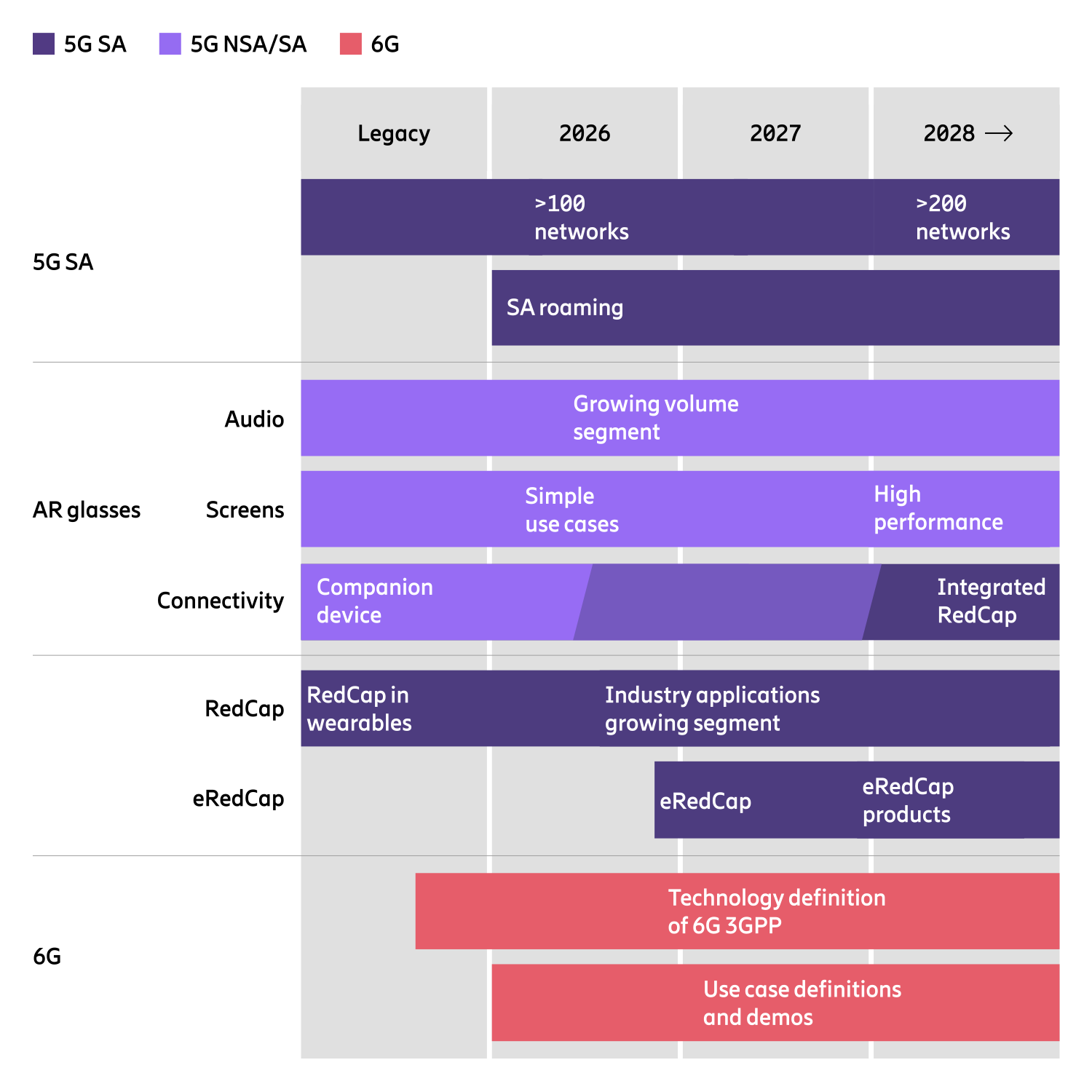
Note: Readiness means more than one infrastructure and device vendor is ready.