









Voice and communication services in 4G and 5G networks
With the accelerating growth of 4G and 5G coverage and traffic, the rationale for evolving remaining circuit-switched 2G and 3G voice services to packet-switched services building on voice over Long-Term Evolution (VoLTE) and Voice over New Radio (VoNR) is stronger than ever. This white paper explains the technologies and network evolution aspects that enable globally interoperable communication services over packet-switched networks, using mobile phone numbers as identity on smartphones and other devices. Consumers, enterprises, and industries are benefitting from high-quality and easy-to-use voice and new innovative communication services, across the continuously evolving mobile broadband world.
Introduction
The transition from circuit-switched to VoLTE-based networks is well on its way with more than half of all subscriptions worldwide already migrated, predicted to exceed 4.6 billion by the end of 2022 [6]. The launch of 5G networks is further accelerating the migration. Many 2G and 3G networks have already been closed and an increasing number of communications service providers (CSPs) have publicly announced intentions and plans to re-farm spectrum for cost saving.
CSP-based phone numbers form the world’s largest communication services community, and CSPs can leverage this asset by continuing to evolve globally interoperable services to meet evolving demands from users. Over-the-top (OTT) voice services such as Microsoft Teams© and WhatsApp© have driven user adoption of more advanced communication services such as video calling and video messaging. However, these solutions cannot provide a fully satisfactory voice experience in many mobile scenarios because there are no Quality of Service (QoS) measures in place, limited handover mechanisms, no guaranteed emergency call support, and no pre-installed over-the-top voice apps in smartphones.
With native support in smartphones, VoLTE and VoNR provide an easy-to-use and high-quality experience that is unrivaled by any other technology. In addition, Wi-Fi calling is natively supported in all major smartphone brands and is widely deployed in CSP networks all around the world. Wi-Fi calling can in many cases significantly improve indoor voice coverage and is also a way of providing cheaper calls when the user is abroad.
IP Multimedia Subsystem (IMS), the technical foundation of VoLTE, is the base when CSPs are introducing new services going forward. One-number solutions with support for a voice beyond smartphones including smart watches, smart speakers, and multiple SIM cards, or eSIMs on the same device, have been launched by many service providers. IMS is also the base for network-based solutions to prevent the ever-increasing number of nuisance and fraudulent calls.
IMS is also the solution for globally interoperable voice and communication services in 5G networks. As circuit-switched networks are no longer supported in 5G standalone deployments, the migration to VoLTE and VoNR will be further accelerated.
5G will open new possibilities to provide new communication capabilities. One example is the 3GPP standardized IMS data channel, which provides new services for users and new business opportunities to CSPs.
From VoLTE to VoNR and beyond, learn technologies and communication services evolution.
VoLTE - A foundation for a global communication services ecosystem
The industry term VoLTE relates to the GSMA profile for voice and SMS in LTE [1], which is based on the 3GPP IMS-based multimedia telephony (MMTel) standard. With VoLTE, CSPs can make use of the wider capabilities of IP-based networks to deliver interoperable communication services over mobile broadband networks. VoLTE is a foundation for an advanced user experience including fast call setup and services like high definition (HD) voice, HD voice+ for voice and music within calls as well as innovative new services- available anywhere, on any device that supports the technology.
4G and Evolved Packet Core (EPC) architectures do not include support for circuit-switched voice and video calls. Two tracks are available that provide interoperable voice services on 4G smartphones: Circuit-Switched Fallback (CSFB) and VoLTE. Most CSPs have already deployed CSFB, especially if they had spotty 4G coverage initially. The GSMA profile for video over LTE [2] (ViLTE) is based on VoLTE, providing users with synchronized full-duplex voice and video streams. Seamless service continuity for voice with the circuit-switched domain is offered through the usage of IMS Centralized Services (ICS) and Single Radio Voice Call Continuity (SRVCC).
MMTel forms the IMS basis of the VoLTE solution and is supported by EPC with IP flow and bearer management, and by 4G RAN with conversational radio bearers. Together, they secure interoperability on all interfaces between devices and networks. An overview of the complete system is shown in Figure 1.
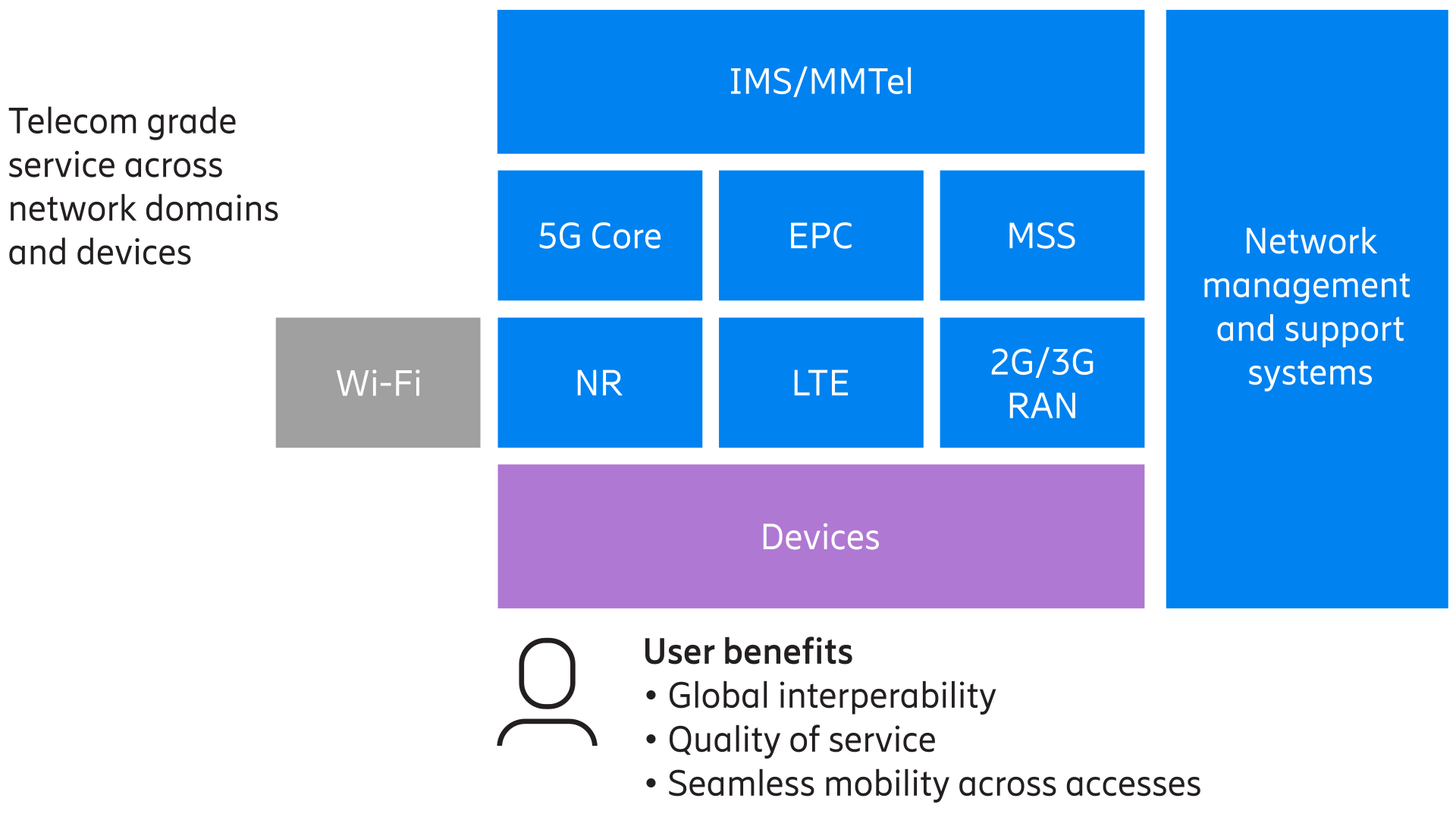
Figure 1. Overview of the telecom-grade voice service across network domains and devices
The entire core network (that is, EPC, IMS, MSS, and 5G core) is now utilizing cloud technology for cost-efficiency and service innovation capabilities.
It is important to take an end-to-end approach to VoLTE implementation to ensure the retention of classic telecom strengths such as excellent voice quality with QoS, mobility management, re-use of the Mobile Subscriber International Subscriber Directory Number (MSISDN) for global voice interoperability, interconnect, international roaming, and various types of regulatory and supplementary services.
VoLTE available in smartphones for all markets
VoLTE-enabled device models, including 5G support, are available from all major device vendors supporting different regions and frequencies. Devices are built using VoLTE capabilities integrated into chipsets supporting HD voice, HD voice+, video calling, and SRVCC. Devices and RAN have been designed to adapt to radio conditions for seamless mobility, optimized battery consumption, and call latency.
The GSMA has enhanced the VoLTE and Wi-Fi calling specifications by providing a set of recommended configurations suitable for most CSPs, which reduces device testing before market launch. The recommended device configurations can also be adapted to the specific needs of CSPs. This brings VoLTE and Wi-Fi calling technology to the same industry level as 2G/3G/4G connectivity, where a single device can be used in many CSP networks. Consumers benefit from an increased variety of VoLTE and Wi-Fi calling capable devices in all markets and price ranges.
Global reach enabled by roaming and interconnect
With 2G and 3G networks being decommissioned, it is becoming urgent for CSPs to deploy VoLTE including roaming to secure voice services for their subscribers globally. In those countries where 2G networks remain, the user experience for inbound roamers will be reduced if CSFB is used; as the spectrum is being re-farmed, there are fewer networks to connect to and the data capabilities are very limited during such a voice call.
Support for VoLTE, when roaming and interconnecting to other networks, ensures the same rich user experience as for calls between users in the same network. In both cases, the service offering, and its evolution remain in control of the home network, but the inbuilt interoperability ensures global reachability to all networks, while also ensuring connectivity to existing mobile and fixed voice users.
Session Initiation Protocol (SIP) based interconnect enables VoLTE to interoperate across the boundaries of CSPs using HD voice, HD voice+ and video calling. Special interworking functions may be needed on the SIP level to interwork between VoLTE and fixed VoIP networks. Examples are interworking for SIP precondition and forking, which may not be supported by all fixed VoIP networks.
As detailed in GSMA IR.65 [3] and GSMA IR.88 [4], VoLTE roaming enables voice and video calling over 4G when roaming in partner networks. VoLTE roaming is deployed with the S8 Home Routing (S8HR) architecture which expands on and reuses the LTE data roaming architecture. The S8HR approach means that the voice, video calling, and messaging services are provided by the IMS in the home network while the visited network provides the connectivity, QoS, and regulatory services.
The advantage of the S8HR approach is that users have the same services when roaming as in their home network. This means that CSP-specific services and new advanced services such as HD voice+ and multi-device voice calls will continue to work while roaming without cumbersome and time-consuming inter-operability projects between roaming partners.
S8HR can also be deployed before a SIP Network-to-Network Interface (SIP-NNI) is introduced between CSPs. This aspect is also an enabler for a fast and global roaming deployment since it may take several years before SIP connectivity is deployed between all potential roaming partners.
Voice in 5G networks
3GPP has standardized the IMS architecture and all existing IMS services to also be used in 5G networks. GSMA has additionally defined profiles for 5G use. CSPs that have already deployed IMS-based voice and video calling over LTE and Wi-Fi, can now simply add the 5G New Radio (NR) and related capabilities without the need for a new voice service engine. 5G networks also support SMS/MMS, IP messaging, interworking with Wi-Fi, and regulatory requirements related to voice and emergency calls. Voice in 5G provides a seamless high-quality user experience that is unrivaled by any other technology.
Voice in 5G has been introduced in three different evolution steps, which all retain the communication capabilities of VoLTE while adding new capabilities of 5G. In the first step, IMS is independent of 5G, and the 5G capabilities are implemented by adding the NR access to a 5G enabled evolved packet core network that also serves the legacy LTE access. This architecture is referred to as the 5G non-standalone architecture (5G NSA) as shown in Figure 2. 5G NSA provides a 5G data boost on top of the LTE subscription. This is achieved by connecting devices simultaneously to both NR and LTE in an E-UTRA New Radio Dual Connectivity (EN-DC) configuration. The EN-DC configuration is great for increased data speeds, but it comes with a penalty on voice coverage since the maximum allowed uplink power must be shared between LTE and NR. One option is to shut off data over NR while being on a call.
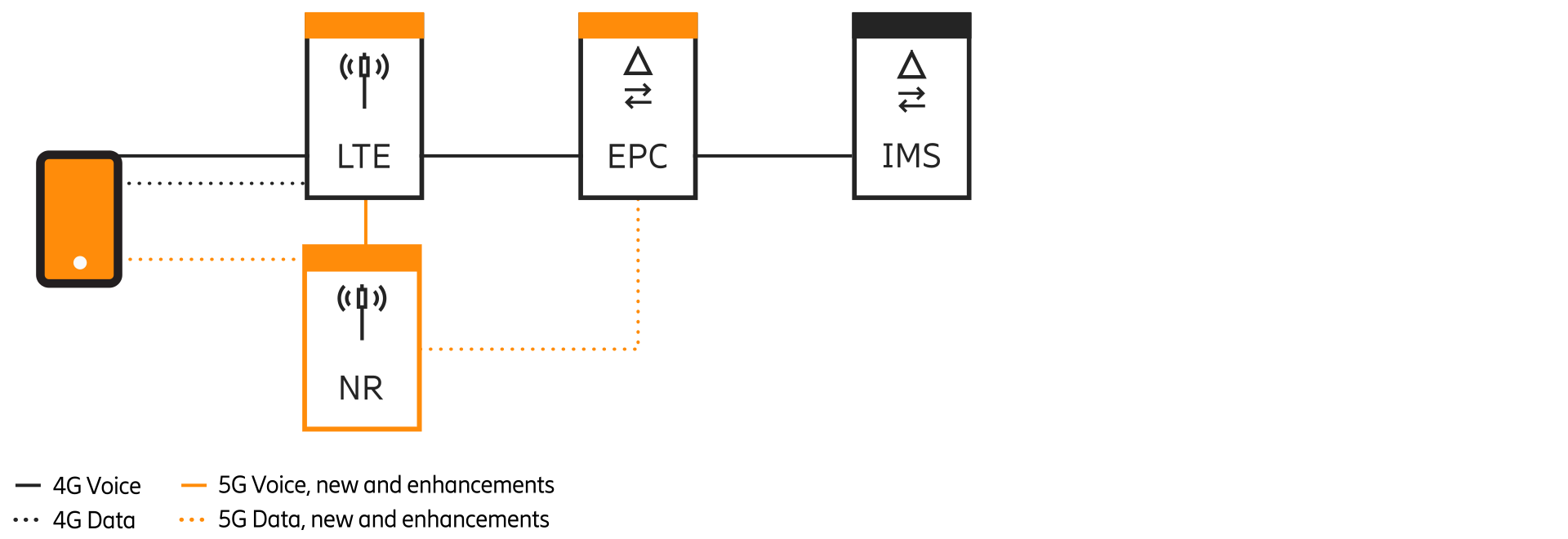
Figure 2. Communication services with Dual Connectivity (EN-DC) in 5G non-standalone architecture
The second evolution step of voice in 5G is Fallback to EPS (Evolved Packet System) from NR when making or receiving calls. After completing the call, the user is immediately moved back to the 5G access to benefit from faster data speeds. The EPS Fallback solution is implemented on the 5G standalone architecture (5G SA) as shown in Figure 3. 5G SA introduces a new 5G core and new 5G specific services such as network slicing and new QoS mechanisms that are important for enterprise and IoT use cases. 5G SA also offers better data service performance in terms of data session setup times and data speeds compared to 5G NSA. The benefit of EPS Fallback is that it enables smartphones in 5G SA long before continuous NR coverage can be deployed locally or on a nationwide basis. The only prerequisite is that there is overlapping VoLTE coverage wherever EPS Fallback is to be deployed.
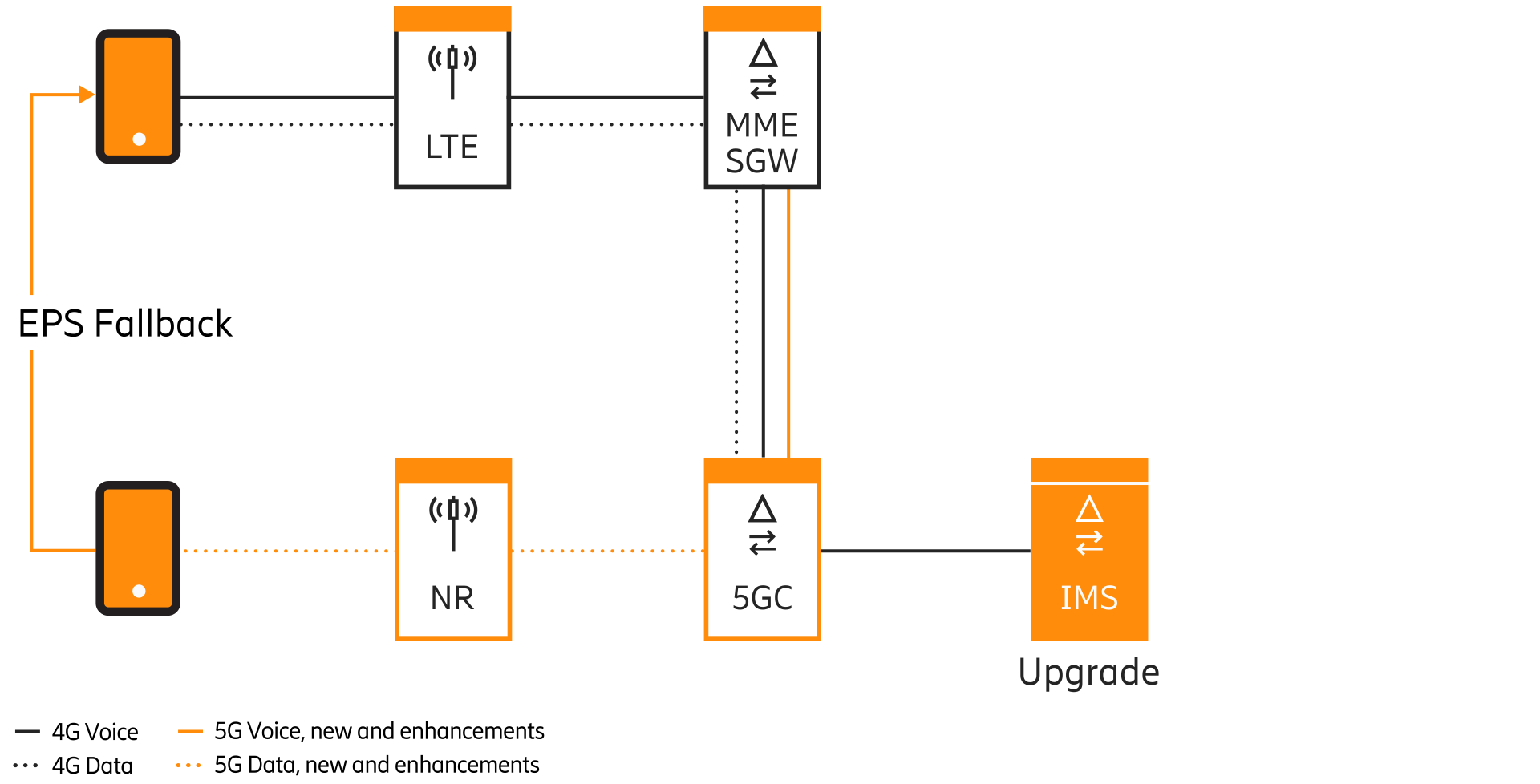
Figure 3. Communication services with EPS Fallback in 5G standalone architecture
The third and final evolution step for voice in 5G is Voice over New Radio (VoNR). VoNR offers both voice, video calling, and messaging services over the 5G access. It also offers faster data speeds and shorter data session setup times during voice calls compared to EN-DC and EPS Fallback. As with EPS Fallback, VoNR is also based on the 5G standalone architecture as shown in Figure 4. One difference from EPS Fallback is that VoNR can be offered together with data services in a separate 5G mobile broadband slice to avoid disturbances from other network slices for enterprise industries that may have an unpredictable traffic pattern. VoNR requires good and continuous NR coverage to offer acceptable voice service. Initial VoNR deployments rely on a seamless handover to VoLTE when moving out of NR coverage.
VoNR benefits from general 5G SA security enhancements. The user’s long-term identity, the Subscription Permanent Identifier (SUPI), is concealed to protect the individual from SUPI/ International Mobile Subscriber Identity (IMSI) catchers. The radio network may also log and report occurrences of suspicious device measurements that indicate SUPI/ IMSI catchers. The user’s short-term identity, the 5G-temporary mobile subscriber identity (5G-TMSI), is also updated more frequently than in 4G to protect users from being associated with and tracked using the temporary identity.
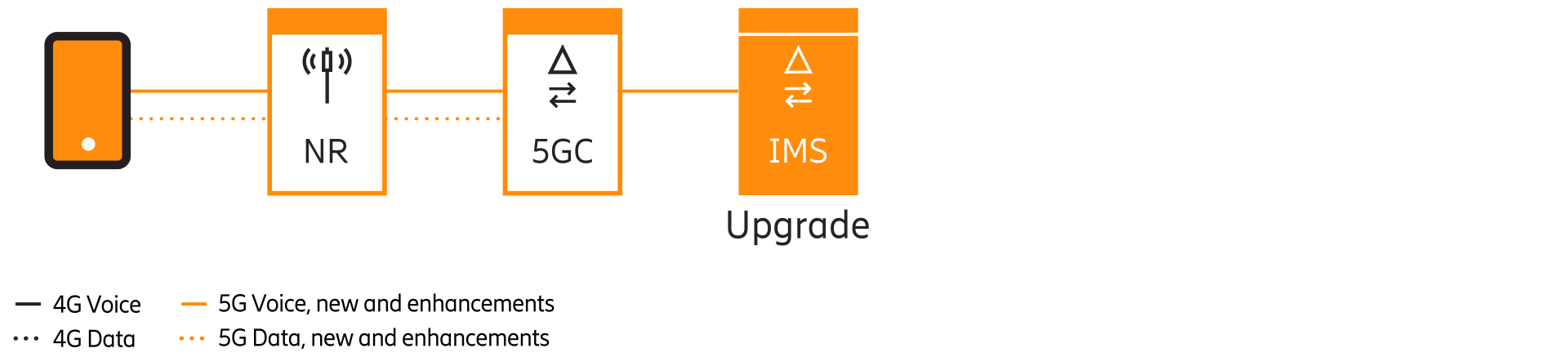
Figure 4. Communication services with voice over NR in 5G standalone architecture
CSPs investing in 5G will be in different situations regarding their coverage build-out depending on their available spectrum. While it will take time for NR to achieve full coverage, the LTE coverage is already sufficient for VoLTE in most countries. VoLTE is a prerequisite for introducing 5G core (5GC) as 3GPP has not standardized CSFB from 5G SA, and dual-connectivity solutions are not optimal from a coverage and battery consumption point-of-view.
5G roaming based on 5GC also requires VoLTE roaming as there is no possibility of falling back to CS. Voice over NR roaming follows the same principles as S8HR for VoLTE but instead uses the 5GC N9 interface. It is therefore referred to as N9 Home Routed (N9HR) roaming.
Providing improved voice services for users
Mobile networks were originally purpose-built for person-to-person communication first with voice and SMS, and later for mobile broadband. These networks are also used for machine-to-machine applications, such as various types of meters, remote control, and alarms. These networks still have built-in limitations for what can be achieved, framed by factors such as bandwidth, protocols, and codec support.
Moving to IP-based communication networks, a much higher degree of freedom can be applied in adopting various application needs, connectivity and bandwidth availability, codec evolution, and new innovative devices.
Wi-Fi calling enabled in networks and devices
Natively integrated Wi-Fi calling in devices is available from all major smartphone brands. CSPs can thus extend voice service reach into homes and other locations that have limited cellular coverage. The phone will use the local Wi-Fi access point and automatically connect to the CSP-provided voice service by any internet connection. A seamless handover of calls from 4G and 5G to Wi-Fi is supported to ensure voice service continuity.
Wi-Fi calling needs to be enabled both in the device and in the network. The evolved Packet Data Gateway (ePDG) functionality in EPC is needed to allow for untrusted Wi-Fi accesses to interwork with the EPC and connect to the IMS network. The ePDG provides security mechanisms such as Internet Protocol security tunneling of connections with the device over untrusted Wi-Fi access to ensure a seamless handover of an ongoing VoLTE call to the user’s home Wi-Fi, and vice versa. The service is still anchored in the CSP network by the ePDG.
Wi-Fi calling builds on VoLTE specifications and IMS/MMTel and hence offers similar service capabilities as VoLTE but without guaranteed QoS. There are also a few other differences related to the handling of location-dependent services. VoLTE uses network mechanisms to make the service predictable and independent of load from other services, while for Wi-Fi calling, the service quality will be dependent on the local environment and load from other users connected to the same access point. Thus, Wi-Fi calling is suitable for residential usage and smaller enterprises, while larger enterprises are better off using 3GPP-based small-cell solutions to guarantee high-quality real-time voice and video calling services.
New use cases and more types of 4G and 5G enabled devices
IMS offers the possibility of providing communication services on multiple devices across all accesses so that users can select the most suitable device for a particular occasion and even transfer ongoing calls between devices. Evolving communication services networks to IP makes it easier to extend communication services use cases to other types of devices, as shown in Figure 5. Functionality that makes it possible for several devices to share the same phone number has been launched in multiple countries, enabling CSP voice services on tablets, smart watches, smart speakers, laptops, and so on.
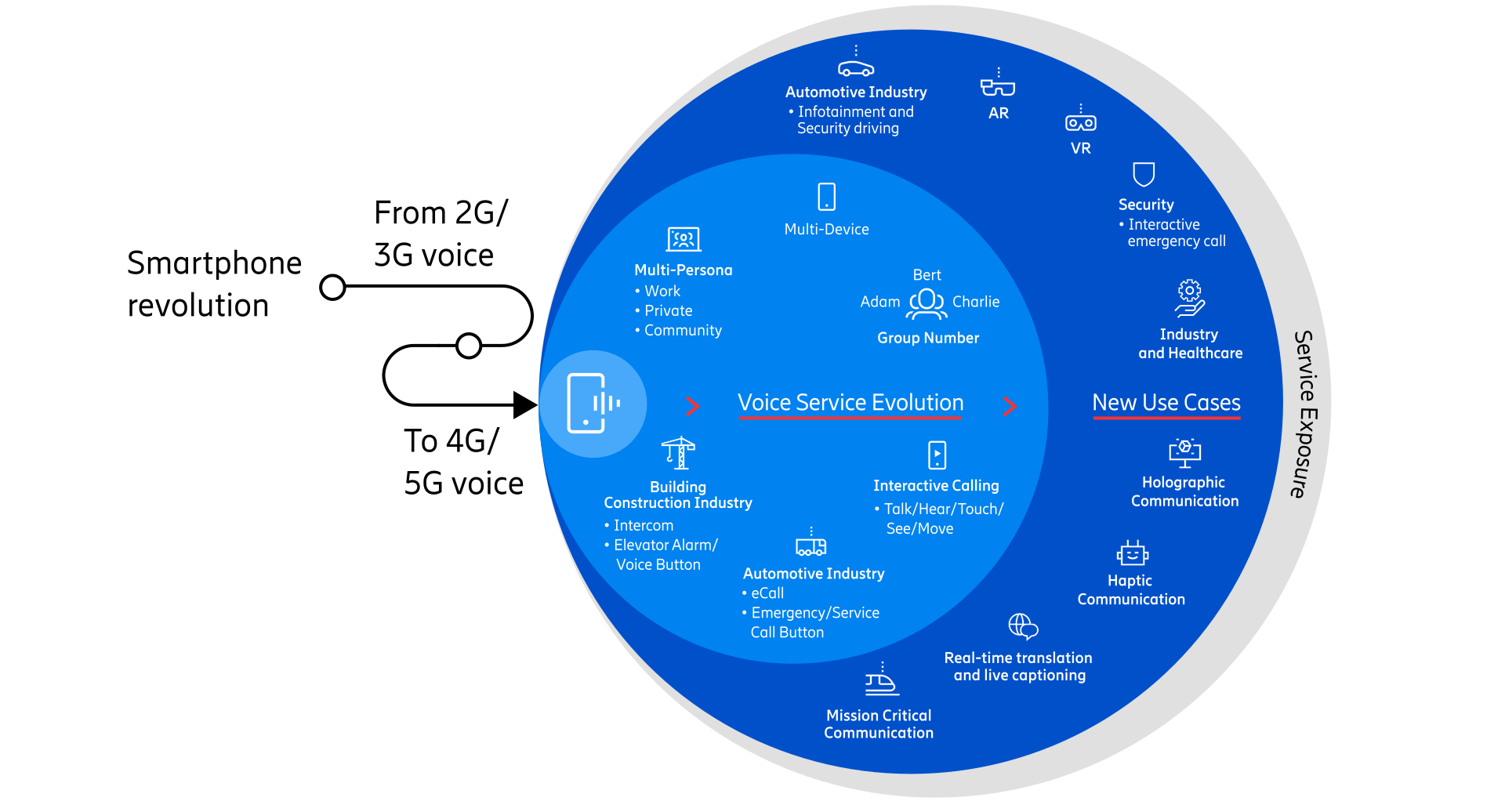
Figure 5. Communication services use case examples, today and in the future
Multi-device support often means multi-SIM usage-that is, the ability to share a phone number across multiple SIM devices. For example, a user may prefer to use a big screen while at work and a smartwatch when out running. In addition, a single device can have the ability to serve multiple lines, for example for different aspects of life: for example, one phone number for private use, another for business, and a third as a coach for the football team of a child. Multi-device and multi-line use cases can also be combined.
Support of VoLTE in Cat-M1 modules and network infrastructure provides basic voice-calling capabilities for different types of IoT use cases. The VoLTE-enabled IoT devices benefit from the characteristics of Cat-M1 modules such as form factor, long battery lifetime, coverage, and low device cost. Example use cases where basic voice services are included are alarm panels to reach service centers, wearables, digital locks, disposable security garments, and more.
New services for fraud and nuisance call detection
Nuisance and fraudulent calls are today having a significantly negative impact on CSP voice traffic. Many users are no longer answering calls from unknown numbers, which also prevents some important calls from being answered. The Secure Telephony Identity Revisited (STIR) and Signature-based Handling of Asserted Information toKENs (SHAKEN) standards were developed to mitigate this problem but only work in case both the originating and terminating networks have implemented the functionality. A variety of smartphone apps are also available to warn users of nuisance and fraudulent calls but the parties generating these types of calls have significant resources to change their behavior dynamically and can therefore continue to get their calls connected, despite the apps. The main drawback of smartphone apps is that they have very limited information about the call, usually only the calling and called party number. Network based solutions can utilize all the information available in the terminating network, including information carried in SIP signaling from the originating and possible transit networks. Combining this information with machine learning algorithms provides a superior way of detecting unwanted calls, resulting in improved subscriber satisfaction and can result in increased voice traffic.
Video calling
The number of networks using SIP interconnect, which enables ViLTE between CSPs and countries, is increasing and over time it will be technically possible to make ViLTE calls between most networks in the world. Some CSPs have also started offering ViLTE as a best effort service and charging for it through consumption of the data bucket. This is to align and compete with OTT-based video calling applications. Users have learned from OTT video calling experiences that the video service may not work in all places in the network, but this is still acceptable as the video call is then just automatically downgraded to a voice call.
The introduction of 5G and areas with very high capacity in the radio network also makes CSP-based Video over New Radio (ViNR) more attractive and feasible than in 4G. ViNR has been verified exchange to exchange by vendors and CSPs, and it is ready to be activated in many 5G smartphones if requested by CSPs.
The European Union (EU) is proposing legislation, which focuses on using ViLTE and ViNR to improve the 112 services for the hearing impaired and people in general who cannot orally describe the urgency to an emergency dispatcher. The legislation is intended for EU member countries, but the concept may also be applied by other countries in the world.
The benefits of 3GPP standardized ViLTE and ViNR, compared to OTT-based video calling is first that users do not need to install and use an app to make and receive video calls. The standardized ViLTE and ViNR services are also generic and enable users to find and connect to any other user, enterprise, or authority in the world using a standard E.164 telephone number. ViLTE and ViNR calls are dialed with the phone’s native dialer and the numbers can be stored in the phone’s native address book as for voice calls.
Evolution of voice and communication services building on 5G
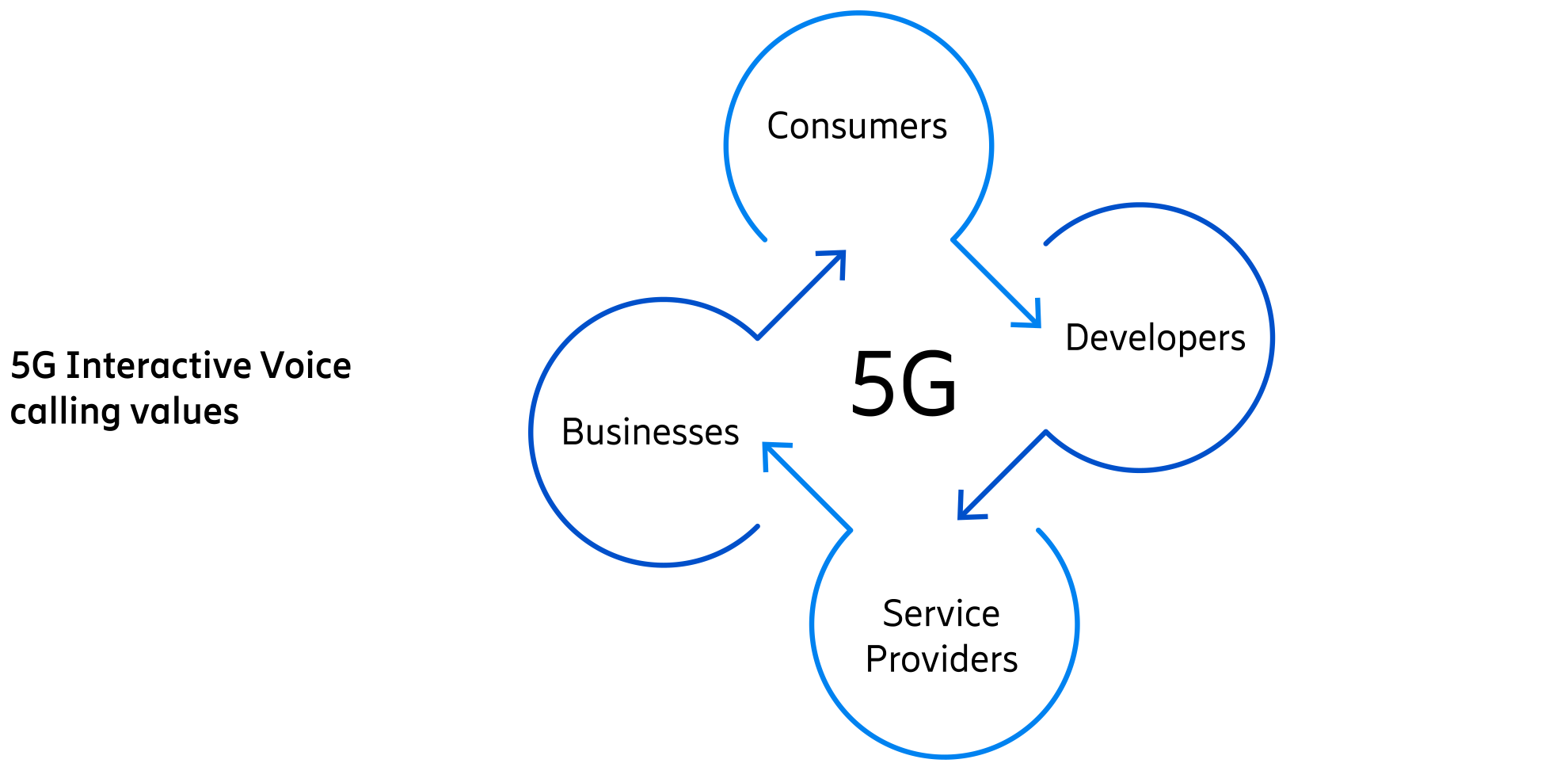
With 5G access, we can expect more use cases, including interoperable voice and communication services, based on IMS. 5G radio, enabling higher bitrates and new service profiles, will unlock a wide range of new services like augmented reality (AR), virtual reality (VR), and ultra-reliable low latency communications (URLLC). Many of these new services will require a high-quality voice component, and in 3GPP Rel-16, an IMS data channel has been specified to enable data media within a 5G voice call. The IMS data channel enables the addition of real-time, remote interaction between people and things, through a regular mobile phone call. It also includes an innovation framework based on Web Real-Time Communication technology-the regular call screen can display any web content. Using the web technology framework enables fast use case development without the need to standardize them in 3GPP and thus time to market for new services can be radically improved. By using the web technology framework, use cases like screen sharing, gaming, and social collaboration within a regular phone call can be developed. Consumer-to-business and business-to-business calls will be able to provide better digital experiences through increased efficiency. For example, with remote expert support in business contact centers, the callers could start by interacting with the businesses’ call screen menu content while waiting in the phone queue. During the phone conversation, the customer support agent could provide better product and service advice using screen-sharing and content collaboration directly within the call screen. In the future, AR could also be added to further enhance the customer support experience. Since the web content is loaded automatically on the call screen there is less need for consumers to download and install specific apps from brands.
GSMA has, in the IMS Data Channel White Paper NG.129 [5], provided an overview of the technology, industry vision, and user stories.
| Consumers | Service Providers | Developers | Businesses |
|---|---|---|---|
|
|
|
|
Service exposure for communication services
As networks evolve toward 5G, programmability through Application Programming Interfaces (APIs) increases in importance. It is imperative that network exposure is realized in a controlled and secure manner, by defining different functionalities:
- Exposed Services and Management functionality, making the exposed service securely reachable for the consumer via an API Gateway with support for portal, software development kit, and API management.
- Business and Service Logic functionality for transformation and composition when there is a need to raise the abstraction level of a service offered to an external Application Function (AF) by composing combined services from different network assets.
- Abstraction and Resource functionality for communication with the network assets, for example, RAN, Packet Core, UDM, and IMS.
The APIs enable AFs to enrich, influence, or integrate IMS calls into the enterprise business context. As networks evolve toward 5G voice, it is believed that 5G IMS exposable voice assets, for example, call state, subscriber state, roaming state, current access attachment state, 5G IMS analytics data-KPI info, will become important and valuable for CSPs particularly in the cross-domain context, for example, IMS-Core-RAN. Using the composition functionality, 5G core exposure offerings through NEF can be enhanced to add a voice context to the consumers of these 5G core APIs.
Other future voice and communication services
6G is already widely studied and discussed in the telecommunications industry. Even though a lot of standardization work remains, voice on 6G will most likely also be based on IMS. IMS offers the flexibility needed for future communication services, and no alternatives are foreseen today.
Conclusion
The migration from circuit-switched 2G and 3G mobile voice networks toward 4G and 5G voice, building on VoLTE and VoNR is well on its way. Many CSPs plan to close 2G and 3G networks by 2025. 4G subscriptions continue to increase, projected to peak at 5 billion in 2022. One-quarter of the world’s population is covered by 5G, estimated to be 75 percent in 2027 [6].
CSPs are developing their communications business, and consumers and enterprise users are benefitting from high-quality rich communication services, available on any device, anywhere. The quality of voice calls is generally better when using telecom-grade 4G and 5G voice services than it is with OTT voice services.
5G offers new business opportunities related to communication services. The IMS data channel can be used for new interactive calling use cases in addition to voice, including AR and VR. Service exposure related to 5G is also an opportunity for CSPs to offer new unique innovative services.
Glossary
Contributors