








70 years in Canada and counting
- English
- Français
There has never been a time in living history when we have experienced so much change, so quickly. But for Ericsson, change has been the only constant in a 70-year history in Canada.

Explore our journey
1953
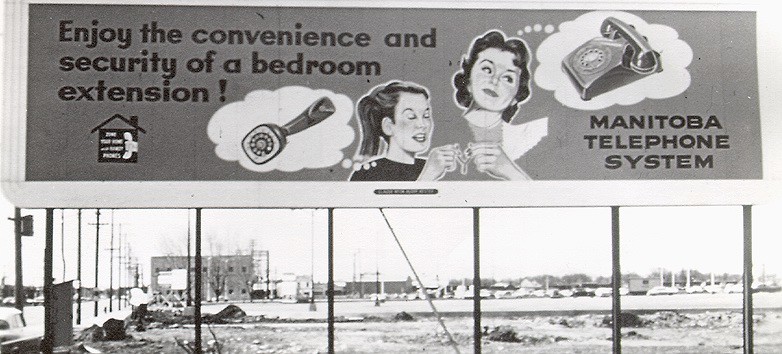
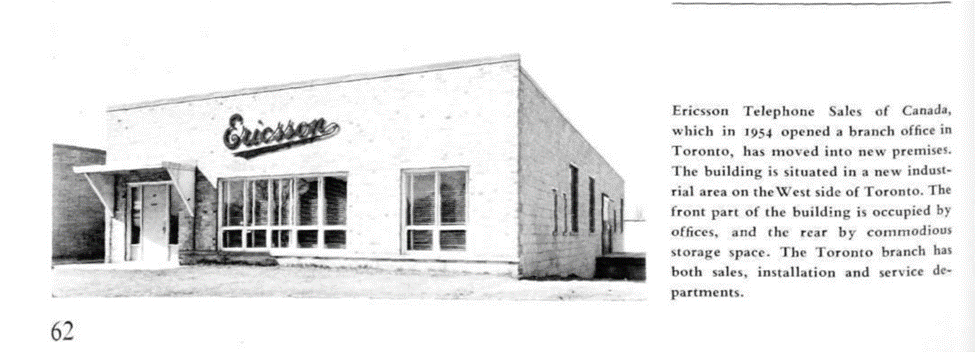
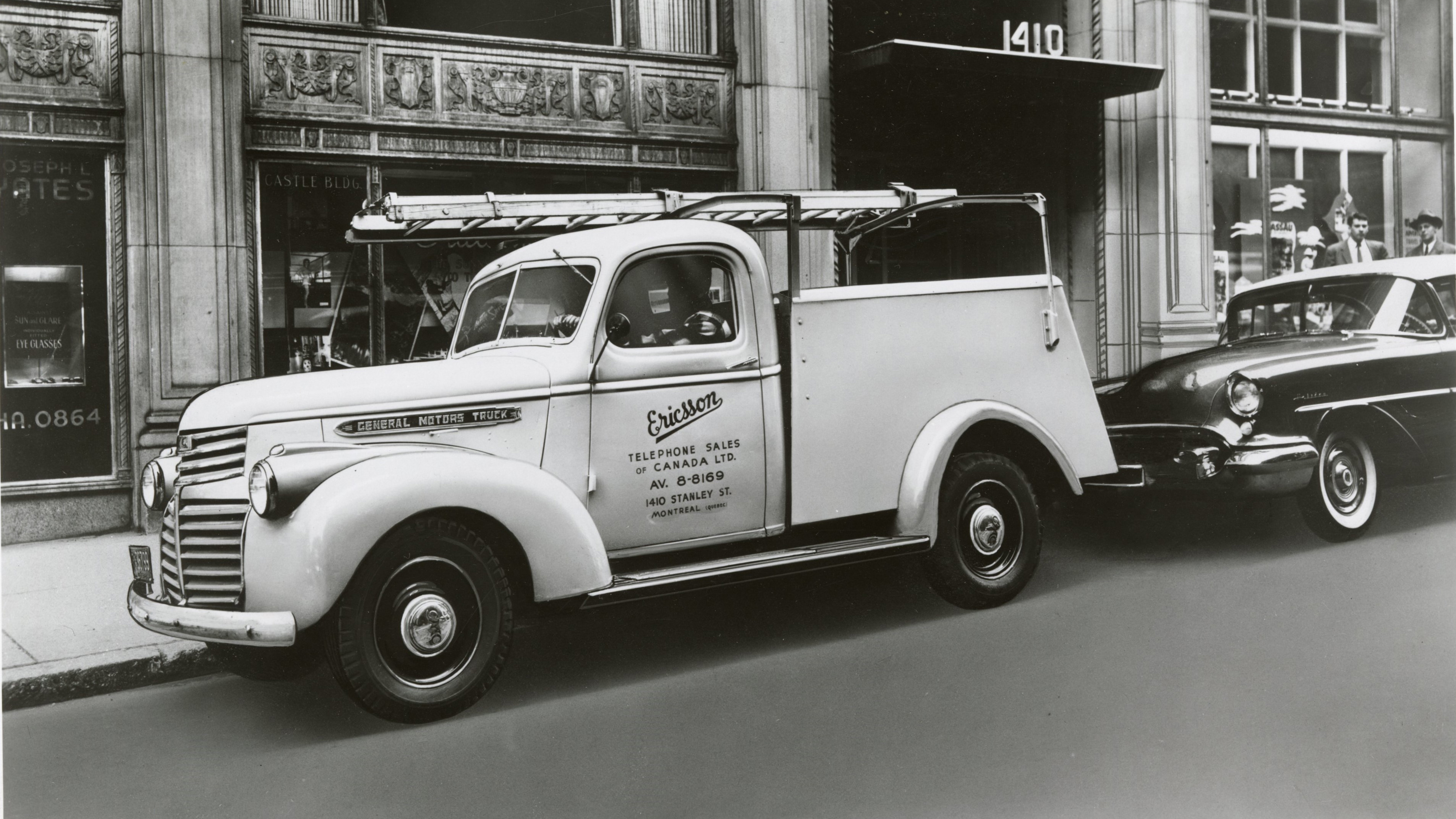
Initially named Ericsson Telephone Sales Corporation establish an office in Montreal.
1962
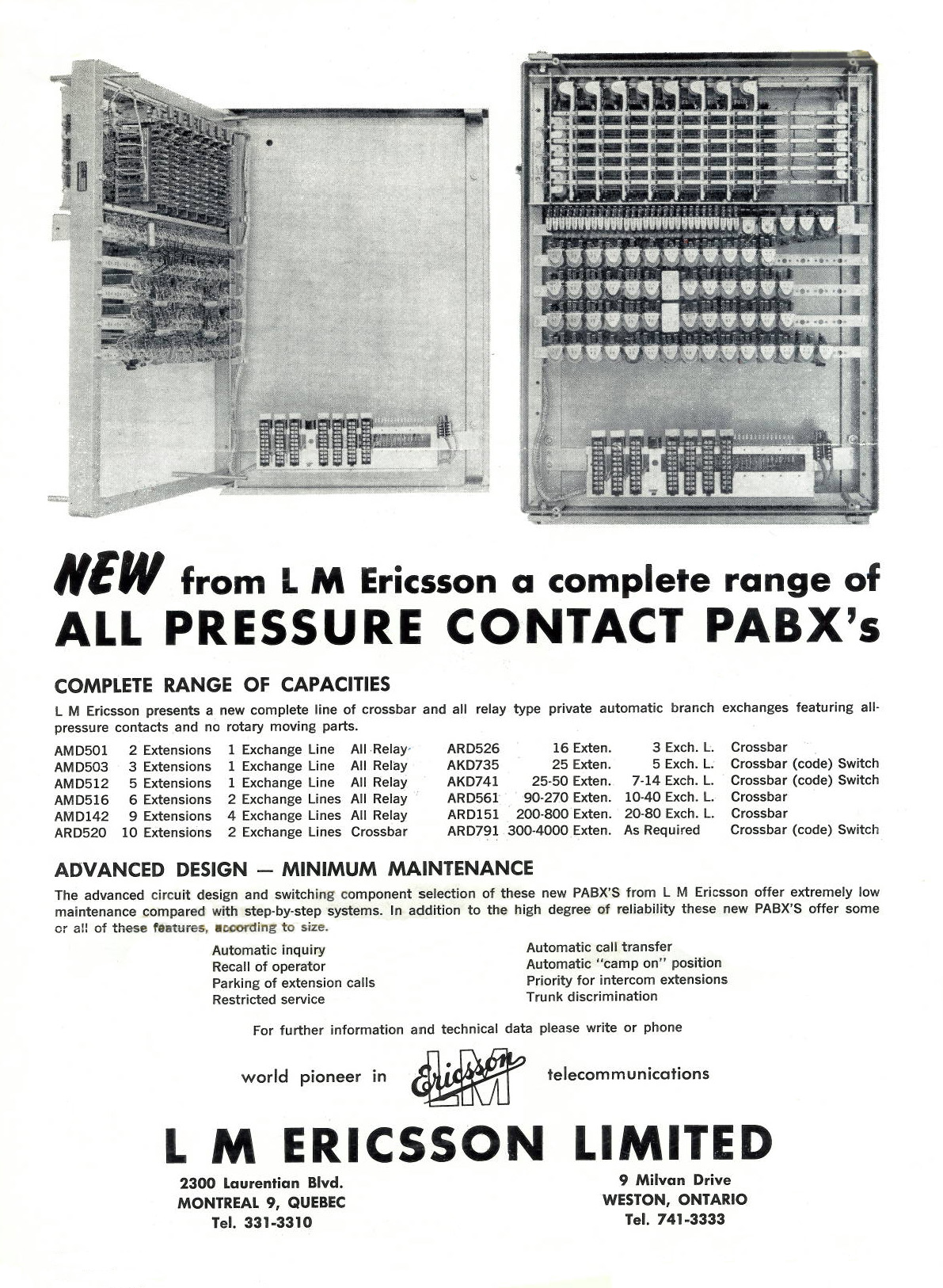
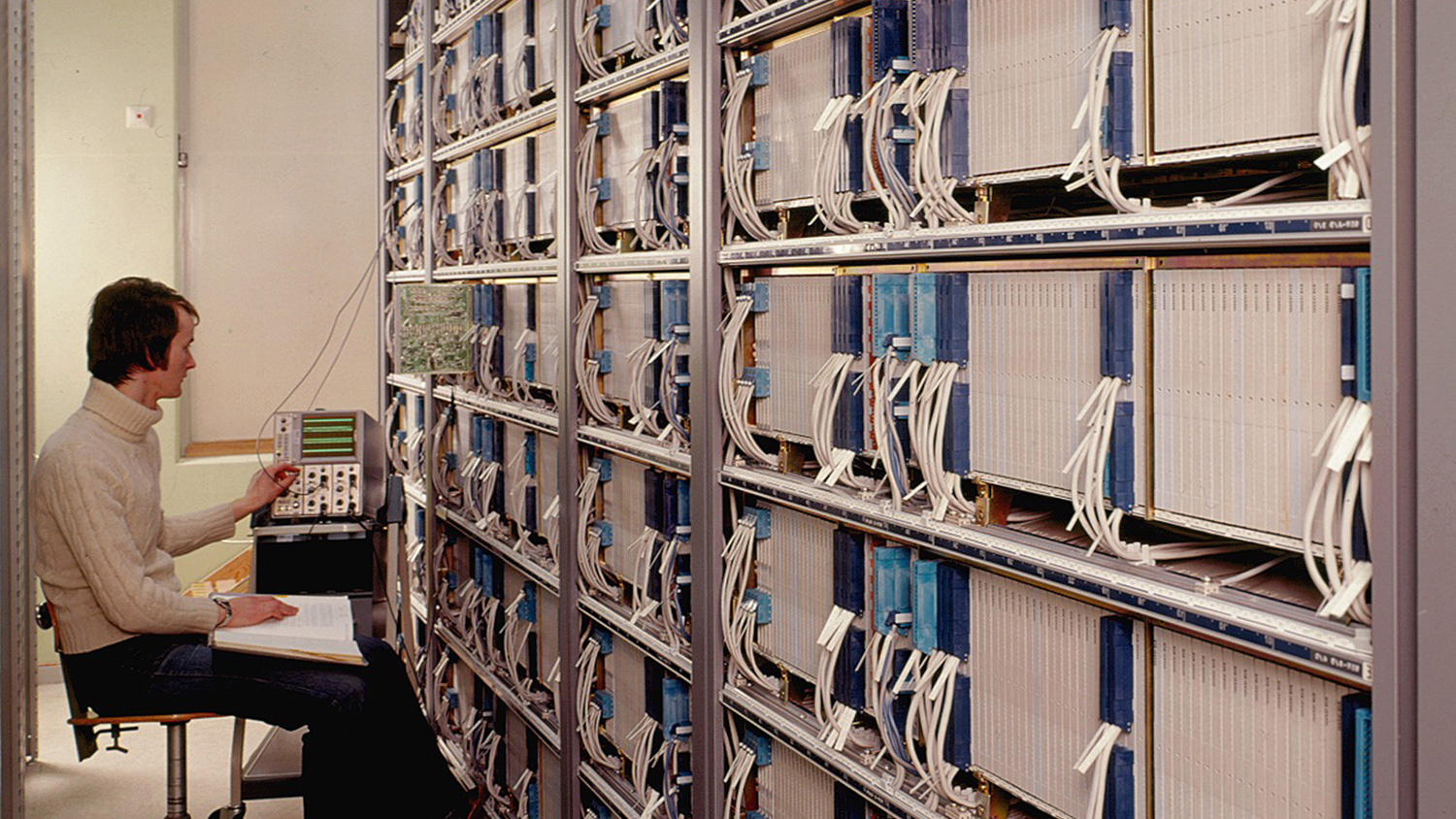
Contract signed with COTC, Teleglobe Canada, for delivery and installation of Automatic Gateway Exchanges of the Crossbar ARM type, used for international telephone and telex traffic in Montreal, Vancouver & Hawaii.
1984
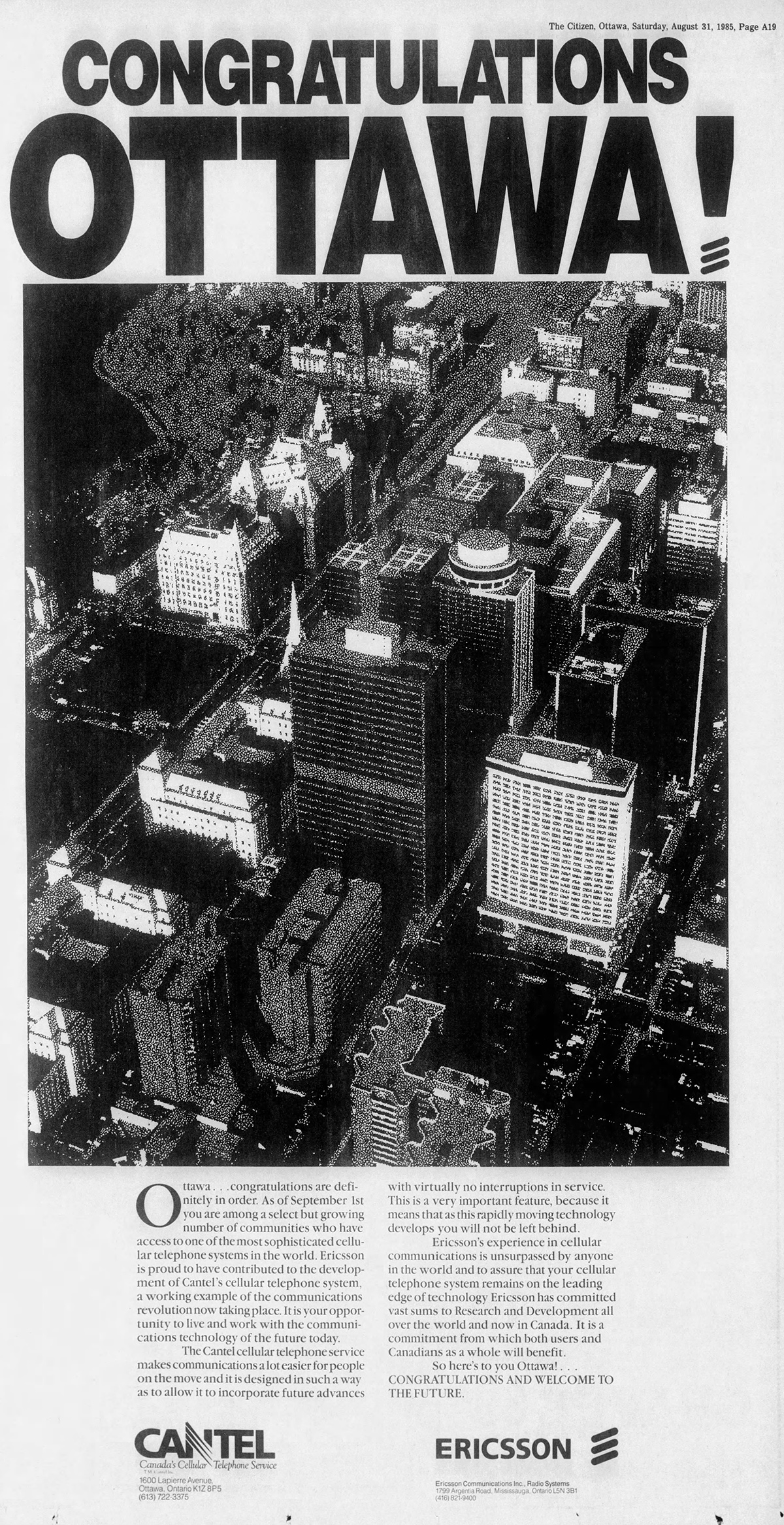
Ericsson signs a contract to deliver a national mobile telephone network for the AMPS-system to Rogers Cantel Inc.
1986
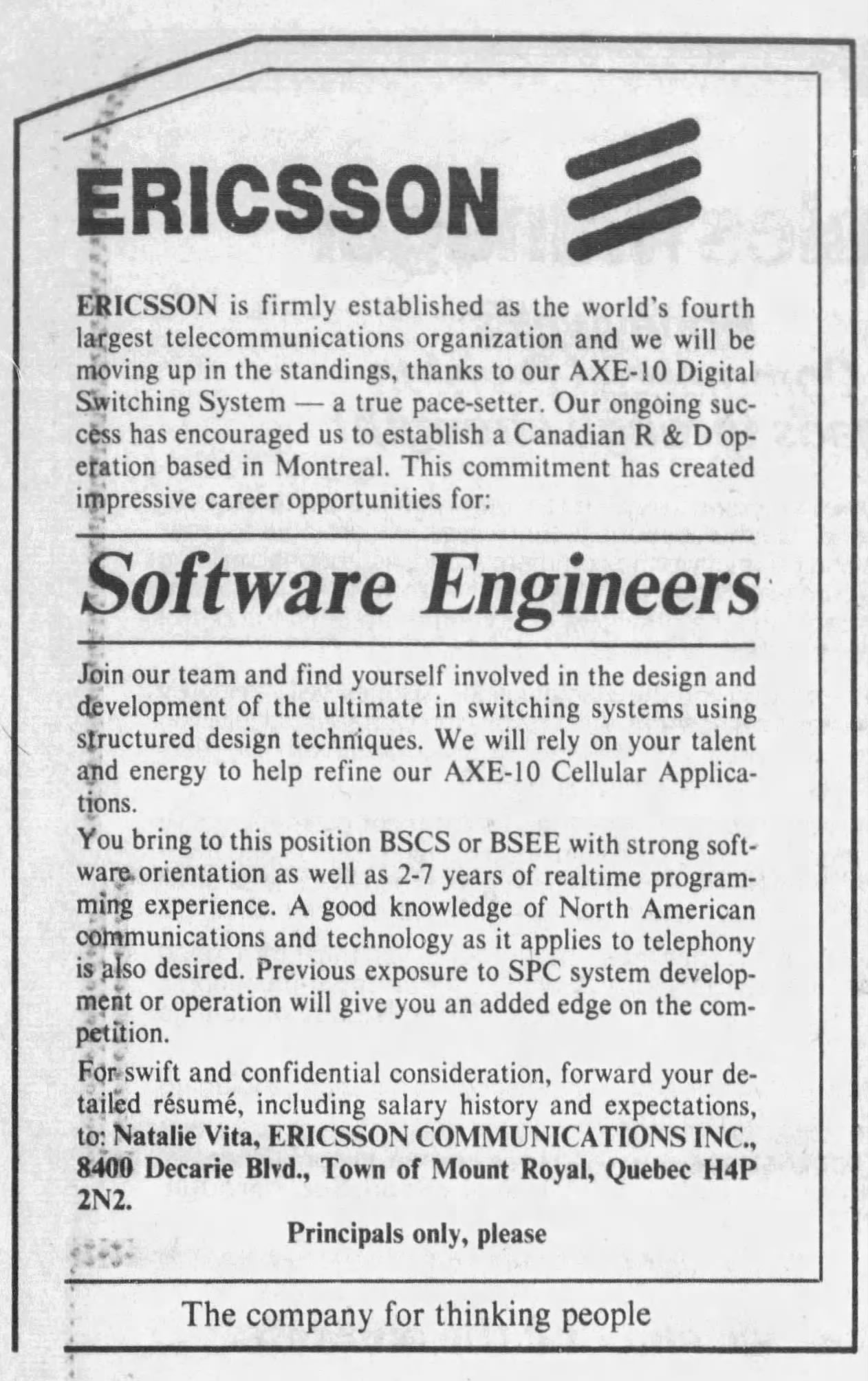
A R&D centre is established in Montreal for developing guidelines for the AMPS mobile telephone network.
1992
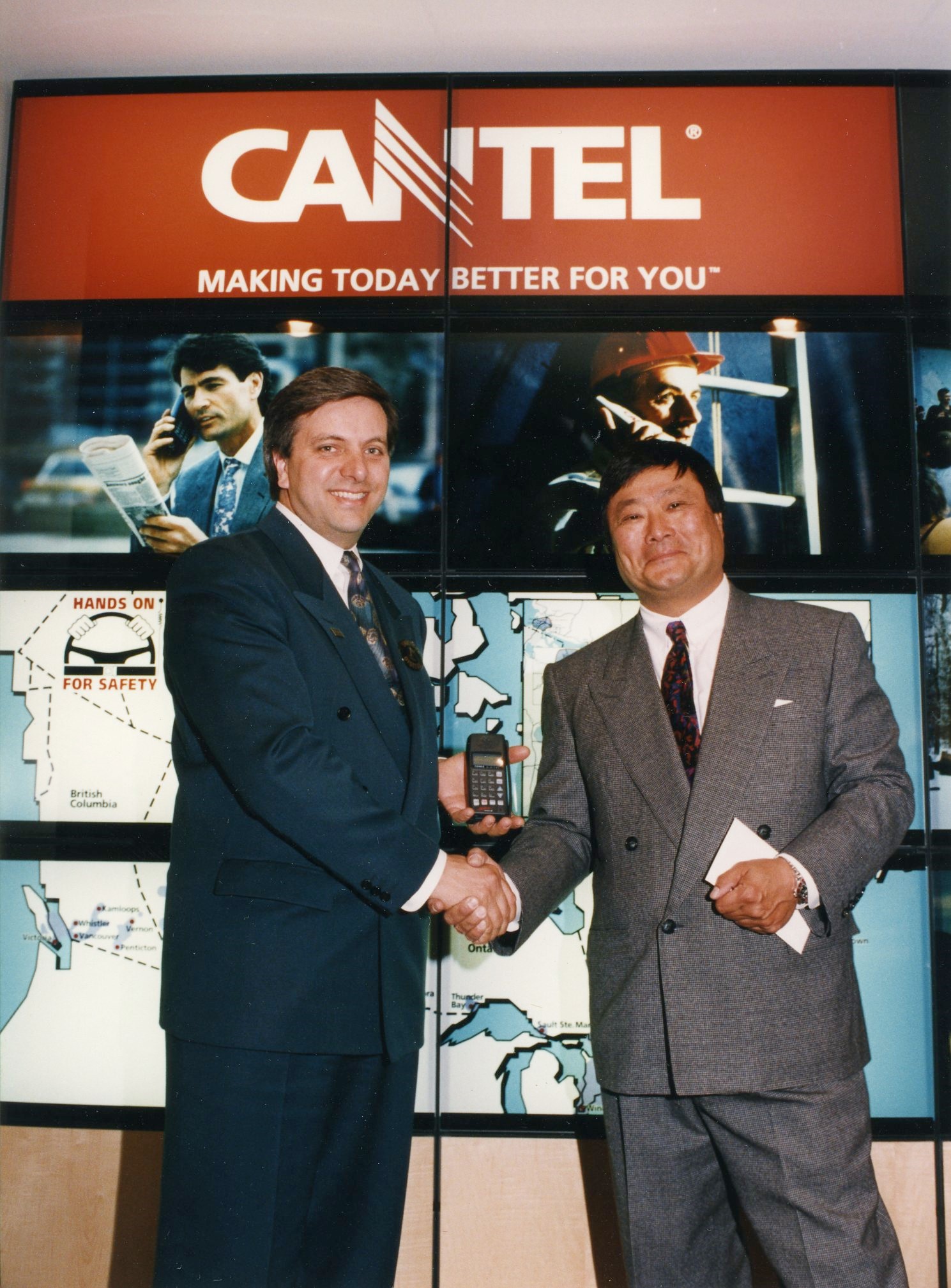
Contract with Cantel is signed for Ericsson to provide new digital cellular technology, the first in North America (D-AMPS).
Montreal mandated to develop software for the Mobile Switching Center based on the D-AMPS/AMPS worldwide cellular standard.
1995
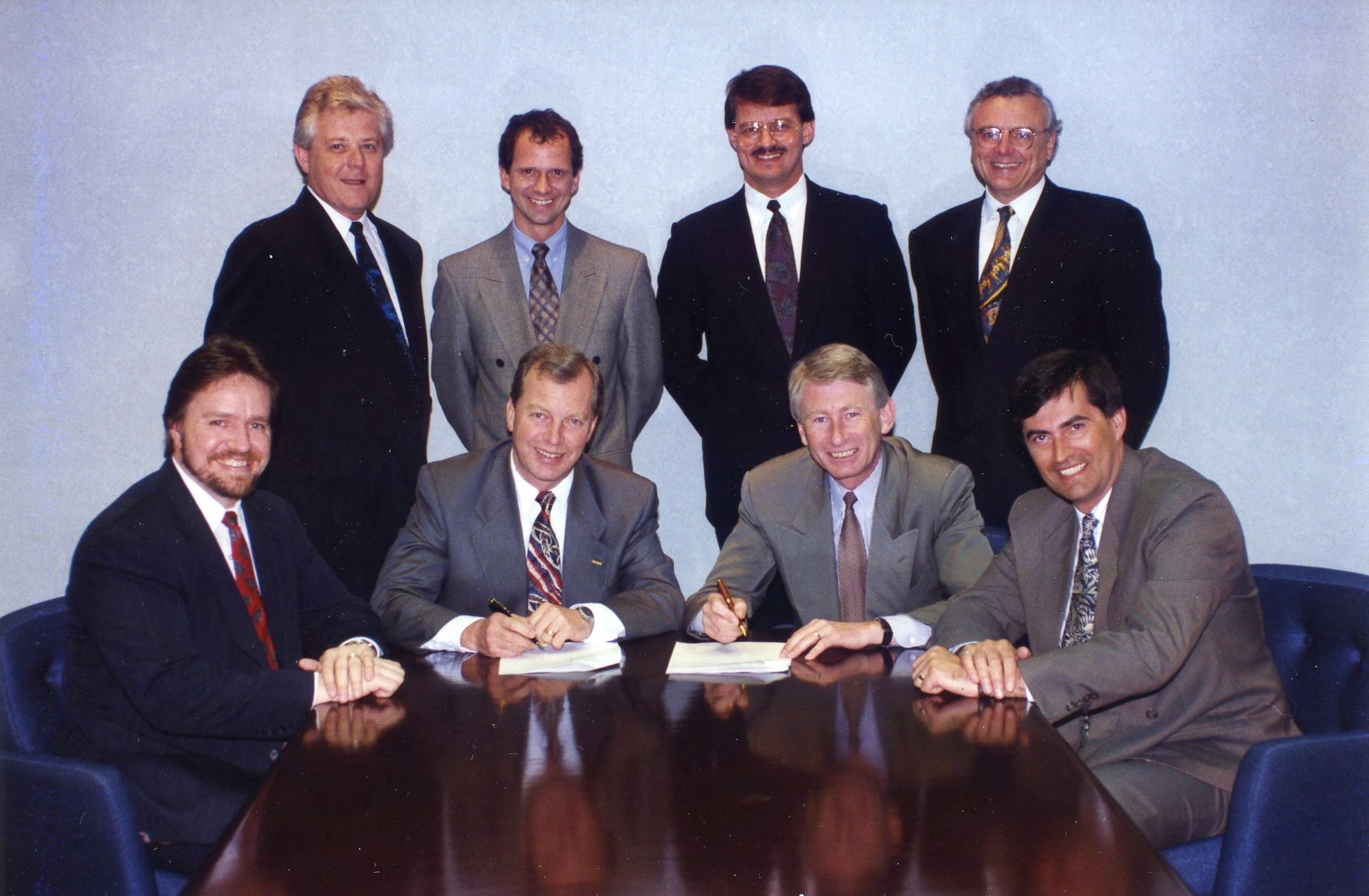
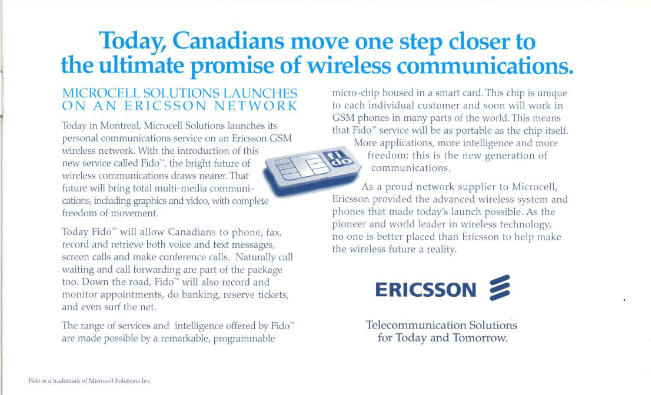
Contract signed with Microcell Telecommunications Inc. for $200 million to supply the first GSM based PCS system in Canada.
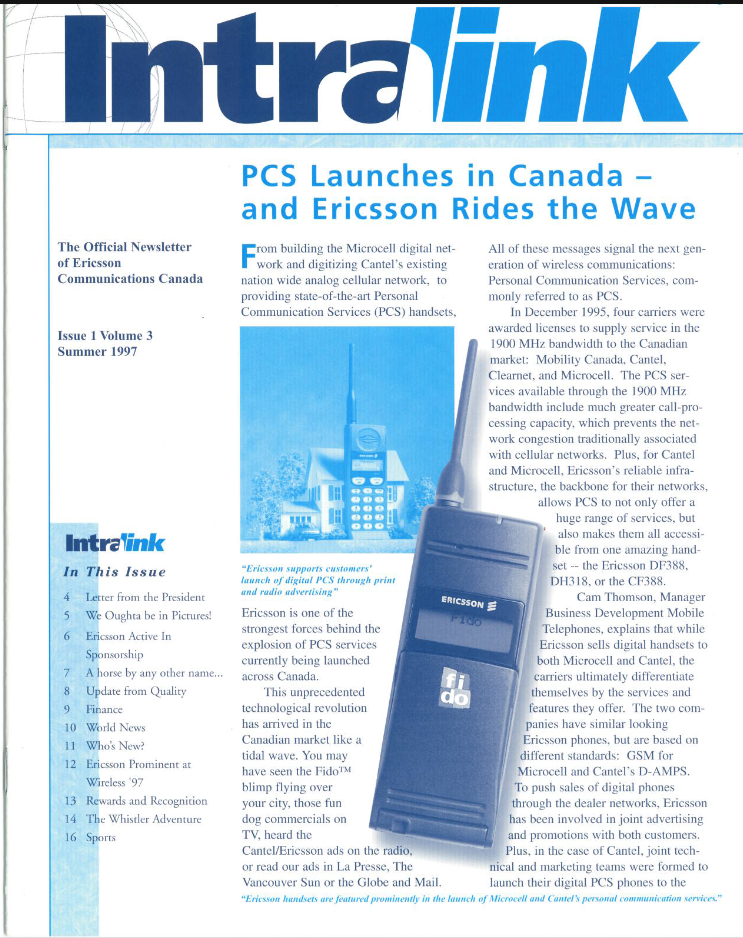
1997-1998
1997
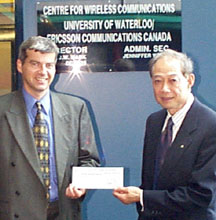
Ericsson provides a $1,000,000 grant to the University of Waterloo to establish the Centre for Wireless Communication, Canada’s first academic program in wireless communications.
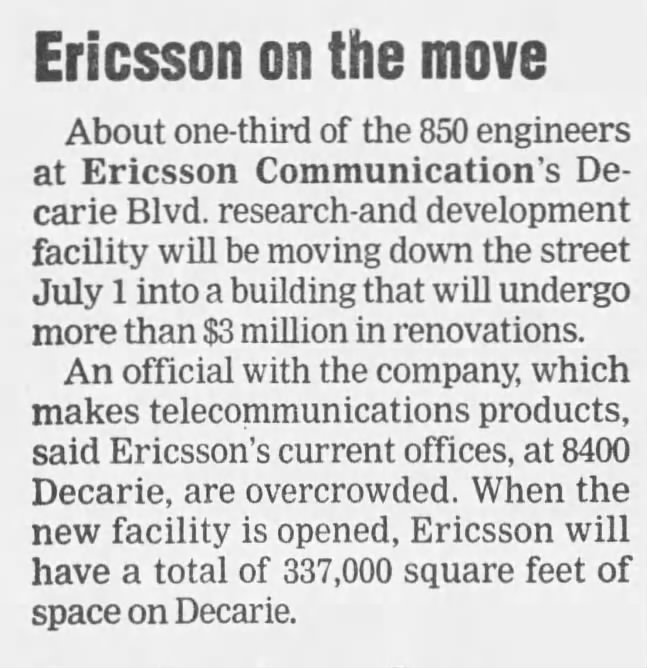
Two production units are established in Montreal with the task of developing Wireless Intelligent Networks, Applications and Platforms, as well as Operations Support Systems on a global scale.
1998
A new production unit is opened in Montreal with world-wide responsibility for managing the Mobile Switching Centre. The same year Ericsson Canada enters a strategic alliance with Rogers Cantel to develop support solutions for the TDMA network. Ericsson invests 178 million Canadian dollars in R&D, placing the company seventh in the country.
1999
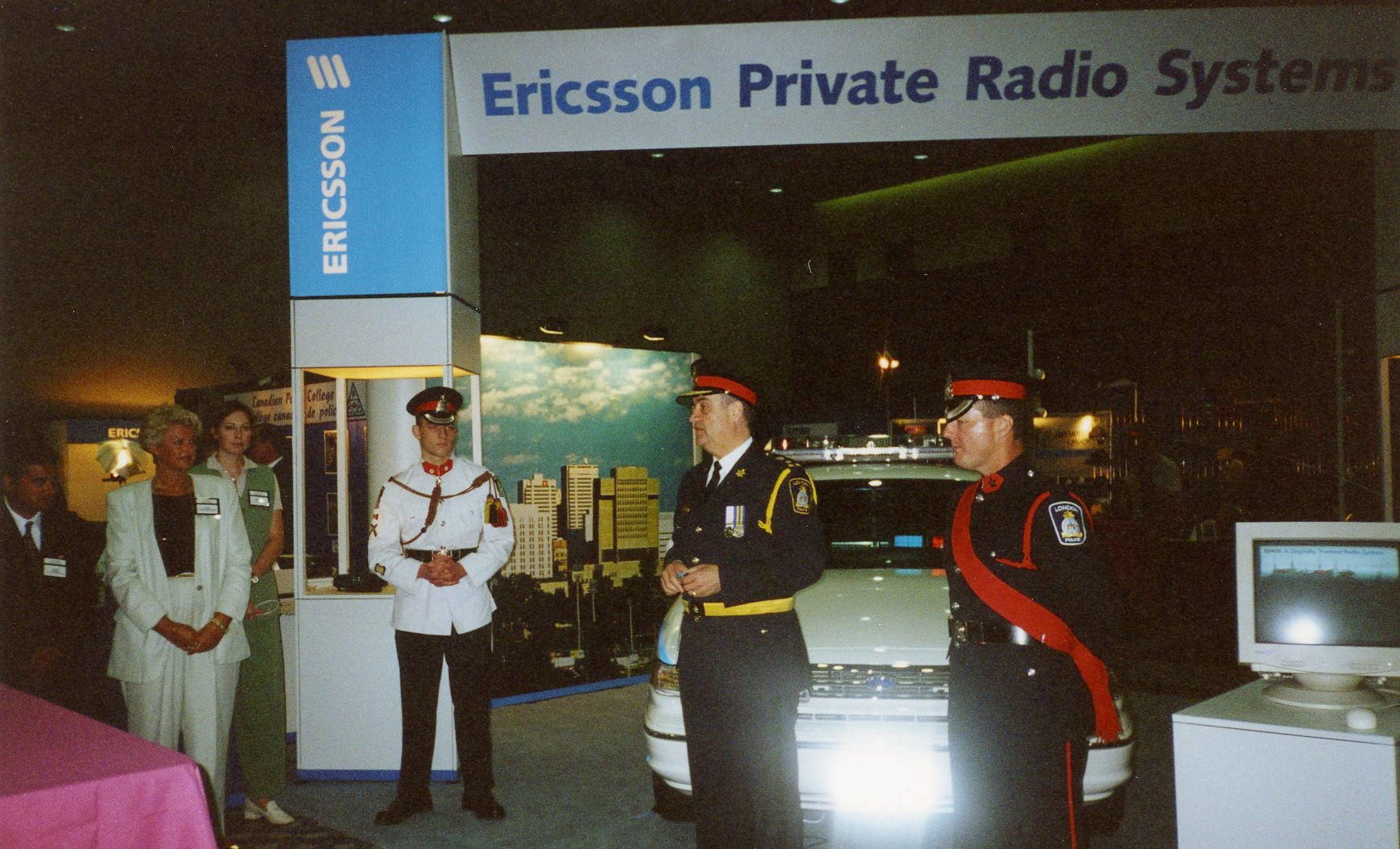
Ericsson Canada signs a contract with the City of London Police and Ottawa-Carleton Police for delivery of the EDACS security system.
Opens a new $7 Million Integration Centre in Montreal for testing and developing next generation wireless systems.
Montreal office was established as key center in emergency response for Ericsson’s customers worldwide to respond to the feared Y2K bug.
Company changes its name to Ericsson Canada Inc.
2010

Ericsson completes the acquisition of Nortel’s North American GSM business.
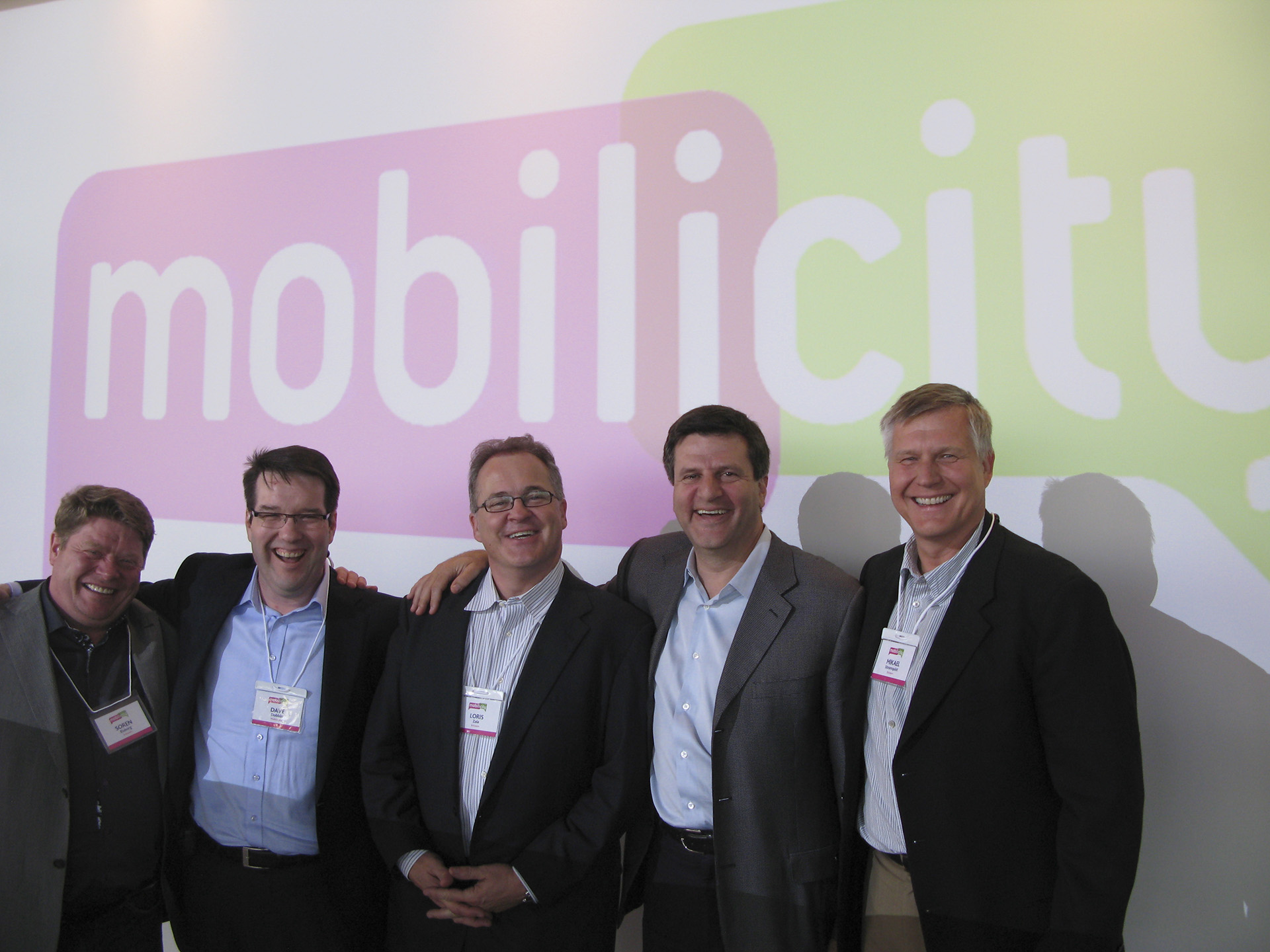
Mobilicity chooses Ericsson to manage its 3G network to service Toronto, Vancouver, Calgary, Edmonton, and Ottawa. This marks Ericsson’s first managed network operations contract in Canada and second major contract in all of North America.
Ericsson is chosen by Hydro-Quebec to be the prime integrator and project manager for a multi-year deployment of 4M smart meters for homes and businesses while drawing staff from its Montreal R&D site.
2011
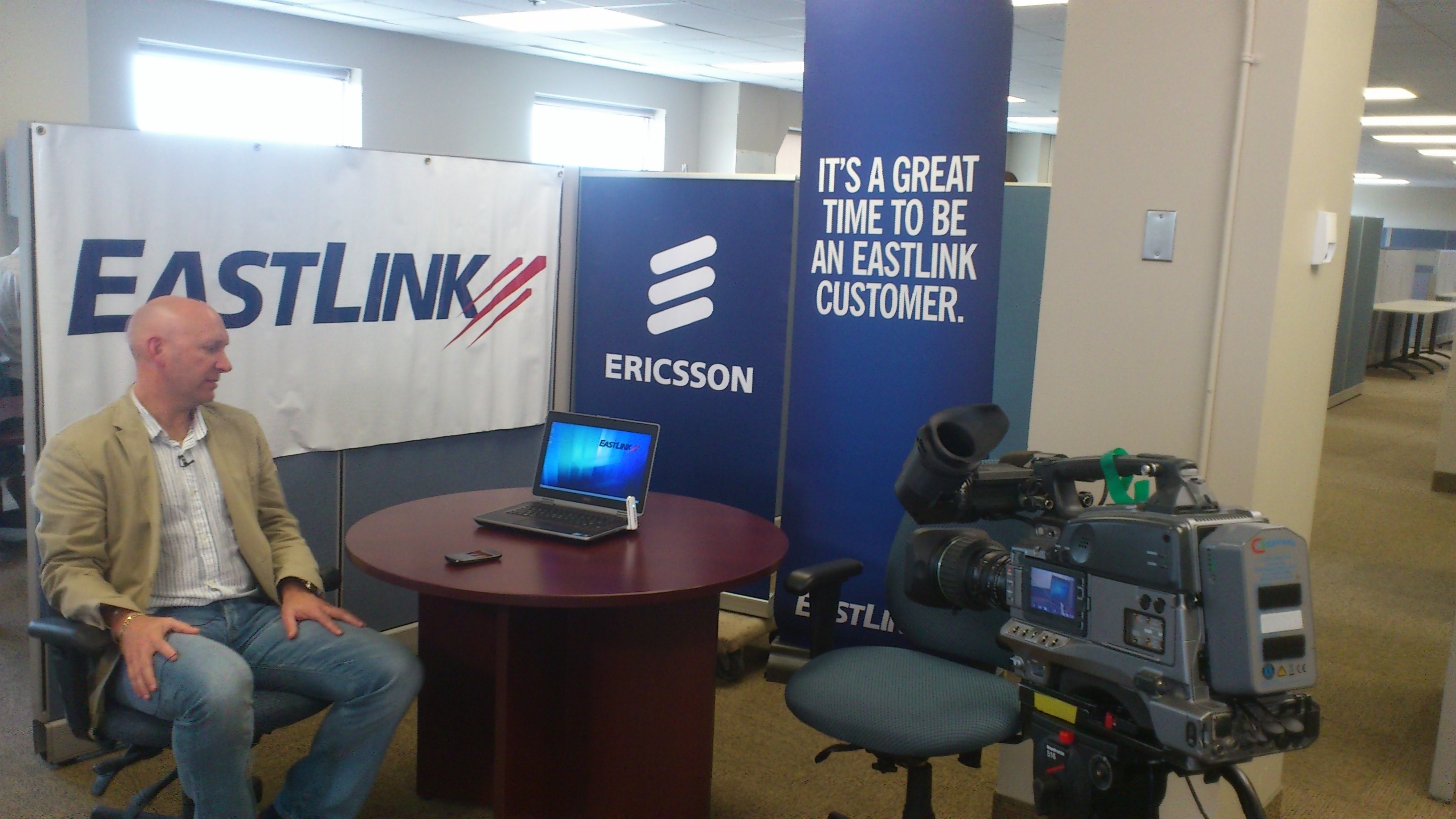
EastLink selects Ericsson to build its Mobile Broadband Network, while also allowing Ericsson to be the sole supplier of HSPA radio access networks and Evolved Packet Core.
2012
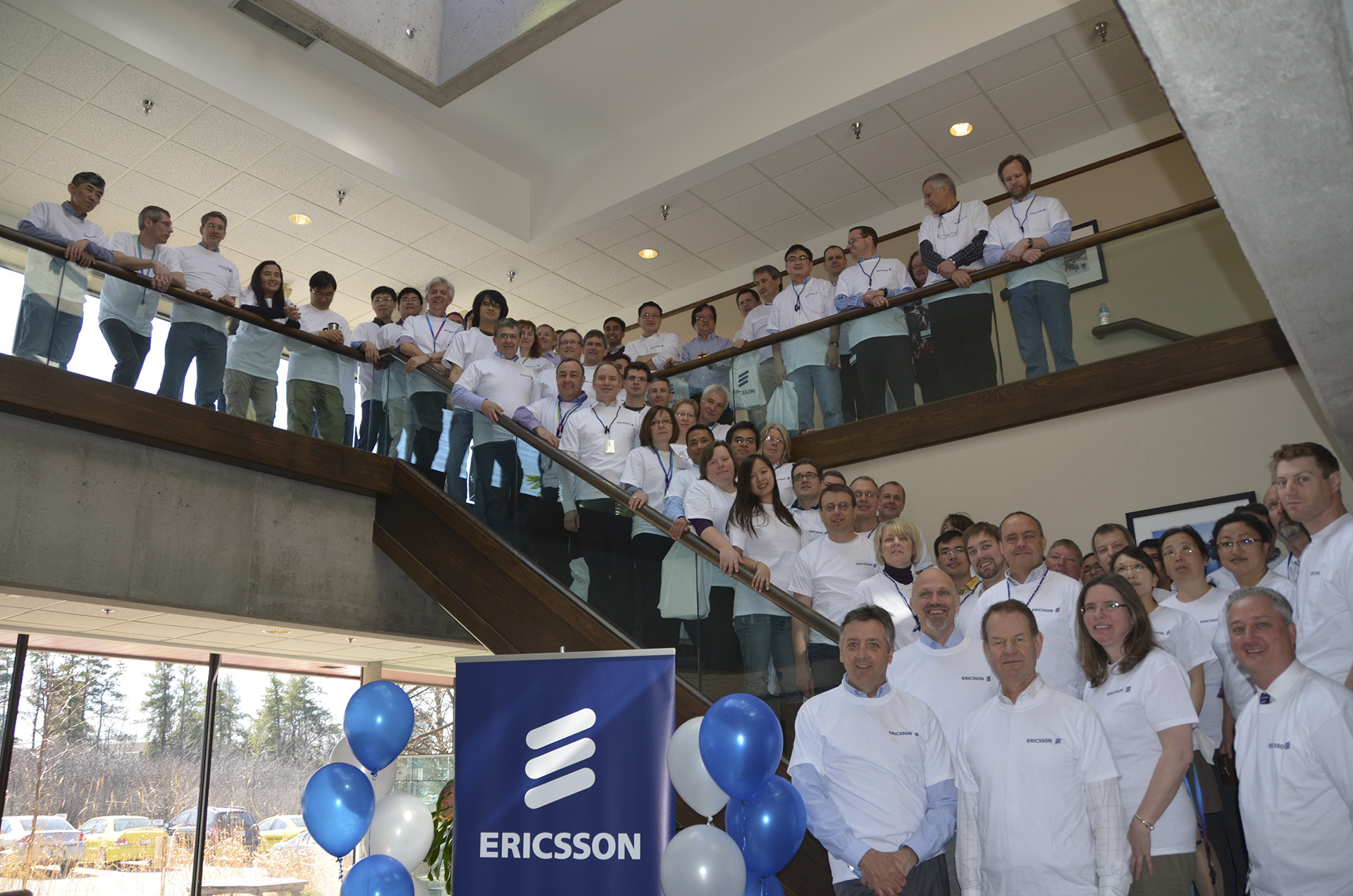
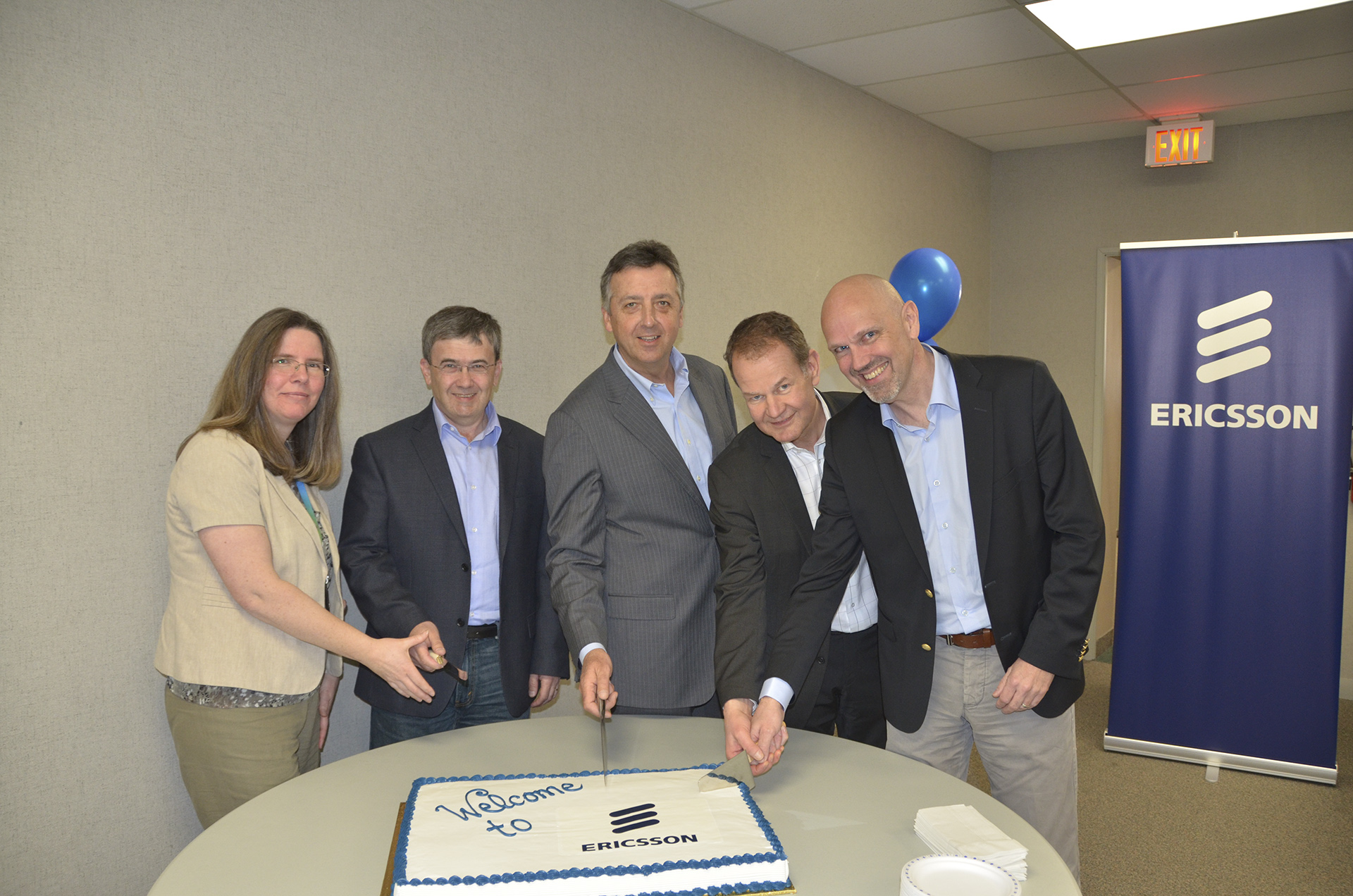
Ericsson acquires Canadian carrier grade wifi solutions manufacturer Belair Networks, taking on its staff of 120 persons.
2013-2014
2013
Ericsson provides TELUS Mobile with an IP Multimedia System (IMS), as well as comprehensive systems integrations services based on Rich Communication Services and Voice over LTE.
2014

Videotron launches its 4G LTE network using Ericsson radio and core network technologies.
2019
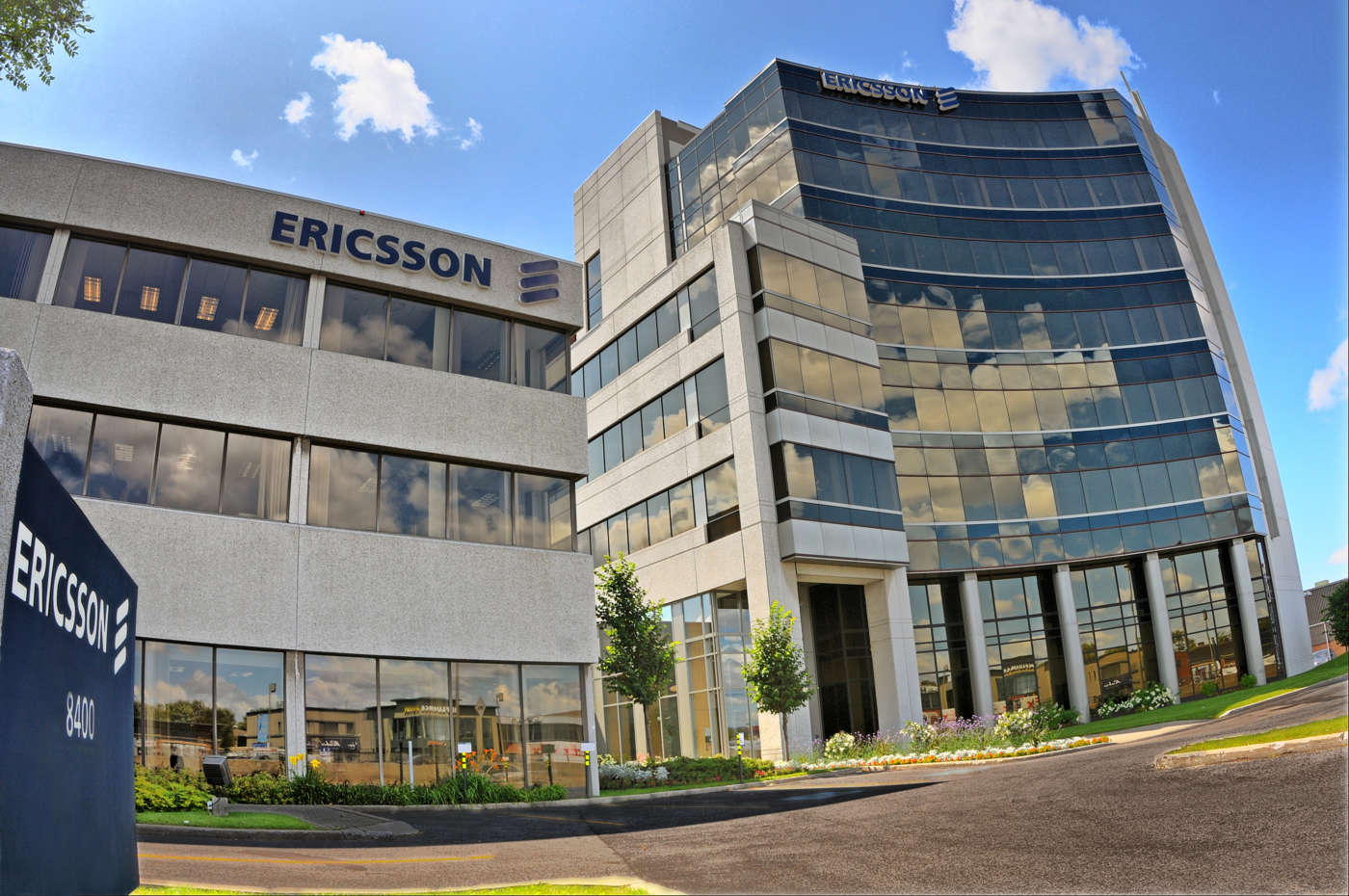
Ericsson launches a Global Artificial Intelligence Accelerator innovation hub in Montreal which focuses on R&D in AI and Automation.
MediaTek and Ericsson preform an interoperability development test in Ottawa, resulting in a ground-breaking 5G standalone end-to-end call on 2.6Hz band based on 3GPP’s 5G December 2018 specifications.
2020

Ericsson and TekSavvy Inc. Partner to upgrade and expand TekSavvy’s existing rural Fixed Wireless Access network and services using Ericsson Radio System radio, transport and Cloud Core network technology.

Ericsson and Carleton University announce a multi-year partnership to advance world-class talent development programs for engineer and computer scientists going into the wireless communications industry.

Bell Canada selects Ericsson as a 5G partner to support its nationwide 5G mobile and fixed wireless access deployment.
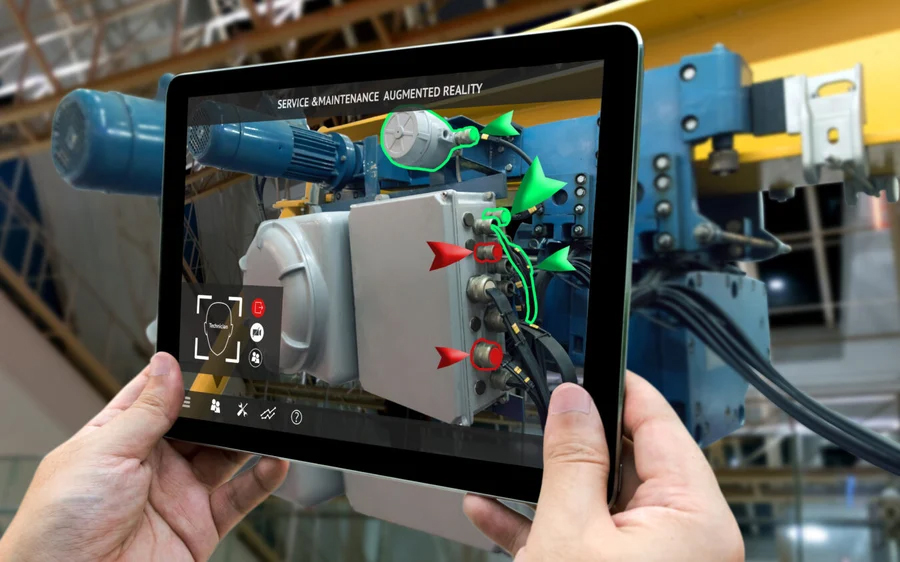
Rogers deploys Canada’s first 5G network, of which Ericsson is the sole supplier for the 5G RAN and 5GC.

Ericsson, ENCQOR 5G and Concordia University partner to create the Industrial Research Chair in Cloud and Edge Computing for 5G and beyond.

Ericsson is selected by Xplornet to deliver rural 5G wireless broadband services.
2021

ENCQOR 5G and Ericsson deploy a standalone 5G network to drive innovation and edge computing and applications.
TELUS and Ericsson complete the first multi-vendor network slicing orchestration proof of concept in a lab environment based on 3GPP Release 16 and IETF L3NM.
2022

Eastlink launches a new 5G network - powered by Ericsson - to service 18 sites in Halifax, Nova Scotia.

In collaboration with Ericsson, Rogers launches Canada’s first commercial 5G standalone network.
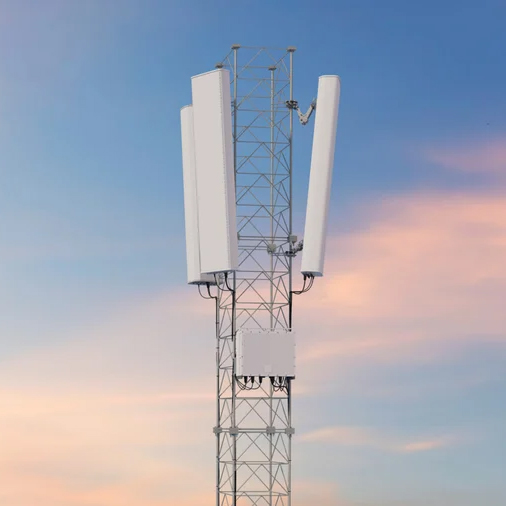
Ericsson, École de technologie supérieure (ÉTS), Concordia University, Polytechnique Montréal, Environment and Climate Change Canada (ECCC) launch a joint research initiative to reduce the energy use of 5G networks.
2023
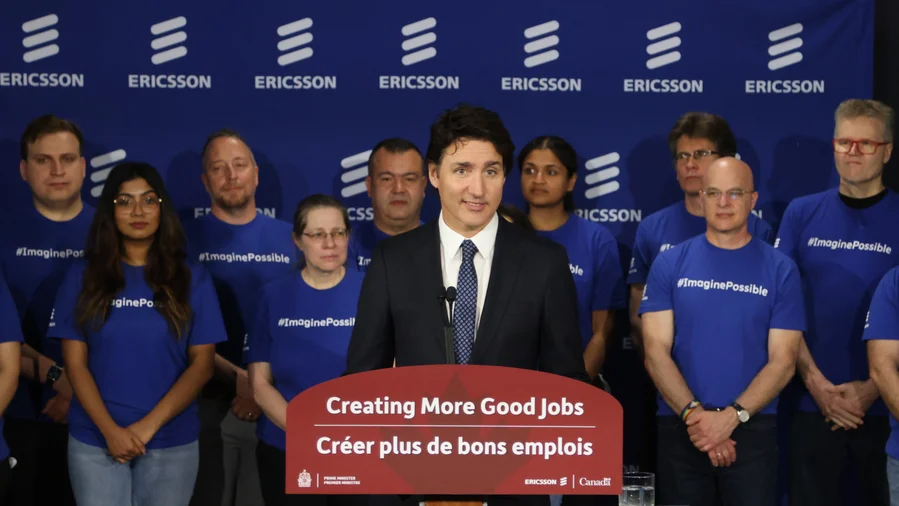
Ericsson and the Government of Canada to invest more than CAD 470 million in R&D centres
2025

Moving beyond 4G boundaries
Global mobile data traffic is expected to multiply by 5 times, particularly in dense urban areas where current 4G networks are unlikely to keep up with the demands of the future.
2025-2029


Life in a Climate-Impacted Future
More than half of Canadian urban early adopters are worried about the negative impact of global warming, but they also see connectivity and internet services as important tools to handle the challenges in everyday life caused by climate change. Read more