










How close are we to becoming the Jetsons?


Back in the nineties, my favorite TV show was called Tomorrow’s World, a UK-based show which ran for a whopping 38 years on the BBC. It discussed the latest developments in science and technology (just look at this snippet of what the home in 2020 would look like).
Back then, the future was extra exciting. Technology would make our lives infinitely easier – we’d be commuting to work in electric, automated cars, and life at home would just be one smooth series of button pushing.
The height of this slightly skewed future gazing was my favorite Saturday morning space-age animated sitcom, The Jetsons, which first aired in the 1960s. The Jetsons are a middle-class family of four – Jane, George, and their two kids, Elroy and Judy – who live in a space town called Orbit City in the year 2062. Buildings in Orbit City are built on adjustable columns, an architectural style that isn’t too far a leap from Seattle’s Space Needle. The family’s apartment is huge, colorful and minimalist, and they travel by flying car, space board or a pneumatic tube.
In one sense, it’s a space utopia. But the Jetsons are human after all, and they often get themselves into the usual family arguments or awkward situations that many Earthbound families do today.
Having not seen the Jetsons for many years, I wondered if any of the technology in the show had actually became a reality. The Simpsons famously has an uncanny ability to predict the future – including Trump as President and a virus sweeping the globe. So how well did the Jetsons creators do in predicting how we’d live in the future?
Communication
Probably the most familiar concept of them all. Video calling is the norm in the Jetsons, although they call it a ‘televiewer’ and it comes in the form of a large fixed screen, rather than a mobile device. Wherever they’re located, connectivity is always crystal clear – low latency and high throughput has clearly been a major success in Orbit City. Could it be an evolved version of 5G? High speed connections, billions of connected devices, and transforming communication from your handheld device to whole industries – the evidence certainly points in that direction, especially if we consider George Jetson’s job…
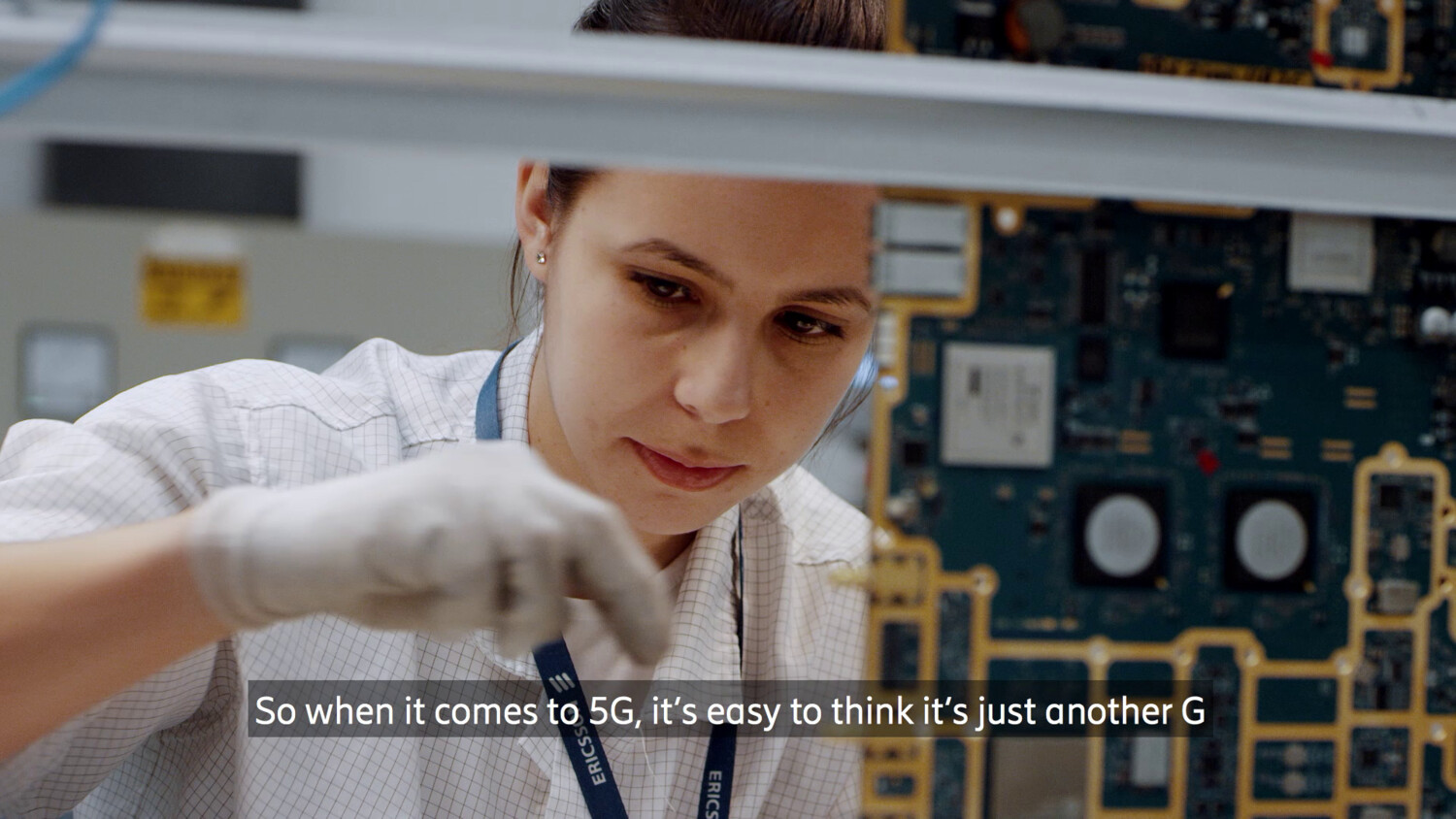
Caption: Is connectivity in a Jetson’s world a distant cousin of 5G?
Industry automation
When it comes to work, the family’s father figure, George Jetson, is a Digital Index Operator at Spacely Space Sprockets, although it’s hard to distinguish what he actually does during the day apart from button pushing. He’s also often late to his desk, even though he doesn’t have to work until 11am, and he finishes just three hours later.
Interestingly, during a confrontation with his boss about how much he’s been thinking about a certain issue, his boss responds, ”You THINK?! Your machine is meant to do the thinking, Jetson!” It seems that in Orbit City, Industry 4.0 has reached its zenith. Work life isn’t much more than checking a few monitors and doing as little hands-on work as possible, as exemplified by George’s outburst after a hard day on the job: “I pushed the button on and off five times!”
Orbit City reflects many of the future predictions for industries like manufacturing. The expansion of 5G and cellular technology will reshape many sectors of society and transform industries, increasing efficiency and productivity in the process. With that, comes a widely recognized fear that automation will make people jobless. But many also see the benefit of expanding automated jobs to free up workers for other, more meaningful work. In Ericsson’s Creative Machines report for example, half of workers claimed that having an AI to help them improve their work capacity or do simpler work tasks would be a good idea.
We could also see the expansion of remote robotics – controlling one or a series of machines from a distance. While we may not be carrying out tasks with our feet up quite like George Jetson, but he certainly knows a thing a or two about using technology to his advantage.

Hear about the future with remote robotics from Azimeh Sefidcon, Research Director for Cloud Systems and Cloud Platforms at Ericsson
Smart homes
Home cooking at the Jetsons’ is my kind of cooking. Kitchen aesthetics may not have changed that much in Orbit City, but when you can order a meal from a wall-mounted menu (otherwise known as a food-o-mat), I’m all in. But even the machines in 2062 have their glitches – overdoing the eggs and burning the toast are common occurrences.
I doubt the Jetsons do their own food shopping – I can’t see George or Jane running out of milk on a Saturday morning. Again, it seems that automated decision making and zero-touch consumption is a concept that isn’t too far away. Imagine refrigerators that reorder the groceries, or virtual assistants that take care of all the boring aspects of home life – paying bills, setting up bank transfers, staying on top of insurance policies. It’s all highly likely.

What will Christmas look like in 2050?
Hear from some of our Ericsson thought leaders on what they think about the future of Christmas.
Read the blog post here
Robots
Chores are obviously a thing of the past in the world of the Jetsons. Robotic vacuum cleaners are widely available, as they are today. There’s also Rosie the sprightly ‘rent-a-maid’, who despite being a slightly outdated model, ends up as a well-loved member of the family. Importantly, she’s not just a robotic cleaner – she’s a confidant, and has her own firm opinions about things. In this sense, Rosie may just reflect what’s to come for virtual home assistants. According to our 10 hot consumer trends report, half of survey respondents with virtual assistants believe that their devices will soon understand our emotions, and will likely act on situations rather than commands. Further, 42 of respondents claim that they think their virtual assistants will soon know them better than their friends do – reassuring, or unnerving?
Robots also help the family get dressed in the morning via long, extendable arms that emerge from the wardrobe. This might be a step too far for me, but we should perhaps consider the kinds of clothes we might wear in a Jetsons world. According to a recent ConsumerLab study Connected Intelligent Machines, 76 percent of consumers say that by 2030, there’ll be intelligent posture-supporting suits that help people maintain the correct position during daily activities. Further, 71 percent predict that by 2030, we’ll have AI assistants that translate everything we say to code, giving us humans the power to program any device to do what we ask. The world will truly be your programmable oyster.
Transport
It may not come as a surprise that the main form of transport in 2062 is a nimble little flying saucer or flying car. Despite the Jetson’s having zero gravity on their side, flying cars may not be as far off as you might think. In September 2020, a Japanese company test piloted a manned flying car using drone technology. The flight only last four minutes, but the company is planning on launching the vehicle in 2023 with the possibility of ‘air taxis’ coming on to the market in the next few years.
And who wouldn’t love a skateboard turned hovering spaceboard for a future Christmas? The Jetson children use this as their main mode of transport – a kids dream, surely? Unfortunately, it seems that, alongside Back to the Future fans, it’s here we’re the furthest away from a Jetson’s lifestyle. Nevertheless, what we are seeing today is digital technology increasingly influencing and innovating within the automotive industry. Think connected vehicles, in-car AR services, and automated public transport – perhaps not quite as space age, but out there, nonetheless.
So how close are we to a Jetsons future?
Many of the concepts in the show are certainly plausible. Heightened communication, automation, and using technology for an efficient lifestyle are all points to consider. We should remember however, that we can never fully predict the challenges that might affect how technology develops in the future, as Nigel Willson, speaker, influencer, and advisor on AI, innovation, and technology, points out:
“Programs like ‘The Jetsons’ piqued our imagination, showing us exciting ways our future could unfold, from gadgets in the home to the way we might be working. Now with the rapid acceleration of new technologies, the future seems much closer, and new programs like Black Mirror can make it seem less exciting and more foreboding.
The reality is our world is a rapidly and ever-changing place, in which predictions of our future become much harder. For example, our lives have been immeasurably altered by a pandemic, the impact of which no one could have predicted as we started 2020.
In my future, I would love to see robot helpers, flying cars and a much reduced working day! But my greater hope is that we see a fairer and more equitable future for everyone as our world becomes an ever-shrinking sphere, and our lives become interconnected and interdependent, with technology and connectivity used as the enabler to make that happen. We all need to take the opportunity to dream big!”
For Michael Björn, Head of Research Agenda and Quality at Consumer & IndustryLab, there’s also one major factor that the Jetson’s missed:
“One thing that is completely missing from the world of the Jetsons is how digital and physical experiences will complement each other and form a merged reality perspective. We may still be a few years away from what the Jetsons could do, but once we get there, we will speed quickly past them into a future where an internet of senses makes any experience possible. The Jetsons need jets to fly, for example, but we might be flying just by waving our arms…!”
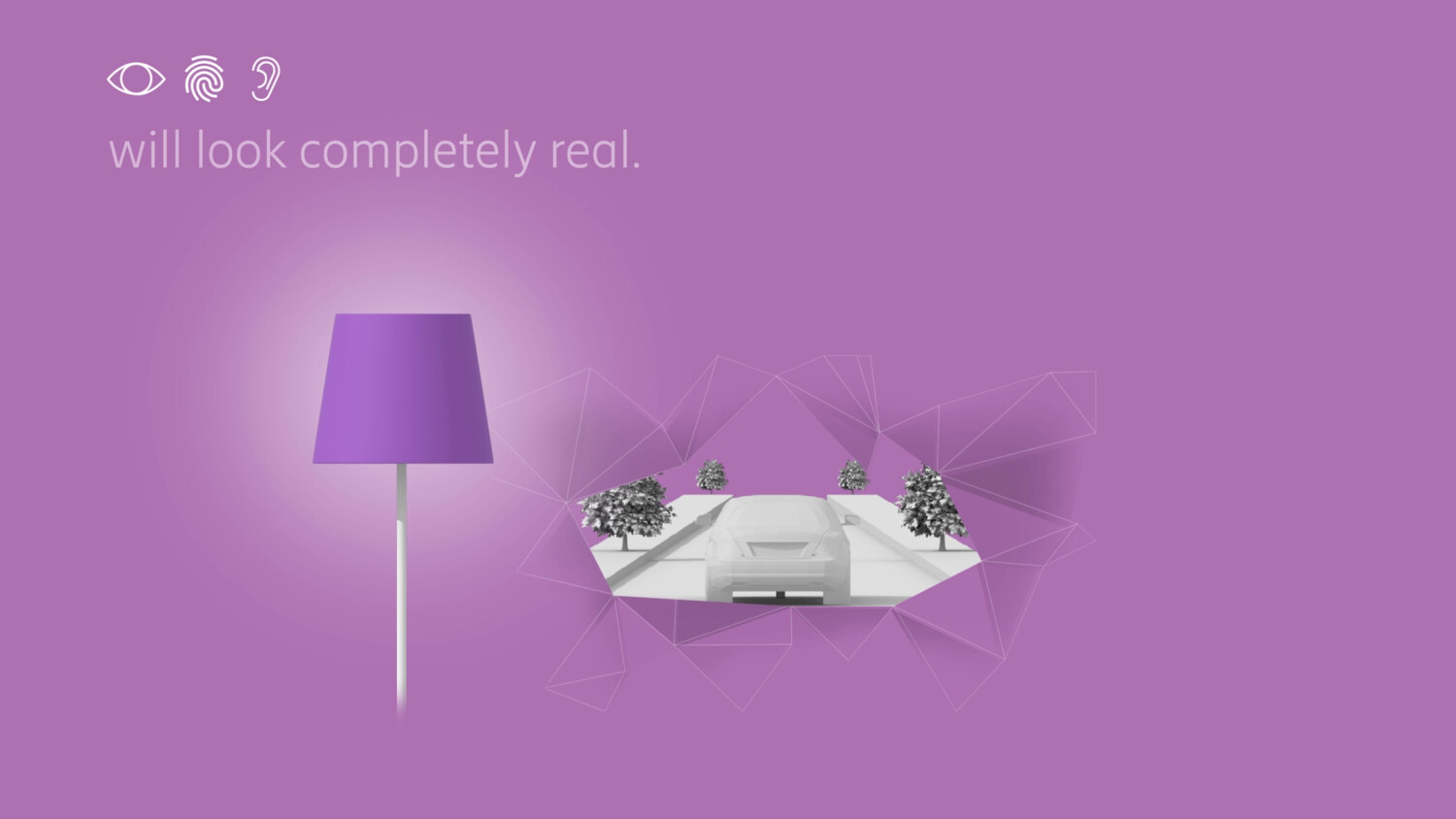
Caption: Get a taste for the Internet of Senses.
The Internet of Senses is the concept that in the future we’ll be able to experience the internet with all our senses. We could taste food made locally in Japan, we could travel to Peru through our connected thoughts, and we could experience the touch of a new garment on a virtual trip to a department store.
I’m sure even the Jetson’s would have been taken aback at those kinds of digital possibilities. However technology develops, it will clearly help us experience the world in a completely new way by 2062. Even so, I’ll still be holding out hope for that spaceboard
Read more
Will we see brain-controlled technology in just ten years?
Learn more about 5G and a world without traffic jams.
Explore our 10 Hot Consumer Trends 2030 report to find out how the internet of senses is shaping consumer expectations.