









Riding the wave of 5G innovation: How we built Europe’s first 5G shipyard
- English
- Español

Innovation Manager, Telefónica España
Innovation Manager, Telefónica España
Innovation Manager, Telefónica España
Have you ever stepped into a shipyard? Boats larger than buildings; vessel pieces scattered everywhere; researchers and engineers rushing backwards and forth. It can be difficult to imagine how modern-day technology, like 5G, can fit into the picture. But as Innovation Manager at Telefonica, I’m a firm believer that 5G, with its high performance and capacity, has the potential to change everything. And, as we have proven in this collaboration journey, that includes improving efficiency in vessel maintenance and construction.
Innovation meets industry
Our journey begins back in 2017, when my team and I responded to the Ministry of Economic and Digital Affairs’ call for grants to promote the development of 5G industrial use cases and encourage the wider digital transformation of Spain’s economy.
Leading us to set our sights on the naval industry, we connected with Navantia, a company specialized in ship building and design that had previously expressed an interest in deploying 5G in their shipyard - something we wanted to make a reality.
Our first challenge was to work out which 5G use cases to develop. Then, we needed to identify the right partners across the innovation ecosystem who we could collaborate with in making those ideas happen.
Paving the way for the 5G Shipyard
Shipyards are places with well-defined and complex processes, made up of specialist workers with distinct roles. And so, to identify opportunities where new technologies could help to improve the efficiency and even safety of their business operations, we needed to understand the business from the people that knew it best. That’s why collaborating with our colleagues at Navantia was key.
We then began to work together with Ericsson and technology vendors Cinfo and Idronia to get a sense of what 5G could enable in a shipyard. Where would it make a difference? Which processes could it optimize and scale up?
These opportunities would be powered by a dedicated Ericsson industrial 5G network. Testing the very latest in 5G technology, we leveraged both a Non-Standalone and Standalone 5G core and installed one of the world’s first antennas for European millimetre bands to provide the shipyard with optimal 5G coverage.
We also relied upon an Edge Computing processing centre deployed on Telefonica’s Network. This would provide the high-bandwidth, high-reliability, and very low latency to implement industrial and cutting-edge technologies such as augmented reality and 3D scanning.
Creating 3 Shipyard 5G use cases
1. Remote Technical Assistance
Ever wondered how long it takes to repair a boat after it is damaged? Weeks, or even months, depending on the severity or type of maintenance needed. In fact, the machinery, devices, and industrial processes involved are so complex only several individuals have the specialist skills to maintain and repair them.
This can be problematic. Not only does it lead to a disruption in the industrial chain, it also leads to drop in productivity. And so, we implemented a solution that would facilitate repairs to be carried out by a non-specialist worker placed on site.
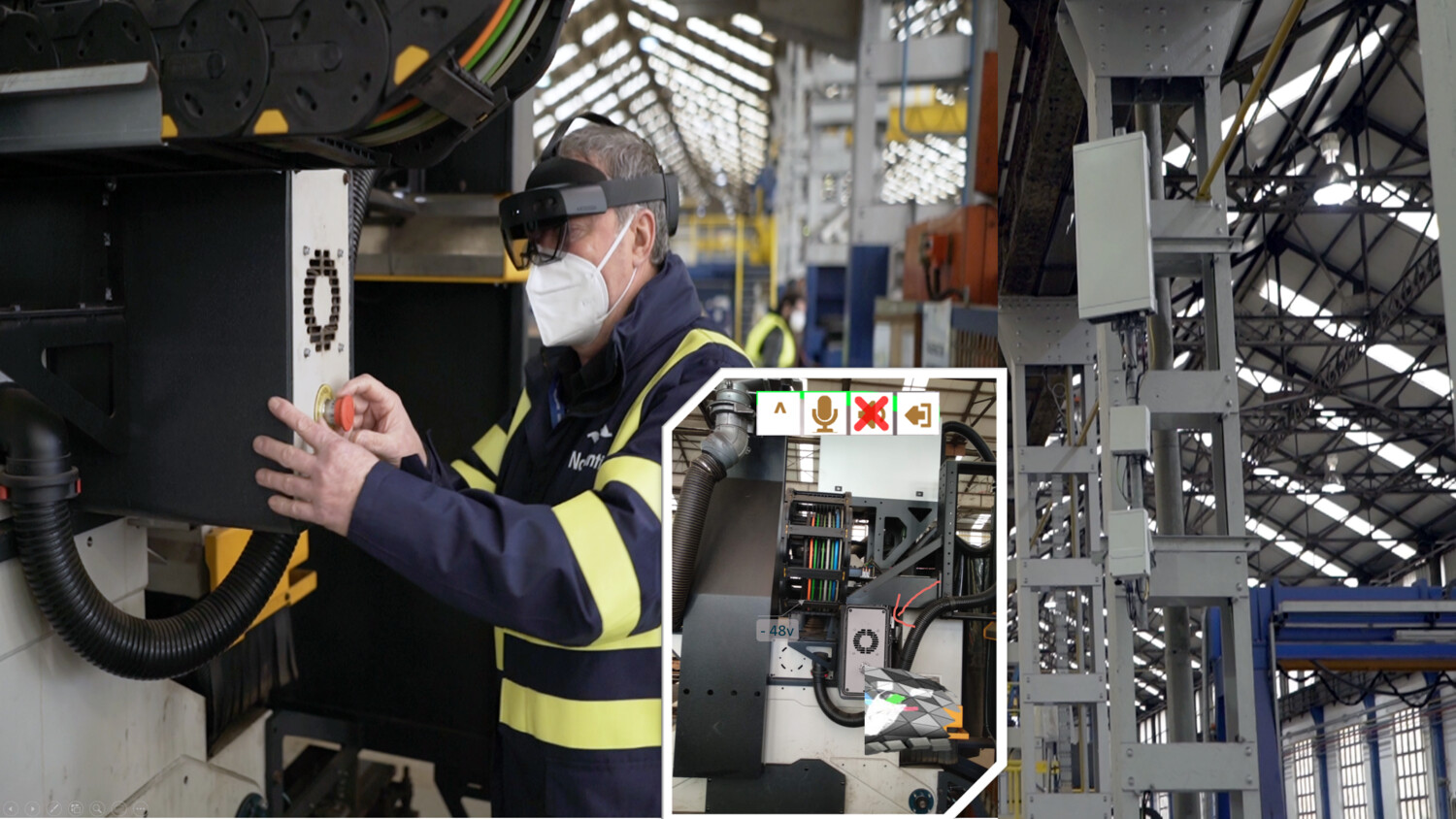
Drawing upon the low latency and high real-time processing capacity offered by 5G and edge computing, this use case leverages augmented reality, via Microsoft’s Hololens 2, to allow a remote expert to guide a non-specialist worker to diagnose and carry out any necessary maintenance or repair work using specialist equipment.
In constant contact with the specialist, the worker can carry out repairs in real time, guided by graphical representations such as animated 3D models and illustrative pictures, so that the repair can now take a matter of hours.
Moreover, the specialist can be anywhere and still support with the task, something which has proven to be vital throughout the COVID-19 pandemic.
2. Visualisation of Virtual Parts in a real environment
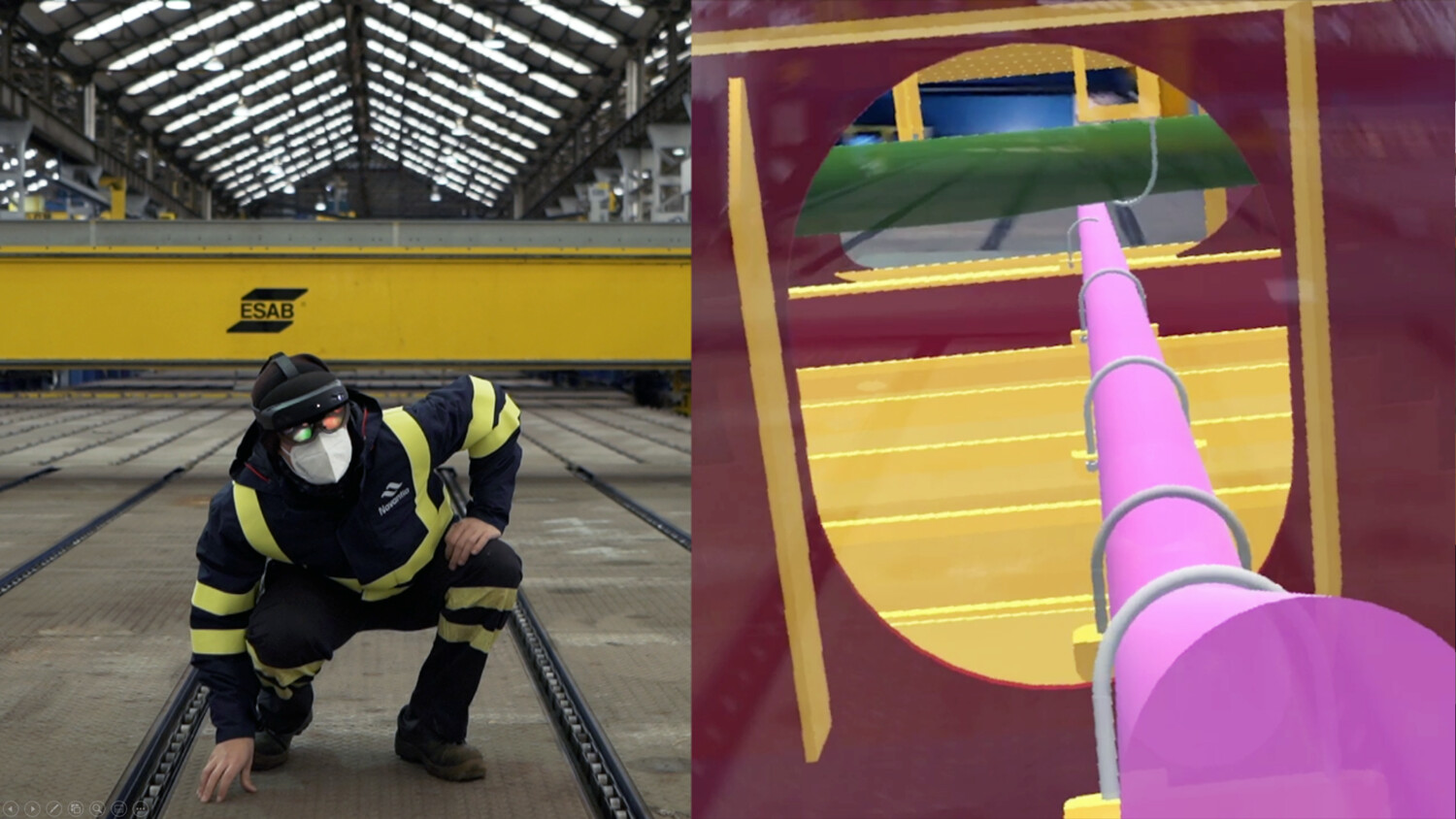
The importance of precision in the shipbuilding process soon became clear. A huge amount of time is spent planning and co-ordinating so that ship parts fit together with millimetric accuracy. We thereby decided to introduce a use case that would allow workers to visualize and overlay design parts onto already constructed sections with AR glasses in real time.
Now, inaccuracies can now be detected before moving ahead into the manufacturing phase. Taking rework and unnecessary alterations out of the picture, this will save vital resources and significantly accelerate the construction process.
3. Supporting the modular shipbuilding process
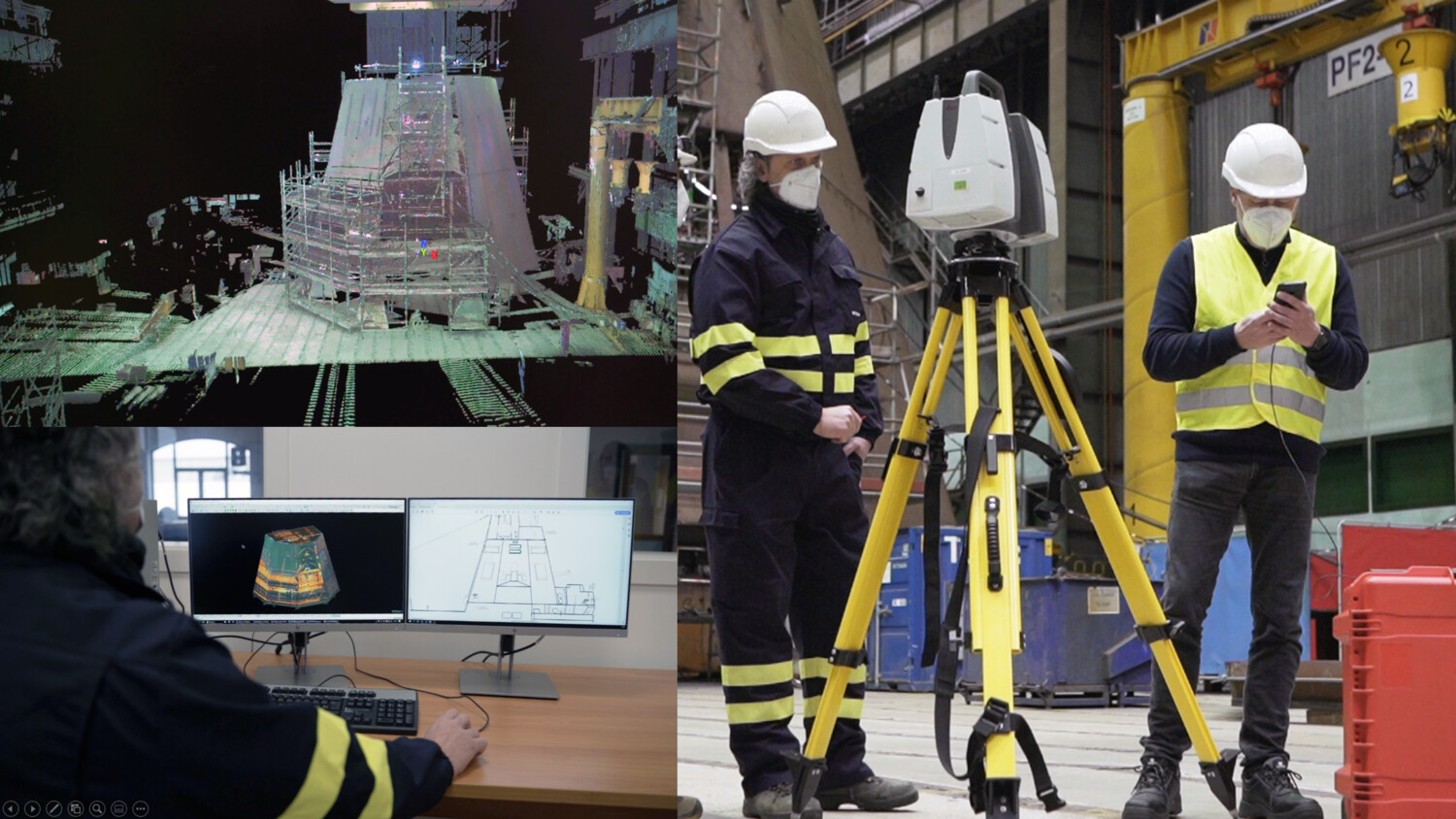
Similarly, leveraging the high bandwidth of 5G, and the huge power and computing capacity of edge computing, we also provided a faster, and more optimized solution to verify that all the ship’s sections fit together.
First, 3D laser scanners capture a blueprint-like image of the different building blocks to be assembled, generating gigabits of information across the three-dimensional space. Second, this layered, complex data is then sent via streaming to computers placed on the edge of the mobile network, allowing specialists to instantly get a full picture of the vessel.
This is a real step up from the pre-existing process. It ultimately eradicates the time and effort spent manually downloading and physically transporting data across different construction sites, which then had to be uploaded to a local computer, using a USB.
Collaboration to drive future 5G innovation
This project is without doubt a major step on both Spain’s and Europe’s industrial transformation journey. What was truly unique however, was that we created the use cases with Navantia’s needs and direction at the forefront. It was a team effort, and our proposed solutions were the result of hours of observing, listening, and working together.
It must be said that our success goes beyond the collaboration between Telefonica and Navantia. It was also the critical technology and collaborative contributions of Ericsson, Cinfo and Idronia that really took the project to the next level and made Europe’s first 5G-powered shipyard a reality. Together we have proven that anything is possible with innovation, determination, and collaboration, especially when we have technology like 5G at our disposal.
5G really is a platform for co-creation and its full value will only be realized by the innovation and industrial ecosystems working closely together. Our focus now is to continue to drive that critical transformation across Europe’s industries. That begins by asking the questions: what do you want to change? Where do you want to be in the future? How can we help you to drive that change and take you a step closer to that future?
And, with 5G set to cover 60% of the world’s population by 2026 , there is no better time to do that than now. I’m excited for where this will continue to take us in the future.
Further links
Find out about our 5G Port in Livorno, Italy, here.
Our new Connected Ports report outlines use cases that can optimize port operations, create new cost reductions, increase worker safety and sustainability using private cellular technology. Get the highlights here.