










How has the pandemic influenced consumers’ online perspectives on privacy?

Senior Researcher, Consumer Insights, Ericsson Consumer & IndustryLab

Principal Research & Chief Statistician at Ericsson Consumer & Industry Lab

Research Statistician at Ericsson Consumer & IndustryLab
Senior Researcher, Consumer Insights, Ericsson Consumer & IndustryLab
Principal Research & Chief Statistician at Ericsson Consumer & Industry Lab
Research Statistician at Ericsson Consumer & IndustryLab
Senior Researcher, Consumer Insights, Ericsson Consumer & IndustryLab
Principal Research & Chief Statistician at Ericsson Consumer & Industry Lab
Research Statistician at Ericsson Consumer & IndustryLab
Listen to an audio summary of the ‘Keeping consumers connected’
As we left 2020 behind, we left a historic time filled with challenges, tragedies, and new norms. As the pandemic reached and affected billions of us across the globe in a matter of weeks and months, it presented the global community with an array of socio-economic challenges. Governments, businesses, and consumers attempted to keep their bearings during the crisis by changing their approach, with the more common approach to keeping organizations and activities going being the growth of digital platforms.

While 2021 started off with the start of vaccine rollouts, and sparking hopes of a brighter future on the horizon, the world is unfortunately still battling to maintain the spread of Covid-19 and its variants. It can be argued that we won’t be able to completely return to normality, at least until the majority of the world’s population has been able to receive the vaccine. But in the pivotal moment between leaving the pandemic behind, while enduring the last months of pandemic life imposed on us, consumers across the globe continue their best to lead life in every way they can from a safe distance.
The turn to digital platforms became a new normal during the pandemic. Not only as a key means for consumers to continue managing work life and studies, but also to socialize, keep in touch with loved ones, access entertainment content, learn new skills and stay up to date with current affairs. As the pandemic progressed, millions of consumers went online and stayed there. And for a significant share of consumers, life under the pandemic became the trigger for taking up new digital habits for the first time.
While being able to access the internet and taking advantage of services and tools for daily needs is important, it has its share of risks. In April 2020, the Global System for Mobile Communications (GSMA), among others, began raising the alarms over incidences of fraud and cybersecurity issues, targeting both businesses operating remotely, as well as consumers in quarantine during the pandemic. It’s likely more challenging for consumers who are relatively new to online tools and services, to discern between correct links and information from fraudulent ones.
In this blog post, we explore the impact of the pandemic on consumers’ online behaviors, drawing on what we learnt from a study covering 31 countries. We also take a closer look at the digital habits of consumers. And as consumers increasingly turn to online platforms to go about their daily life, we ask ourselves if this has had any impact on consumers’ attitudes around privacy and online security.
Let’s begin by taking a detailed look at the role that information and communications technologies (ICT) have in consumers’ daily lives. In this context, we’re referring to the (mobile) technology devices they use, how and to what extent they access the internet, as well as the apps and services they use for their diverse needs.

Connectivity during Covid-19
Read more on the impact the pandemic is having on consumers' daily lives.
Click hereThe consumer lifestyle segments and their digital habits
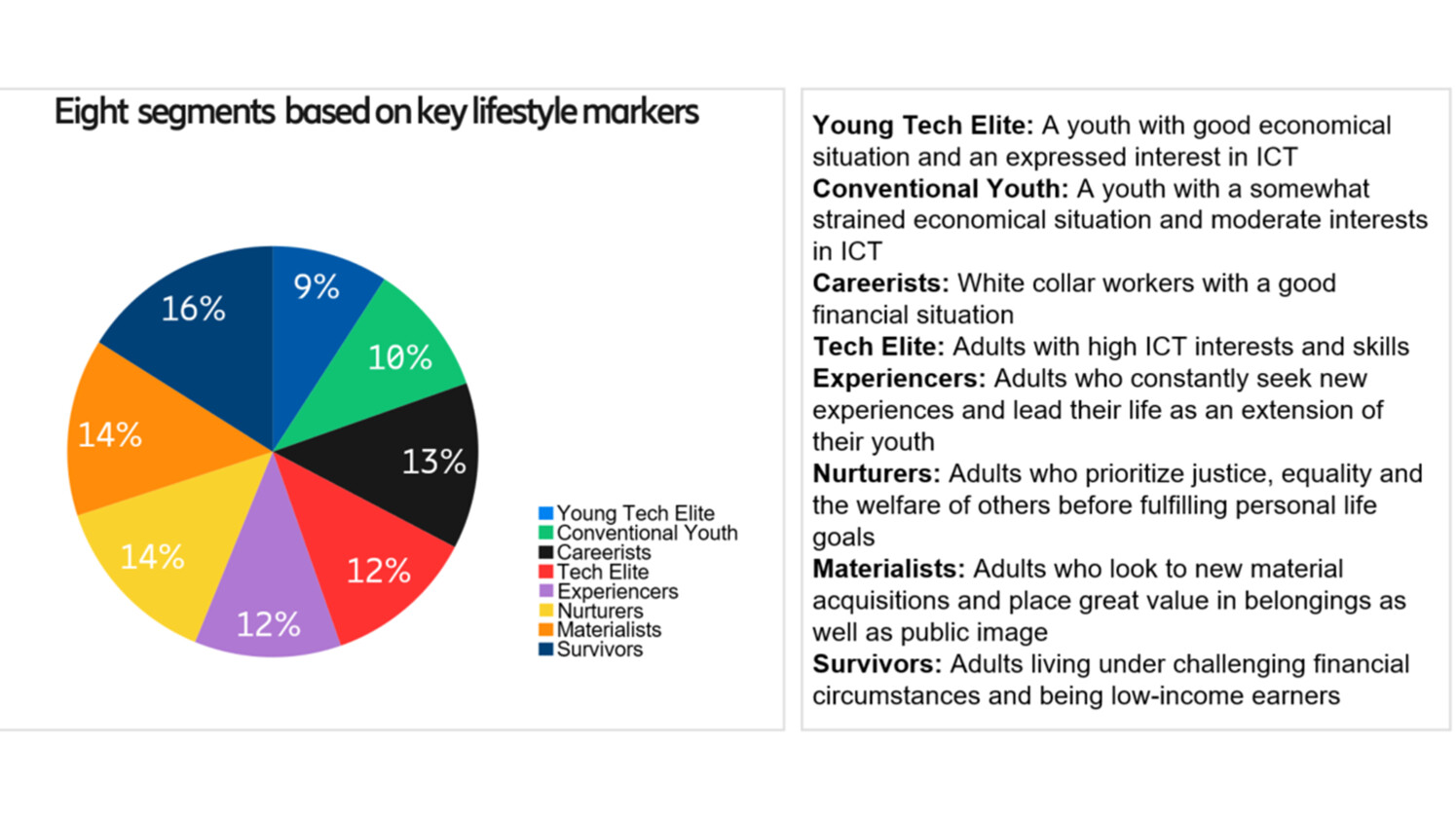
In order to truly understand nuances to habits around ICT, we first need to segment the consumers based on their lifestyles: age, values, civil status, work status, financial situation, technology interest, ownership, and so on.
Base: Online population aged 15–79 (69) years old within 31 countries (Algeria, Argentina, Australia, Brazil, Canada, China, Egypt, Ethiopia, France, Germany, India, Indonesia, Italy, Japan, Kenya, Mexico, Morocco, Nigeria, Philippines, Russia, Saudi Arabia, Singapore, South Africa, South Korea, Spain, Sweden, Thailand, Turkey, UAE, the UK, and the US).
In doing so, we’ve identified eight groups of consumers that represent distinct ways of leading life. Through these eight segments, we’re also able to discern the many differences that exist in their ways of using and relating to ICT. Key differences such as how much time they actually spend online, the services that they use, and the devices they turn to. Let’s briefly look at their key characteristics:
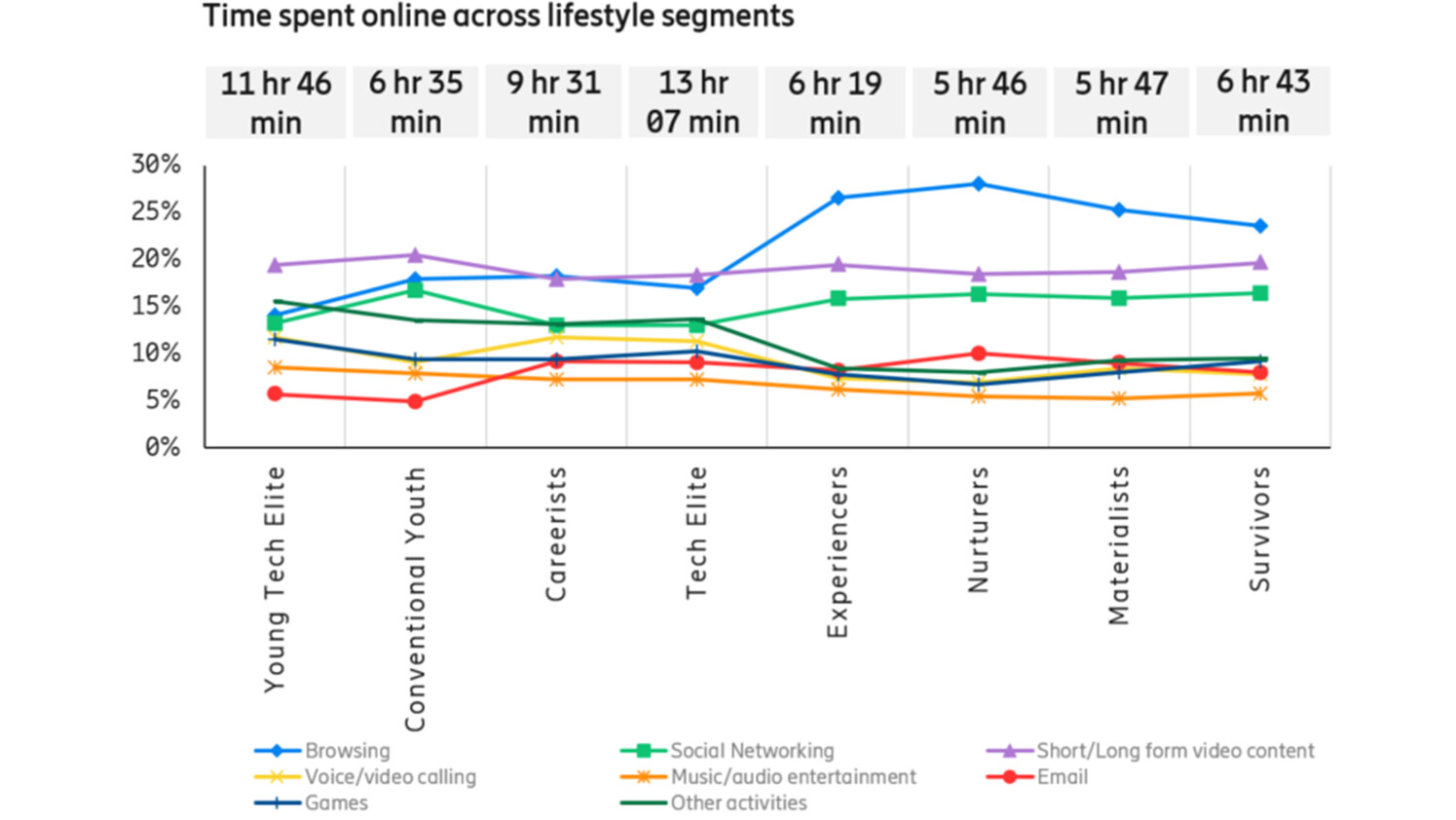
The young tech elite are characterized by their embracing of technology for their diverse daily needs and have increased this habit during the pandemic. They are among the top two segments who spend the most time online, averaging at 11 hours and 46 minutes daily. Apart from utilizing gaming devices, laptops and tablets, their go-to device is the smartphone.
The conventional youth have similar energy and enthusiasm in life as the young tech elites, but lack similar financial means and are also more moderate technology users. They spend six hours and 35 minutes online daily, and similarly to the young tech elites, most of their time online is spent watching short and long-form video content.
The careerists are characterized by their professional prowess and their embracing of technology for their diverse daily needs, both professionally and privately. Averaging at nine hours and 31 minutes online per day, the bigger share of their time is spent on browsing and watching video content.
As the most technology-savvy group, the tech elites are characterized by their broad ownership of technology devices and their frequent use for diverse daily needs. They spend 13 hours and 7 minutes online every day, with a relatively even spread of their time across various online activities.
The experiencers are characterized by the prioritization of new experiences. When it comes to their use of technology, it’s from the aspect of efficiency and convenience. Hence, the time they spend online averages at six hours and 19 minutes, and their top three activities are browsing, watching video content and social networking.
The nurturers are characterized by their general care and consideration for others and the planet. They believe in collective good and value common welfare. When it comes to their time spent online, they average at five hours and 46 minutes every day, where browsing and staying informed is a key activity for them online, with the smartphone being their main device.
The materialists are characterized by their seeking of success, mainly through material acquisitions and status. They increased their ICT usage during the pandemic, with technology ownership not only taking part in representing their lifestyle, but also becoming an outlet for entertainment, convenience, and efficiency. Similarly to the nurturers, this group has a moderate ICT usage and spends around five hours and 47 minutes online every day.
The survivors are characterized by their financial hardships, which have been exacerbated by the pandemic. With limited work opportunities, they struggle to see any immediate improvements to their situation. When it comes to the time they spend online, similarly to the materialists, they spend the greater share of their six hours and 43 minutes browsing, watching video content and social networking.
Base: Online population aged 15–79 (69) years old within 31 countries (Algeria, Argentina, Australia, Brazil, Canada, China, Egypt, Ethiopia, France, Germany, India, Indonesia, Italy, Japan, Kenya, Mexico, Morocco, Nigeria, Philippines, Russia, Saudi Arabia, Singapore, South Africa, South Korea, Spain, Sweden, Thailand, Turkey, UAE, the UK, and the US).
Without a doubt, the pandemic has increased the overall time that all these groups spend online. While the average individual spends around eight hours online per day, half of the groups are above the average and the other half below it.
But it’s their overall approach and use of ICT devices and services that speak the greatest volume: for the youth and tech enthusiasts, including the careerists, the distribution of their time in using different services is rather balanced. Between 50 – 60 percent of their time online is spent on a smartphone, with laptops and other mobile devices taking up the rest of their total usage. While for the other groups, key activities are more informative and entertainment oriented. Between 40 – 50 percent of their time is on the smartphone, and the use of the laptop is more prominent. In other words, there are distinct differences in how much they are connected and what they do online. But one thing they all have in common is their view of connectivity as a key factor in their overall life satisfaction.
The value of connectivity in daily life
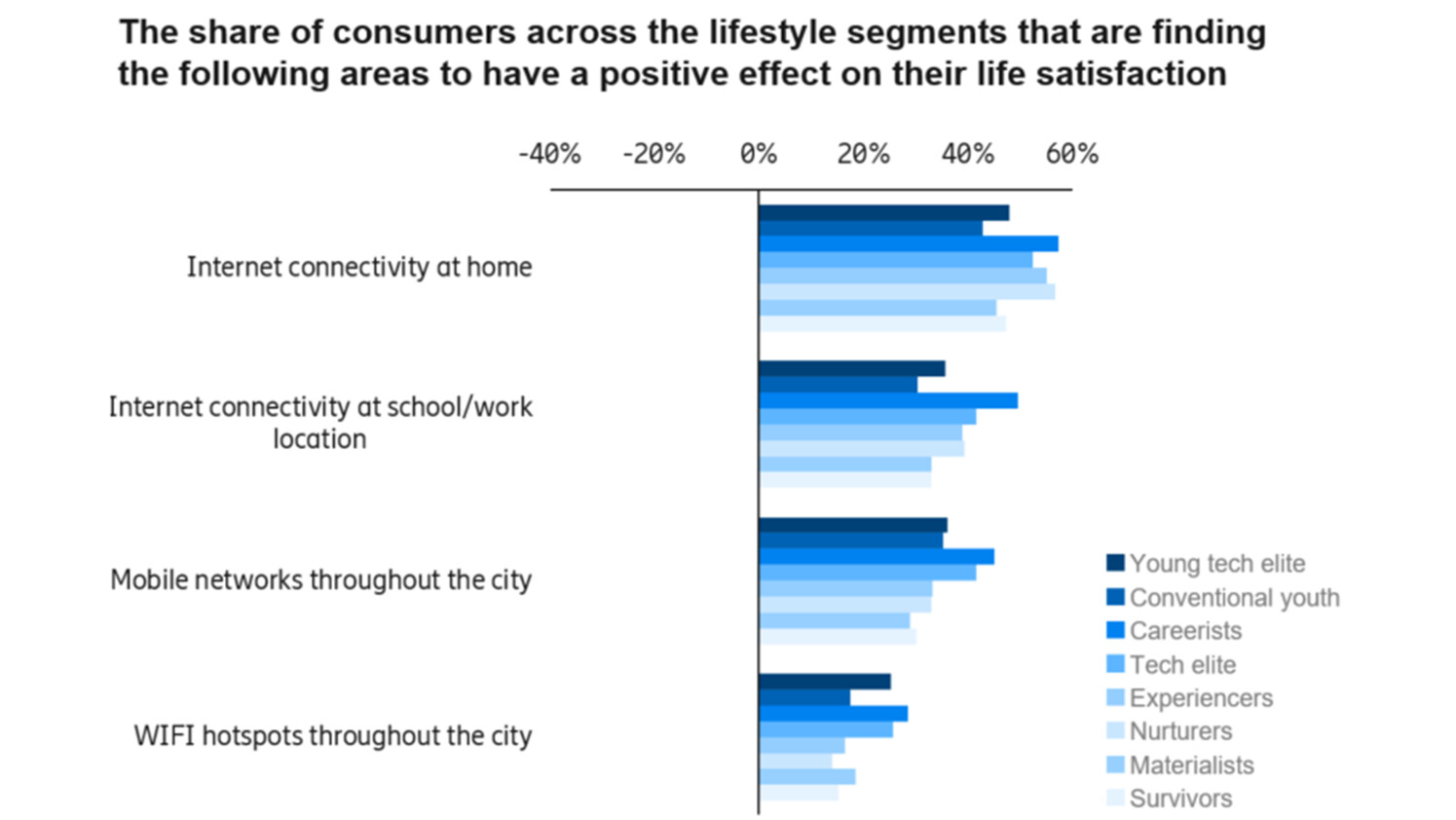
Connectivity has become a key element in consumers’ daily lives, especially during the pandemic. Enabled by connectivity, those who have had the option have been able to manage work remotely, continue with studies, maintain household management, and keep in touch with loved ones while having to stay indoors. We found that around 60 percent of consumers had highlighted connectivity in the home as having a positive impact on their city life satisfaction, making it the highest rated alternative among a list of 19 key services provided by a city or municipality for its citizens.
Just as the use of ICT differs among the consumer segments, so too does their perception on the kind of impact it has had on city life satisfaction. Given the new normality that the pandemic has imposed, it is perhaps natural that connectivity in the home is highly rated among all segments. For example, the work-driven careerists are the most demanding of flexibility regarding when and where they want to access the internet, so it makes sense that they stand out as the ones specifically identifying connectivity as a key factor to city life satisfaction. They also stand out when it comes to the importance of all four connectivity access types asked about.
Base: Online population aged 15–79 (69) years old within 31 countries (Algeria, Argentina, Australia, Brazil, Canada, China, Egypt, Ethiopia, France, Germany, India, Indonesia, Italy, Japan, Kenya, Mexico, Morocco, Nigeria, Philippines, Russia, Saudi Arabia, Singapore, South Africa, South Korea, Spain, Sweden, Thailand, Turkey, UAE, the UK, and the US).
A key factor here are the daily needs of consumers. But there is a distinguishing factor that drives city life satisfaction with regards to connectivity access: the number of access points consumers have at hand directly impacts their satisfaction with connectivity. The more connectivity access points that a consumer can access, such as Cable/DSL connection in the home in combination with a 3G/4G/5G router, or even a mobile hotspot, then the more satisfied consumers are with the connectivity. In countries where the fiber access is stable and provides good speeds, then additional access points have little to no impact on the satisfaction with overall connectivity. While in countries where the infrastructure for fiber isn’t as stable, then multiple access points that complement the home fiber add positively to the overall satisfaction with connectivity.
But one connectivity access point that was identified as contributing least to city life satisfaction is the Wi-Fi hotspot. These are often located throughout a city, and were particularly low rated among consumers in the majority of the 31 countries in the study. While consumers in the current reality of a lingering pandemic are not able to fully take advantage of Wi-Fi hotspots in their city, it will likely remain a challenge they face when trying to remain connected while traveling in their city, unless the situation improves from an access and infrastructure point of view.
The emotional driver of decision-making
In our studies, we uncovered the impact that the pandemic has had on the emotional wellbeing of consumers. Indeed, the emotional states that consumers have experienced under the pandemic are a result of its severity in the respective countries involved, as well as the financial reality that consumers have found themselves in. Around 45 percent of consumers had reported a financial impact from the pandemic, and 22 percent – the equivalent of half a billion connected consumers globally – reported a financial reality that places them in a struggling position. Many of them are self-employed or small business owners, and have had to work remotely as best they can.
Indeed, financial stress can have a profound impact on overall emotional wellbeing, coloring both ones outlook on life, as well as the future. Yet despite the many challenges, hardships, and personal sorrows the pandemic has left in its wake so far, there is an underlining sense of optimism for the future among the global online population. With urgent support needed for those struggling the most during this crisis, 64 percent of consumers across the 31 countries express a positive outlook on their financial future. Among the previously mentioned 22 percent who reported a financially struggling situation, around 35 percent of them also express a positive outlook on their finances. With this underlying optimism, there has never been a more crucial time to address global challenges that are too big for consumers to steer on their own.
In his latest remarks at the 2021 Economic and Social Council Forum on Financing for Development, the Secretary-General for the UN, Antonio Guterres, summarized the unprecedented year of 2020 as one that has pushed the world into a recession unseen in the last 90 years, and the coming years will be the most crucial in how recovery and development progress globally. In his message, targeted at those in power, to unite in the face of the next crisis and economic inequality, he stated that it is imperative that these challenges are solved so that consumers globally not only keep this optimism for the future, but also experience it as a reality.
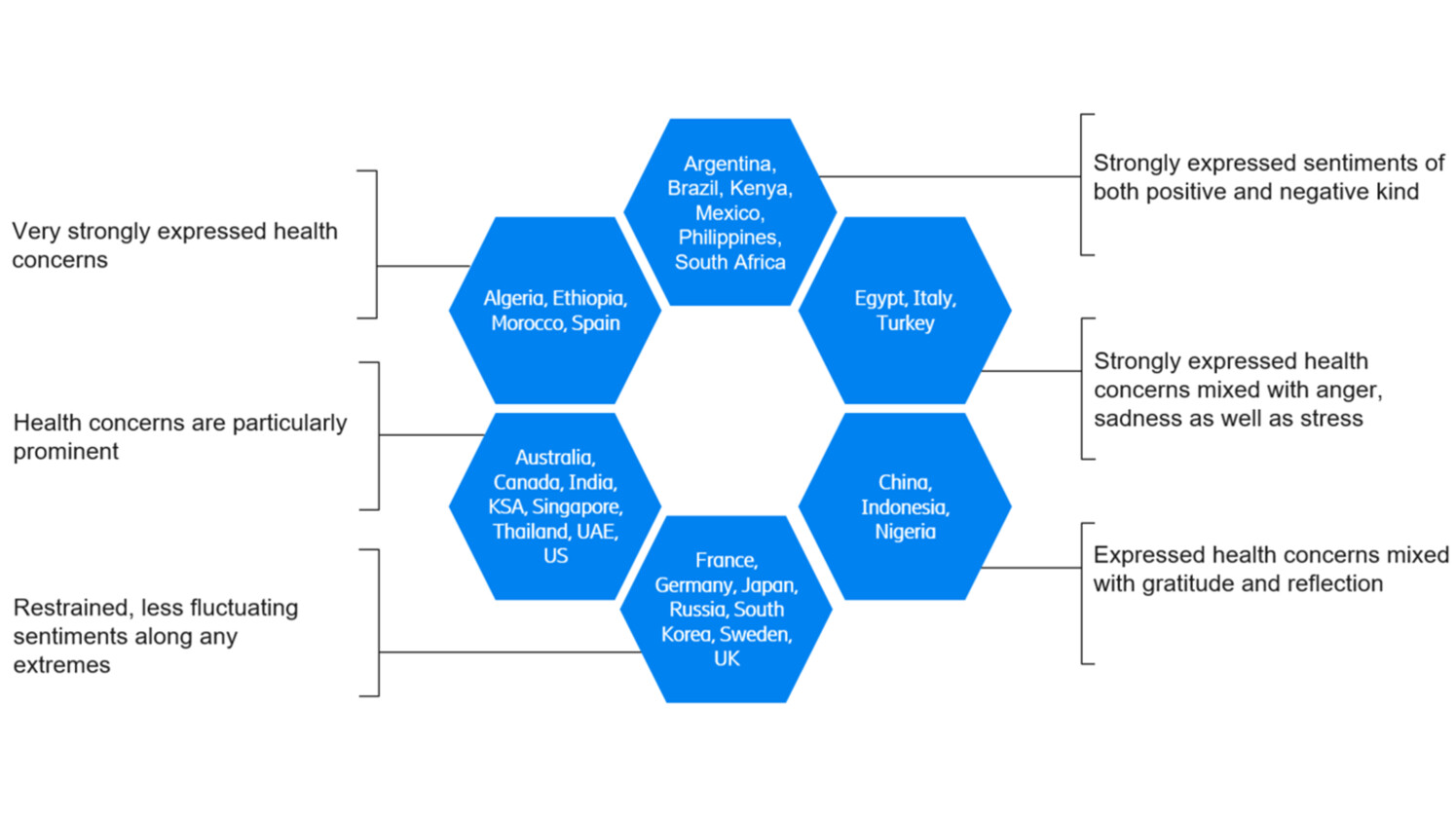
There are also other determining factors for how emotional fluctuations are expressed given the cultural context, social norms, the abilities and attempts of governments to handle the spread of the virus, and the socio-political atmosphere that consumers live in.
Base: Online population aged 15–79 (69) years old within 31 countries (Algeria, Argentina, Australia, Brazil, Canada, China, Egypt, Ethiopia, France, Germany, India, Indonesia, Italy, Japan, Kenya, Mexico, Morocco, Nigeria, Philippines, Russia, Saudi Arabia, Singapore, South Africa, South Korea, Spain, Sweden, Thailand, Turkey, UAE, the UK, and the US).
In the majority of countries, the concern for the health of themselves and loved ones are a common nominator. However, consumers living in countries such as Japan, Russia and Sweden report limited fluctuations to their emotional wellbeing, while consumers in countries such as Argentina, Philippines and South Africa express significant increases in sentiments ranging from fear and anger to gratitude and self-reflection. It is worth noting that we are discussing tendencies on national levels, where nuances to these tendencies co-exist and differ depending on individual circumstances. But national tendencies do give important nuances when looking at differences and similarities between countries and regions. Especially with regards to the impact that the pandemic has had on the respective populations. With new needs and habits formed and shaped by the pandemic, each country will have its foundation set for the types of ICT devices and services that consumers will potentially take up and maintain in the future.
While at first sight emotional wellbeing may seem unrelated to how consumers use ICT, there is a strong relationship between the emotional wellbeing of consumers, their financial situation, their life situation, their needs in daily life and how ICT is used. For example, medical attention from a professional, whether for physical or mental wellbeing, is a need that exists with or without the pandemic as a backdrop. But with a struggling healthcare sector fronting the pandemic while also needing to attend to regular patients, the pandemic has laid bare the acute need to help consumers manage their own health and wellbeing in the long term, albeit in new and more efficient ways.
In fact, in a November 2020 article, McKinsey & Company illustrated how even a pre-pandemic healthcare sector had been adopting technology and artificial intelligence (AI) for support in diagnosis. The pandemic has further pushed the sector in trialing new innovations such as drones and advanced sensor equipment to support at-home health provisions for those unable to be at a hospital. E-health services can play a great role in supporting consumers with health worries, including telehealth, where consumers can engage in direct conversations with a medical professional. However, few consumer groups are frequent users of e-health. This includes seniors who live by themselves and who have limited physical interactions with others.
Seniors who live by themselves also report loneliness as being the strongest emotional reaction to the pandemic and the isolation they find themselves in. Yet they’re still not familiar enough with services that can tie them back to their families and communities, as less frequent users of social networking services, video calling services, local community platforms or otherwise social activities online.
Another group of consumers who have specific daily needs are struggling parents, who have had to deal with financial stress on top of household management and childcare. Given their circumstances, they are currently typical users of work and productivity services – for example, in how they manage household and grocery shopping online. Yet given their stressful situation, they lack both the awareness and use of other types of services that can help them in their current situation. These can include children’s educational content, family entertainment content, e-health services, and utility services, for example.
Despite the gaps that exist between the daily needs of consumers and the potential for ICT devices and services to support them, consumers have increased their online presence significantly during the pandemic. However, while efficient and even critical at times, it’s not without its own challenges, most notably from privacy and online security aspects. Let’s have a look at the attitudes and concerns that consumers have with regards to their privacy online.
Being more connected and more privacy aware
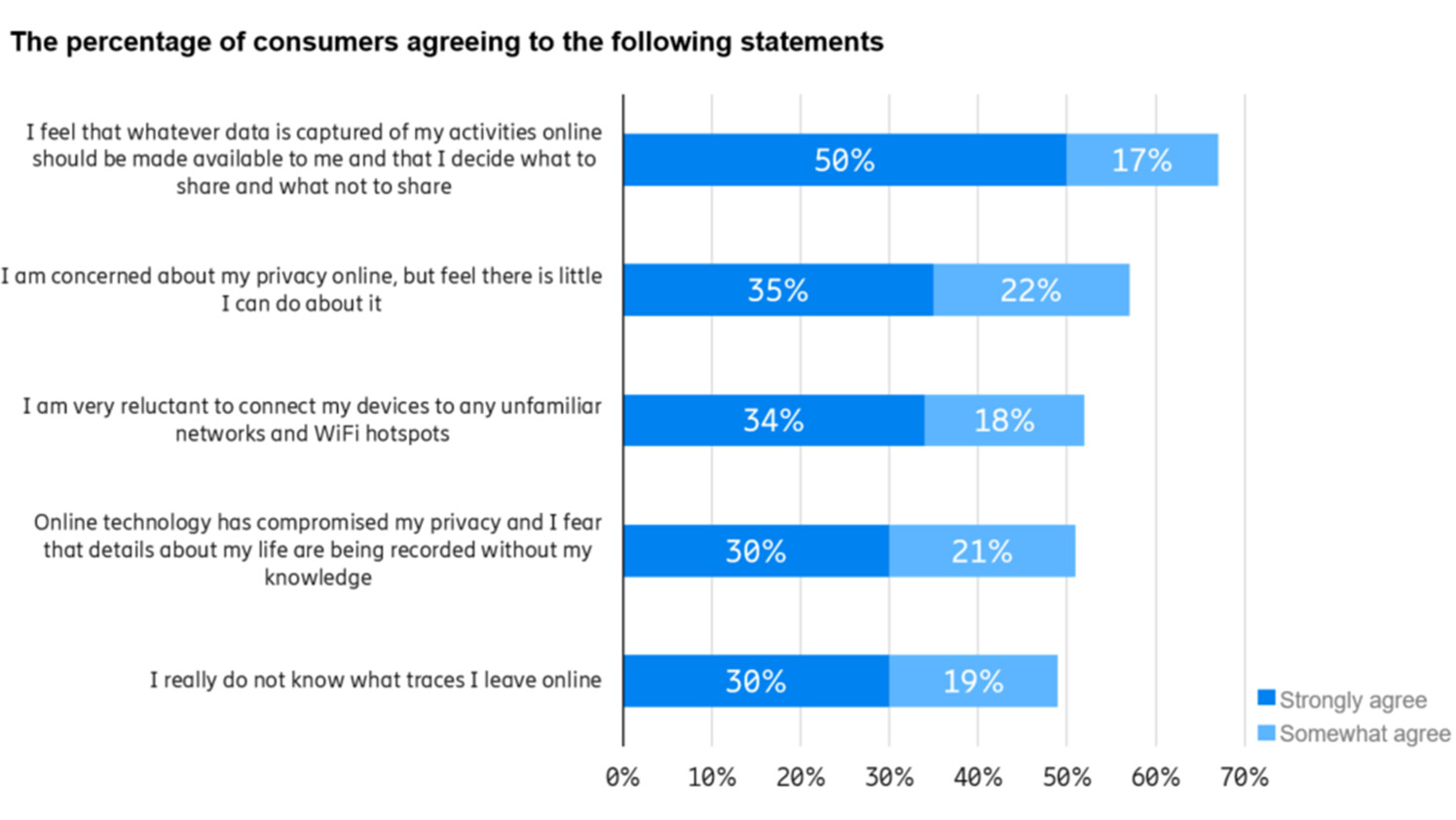
With work life, private life, and anything in-between happening to a greater extent online during the pandemic, consumers have the need to access online services but express concerns around transparency and their privacy online. As many as 67 percent of consumers in the study express a wish to have the ability to decide how and what data is shared online.
This wish for transparency and control comes against the backdrop of genuine concern: as many as 57 percent of consumers state that they are concerned about their privacy online, yet feel that there’s little they can do about it. Furthermore, 49 percent of consumers state that they are not fully aware of what traces they leave online, underscoring both a lack of sufficient knowledge and a sense of hopelessness over the situation.
Base: Online population aged 15–79 (69) years old within 31 countries (Algeria, Argentina, Australia, Brazil, Canada, China, Egypt, Ethiopia, France, Germany, India, Indonesia, Italy, Japan, Kenya, Mexico, Morocco, Nigeria, Philippines, Russia, Saudi Arabia, Singapore, South Africa, South Korea, Spain, Sweden, Thailand, Turkey, UAE, the UK, and the US).
It is particularly concerning that just over 50 percent of consumers also feel that ICT solutions in their daily life have compromised their sense of privacy, leading them to feel that their personal information is being captured without their consent. This is concerning for various reasons, but one notable reason is when we consider the outlook: consumers see an increase in their use of online platforms long after the pandemic has passed. From e-learning and entertainment to e-commerce and e-health, these are all services that seem likely to grow in use across different consumer groups and in the majority of the 31 markets in our study. But in order for consumers to truly feel comfortable using ICT solutions, using them frequently and to their full potential, they also need to feel safe and secure while doing so.
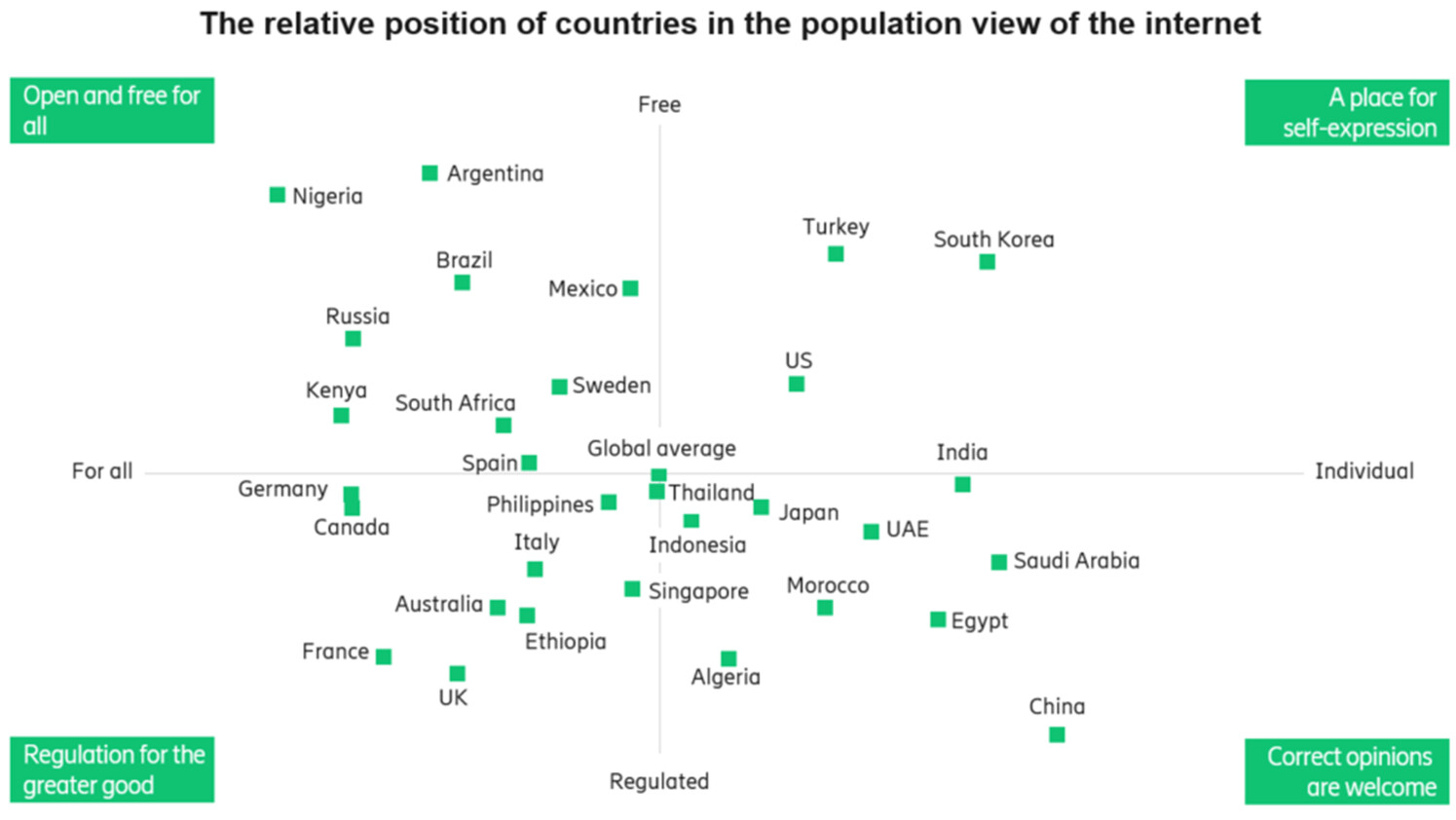
The GSMA has, as part of its mission around the need for transparent future digital societies, underlined the importance of collaboration between governments, regulators and the mobile industry to enable a thriving mobile economy. However, consumers seem a bit divided in this regard: while 68 percent of consumers state that companies should preserve their customer data while withstanding government pressures, 47 percent also believe that their government should regulate the internet more than it does now. One might wonder, how the internet is perceived as a platform, and whether or not consumers see regulation as a necessary factor in controlling content and actors online.
Base: Online population aged 15–79 (69) years old within 31 countries (Algeria, Argentina, Australia, Brazil, Canada, China, Egypt, Ethiopia, France, Germany, India, Indonesia, Italy, Japan, Kenya, Mexico, Morocco, Nigeria, Philippines, Russia, Saudi Arabia, Singapore, South Africa, South Korea, Spain, Sweden, Thailand, Turkey, UAE, the UK, and the US).
In this regard, the cultural and socio-political dynamics in the respective markets highlight the greatest difference in how consumers relate to the matter. For countries where consumers align towards a more regulated online environment, the industry has a journey to take in order to gain the necessary trust from consumers while demonstrating a will to provide transparency measures. For countries where consumers align towards a free and open internet, governments and regulators have an important role to play in communicating how regulation and oversight can become an important tool for individual protection. If principles and frameworks for good privacy practices could be strengthened – given our understanding of the concerns consumers are expressing – then all actors need to act with the joint understanding that the right to privacy is a human right. While in practice this might look different given local conditions, it’s a clear indication for future work.
Attention to privacy varies among the segments too
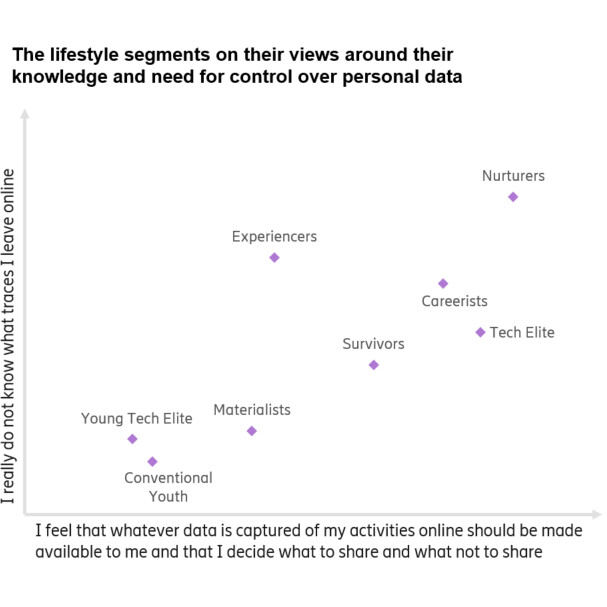
Indeed, a sense of transparency and control is at the heart of the matter. But the levels of knowledge around online privacy and the need for control over the handling of personal data online differ among consumers. Let’s revisit our consumer lifestyle segments and their perspectives on these elements.
Base: Online population aged 15–79 (69) years old within 31 countries (Algeria, Argentina, Australia, Brazil, Canada, China, Egypt, Ethiopia, France, Germany, India, Indonesia, Italy, Japan, Kenya, Mexico, Morocco, Nigeria, Philippines, Russia, Saudi Arabia, Singapore, South Africa, South Korea, Spain, Sweden, Thailand, Turkey, UAE, the UK, and the US).
When it comes to the youth, both the conventional youth and the young tech elite consider themselves knowledgeable enough around the digital traces they leave online, and therefore see little reason in being presented further information or control mechanisms around it. Neither the materialists nor the experiencers see significant needs for knowing what data traces are left online, but their stance stems from two distinctly different reasons; the materialists see themselves as informed enough already, while the experiencers do not want to be too alarmed about it if their positive online experiences outweigh any potential risks.
The careerists and the tech elite consider themselves knowledgeable around the fact that they leave traces online and acknowledge that there is a complexity in understanding the full extent of traces a person can leave behind when using online services. Thus, they also acknowledge the limits to their knowledge in this area, expressing both a wish to understand what additional data exist out there about them, and a wish to be able to manage it accordingly. The survivors express a lack of knowledge around their own traces online, but would like to know more, as long as they have the time and possibilities to inform themselves better. And lastly, the nurturers are the most concerned segment among all eight, lacking awareness but a strong will to gain control and management over their data online.
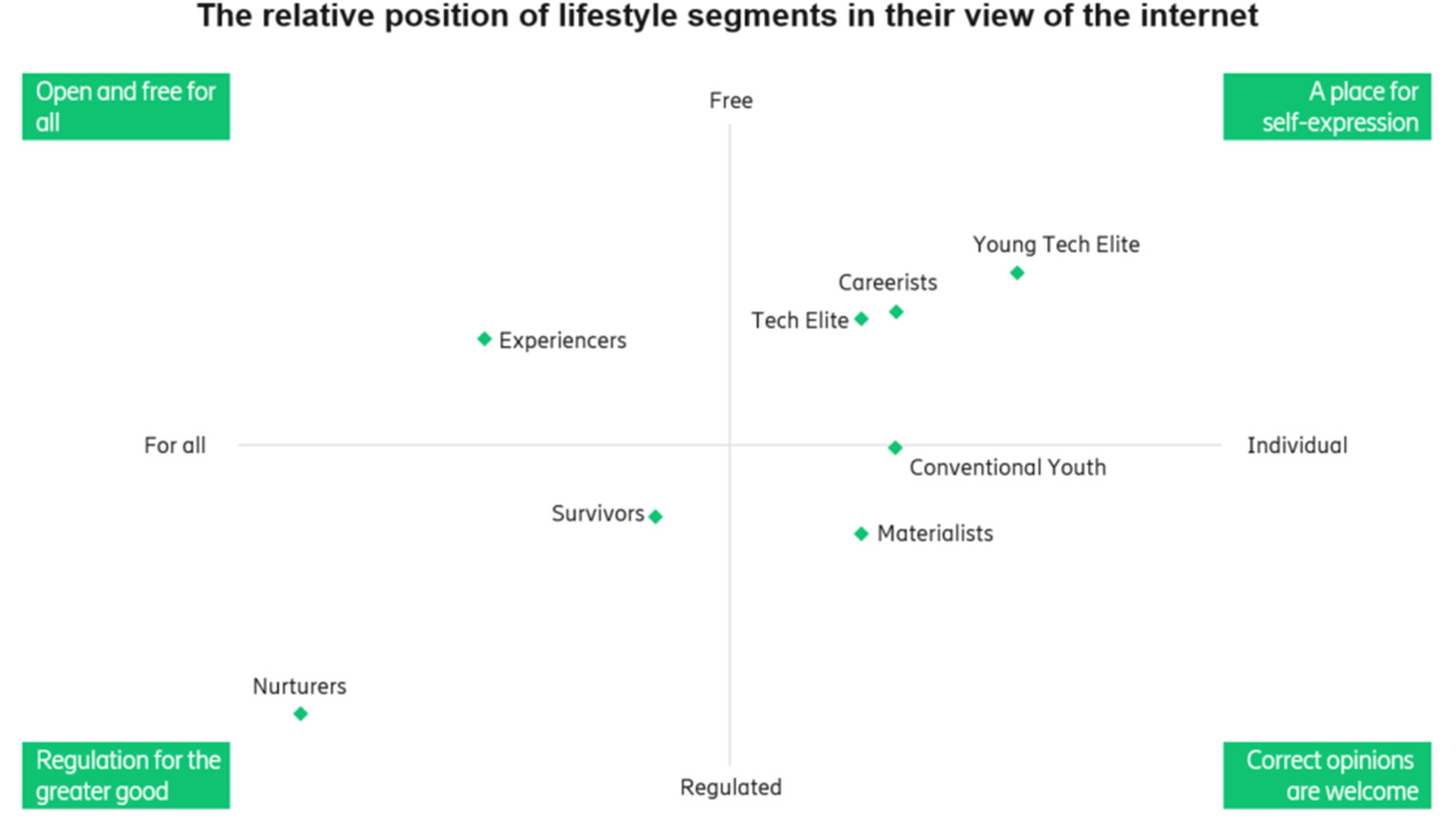
Indeed, while half of the segments express concerns over privacy online, the other half, well, don’t. And it isn’t simply their levels of concern that differ, but their perspectives on whether or not the internet should be regulated, and whether or not it’s a place for all, or for individual
Base: Online population aged 15–79 (69) years old within 31 countries (Algeria, Argentina, Australia, Brazil, Canada, China, Egypt, Ethiopia, France, Germany, India, Indonesia, Italy, Japan, Kenya, Mexico, Morocco, Nigeria, Philippines, Russia, Saudi Arabia, Singapore, South Africa, South Korea, Spain, Sweden, Thailand, Turkey, UAE, the UK, and the US).
The technology-oriented segments, and the young tech elite in particular, perceive the internet as a free and open space to express individuality and personal ambitions. Whereas at the other end of the scale, the nurturers consider the internet to be a space for all, and where regulation is considered a key element in protecting individuals online. What is interesting to keep in mind is that among each of the 31 countries in our study, these eight segments exist and differ in population size. And while national tendencies place the overall population of a country along the four quadrants above, within each country the segments will be widely spread from the national average.
This means that views on privacy and online security will differ within different segments within a country, and as a result the expectations on governments, regulators, and private sector to address these topics will vary. However, how different actors at national levels address this in practice should focus on a common starting point: that privacy should be afforded to everyone as a basic right. As we look to a future where new technology innovations will enter the lives and homes of consumers, it is particularly important to make sure that the default position is the privacy of the individual consumer.
A digital future awaits us
Our learnings illustrate the many nuances and differences in what life under the pandemic has been like. Despite our specific attention to changes in consumers’ digital habits under the pandemic, we have been able to discern how life under the pandemic has put parts of the global online population under enormous hardships, while for others life is just different and the new norms imposed due to the pandemic is what has taken its hardest toll on health and wellbeing. At the time of writing the vaccine rollouts continue, and the progress is slow in several parts of the world. In some parts of the world the spread of Covid-19 is only intensifying during its third wave. Consequently, maintaining social distancing may be a norm that millions of consumers will have to continue with for a while longer.
Yet, there is progress, and as we slowly move towards a future that’s free of this pandemic, we see a few emerging patters in what consumers themselves look forward to. Spending time with loved ones, having new and rich experiences and city strolling more freely. But what is clear for the majority is that many of the activities we would normally do in-person and around others will continue to happen online and over different digital platforms. Be it for work, studies, entertainment, or online shopping: consumers are looking to spend more of their time online. The internet is increasingly becoming the avenue for self-expression and connecting with others. Further, the smartphone is the device most frequently used for different online activities. We can say then, that connectivity has become the lifestyle enabler for consumers, and a key factor of satisfaction with city life.
However, consumers are also to a long-term future that is more digital and potentially more challenging from a privacy perspective. Upon asking consumers how they see life changing by 2025, 75 percent of the global online population believe that life will be more convenience-oriented, especially through new online services. And almost as many believe that, as online services become more pervasive and widely used in the future, issues around online privacy will rise with it.
This should alarm decision-makers in government, regulatory bodies and the wider technology and telecommunications sector for the simple fact that as societies develop and progress, many of the platforms for new innovations will be technology driven. And if there is a belief that future societies will be transparent and inclusive, and that the right to privacy is a human right, then innovators and innovation enablers need to adhere to two very specific needs that consumers have: transparency in the privacy practices that are in place and, the right to decide over their own data. Even today, a great share of the global population express concerns over both these aspects to privacy online.
What about you? As you look towards life in your country, in your city, in your daily life, what kind of a society do you see? And do you think your digital habits will change much in a few years’ time?
Learn more
Explore more from ConsumerLab – the voice of the consumer.