










Network slicing transformation: starting your journey
- English
- Français

Senior solution marketing manager

Senior solution marketing manager
Senior solution marketing manager
The enterprise and slice strategy
A successful transformation journey relies on having a solid slicing strategy as your foundation. A great deal of the new revenue potential depends on providing industries and enterprises with connectivity solutions support as part of the enterprises’ digital transformation. This requires communication service providers (CSPs) to:
- Understand and identify current and future industry requirements and use cases
- Estimate market size for different industries and segments (market-sizing key opportunities)
- Segment enterprise customers (small/medium/large or B2B/B2C etc.)
The enterprise or B2B strategy includes prioritizing both industry and customer segments, and target use cases. Selection will often be based on local market conditions and current enterprise relations. Building sufficient knowledge of the segments’ industry needs and challenges is key to developing a ‘go-to-market' model and deciding which role to play in the value chain.
Marketing initiatives should also be directed towards enterprises. This part shouldn't be underestimated as 5G enablers – including network slicing and its potential – are generally not fully understood by enterprises.
The slicing business and operations process
Similar to other service provider offerings, network slicing needs its own business process. Slices need to be treated as products and connected to BSS systems. Slices will be created and orchestrated as part of Operations Support Systems (OSS). Eventually there will be self-serve portals where enterprises will be able to order network services themselves. Finally, in run-time, there will be monitoring of service level agreements (SLAs) and continuous life cycle management.
Use cases and network geography
Use cases will have different requirements depending on geography or network topology. Technically, these requirements will differ if services are used either locally on an enterprise campus (such as a production plant or hospital), a limited area like a city, or over a wide area (such as connecting automobiles or power grids).
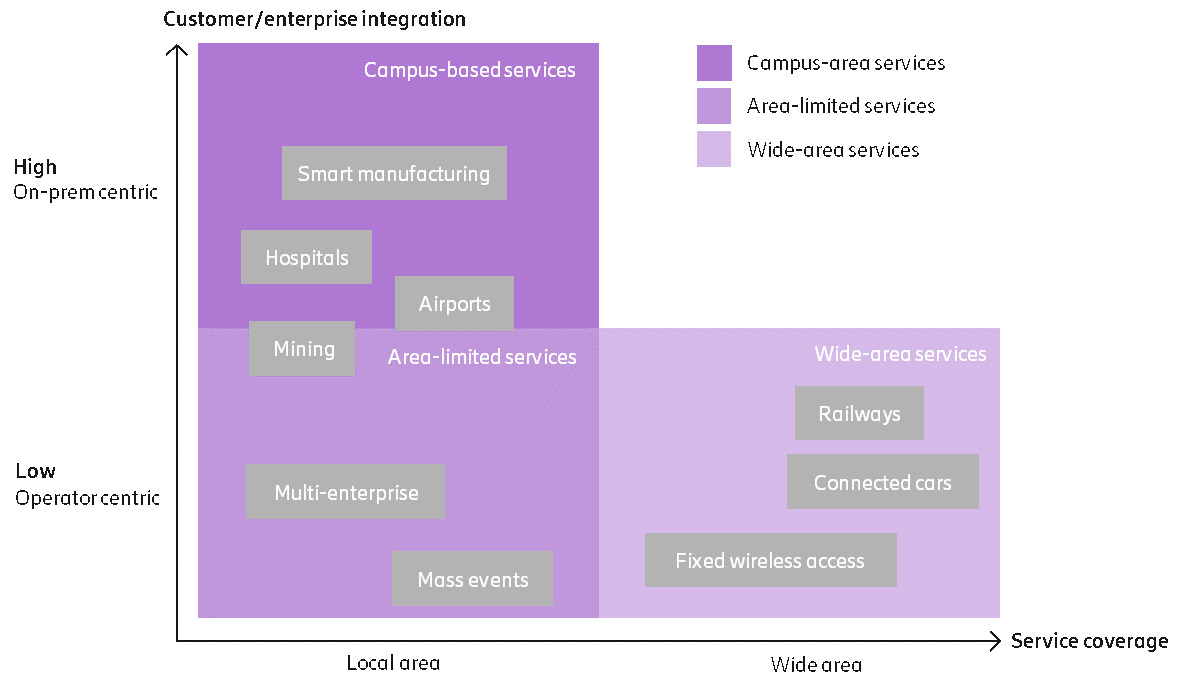
Fig 1. Different geographical slice categories fit different use cases
Network slicing is a journey
As network slicing involves a lot of changes to business models, use cases and technical capabilities across many areas, it will likely be a journey over some years.
How should CSPs take this on? The general advice is to start simple and evolve. Let the business needs and use cases guide the journey. Network slicing can start with a 4G/LTE Radio Access Network (RAN), provided there is a virtualized core network in place and some service orchestration. For most, it will start with introducing 5G core and cloud-native technologies in the cloud infrastructure with a container as a system (CaaS) layer like Kubernetes. In the beginning, there will be a few static slices with some orchestration and limited automation. While over time, there will be more types of slices requiring more automation, as well as dynamic slices.
There isn’t a ‘one size fits all’ network slicing approach when it comes to size, type of solution or multi-tool. The ability to engineer network slices depends on an evolving toolbox of versatile enablers in five areas: cloud infrastructure, RAN, core, transport, and operations support systems and business support systems (OSS and BSS).
Depending on the scenario, different combinations of enablers of NFV transformation will be required to engineer the appropriate network slice(s). These enablers can be used in different ways depending on what strategy the CSP chooses.
Using what you need and starting a stepwise journey is paramount.
To help you on this journey there is a toolbox of enablers, including:
- 4G and 5G RAN and core slicing capabilities
- Network automation/service orchestration/assurance
- Cloud infrastructure evolution
- Cloud-native applications and continuous integration/continuous deployment (CI/CD)
- Service and network exposure
- B2B/B2B2C/B2B2X business support
- Transport slicing capabilities
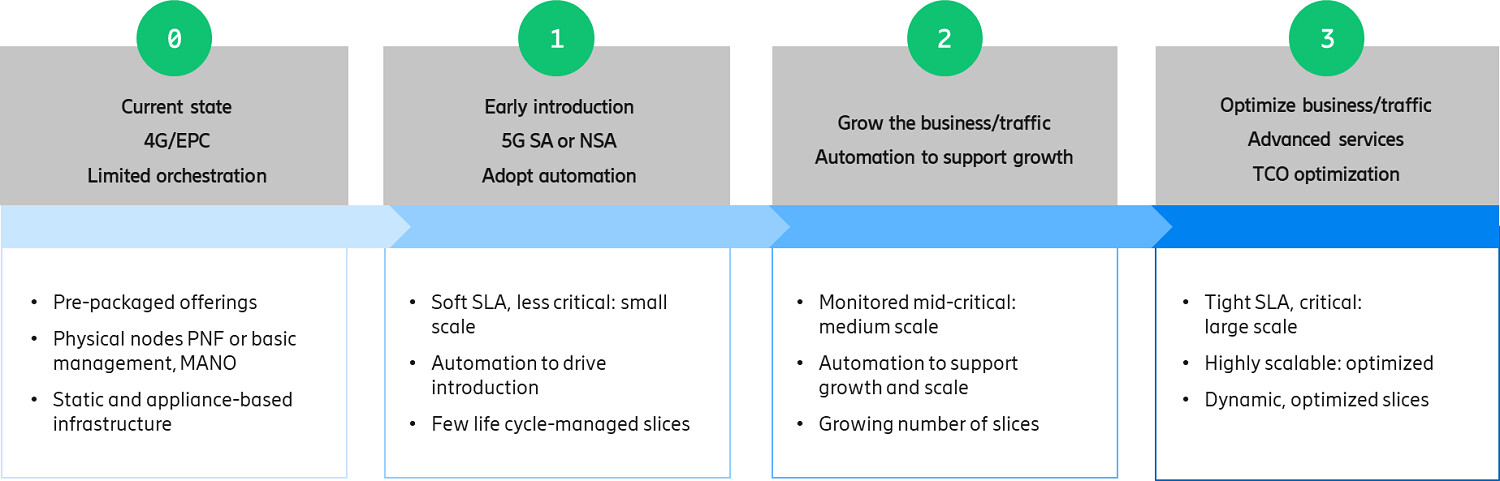
Fig. 2 The network slicing journey steps and phases
These are my key takeaways for CSPs when it comes to building a network slicing strategy:
- It is important to not ‘get lost’ by attempting to build a very advanced solution from day one.
- This journey requires a buildup of skills in enterprise market needs, operations and technologies. Make basic features work first and gain the confidence to approach enterprises to form partnerships.
Conclusion
Network slicing will be a journey over the coming years, and choosing what steps to take depends on the enterprise and slicing strategy. There is no single network slicing solution, but several useful enablers that exist or are being developed as part of NFV and cloud transformation. It is also worth remembering that not all IoT and enterprise services require slicing, but a significant number will. As we do not know which services will be developed, and to secure future competitiveness, we believe slicing will be needed and there’s no time to waste!
Time to start your network journey
Discover more by downloading our report on the CSP network slicing journey.
DownloadLearn more
- Read our blog: The art of 5G network slicing explained
- Discover more about how Ericsson is working with network slicing