











Network automation
The demand for mobile connectivity is booming, and an array of new use cases has created greater opportunities for network monetization. But customer expectations and network complexity have also increased. Automation is the key to mastering this balance, allowing service providers to manage multiple layers and technologies in a multivendor environment, while also delivering a differentiated user experience and greater scalability.
Network automation explained
Network automation is the process of using software and artificial intelligence (AI) to plan, deploy, configure, orchestrate, analyze and assure mobile networks and services. It removes manual steps from these processes to achieve greater efficiency and meet the demands placed on networks by modern use cases.
With the use of computer algorithms to automate and analyze networks and operations, we can understand and manage them more simply and efficiently than ever before, significantly impacting results and saving resources that can be better used elsewhere.
Examples of network aspects that can be automated include:
- Service activation
- Maintenance
- Resource allocation
- Interference management
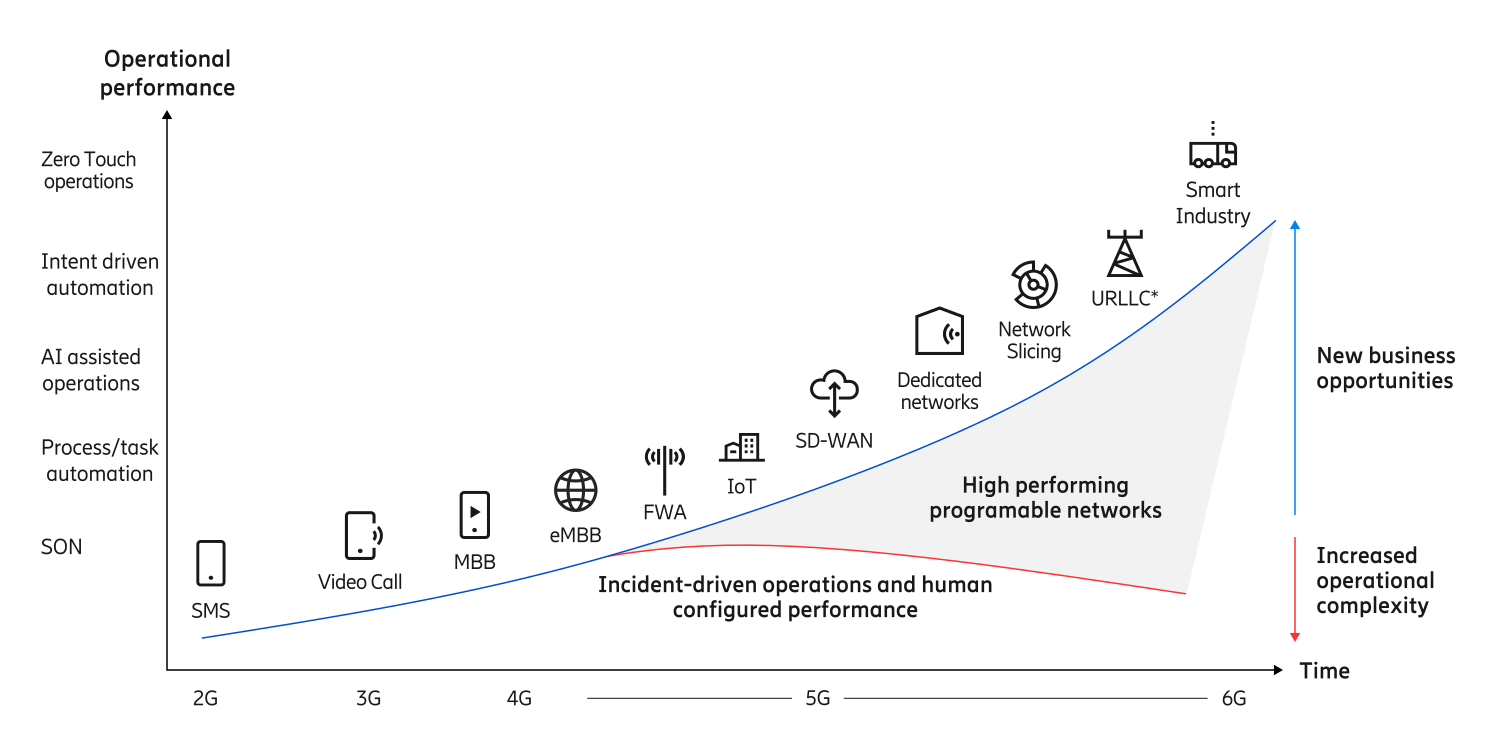
The evolution of network automation
New network demands create new complexities and challenges
Fulfilling the full potential of the 5G era and beyond will only be possible with the help of increased network automation. Mobile networks have become much more sophisticated at the same time as telcos seek greater operational efficiency, simplified resource management and minimal costs. All while their customers place more importance on a seamless user experience. In some cases this seamless performance underpins services that are critical to society.
Intelligent automation is essential in order to succeed in this context. Traditional, manual processes are no longer sufficient to meet the cost and performance demands placed on networks. Solutions exist today to leverage automation for greater operational efficiency, better performance and lowered expenses, as well as shorter time to market and improved scalability. The automation journey is already underway and accelerating – it’s time to get on board.
Benefits and opportunities
Leveraging the power of network automation can be transformative. From performance improvements, more effective use of resources and energy savings, to cost reductions, reduced time to market and more.
Performance reliability
Maintaining the high standards customers demand can be a challenge when paired with today’s level of network complexity. Leveraging automation and AI makes it easier to navigate this and achieve consistently high network performance. The result is not only an improved user experience, but also the benefits for customer retention that come with it.
Operational efficiencies
By automating repetitive tasks and ensuring they are resolved in an efficient manner, costs can be reduced while staff and resources are at the same time freed up to use in other valuable areas. Leveraging algorithms can ultimately lead to dramatic improvements in network capacity planning and optimization. It is even possible to predict outages and degradation, reducing costly downtime.
Energy savings
Rising energy costs and the enforcement of net-zero targets mean achieving sustainable operations is now a must-have. Leveraging automation in the network makes it possible to detect energy efficiencies and address them in a timely manner, as well as channel energy to hardware only when it is needed, in order to achieve more efficient energy usage without impacting performance.
Faster time to market
With the help of automation, network updates and new services can be delivered in a much more agile manner, significantly improving time to market. A high degree of reliability due to the reduced risk of human error also helps ensure these complex services can be delivered at scale.
The path to a more autonomous network
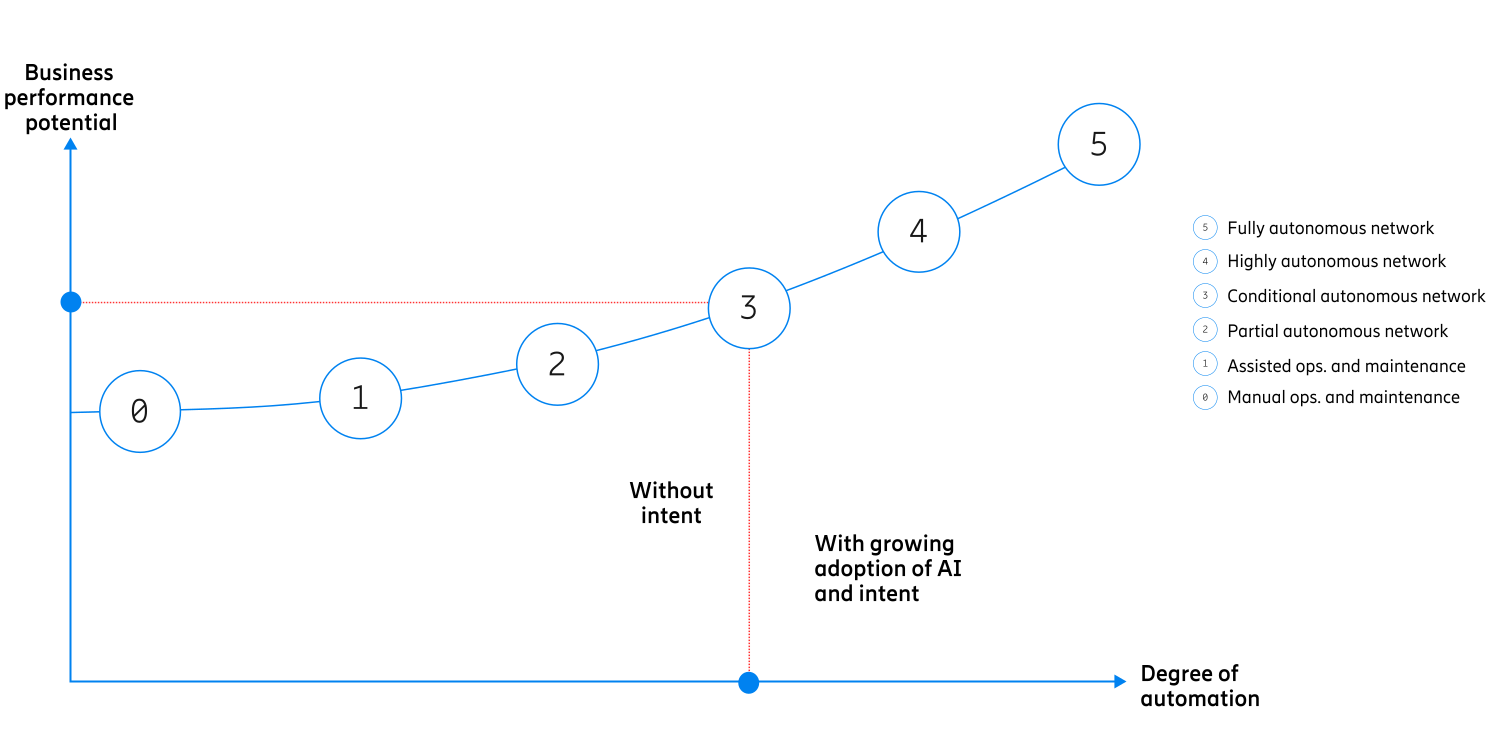
Programmable networks built with AI and intent
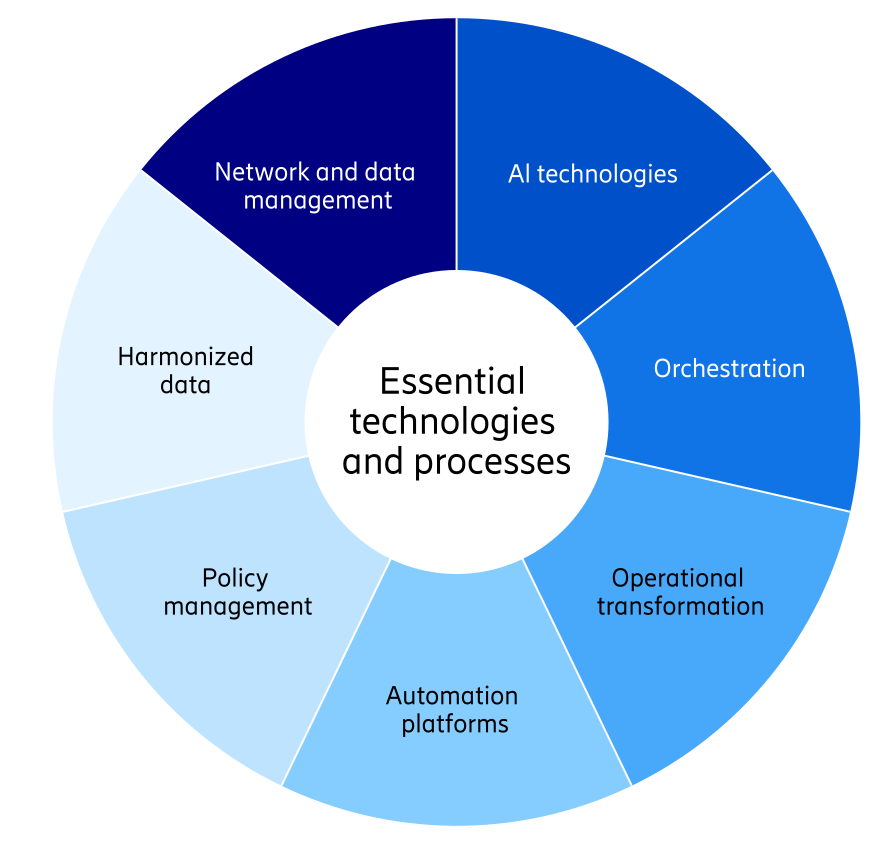
Essential technologies and processes for network automation
Network automation use cases



Why choose Ericsson for network automation?
Ericsson’s centralized network automation and AI solutions can have a transformative impact on your automation journey, providing a foundation to prepare for a future of autonomous, intent-based networks, and allowing you to run a more efficient, better performing and more agile network today.
Our automation solutions are prepared for multi-vendor and multi-technology environments, enabling the adoption of Open RAN and facilitating the deployment of new use cases from an open application development ecosystem.
We have taken an industry-leading role in the adoption of automation and AI in networks, introducing award-winning intent-based operations capabilities. These allow the network to respond, adapt and scale in a fully autonomous way to changes in network demands.
There is ultimately no one-size-fits-all approach to automating networks. With global experience delivering automation benefits, we leverage best practice knowledge and expert insights to tailor the right solution for your unique needs.
The impact of our network automation solutions is demonstrated in the networks of satisfied customers across the globe.

In the spotlight






Customer success stories


Related topics



FAQs
Network automation is the process of using advanced software and artificial intelligence to plan, deploy, configure, orchestrate, analyze and assure mobile networks and services. It removes manual steps from network and service operations, making it possible to manage multiple layers, technologies and vendors more efficiently while delivering a differentiated user experience and greater scalability. Learn more about intelligent RAN automation.
The benefits include improved performance reliability, operational efficiency, energy savings, faster time to market and greater scalability. Automation and AI make it easier to maintain consistently high network performance, reduce inefficiencies, free up resources and predict outages or network degradation before they occur. Some real customer examples include a 25% saving on daily RAN energy consumption at Far EasTone and 60% faster site report generation in specific implementations at XL Axiata.
Network automation draws on key essential technologies and processes: network and data management, AI technologies, orchestration, intelligent automation platforms, policy management, operational transformation and harmonized data. Together, these capabilities support increasingly automated monitoring, analysis, configuration and optimization across complex network environments.
Main use cases of Ericsson network automation include service activation, assurance, resource allocation and interference management. These use cases span RAN automation, transport automation and end-to-end service automation. Closed-loop automation, including fully automated problem detection and resolution, are considered essential elements of future network operations.
Based on the TM Forum six-degree scale, the levels range from Level 0, manual operations and maintenance, to Level 5, a fully autonomous network. The intermediate levels are assisted, partially autonomous, conditionally autonomous and highly autonomous operations. Most communications service providers currently sit at the conditional automation level, with highly autonomous networks as the next target. Learn more about autonomous networks.