










Satellites and helipads: Restoring connectivity in flood-hit western Europe

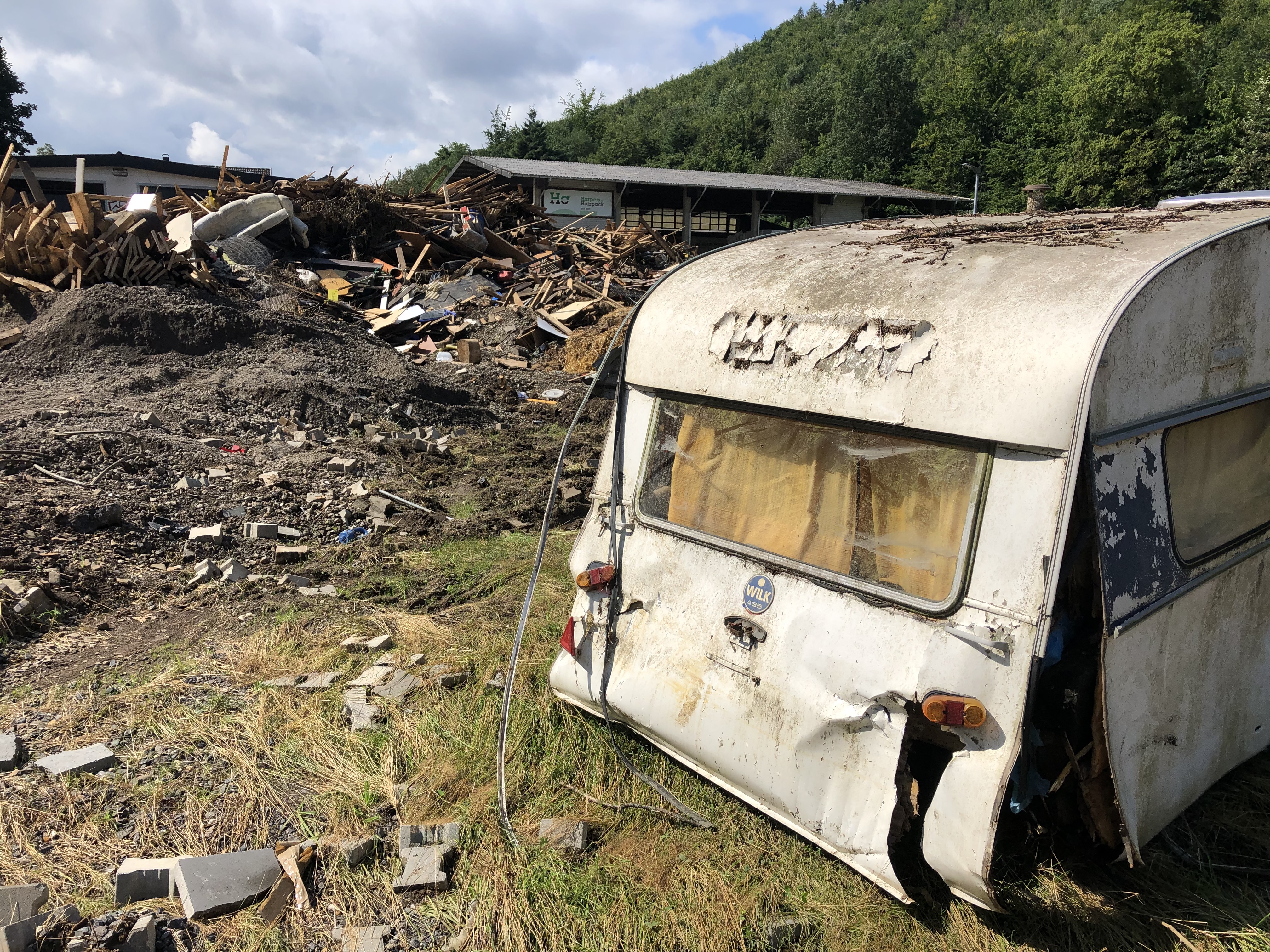
”It was total chaos,” says Ericsson Response volunteer, Georg Schmuecking, describing the aftermath of the floods. “There were huge piles of rubble, furniture everywhere and streets and sidewalks were completely destroyed. Electricity, internet – everything was down.”
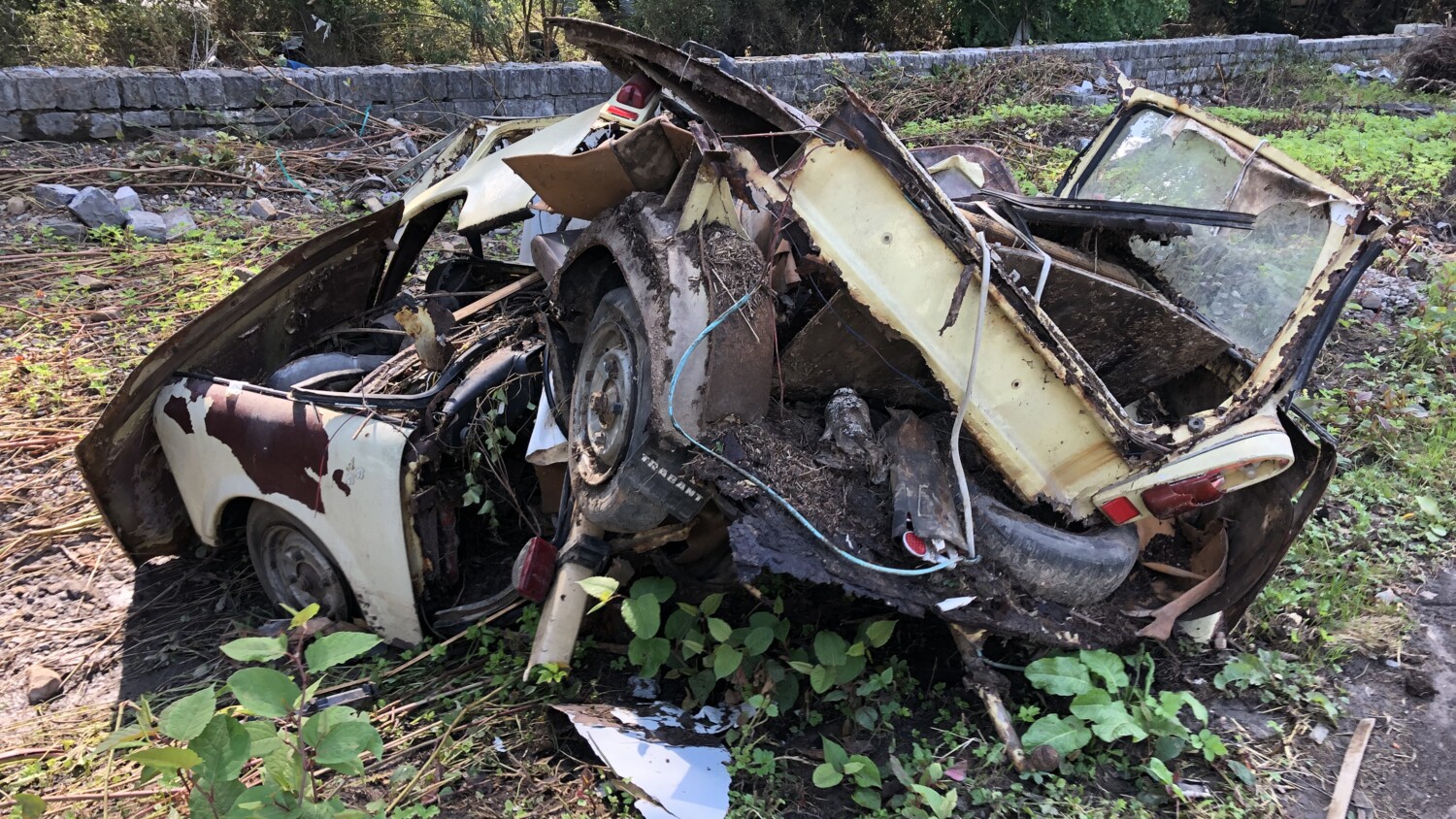
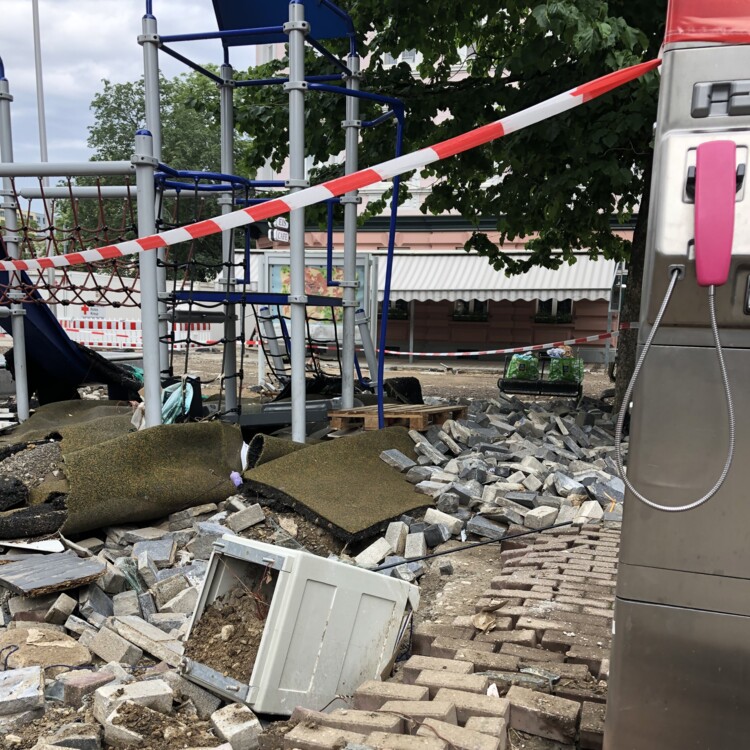
The streets of Stolberg and Zweifall in North Rhine-Westphalia, following the worst floods in living memory.
For Georg and Ericsson Response SCR Program Manager, Lars Ruediger, this disaster hit close to home. Located just 10-15 kilometers from their own villages, the towns of Stolberg and Eschweiler in North Rhine-Westphalia were devastated by the worst floods in living memory.
As part of the Ericsson Response program, they were able to immediately spring into action, leveraging locally available equipment, partners’ equipment and local capacity to provide on-the-ground assistance.
Established in 2000 and staffed by employee volunteers, Ericsson Response is a disaster relief program that focuses on providing connectivity to humanitarian workers in disaster areas through the installation of temporary internet until local services have recovered. Ericsson Response volunteers have participated in more than 60 missions in 40 countries around the world. This includes natural disasters like Hurricane Maria on the islands of Dominica and Puerto Rico as well as Cyclone Idai in Mozambique.
With Ericsson Response training material already located in Germany, Ericsson Response’s long-standing partner, Emergency.lu, offered the key ingredient: an inflatable VSAT system satellite dish.
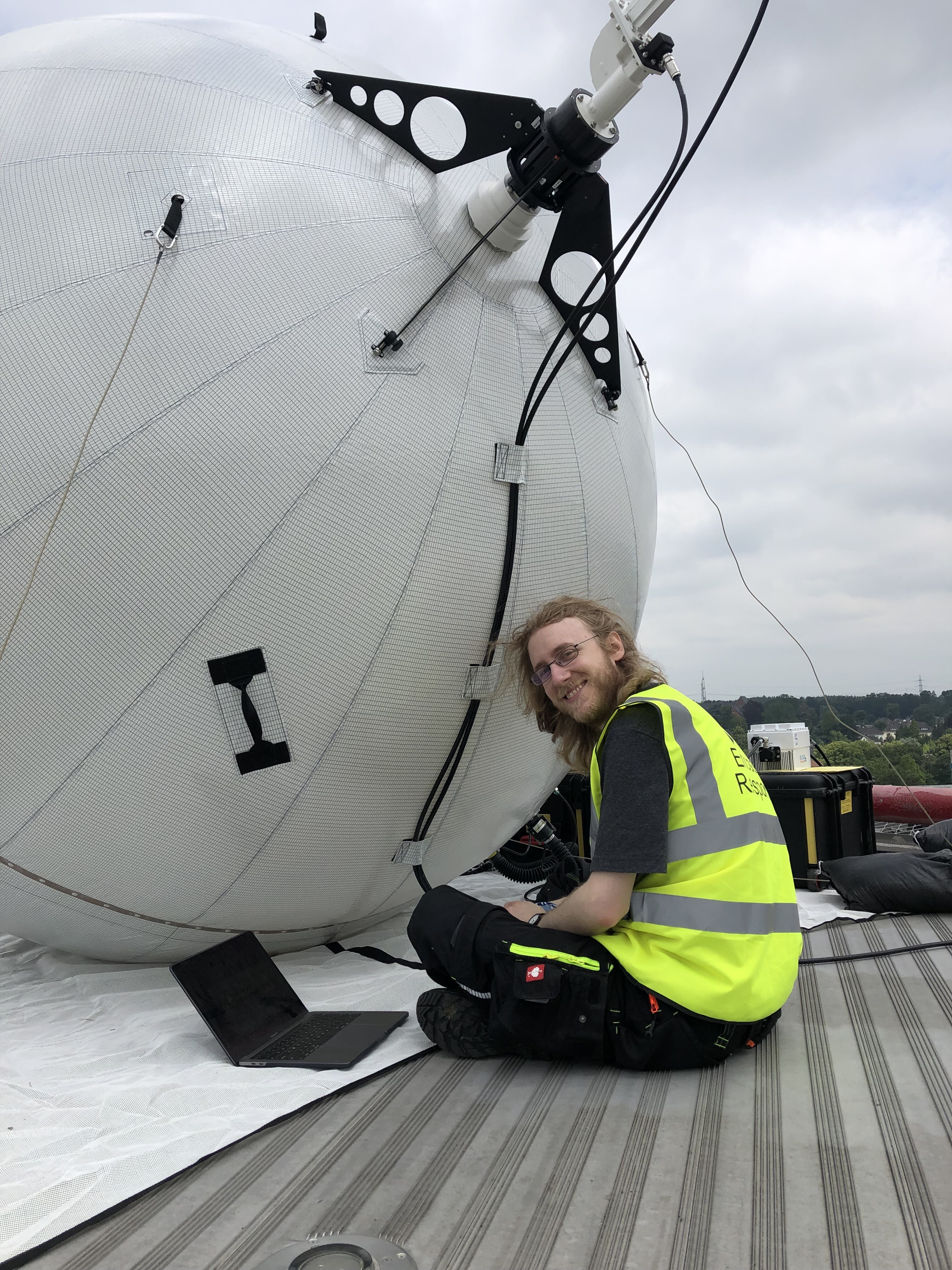
Georg Schmuecking at St. Antonius Hospital Eschweiler setting up Emergency.lu’s inflatable satellite dish
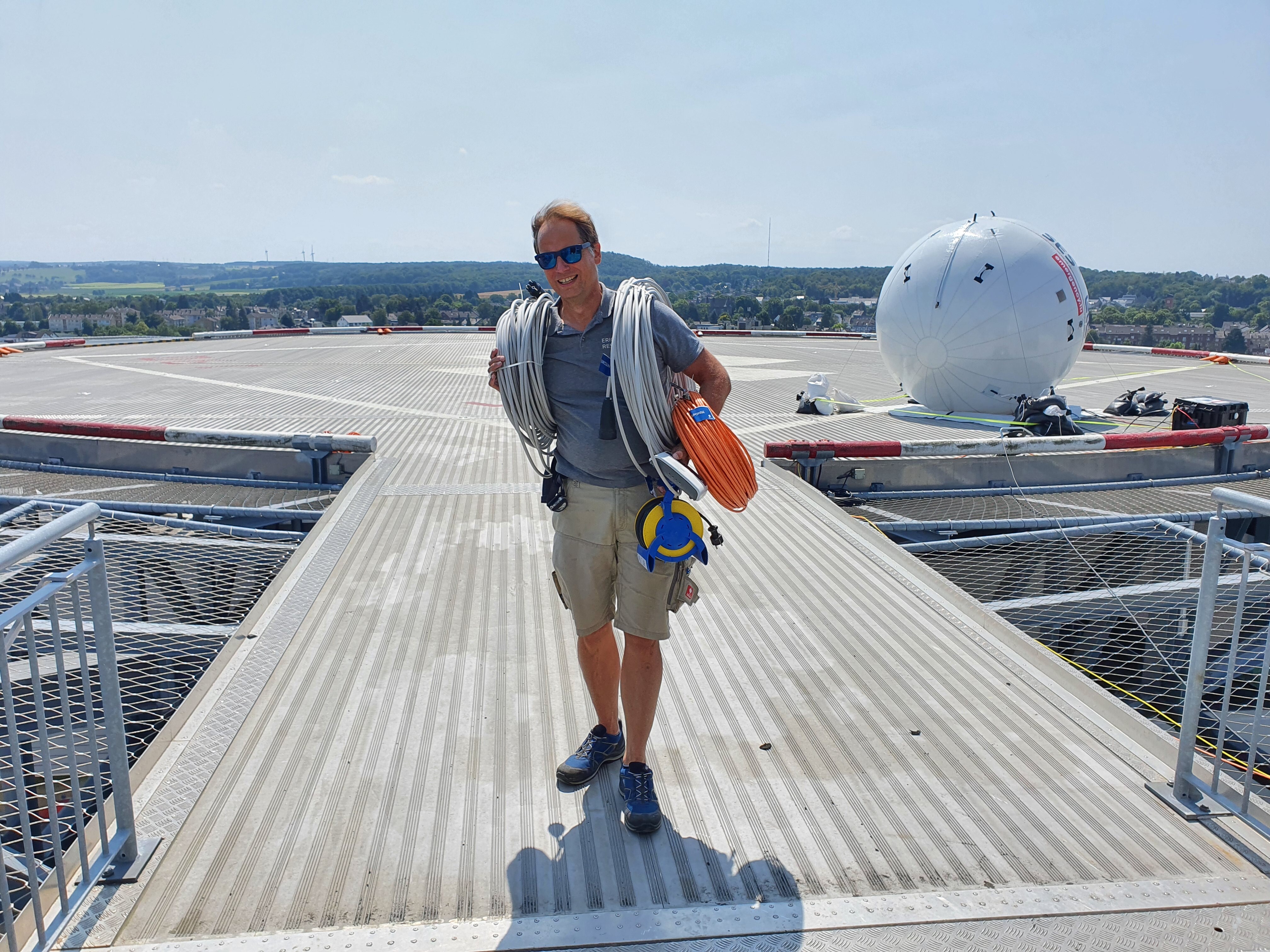
Lars Ruediger at St. Antonius Hospital Eschweiler setting up Emergency.lu’s inflatable satellite dish
“This allowed us to meet our goal of spreading out internet connectivity to different sites quickly. These situations often result in complete blackout of communication, and the only way to reconnect with the outside world is through satellite systems,” Lars says.
But why is it important to restore connectivity after a natural disaster strikes?
“Connectivity makes a huge difference by allowing responders to communicate and the affected population to connect,” Lars explain.
While Lars was sourcing material, Georg was already on the ground connecting with crisis management to ascertain where Ericsson’s support was needed.
This dynamism was key in allowing Ericsson Response to assist at this national disaster, even though it deviated from their standard international assistance procedure.
“Normally Ericsson Response works in international emergency response based on partner requests from organizations, such the World Food Programme’s (WFP) Emergency Telecom Cluster (ETC). They provide organizations like Ericsson Response with access to emergency response mechanisms,” Lars explains.
“But then St. Antonius Hospital Eschweiler reached out, requesting support to re-establish internet connectivity on-site. Combined with the necessary local capabilities – staff and equipment on the ground – we were able to leverage Ericsson Response.”
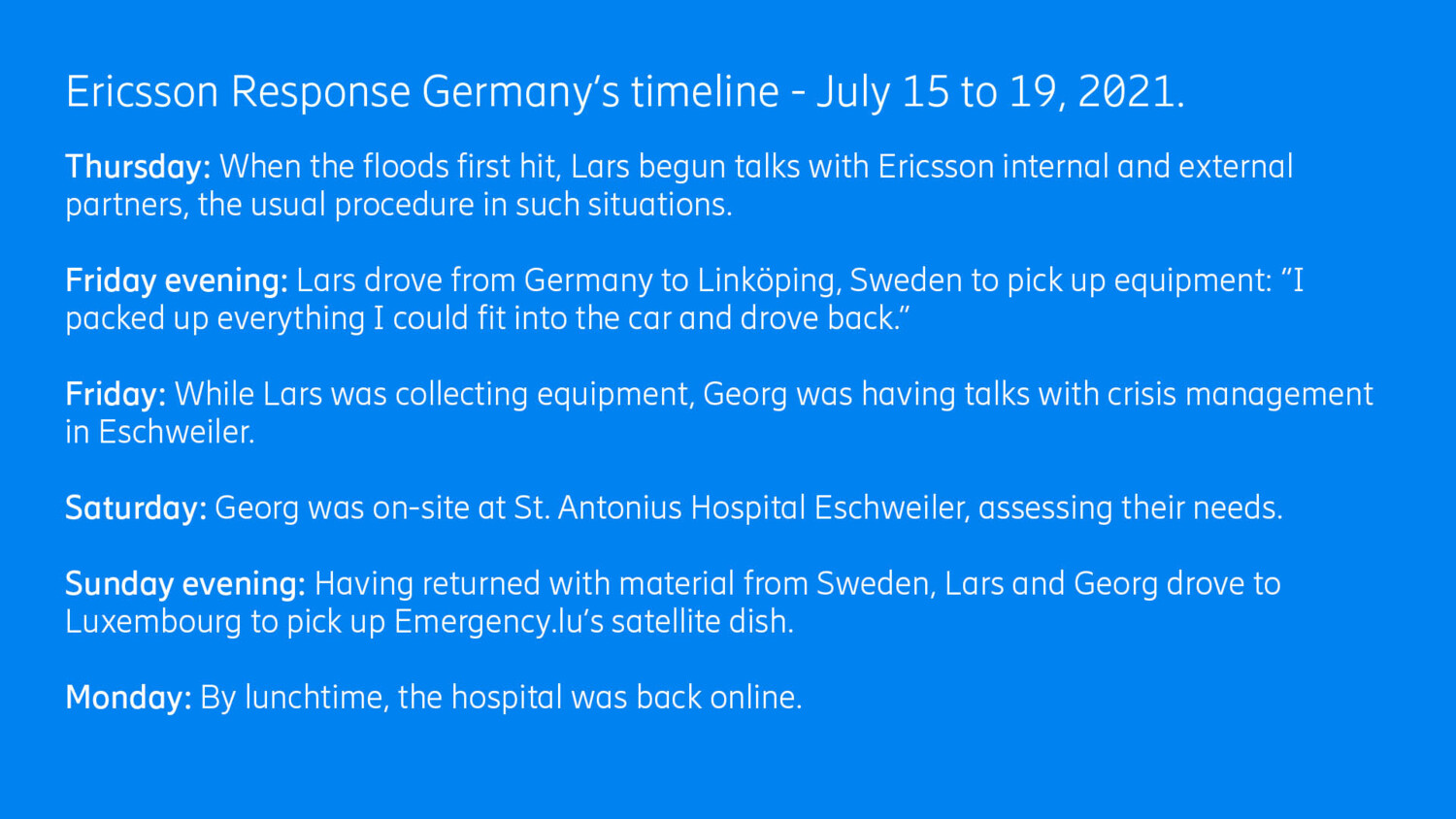
The basement of St. Antonius was flooded and the entirety of their IT and electrical installations were lost. All 295 patients had been evacuated, including 17 ICU patients who had to be airlifted out.
“When I first arrived at the hospital, they were still pumping out water and removing large piles of mud. Salvage teams were in the basement assessing the level of destruction. It was such a weird scene it resembled an underwater cave expedition, with people dressed in waterproof suits with helmets and lights and surrounded by darkness and water,” Georg says.
Ericsson Response was determined to bring connectivity to St. Antonius Hospital – fast.
However, setting up a temporary, independent network for internet access poses numerous challenges. Firstly, the satellite dish had to be deployed on the hospital’s helipad – 10 floors up.
”We received massive support from the hospital staff who helped us carry up both the equipment, and sandbags needed to weigh down the inflatable satellite dish,” Georg says. ,” Georg says.
With the satellite dish firmly secured, the team then needed to connect access points and power on the ground. But the sheer height of the building added another challenge: where could they find an extension cable that covered such a lengthy distance?
”I called a colleague at Ericsson Eurolab, which is also located near Eschweiler, and said, ‘We need a 60-meter extension cable!’ He immediately responded, ‘Okay, we will build that for you.’ An hour later it was already installed at the hospital. You have to improvise in the field,” Lars says.
36 hours after receiving St. Antonius Hospital’s call, a temporary WI-FI network had been installed; providing connectivity for vital services, including data recovery for the hospital’s I.T. department. It also provided the oncology department with some electricity, print services and internet access; allowing the staff to coordinate with other treatment centers and provide remote patient support.
Two remote fire departments in Zweifall (pictured) and Vicht were connected via Cradlepoint.
With two other Ericsson Response volunteers, Vanessa Fränkel and Frank Wollersheim also providing user support at St. Antonius Hospital, Ericsson Response was also able to move on to the next tasks - using Cradlepoint to reconnect the information and alerting system for two remote fire departments in Vicht and Zweifall.
This was the first-time Ericsson Response’s own cloud-based user management and access control had been used together with Cradlepoint devices in a deployment.
“The hospital satellite dish is quite far away from these two fire departments and there were topographical issues, including mountains in between them, so we didn’t have a line of sight. Since we couldn’t link those places to an ISP nearby, we solved this by using Cradlepoint together with the Vodafone 4G mobile network, which had retained a fairly stable connection. This set-up successfully bought the two fire stations back online and connected them to the main fire station in Stolberg,” Lars says.
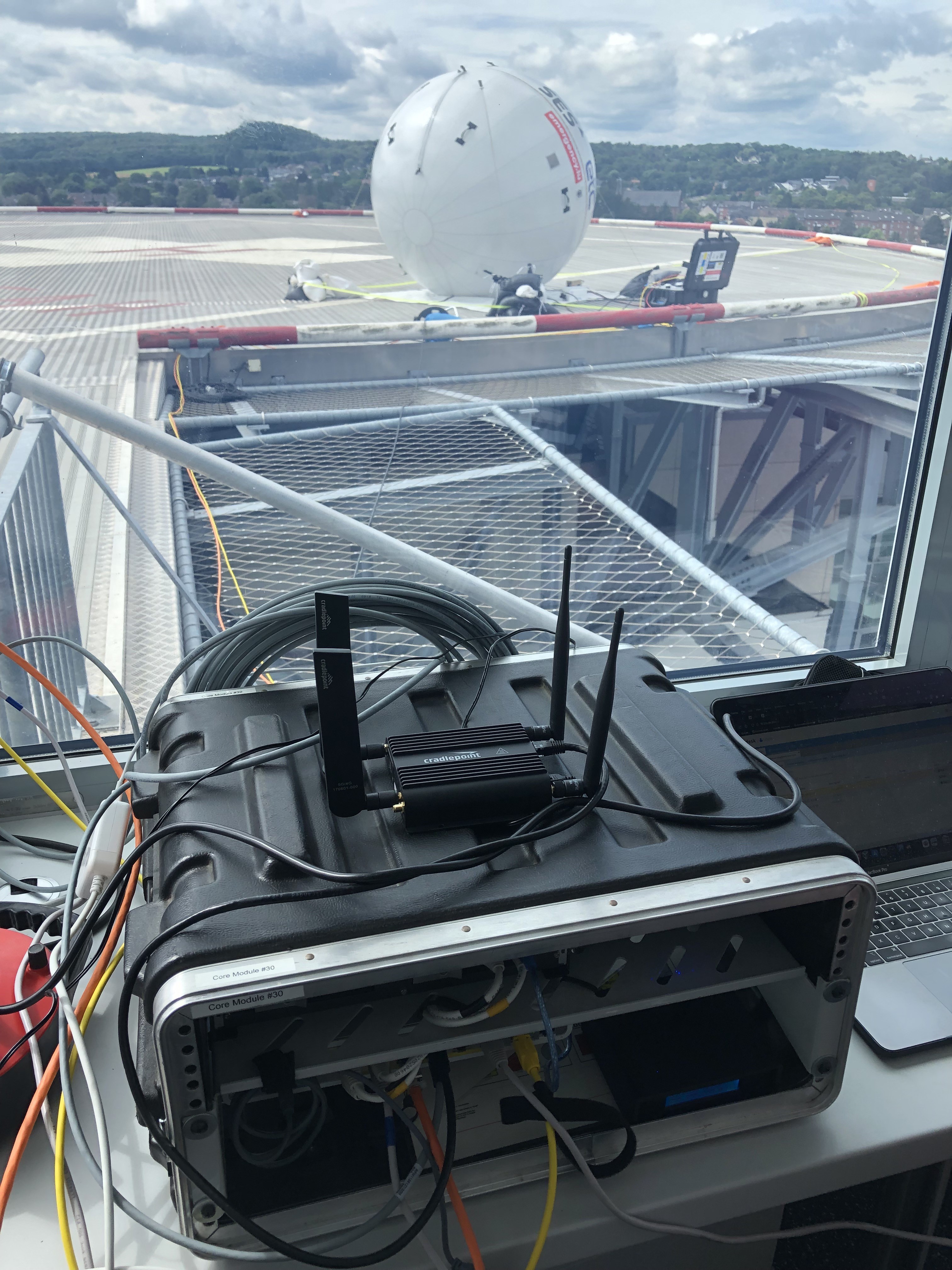
Hospital installation showing the local user management, the satellite dish and a Cradlepoint unit.
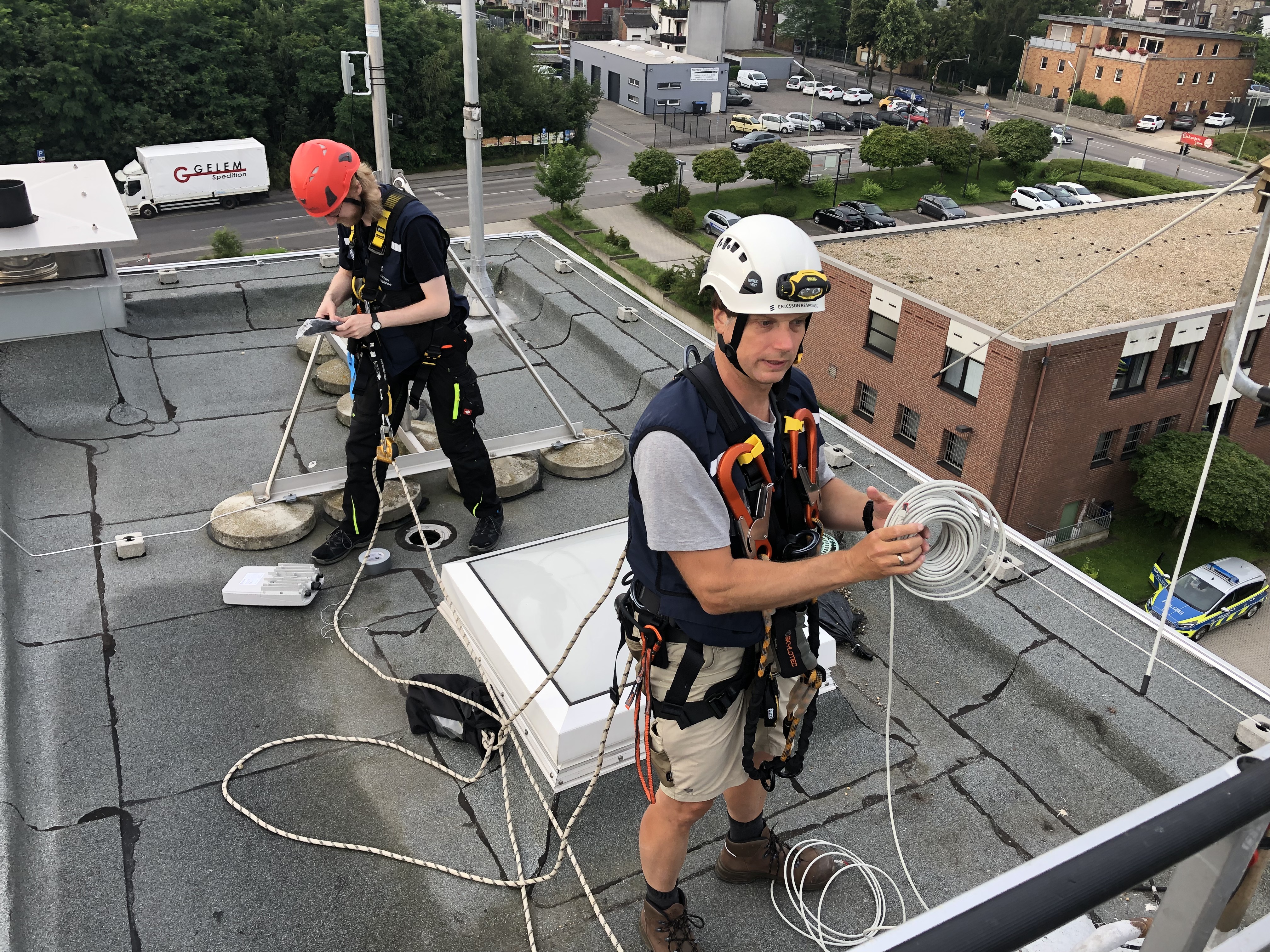
Ericsson Response on the top of Stolberg Fire Department tower, installing the link to Kaiserplatz Square.
The team also linked the Stolberg Fire Department’s internet ISP to the Kaiserplatz Square relief center in town, providing internet access to both support workers and the public.
With electricity knocked out, solar panels and car batteries were used to power this installation.
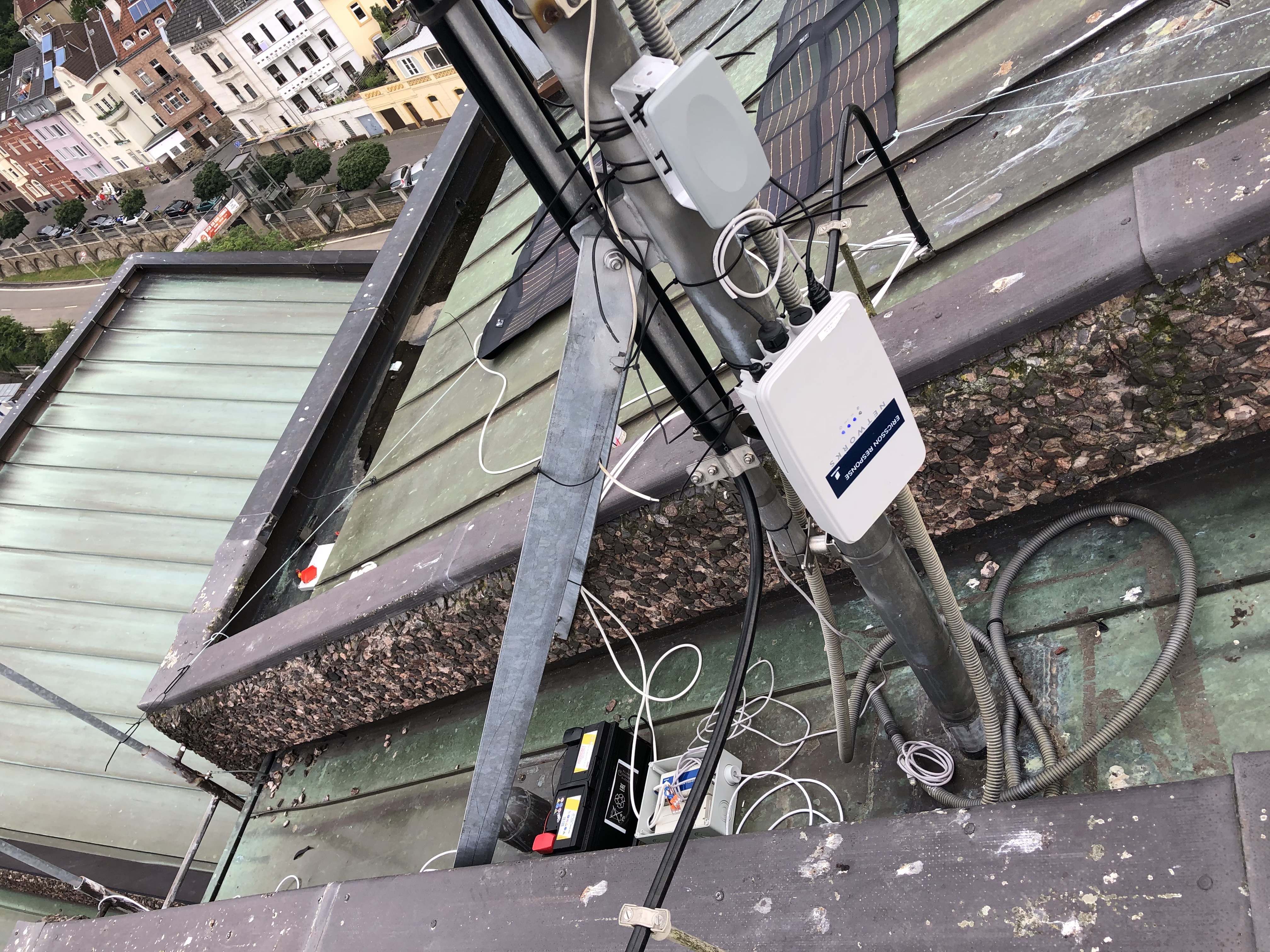
A solar powered link was installed on the top of Stolberg town hall to provide connectivity to Kaiserplatz Square.
Innovating, improvising and connecting people - Georg says being part of Ericsson Response’s employee volunteer program is extremely rewarding.
"This was my first mission with Ericsson Response and I’m really happy that Ericsson gave me the opportunity to help other people with my own strengths. And seeing how our efforts helped others makes all the work worthwhile,” he says.
In addition to Ericsson Response’s work in Germany, Ericsson employees also volunteered to help with local clean-up efforts in other flood-hit parts of western Europe.
Find out more about Ericsson Response:
Explore Ericsson’s humanitarian initiatives:
Blog: The humanitarian technology we use to connect after disasters