










The future of sports: how 5G will transform the sports experience


I love watching sports. Tennis, football, motorsports, rugby – you name it, I’ll sit down and watch it.
As a kid I watched early 90s motoracing on Sunday afternoons with my dad, trying hard to follow the commentator and the names of all the drivers: Mansell, Schumacher, Hill. The torrid of cars, the roar of the engines and the iconic British voice of Murray Walker, whose live commentating – which spanned 25 years – almost became as legendary as the drivers themselves.
However, Walker’s voice was pretty much the only thing that I had to guide me through the race, which is a far cry from what’s available when you tune into motor racing today. The live stats are almost overwhelming: speed, position, tire strategies, laps, turns and trackers. Your TV screen isn’t far off from becoming a gaming interface as you try to soak up as much data before the next important overtake or pitstop.
But with 5G networks now being rolled out – and in turn, industry use cases – what impact will this fast-developing technology have on the future of sports, and how will it affect the way we experience it?
Put the fans first: How tech will change the fan experience
You might believe that there’s already too much tech already embedded into sport. Tennis has ‘hawkeye’, soccer now has goal-line technology. Surely anything more would be overkill?
But if you’re in a stadium watching a live game with players that are far off in the distance, you might want something closer to home to understand what’s happening on the field. Wouldn’t something like personalized views of the game in real-time be quite helpful?
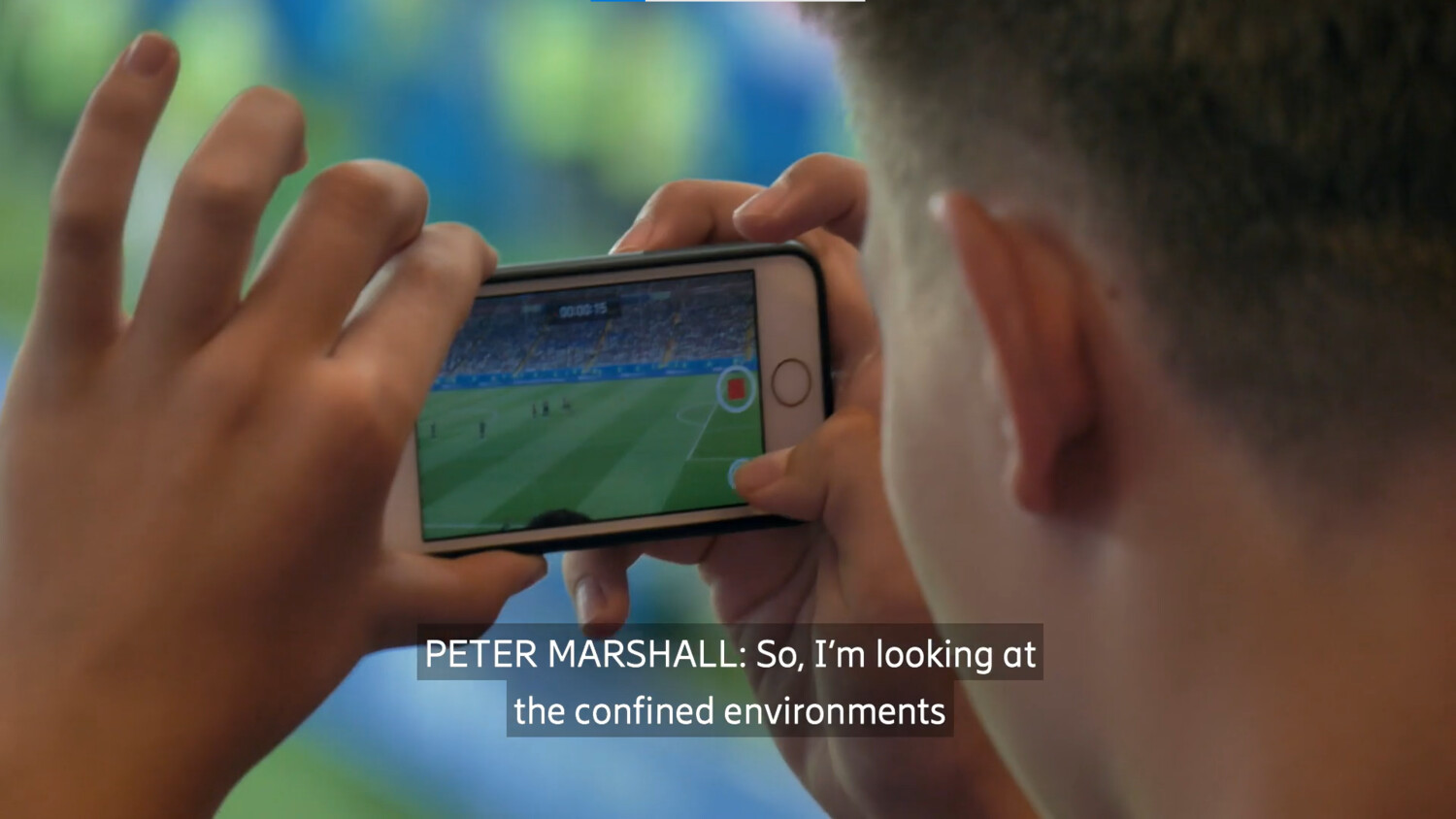
An example of this already in use is Verizon 5G Multi-View. The American service provider has now implemented its 5G Ultra Wideband network in more than 70 US stadiums and sports venues. Fan engagement is in demand. No more binoculars. Instead of having an experience pushed to fans, fans can turn it on its head with 5G Multi-View and change how they experience the game – they can fully personalize it.
The Multi-View solution needs massive bandwidth and low latency. And in stadiums with 5G, Verizon can offer seven streams of HD video to a smartphone, allowing fans to control the angle or view they want to watch and rewind the video feeds to see instant replays. If you're up in the high section of a venue, or if you're in the low section but can't see the end of the field, you can pull out your phone, hit the view that you want and watch that in real time.
Without that low latency, Multi-View wouldn’t be possible. If the video feed is two seconds behind and somebody scores, you’ll still be watching your screen while the rest of the stadium is cheering for the goal or touchdown that just happened, which would not be a good experience.
“At Super Bowl LVI, we offered 5G Multi-View in the NFL Ticketholder App, and we offered it during the past season through 9 different team apps. We’re also working with the National Hockey League where last year we showed that you can hold up a phone and track the player in real time, which you couldn't do before without the low latency and massive capacity that 5G can enable.”
–Brian Mecum, Vice President, Device Technology, Verizon

Listen to the podcast
Hear from Peter Linder, Head of 5G Marketing North America, talk about how stadiums have prepared for the large-scale return of fans with a new digital twist.
Listen hereHow tech can change the future of the players, and the game itself
5G not only has the ability to improve how we watch the game, but also how we watch the players. We’ll be able to oversee how a player moves, how they handle the ball or racket and analyze the likelihood of an injury. This generation of sportsmen and women already access a huge amount of data to keep track of their progress. But with 5G, it doesn’t matter whether it’s an individual player, a ball, puck or racket – everything will be able to be tracked in real time.
Further, this real-time sports analysis can influence whole teams and their strategies. Teams are starting to open up to high tech companies, and because of the emergence of the fourth industrial revolution – where capabilities like multi-access edge compute is the norm – teams can access information they've never contemplated before. In turn, it can allow teams and coaches to make educated and informed decisions based on this next level of data, rather than a gut feeling.
Future of sports: where every seat is the best seat in the house
Research shows that consumers are ready for more immersive experiences. At ConsumerLab and IndustryLab, research revealed – even a few years back – that half of the world's smartphone users expect us all to be wearing AR glasses by 2025. And according to Ericsson’s latest 10 Hot Consumer Trends report, 55 percent of consumers want to visit a museum that uses advanced AR/VR technology to recreate historic events, making them feel as if they are there in person.
With the demand there, how will this evolution translate to sports experiences long term? Well, those kids watching sports with their family members won’t need to rely on a single voice to guide them through the state of play. In fact, sports and players are set to enter the home itself through augmented and virtual reality. It won’t matter if season tickets are hard to obtain, or if a stadium is inaccessible for some fans. In the future, every seat will be the best seat in the house through immersive technology, which will bridge the current gap between the stadium and the home experience.
Imagine inviting friends who live on the other side of the world into your home as an avatar to watch the finals of a world series. The Internet of Senses will provide your guests with the same food options as the fans in the stadium and they’ll taste the same digitally as they would in real life. Spacial audio speakers will allow you and your friends to hear the roars and vibrations of a real crowd in the comfort of your home. And your 3D volumetric table will allow you to watch the game in real time.

Example of a volumetric table of a football pitch
There’s been much discussion about the metaverse in 2022 so far. And it reveals that the buck doesn’t have to stop with the stadium, the fans or the teams. The metaverse opens up new opportunities in everything from merchandise to creating a platform that helps merge the home and stadium experience even further. Take this year’s number one soccer event: developers from a well-known beer brand created a bar in the metaverse where visitors could relax, play games, chat, claim prizes and even pour and drink a virtual beer.
The commercial possibilities with AR/VR and the metaverse can seem a little overwhelming and is made slightly more complicated as there’s yet a fully defined meaning of the metaverse. But what’s certain is that the technology involved in the sports experiences of tomorrow will only enable more remote communities to come together over global platforms. We’ll have personal set ups in the stadium or at home to get the best experience possible based on our wants and needs.
There’s no doubt that the technology will vary and evolve, but the focus will always be the same, whether we’re watching a game tomorrow or in 2050. The love for the game, and people coming together through sport – isn’t that what sport is all about?
Want to know more?
Read more about 5G in sports: Here's how event experiences will transform