










Game on! How 5G is winning over gaming enterprise customers

Solution Marketing OSS/BSS

Solution Marketing OSS/BSS
Solution Marketing OSS/BSS
The rapid rollout and adoption of new 5G mobile services and the emergence of compelling and immersive new games, has resulted in 5G mobile cloud gaming becoming one of the most exciting and promising 5G use cases that today’s communication service providers (CSPs) can offer. Their high-speed, ultra-low latency 5G mobile platforms enable their enterprise customers, like tournament organizers, esports leagues and game content companies, to deliver the lag-free, interactive experiences that today’s gamers require.
Enterprise customers now need and want even more from their CSPs, such as 5G network slicing that lets them spin-up new gaming services and events, and self-service digital portals that let them configure and manage their own services and accounts. Satisfying the growing demand for a richer customer experience (CX) calls for CSPs to employ agile, scalable digital Business Support Systems (BSS) to automate and orchestrate time-sensitive services if they are to secure their share of the 5G mobile gaming windfall.
It’s the biggest game in town
This year, the mobile gaming content market is estimated to surpass USD 121 billion – up from the USD 104 billion realized in 2020. Global gaming has also become a growing, worldwide obsession that’s expected to generate over USD 200 billion in annual revenues by 2023, including 5G mobile and multiplayer gaming tournaments.
In this new mobile gaming paradigm, many CSPs are also teaming up with hyperscale cloud providers (HCPs) like Amazon AWS, Microsoft Azure and Google. By harnessing cloud and edge network resources, CSPs can facilitate the end-to-end workflow for delivering games, and move game rendering and distribution closer to end users for more responsive performance.
To provide a richer CX—with personalized digital portals that offer enhanced ordering, flexible configuration options and account management—CSPs will have to level up yet again to offer BSS capable of automating and orchestrating high-volume transactions, and guaranteeing the high-throughput, low latency bandwidth required for responsive, lag-free gaming. BSS and personalized digital portals, coupled with cloud/edge computing and exceptional network performance, will greatly benefit the entire 5G gaming ecosystem while working to keep enterprise customers satisfied.
A recent Ericsson eBrief, “Game Plan: BSS for 5G enterprise customer experience” explores the mobile gaming use case in more detail, with particular focus on the customer experience that BSS must support for this category of enterprise customer, particularly organizers of esports and multiplayer mobile gaming tournaments.
The size of the prize is substantial – think billions!
To say that the revenue potential of 5G gaming is impressive would be an understatement. According to many market research analysts, the projected revenue is phenomenal and its scope steadily expanding, as evidenced by these statistics:
- In 2020, the mobile gaming content market was valued at USD 104 billion
- By 2023, total annual global gaming market revenue will exceed USD 200 billion
- By 2025, the mobile gaming portion of the worldwide gaming market will reach USD 138 billion
- By 2024, esports will enjoy an audience of around 577.2 million worldwide
- By 2025, the esports market is projected to reach USD 3 billion
- By 2030, slicing-enabled gaming industry revenue is expected to grow to USD 7 billion as per Arthur D. Little report Network slicing: Top 10 use cases to target
Like the adage, ‘failing to plan is planning to fail’, CSPs risk missing out on the significant revenue gains that gaming market experts envision if they fail to adopt enabling technology like BSS.
|
Annual global gaming revenue will exceed USD200 billion by 2023, which is more than worldwide box office earnings, music streaming and album sales, and top five wealthiest sports leagues combined. Source: Gaming & Esports Sector Is The Next Frontier for Media | BCG |
Consider that by 2025, 5G will create up to USD 12.5 billion in revenue that operators can target, within the overall global mobile gaming market valued at USD 138 billion. These opportunities will come from two large areas. Mobile cloud gaming revenue will grow to $6.4 billion in 2025, while mobile XR gaming revenue will grow to USD 6.1 billion in 2025.
Given that the Ericsson Mobility Report November 2020 determined that 52 percent of gamers play games using their smartphones and other mobile devices, it’s imperative that CSPs put in place digital BSS solutions and capabilities that enable them to respond and scale up quickly to meet growing market demands and customer expectations.
Score points with a smarter, richer CX for enterprise customers
Without 5G network slicing, BSS, edge cloud and other infrastructure upgrades, CSPs will be ill-equipped to monetize new 5G mobile gaming opportunities and deliver the high-level quality of service (QoS) that their 5G enterprise customers expect. The figure below illustrates how cloud edge computing, the 5G mobile platform and gaming application server fit together within a unified, seamless workflow specifically for mobile gaming tournaments.
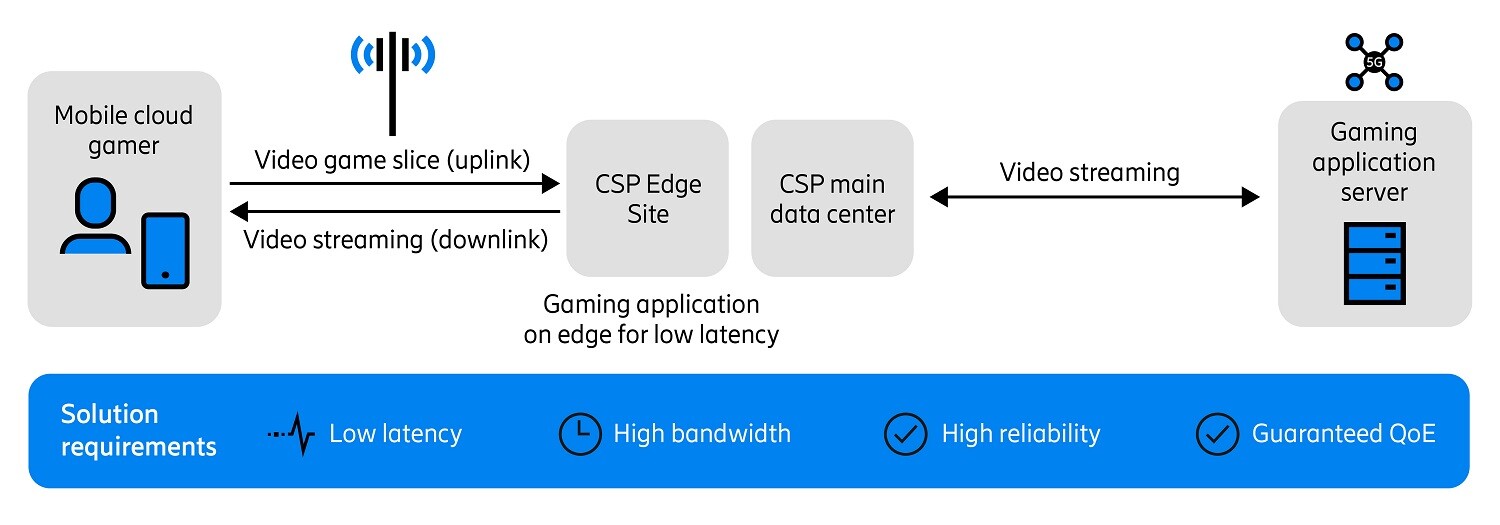
Figure 1: Use case flow – Multiplayer mobile gaming tournaments
Source: Ericsson
But what exactly does a richer customer experience entail? In a nutshell, enterprise customers, especially those in gaming, want personalized, secure access to customer engagement platforms that enable them to interact with their CSPs on-demand across all channels. When enterprise customers log into the CSP’s self-service portal, they want the autonomy to manage the following kinds of tasks.
| Examples of service and account management activities enterprise customers can perform with the CSP’s self-service customer engagement portal: | Ways the self-service customer engagement portal lets enterprise customers manage business models and 5G network performance: |
|
|
Table 1: Examples of activities enabled by an optimized CX
Source: Ericsson
When enterprise customers gain this 360-degree visibility and interactive control over many key aspects of their 5G network accounts and services, including product creation, catalog exposure, ordering and provisioning, as well as managing service level agreements, they can be more productive by proactively addressing their own changing needs without delay. And a simplified, on-demand customer engagement platform also enables enterprise customers to create new mobile gaming experiences and deliver them at a faster time-to-market (TTM) rate.
What’s the best game plan?
CSPs need to understand their role in the 5G cloud mobile gaming telecom value chain as well as their value proposition. A lack of technological readiness to meet the needs of enterprise gaming customers for a robust CX could cost CSPs and their stakeholders a significant share of 5G gaming revenues.
The best game plan for CSPs and their stakeholders is one that builds on a strong BSS foundation. It’s time to think of BSS automation as an essential layer within the gaming ecosystem that must support all aspects of the CSP’s operation such as ordering through activation, charging and billing. It’s also the key to fostering mutually rewarding relationships with enterprise business customers in the 5G mobile cloud gaming arena as they get down to the serious business of playing games.
Learn more
- To learn more about the rapidly growing and dynamic mobile cloud gaming market, and how CSPs can best capitalize on and monetize these emerging revenue opportunities, check out the recent Ericsson eBrief, “Game Plan: BSS for 5G enterprise customer experience.”
- To delve deeper into gaming—one of the top 10 use cases and industries that will drive 5G revenue—check out our eBrief on 5G network slicing: Network slicing: Top 10 use cases to target.
- To know more about Ericsson analysis for gaming industry, check out our report Ericsson Mobility Report November 2020
- For more on digital BSS for the 5G era visit our telecom BSS page.
- Read more about network slicing