










Intelligent ecosystems: driving the development of RAN automation applications

Senior Solutions Marketing Manager OSS

Senior Solutions Marketing Manager OSS
Senior Solutions Marketing Manager OSS
Intelligent automation of the radio access network (RAN) is an important topic for communications service providers (CSPs) for a number of reasons. Firstly, the radio access network is typically the largest part of any operator network – in terms of network elements, capital expenditure (CAPEX) and operational expenditure (OPEX) – and automation of the RAN provides the largest potential for cost reduction, improvement of customer experience and sustainability. Secondly, RAN is arguably the most complex part of any network. 5G, in particular, is supporting new and diverse services in an environment with many more network elements, more frequency bands and more variables that impact service performance than ever before. These elements are key drivers for the widespread adoption of artificial intelligence (AI) and machine-learning (ML) technologies because networks are becoming too complex for humans to manage. This is why we talk about the need for Intelligent RAN Automation.
Back in November 2021, Ericsson launched the Intelligent Automation Platform: an Open RAN service management and orchestration (SMO) platform which had been extended to support not just the automation of Open RAN and Cloud RAN networks, but also the existing, purpose-built 4G and 5G networks which make up about 98 percent of deployed RAN today.
As part of this launch, we announced a number of new RAN automation applications known as rApps. In this blog we aren’t going to talk about specific rApps and their capabilities, but we are going to talk about the types or categories of rApps, how they are developed, who develops them and why we need intelligent ecosystems for rApp developers.
rApp categories
We see four different rApp categories that are designed to run on the SMO platform’s non-Real-Time-RAN intelligent controller (Non-RT-RIC), which forms part of a wider AI and automation foundation:
- Network evolution
- Network deployment
- Network optimization
- Network healing
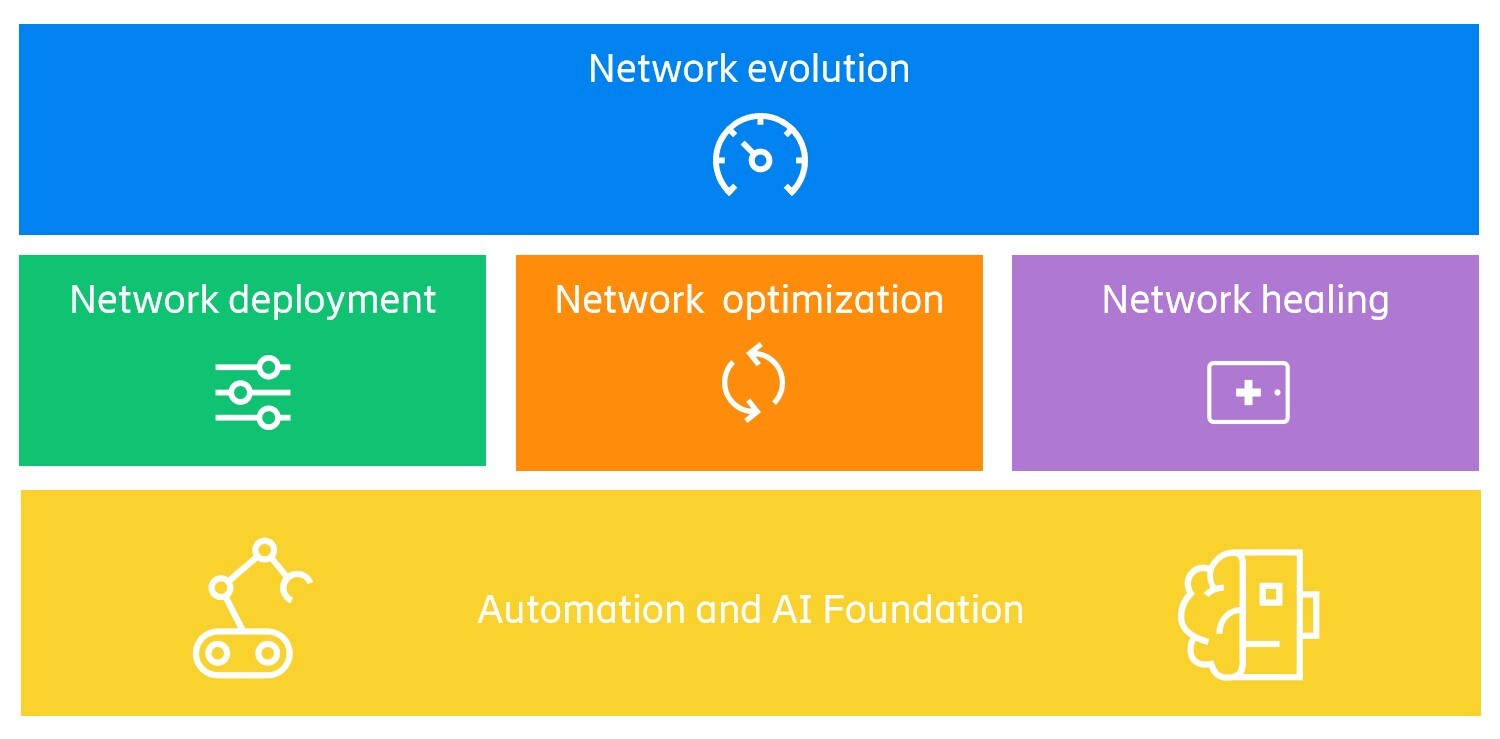
Typically, the network optimization and healing rApps are classified as self-optimizing networks (SON) rApps. Network evolution includes capacity management, radio frequency planning or site planning rApps designed to determine the future shape of the network and the impact of changes on network performance and experience. Network deployment rApps address areas of planning and deployment such as automated neighbor relations (ANR).
| Network evolution | Network Deployment | Network Optimization | Network healing |
|
Capacity Management
Radio Frequency Planning
Site selection
|
|
|
|
rApp development ecosystems and SDKs
To succeed as an automation technology, rApps must meet certain requirements to create a large, open and diverse ecosystem of vendors who are able to operate across multi-vendor environments with low technical barriers to entry and easy routes for monetization. Ericsson’s Intelligent Automation Platform includes a powerful software development toolkit (SDK) which can accelerate rApp development by Ericsson, CSPs and third-party developers which supports lowering barriers to entry and ease of monetization.
While SDKs alone won’t drive the development of these ecosystems, at Ericsson we believe there are three stages in the development of these new ecosystems and we’re already firmly in the first stage:
Stage 1: Developer resources enable rapid creation, testing and deployment of rApps including the management of bugs, updates and developments. The best platform vendors will provide a comprehensive SDK.
Stage 2: The developer community connects rApp and platform developers, enabling information to be shared. Ericsson expects leading vendors to provide technical support, testing, certification and collaboration environments for development.
Stage 3: Mass market adoption is where we will see highly developed and mature ecosystems of application developers. Delivery and life cycle management (LCM) will be fully integrated with the service provider’s CI/CD pipeline to standardize SW asset management.
Ericsson’s SDK and ongoing collaborations with companies such as Infovista and VIAVI solutions are indications that stage 1 is firmly established.
rApp development routes
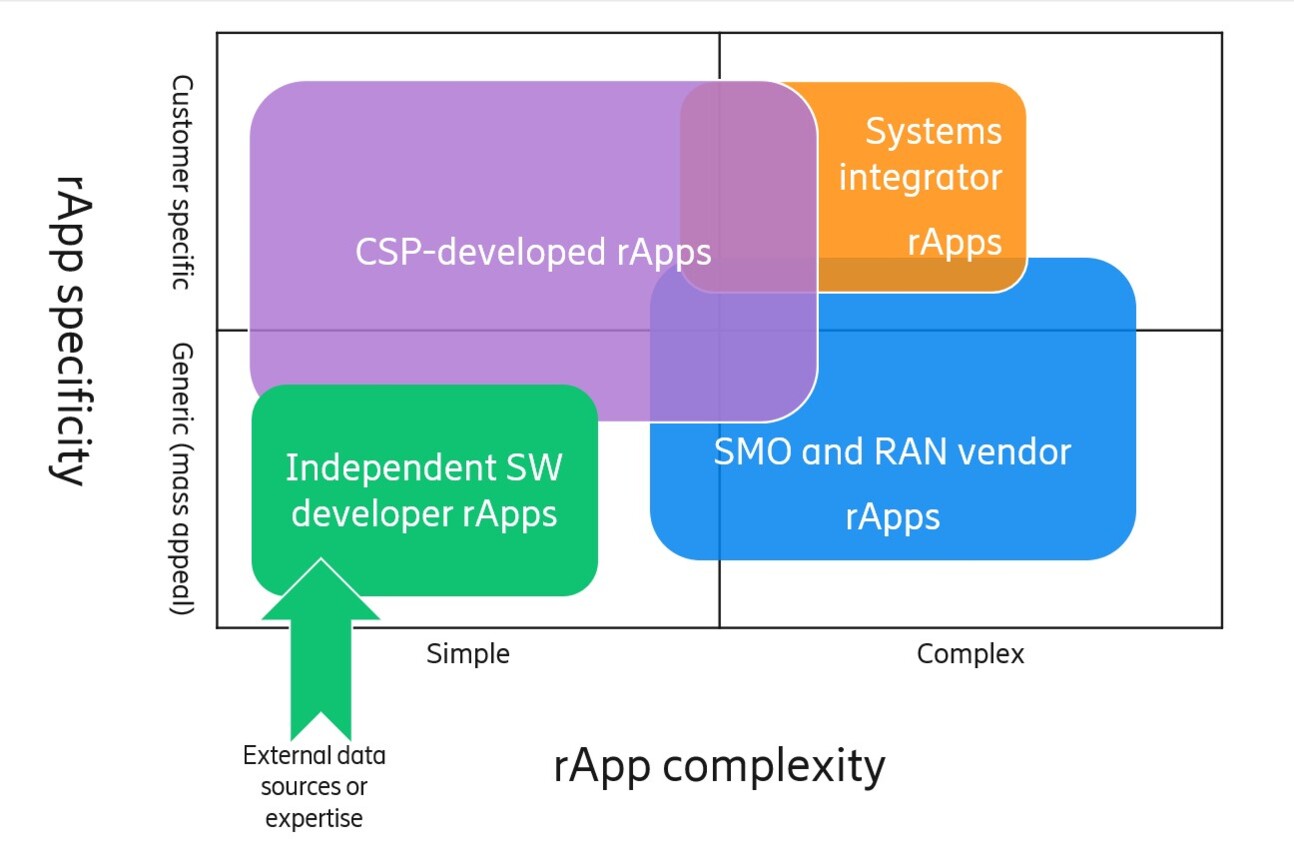
When we look at rApps we see a vast and bewildering array of options available in an open market. We expect to see a dynamic rApp development market emerge, with different types of organizations developing different types of rApps. rApp developers will also need to consider the complexity and specificity of the rApp. For example, we expect SMO and RAN infrastructure vendors to develop rApps that are technically complex, sometimes leveraging their detailed knowledge and experience of radio technology, but that also have mass-market appeal and utility. We also expect CSPs will typically create rApps that are less complex, but much more relevant to their own market situation as a way of helping them differentiate from their closest competitors in terms of improved network performance or enhanced customer experience. That said, we also know a number of CSPs who will delight in creating highly complex and sophisticated rApps, possibly with a view to monetizing their own developments within the wider ecosystem.
Stimulating Intelligent Ecosystems
Ultimately, for intelligent RAN automation using rApps to succeed, the industry will need to create and stimulate a truly open intelligent ecosystem. By lowering the technical and commercial barriers to becoming an rApp developer, as well as enabling full market access (through adoption of open standards and making monetization easier), we will see an ecosystem that matures and delivers benefits to everyone.
This blog introduced the first paper 'Intelligent Ecosystems' from Ericsson’s new Intelligent Automation Guide Series. In the paper we explore the role of SDKs in creating ecosystems and the critical success factors for developers. If you’d like to know more or explore the topic in more depth download the Intelligent ecosystems: How rApp development ecosystems can drive network optimization, service monetization and user experience guide
Subscribe to Ericsson Intelligent Automation Guide Series
Read more
- Read more about RAN Automation
- Read more about the Intelligent Automation Platform
- Read more about rApps
- Read more about Software Development Toolkit (SDK)