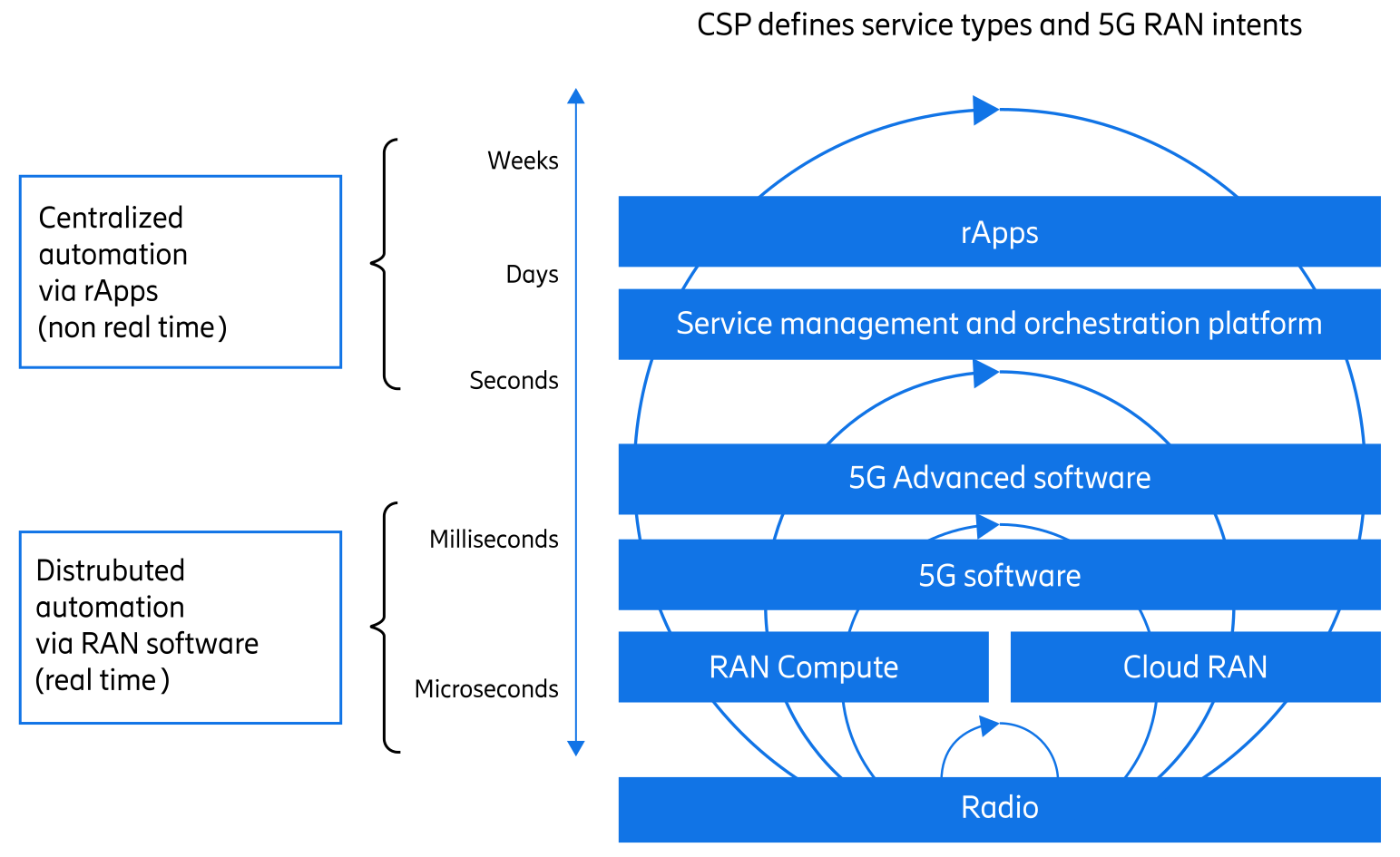
rApps are modular, cloud-native, software applications which utilizes the capabilities of the SMO and are deployed, and managed, on the Non-RT RIC. They use the Non-RT RIC’s network-wide data, analytics, and policy capabilities to observe, manage, and optimize the RAN. In contrast to operations that require swift response times and execution in the radio network functions, rApps operate on “higher-level” control loops – acting on timescales of one second or longer depending on their scope and use case. This makes them well suited for functions such as policy guidance, optimization strategies, automation workflows and model-driven recommendations.
Such other high-level operations benefit from a centralized location, having a broader view of the network and its data. By centralizing compute resources rApps are more flexible than other software applications used for network management. allowing CSPs to manage data resources more efficiently and to achieve higher scale and margins.
If the RAN is an orchestra, the network functions are the musicians and rApps are their conductor. Just like each musician in the orchestra can be a virtuoso, a conductor there to coordinate the players into a well-balanced performance. In the same way rApps help harmonize RAN functions through orchestrated, high-level, automation with the ultimate purpose to get the most out of the radio network.
The SMO architecture that enables rApps increases openness and a wider ecosystem of industry developments. This open nature allows the development of rApps by CSPs, vendors, and third parties. The open nature of rApps allows for the development of rApps by CPSs, vendor and third parties - enabling faster industry innovation and an environment in which multiple players can benefit.