










Under the hood of new multi-band remote radios

Strategic Product Manager Remote Radios

Head of Remote Radios
Strategic Product Manager Remote Radios
Head of Remote Radios
Strategic Product Manager Remote Radios
Head of Remote Radios
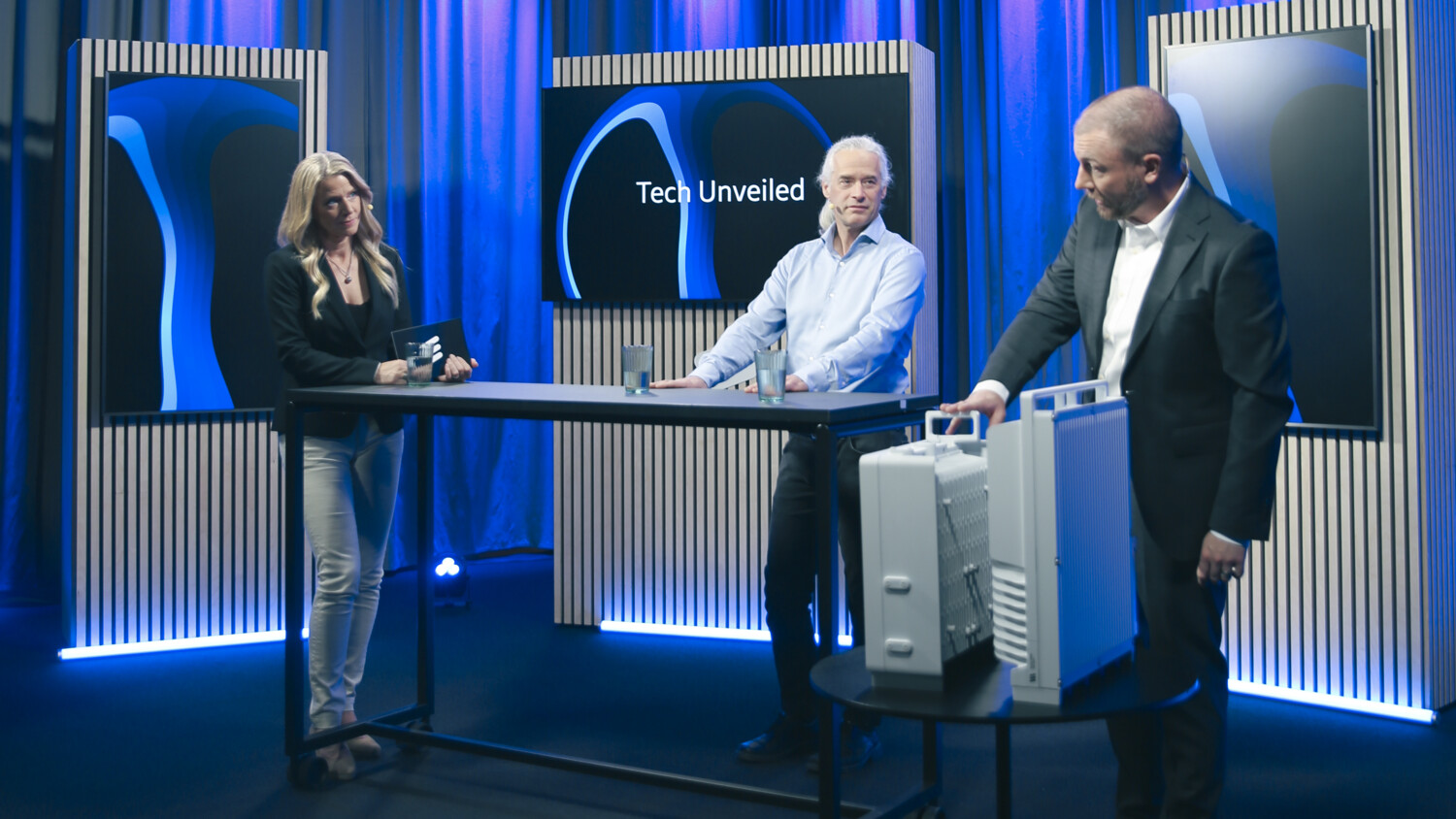
What is a remote radio? And how does it compare to an antenna-integrated radio?
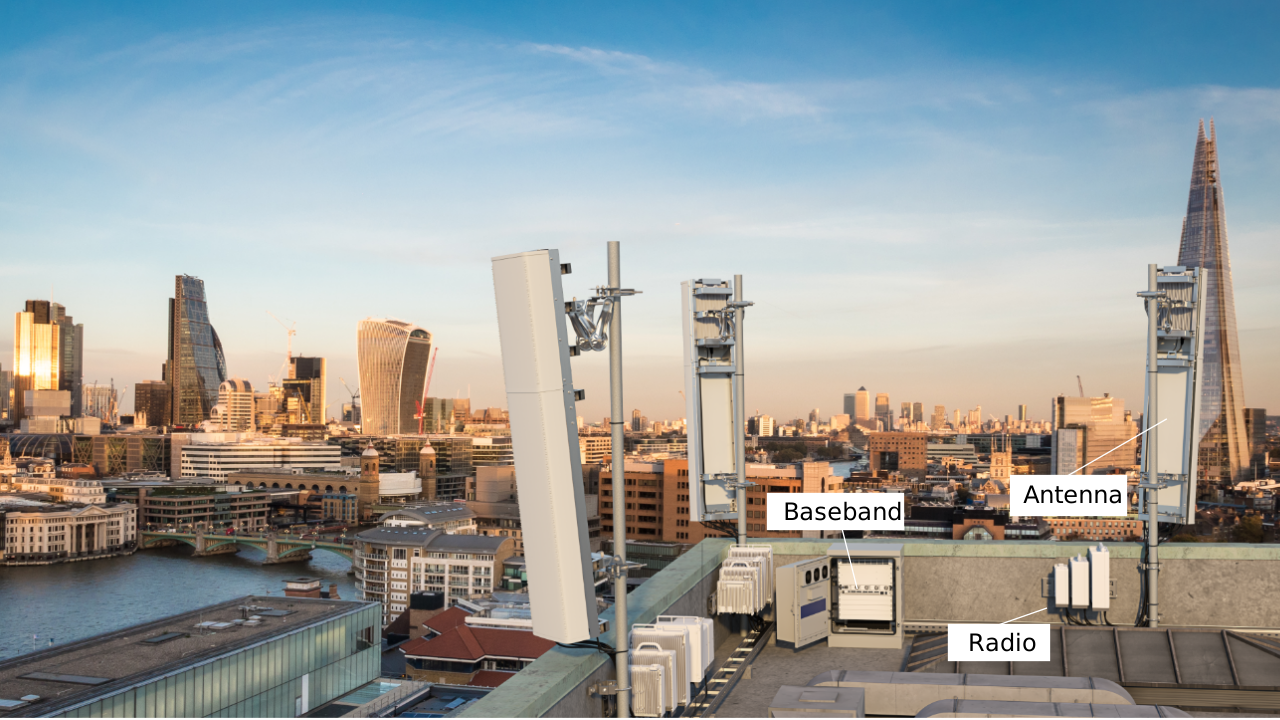
A remote radio is the unit that feeds a passive antenna with radio frequency signaling for one or several frequency bands, based on traffic needs and instructions from the Baseband unit, the RAN Compute.
The main difference between a remote radio and an antenna-integrated radio is simply put that the remote radio is separated from the antenna, and it can be placed both close to the antenna or further away, depending on where the best mounting circumstances are.
The word remote originates from the time when the radio was separated from the baseband so it could be placed near the antenna. Since antennas are at the top of the tower or at the edges of building rooftops, this was often “remote” from the more centralized baseband unit, placed for example at the bottom of the tower or in a shelter on the rooftop.
Are remote radios still vital for 5G networks, and why?
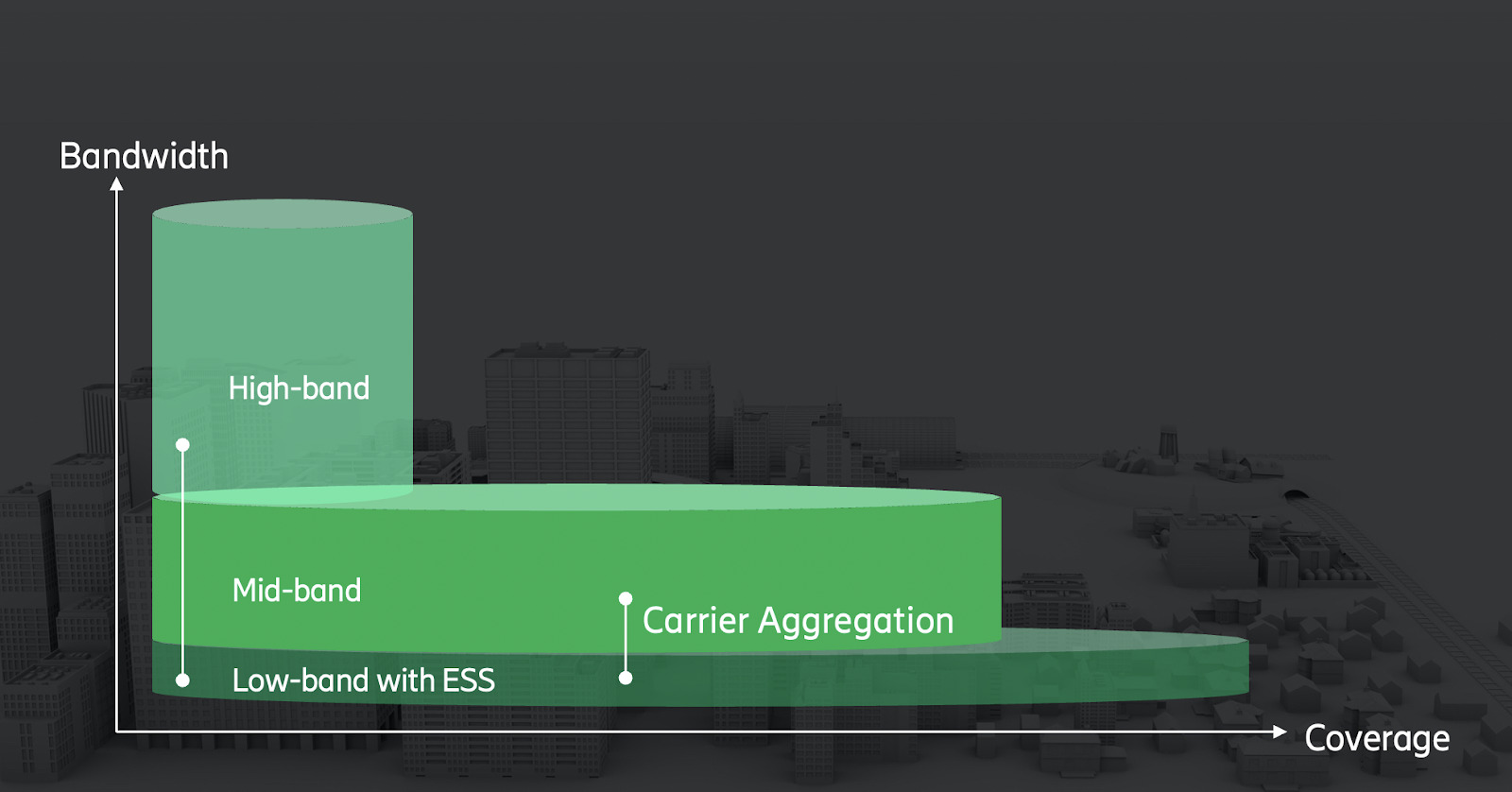
Remote radios are the backbone to 5G and 4G networks, and these radios stand for more than 90% of Ericsson’s global installed base. Remote radios are an optimal deployment form for low-band frequency ranges from about 600MHz to around 2600MHz, since these bands are suited for 2-8 antenna ports, which provides a good performance boost within a reasonable size and weight. Many operators also have spectrum allocations allowing for efficient multi-band deployments using remote radios. Low-band radios can also extend the reach of higher bands, through carrier aggregation, and are thereby key solutions to enable nationwide 5G performance:
Which are the customers main challenges and requirements on remote radios today?
Energy and maintenance cost
Radios need powering, and this cost is part of the service providers operating expenditure. Even if the cost per kilowatt can be volatile depending on external factors, the more energy efficient the radio is, the lower the footprint is on both the environment and on the service providers expense sheet.
Reduced power consumption also reduces the need for active cooling. With passive cooling, wind flow cools the radio via cooling fins instead of adding fans for cooling. This also minimizes the risk of malfunction, as there are no moving parts, eliminating the need for site visits for radio maintenance and repairs.
Footprint
Lower size and weight reduce the site rent for the service provider when renting tower space from a tower company or rooftop space from a property owner. A reduced footprint also opens more space for new equipment and new frequency bands on the site, enabling capacity expansions while modernizing sites.
Easy deployment
The easier a radio is to rollout and install, the better the business case is for choosing a radio. As the new radios support two or more frequency bands in one unit, the case is even better. One radio can in fact replace up to four older radios, as old radios typically support one frequency band with 2 transmit and receive branches.
The weight is also a key consideration, as radios are carried to many rooftop sites. A new multi-band radio weighs around 25kg, which is also a limit recommended by health and safety experts, for a single-person carry scenario.
Performance
Low-band performance is vital to enable nationwide 5G. Ericsson’s radios released since 2015 are 5G ready, including our new multi-band radios. 5G can be installed remotely either partially or fully applying Ericsson Spectrum Sharing. The radio becomes a more flexible asset in the network. As more consumers and businesses start using 5G devices, the radio network instantly adjusts the amount of 5G capacity in each radio.
Which are the main enhancements and customer benefits with our new generation multi-band radios?
The new generation of multi-band radios take a leap in footprint and energy efficiency. Both these factors are important as they improve the business case for modernizing older sites. When we can reduce the footprint while enabling several frequency bands into one unit, the total size of the site decreases and that means lower rental costs for our customers, both from less size and less consumption.
In the new generation radios we are reducing the weight by 25%, down to roughly 25kg, making these radios easy to carry and install. The power consumption is also top-of-mind for our customers, as a lower consumption will mean a lower electricity bill and, in many cases, lower emissions. The new radios have 25% lower power consumption, only comparing to the previous generation.
The new generation radios are both more energy efficient by default, but also support new energy saving features like Deep Sleep. With Deep Sleep the radios can hibernate during the night, a bit like PC hibernates when you leave it for a while.
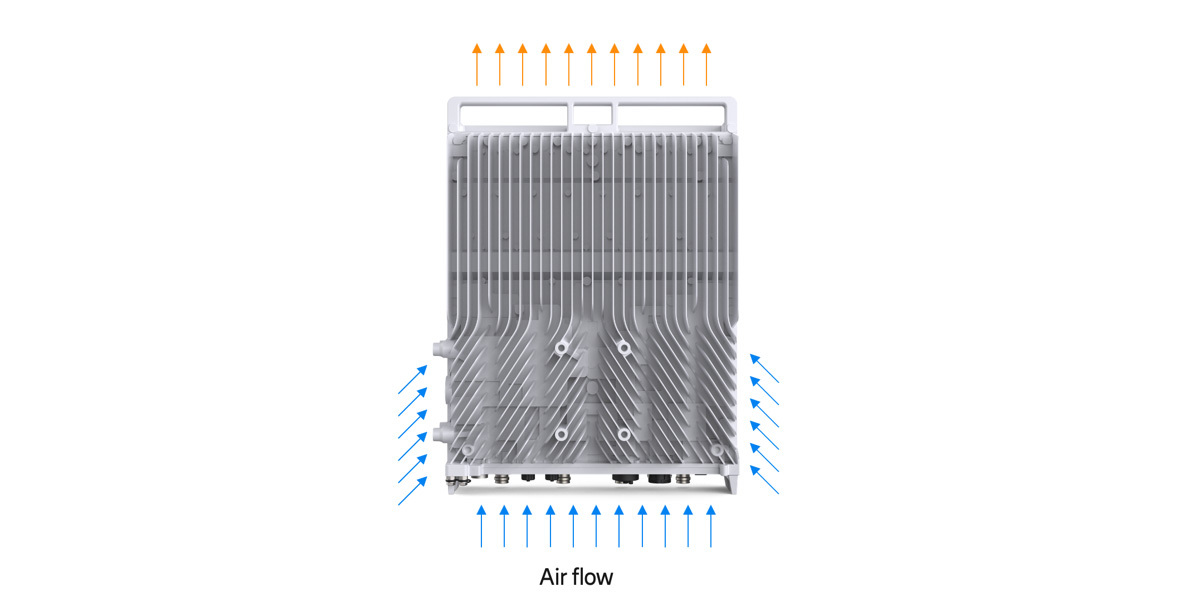
The radios are designed to manage with passive cooling, basically letting the air flow keep the radio within operating temperature via cooling fins. This design philosophy reduces the risk of malfunction of moving parts, resulting in less maintenance visits.
A key performance enhancement is PIM cancellation. Passive intermodulation occurs when several transmitted signals are physically close to each other in the radio, and they share the same antenna, creating a risk for PIM distortion, basically creating uplink interference and reduced coverage. Native built-in PIM cancellation reduces the interference and improves coverage.
The new generation radios also support packet switched fronthaul via eCPRI, on top of CPRI. This opens for more flexible connections to both purpose-built Ericsson Radio System RAN Compute products (basebands), and our new Cloud RAN hardware, making these radios future proof.
Power amplifiers (PA) are a key radio capability - how have the PAs evolved and how do they save power?
Ericsson has taken the step to introduce Gallium Nitride (GaN) amplifiers in the new generation of radios. GaN offers substantially better energy efficiency than earlier generation amplifiers. Increased energy efficiency also means potential for reduced size and weight. Say that you have 30% energy efficiency, that means that 30% of the electricity consumed will be translated into radio signals, but the other 70% will become heat. With every percentage point you increase energy efficiency, you also reduce heat dissipation one percent. Reduced heat dissipation allows for a more compact design.
Why are Ericsson new multi-band solutions better than competition?
Firstly, they are easy to deploy. Light weight is a key differentiator for rollouts, and at 25kg these multi-band radios can be carried by a single person.
Secondly, they have excellent energy efficiency and have a robust passive cooling building practice. Passive cooling reduces the risk of hardware failures, requires fewer site maintenance visits, and on top of that reduces power consumption.
In some areas more output is needed. For this we are introducing a radio with additional output power (up to 480W) with an even better ‘watts per liter’ ratio. Here we applied a concept called thermosiphon, which is a closed loop zero-touch system of liquid and gas. The thermosiphon concept improves the cooling efficiency and thereby is well suited it to a high-output power version for extended coverage and capacity.
We also apply energy saving features. Some features are automatically enabled, and others are kicking in when the customer sees an opportunity to save power. When in Deep Sleep, one 4490 multi-band radio uses only 3% of the power consumed during the peak traffic hours. 3% equals to about 30W of power, so the radio will during that quiet period consume less power than one of your light bulbs at home.
On the software end, the new radios are powered with the next generation Ericsson Silicon which supports multi-standard and mixed-mode capabilities, and coupled with inbuilt PIM cancellation and versatile fronthaul support for both CPRI (common public radio interface) and packet switched eCPRI (evolved CPRI), in the same radio. These capabilities jointly bring the most robust performance in remote radios in comparison to the rest of the market.
How has Ericsson silicon - made inhouse - contributed to the savings in size and weight of the latest generation radios?
Our customers require us to support more bandwidth, often within the existing site and with reduced total cost of ownership. By deploying multi-band radios, multiple existing single-band radios can be removed, freeing up space for new radios supporting new frequency bands.
Ericsson Silicon is the key enabler to build best performing radios while reducing size, weight and energy consumption. In our latest generation of Ericsson Silicon, we have tailor made an ASIC (application-specific integrated circuit) optimized for multi-band remote radios. The ASIC is optimized for the required bandwidth, to handle modern power amplifiers and supports both PIM-Cancellation and packet switched fronthaul. Since ASICs are an efficient method to implement these processing heavy functions, the new Ericsson Silicon enables the new multi-band radio to have low size, weight and energy consumption.
We are now re-imagining radio design with a higher level of hardware integration, where we have replaced multiple components with one single new physical component containing hardware, control interfaces and firmware.
The new multi-band radio-optimized Ericsson Silicon brings a performance boost and future proof the networks while making 5G more sustainable.
To find out more watch our Tech Unveiled episode on Under the hood of new multi-band radios.