










The Ericsson booth tour at Critical Communications World 2022
Solution Marketing Manager
Solution Marketing Manager
Solution Marketing Manager
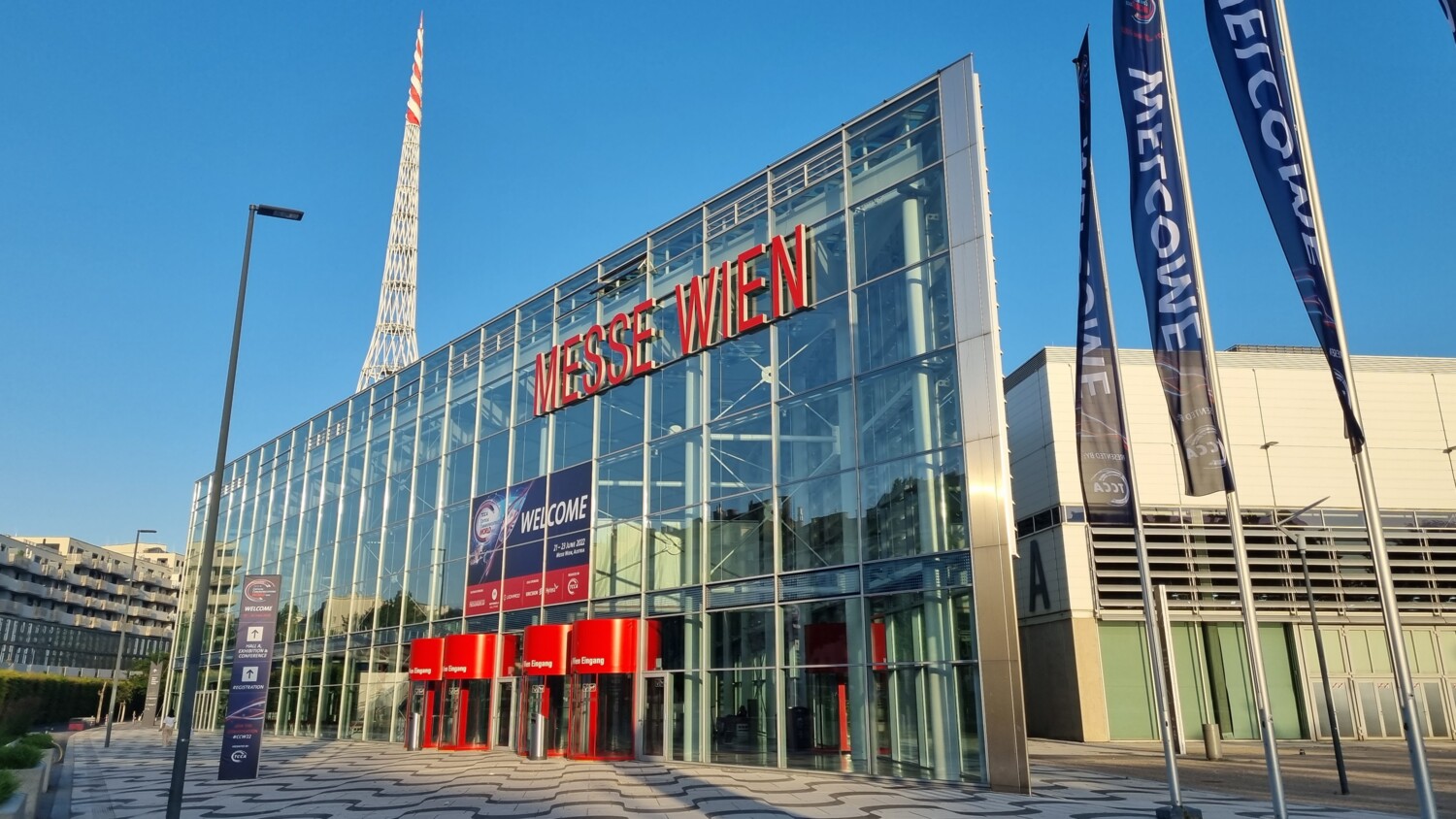
The Critical Communications World (CCW) event is the flagship event of the Critical Communications Association (TCCA) and in 2022 it reverted back to being a physical event in Vienna that took place from June 21 to June 23. It was great to meet people in person again and discuss how to migrate current Land Mobile Radio (LMR) networks to 3GPP-based mission-critical 4G and 5G networks.
If you are a communication service provider, either running separate government public safety, rail, or utilities networks, or adding mission-critical capabilities to your consumer mobile broadband network, then you could all help with providing greater services to these organizations in their daily operations. Today, the personnel working in public sector operations organizations use narrow-band push-to-talk (PTT) services at work, and they only have limited access to mobile broadband services. With 3GPP-based 4G and 5G mobile broadband, they could benefit from a vast array of more valuable services, such as improved situational awareness to solve mission-critical tasks, and in the future even running remote operations using 5G, to avoid sending staff to dangerous situations.
Below are some of the examples from our booth demonstrations at the event, which show new mission-critical services and also explain how to make 3GPP-based 4G and 5G mobile networks capable of serving government and public sector needs.

Figure 1: Preparations in the Ericsson booth for the event opening | Image: personal archive of Kati Öhman
What 5G can bring to mission-critical operations
5G remote operations – avoid sending staff to potentially dangerous zones
Imagine someone has called the emergency services and reported there is an object in the city park which looks like a dangerous gas cylinder, and which could potentially cause a fire or injure people. Do you want to send a rescue team to check this directly? Or maybe you do not have any first responder staff available right now, or the area is considered to be a danger zone. What if you could send out a remotely-controlled vehicle – a car, a drone or a robot - to do a first quick check?
With 5G network high speeds and low latency, you could steer, operate and control this vehicle remotely from the office - if the situation requires, you could even enable an expert sitting in another city, or even in another country, to steer and manipulate it remotely.
With the low latency of 5G networks, the feedback to control a remote object makes it possible to perform a task like this. For some scenarios, this could also be done over 4G, depending on how much feedback is needed to control the remote operation and how much bandwidth is required. Driving an undemanding vehicle and simultaneously taking photos or videos works well over 4G. But if you need to perform more precise remote control, such as using a robot arm to carefully move an object while using HD video streaming to film the area (or using 360-degree cameras), then 5G is required.
In our demonstration, shown in figure 1, people were able to sit in our booth in Vienna and drive a small vehicle (the car is around 1 m long and 0.5 m wide) that was located in Stockholm over a commercial 5G network to get a feeling for how it works. Luckily, most people managed to drive the track without smashing too many cones!

Figure 2: Remote driving from Vienna – driving a car using a commercial 5G network in Stockholm | Image: personal archive of Kati Öhman
Taking mission-critical situational awareness to the next level using XR and 5G
When a complex rescue operation is taking place, many organizations such as the police, fire rescue teams, city authorities, local transportation organizations, hospitals, national security organization need to collaborate to solve the task together. To have the latest information available to all these organizations quickly is of vital importance to solving the task quickly and efficiently. Imagine being able to send out vehicles and drones with high-definition cameras to survey the situation, adding photos shared from the smartphones of the general public and video streams from police officers’ push-to-x devices, all feeding into the same virtual control room.
With 4G/5G networks, it’s possible to turn network information into intelligence that aids and facilitates decision-makers in a disaster relief situation in making accurate decisions. Network exposure, network slicing and EDGE computing provides the functionalities needed to create new tools for first responders.
We have been collaborating with a Swedish company, Swedome, that develops virtual control rooms, to test how this kind of virtual control room, combined with 5G, could enable a virtual command room for back-office staff. The same view could also be provided through a pair of goggles, which could be used by first responders when working in the field. This solution enhances the decision-making process in a disaster relief situation by delivering an improved situational awareness experience to responsible stakeholders, through XR (extended reality) aided regional operational centers.

Figure 3: Discussions about how to enable virtual control rooms for public safety situational awareness, leveraging 5G network exposure | Image: personal archive of Kati Öhman
Deployable networks
Deployable networks are important for mission-critical rescue operations, as incidents may happen in places with non-existent or poor network coverage such as mountain areas, or when the network has been destroyed in a bush fire or an earthquake. Drones, vehicles and other types of equipment could be used to provide temporary cellular coverage in these places. Here’s an example of a proof-of-concept research project that my colleagues did some time ago, building a 150-gram packet core and radio network mounted on a drone, providing an ad-hoc standalone network. Watch the video to see it in action: Ericsson trials drone-mounted network

Figure 4: A 150-gram cellular standalone network on a drone | Image: personal archive of Kati Öhman
The journey to 4G and 5G mission-critical networks
Cellular technology – especially 3GPP-based 4G and 5G – strengthens business and operational processes, empowering organizations in the public and private sector alike. This technology is also the key to enabling a wide range of vertical use cases, facilitating networking and connecting the entire value chain. As public safety and critical infrastructure industries embark on their digitalization journey, they tend to use cellular technology to enable simple use cases such as monitoring and tracking to begin with. They then progress to highly sophisticated use cases including real-time automation and remote operations.
So how do you build a mission-critical broadband network to cater for these kinds of services that have requirements for high-quality, resiliency and security?
Start today with deploying mission-critical 4G, which is the first major undertaking, to migrate from legacy Land Mobile Radio (LMR) networks to modern 3GPP-technology. This also means you have taken a big leap on your journey to prepare for 5G, as all Ericsson 4G products are already 5G-compatible. Find out more in this in-depth paper about the crucial steps you will need to take for a safe and successful migration - these include network evolution aspects, interworking towards current LMR systems, operational organizational aspects and how to transition to mission critical applications: Migration to mission critical 4G and 5G
Radio access networks for outdoor and indoor mission-critical connectivity
A wide variety of organizations are realizing that it is now time to begin modernizing their existing mobile communication networks, including first responders such as the police, firefighters, and ambulance and rescue services, as well as utilities and railway companies. They can use the same radio hardware portfolio that Ericsson has deployed in commercial services for billions of users globally. This hardware is complemented with additional software functionality to make the networks mission-critical, and the network design includes adding extra redundancy to ensure the resilience of mission-critical networks.
Figure 5 showing radio access network equipment mounted on the wall: the Ericsson Radio System 2212, which supports 2G to 5G networks in the same radio unit. It supports a large selection of FDD low-band frequency variants corresponding to spectrum assigned for mission-critical networks in many countries, such as e.g., 410 MHz (B87), 450 MHz (B72, B31) and the 700 MHz bands allocated to public safety (B68/B28). The Ericsson Radio Dot, the world’s smallest tri-band indoor radio for 2G to 5G, provides coverage easily in for example garages, tunnels and in offices. The Ericsson MINI-LINK enables easy deployment of high-capacity transport radio links for backhaul connectivity by just adding a power cable and a traffic cable, supporting up to 5 km hops.

Figure 5: Radio Access Networks and security in mission-critical networks | Image: personal archive of Kati Öhman
Security in mission-critical networks
Security is of the utmost importance and one of the main building blocks for high-availability systems, including both 4G and 5G networks. 5G is the most secure 3GPP communications technology built today, with a basis in 3GPP standardization. Ericsson has systematically developed a state-of-the-art model to incorporate security and privacy considerations into all phases of product development and deployment. The result of this effort is a well-established internal governance framework for security and privacy by design, referred to as the Security Reliability Model (SRM) to enable secure networks for both consumer and mission-critical networks. We have recently to this added new capabilities to our security portfolio with the Ericsson RAN Security Threat Detection solution, which includes false base station detection – you can find out more here: Telecom Security Products and Solutions.
Provide high audio quality push-to-x combined with broadband services
The main service used today by first responders is push-to-talk. But what is lacking is the support for ubiquitous mobile broadband services, and this is what 3GPP-based 4G and future 5G networks will enable, all on the same device. Public sector staff will benefit from using high-quality voice, video communication, messaging and broadband services on different push-to-talk devices such as standard smartphones, ruggedized phones, and future devices like cellular watches, goggles, helmets and more. Explore more about new mission-critical services.
We have already deployed the world’s largest mission-critical push-to-talk (MCPTT)-enabled utilities network, where thousands of users in Southern Linc, a US-based utilities company, are already using the service. You can read more about the case here: Southern Linc and Ericsson

Figure 6: Ericsson’s Mission-critical push-to-x client used on multiple device brands and connected through the Ericsson dispatch solution | Image: personal archive of Kati Öhman
Award winning 5G connectivity – deployable networks
We are also delighted to also share that we won the prestigious International Critical Communications Awards (ICCA) award for emerging technology together with our customer Verizon in the US.

Figure 7: Verizon and Ericsson win ICCA 2022 award | Image: personal archive of Kati Öhman
In this project, Verizon built an emergency response vehicle with a lot of technical equipment to be used by first responder teams, including a complete 5G network. Ericsson and Verizon jointly conceived the idea of THOR (Tactical Humanitarian Operations Response) and partnered together in every step of building this 5G deployable network solution. Thanks to a fully enclosed 5G system combined with edge computing and a command center, the THOR vehicle can start up a network where none is operating, meeting the needs of first responders until the infrastructure is up and running again. It can also provide Wi-Fi hotspots in and around the vehicle.
Learn more in this blog post: 5G deployable networks enhance situational awareness
And watch the webinar: Connectivity when it's needed the most - 5G deployable networks solution for mission critical communications
Start speeding up 4G and 5G mission-critical network deployments
All in all, it was an engaging event with a lot of fruitful discussions with government delegates, operators, partners and other industry players. I hope that all visitors had an interesting time together with us and got inspired by new ideas around how the latest 4G and 5G mobile communications technology can bring benefits to society to enable safer operations for the public safety rescue teams, that help us all in case of natural disasters and accidents. Other public sector organizations, like energy utilities, mainline rail, and metro and can also benefit from the same technologies, in particular by being able to build more green and sustainable operations.
It is time to speed up the deployment of modern 4G and 5G broadband technologies that support voice, video communication, data, and services for government and public sector organizations. The overall industry and eco-system need to collaborate to make this happen faster - this will benefit everyone, both you as an individual, as well as society overall.
If you want to explore more how to make this happen, here’s our references from live networks, latest guides, technical reports, case studies, solution descriptions and more: