










6G series: Leading the way to 6G with Hexa-X II
- The new flagship of 6G research, Hexa-X-II, gets underway in January 2023 and will drive the research agenda through to the commencement of global 6G standardization expected in 2025.
- The Hexa-X-II consortium, which gathers a wide range of world-leading industrial and academic partners, will continue research on the technological components and also look into how the components can fit together in an end-to-end system.
- The 6G platform will be an integral part and driver of the cyber-physical world of the 2030s.

President of Bell Labs Core Research at Nokia

President of Bell Labs Core Research at Nokia
President of Bell Labs Core Research at Nokia
As we approach the 6G era of 2030, the research on the next generation of mobile networks is well under way. With 3GPP estimated to begin the specification of 6G standards from 2025, the window for pre-standardization telco alignment of 6G is right now.
In the first phase of the 6G journey, the 6G flagship research project Hexa-X has laid the foundation for future mobile networks, framing the 6G research questions and performing explorative research on key technological enablers. Now, Hexa-X-II will pick up the mantle as the flagship 6G research project for the second phase of the 6G journey – focused on systemization and pre-standardization.
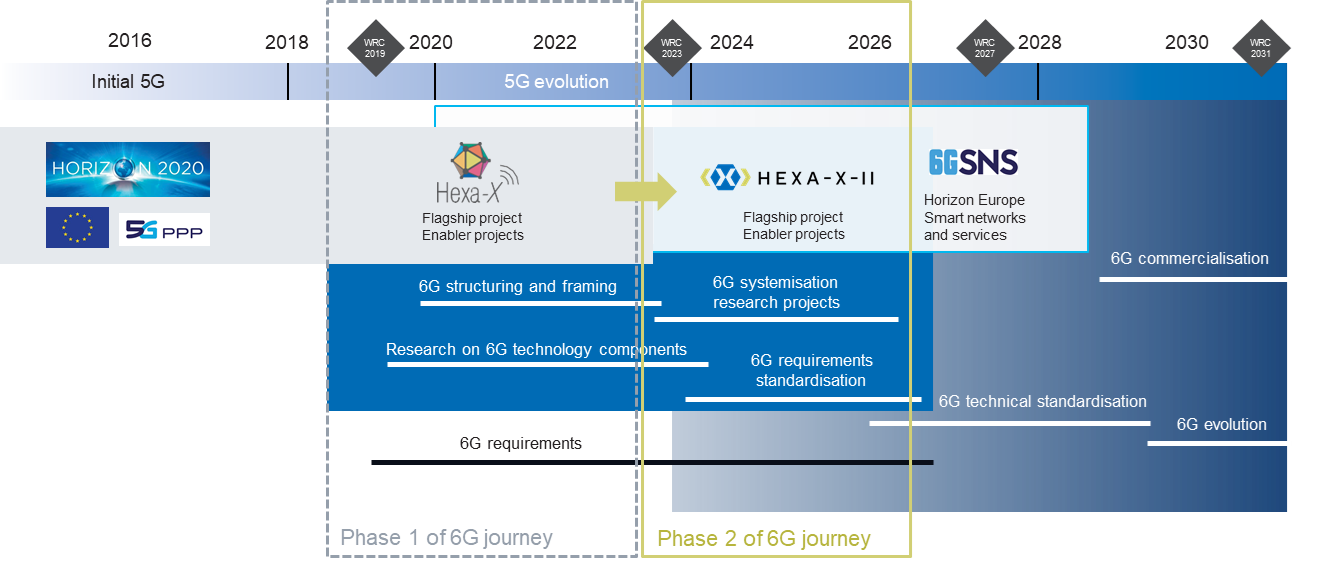
Source: Hexa-X
The key to the success of research leading to previous generations have been the gathering of a wide consortium of key industry players and leading academic institutions providing a firm industry alignment, backed up with academic studies, as a preparation for global standardization. Finding a common ground on main principles and goals has proven to be a success factor for converging on good technical solutions developed during the global harmonization in open standardization.
The Hexa-X-II consortium gathers a wide range of world-leading industrial and academic partners gearing up the partner list from Hexa-X’s 25 partners to 44, with Nokia and Ericsson again jointly leading the venture as overall project lead and technical manager, respectively. The expansion strengthens the consortium with several device and chipset vendors, additional prestigious research institutes and universities, a wider range of telecom operators, as well as inclusion of dedicated small and medium enterprises (SMEs) focused on use cases relevant for the 2030s. This wide participation is key for the holistic approach of the project: we need to understand the future need and applications and master the entire chain of technology from chipsets to hardware to software implementation in order to succeed.
Hexa-X-II partners
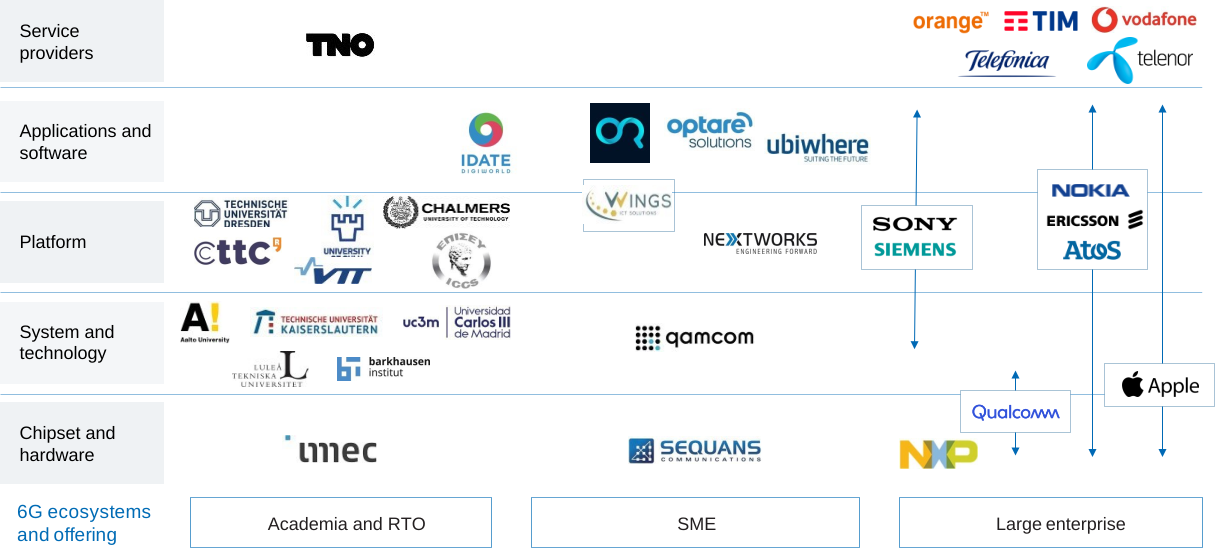
Source: Hexa-X
6G research foundation
Hexa-X identified six key research challenges:
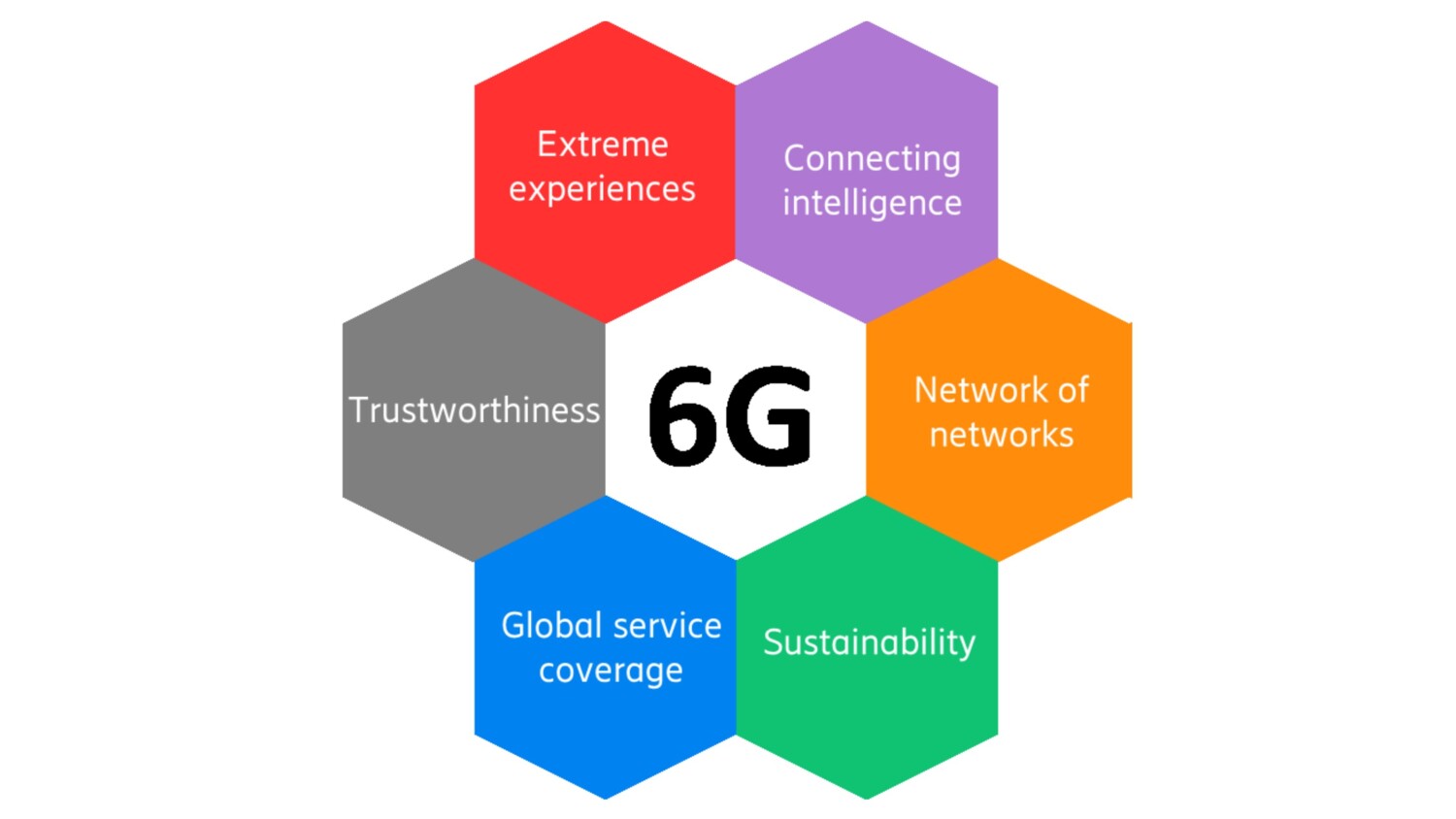
- Extreme experience – providing the network performance required to deliver on the demanding use cases of 2030.
- Connecting intelligence – with the advent of artificial intelligence (AI) and machine learning (ML), the deployment of interconnected intelligent systems will enable novel applications and improved insights into different operations.
- Network of networks – Enabling the network flexibility to scale the operations from general purpose wide-area networks down to specialized local networks with extreme performance and reliability.
- Global service coverage – To bridge the global digital divide, it will be imperative to provide cost-efficient and affordable connectivity to everyone.
- Trustworthiness – With more aspects of our modern industries and societies relying on mobile communication to function, the imperative to maintain the connection, without undue interference or security breaches increases.
- Sustainability – As one of the most pressing issues facing our societies today, 6G is poised to provide a significant positive impact on the sustainability of our industries and societies at large. At the same time, it’s important to ensure that the environmental footprint of 6G systems can be reduced.
The Hexa-X project has conducted research to address these challenges:
- Radio evolution – exploring the higher carrier frequencies in the sub-THz range (100-300 GHz), exploring hardware implementations, waveforms, beamforming and channel measurements as well as novel deployment alternatives known as distributed MIMO. The project has also been exploring the novel concept of joint communication and sensing, where the communication radio interface is re-purposed to also perform e.g., radar-like sensing of the environment.
- Artificial intelligence – AI can be deployed throughout the 6G system to optimize certain features, and provide interconnected evaluations and monitoring for reactive fault management and recovery, or pre-emptively manage and orchestrate the required resources for zero-touch operations. In particular, the Hexa-X project has conducted research on applications for AI on improving the physical layer (PHY) as well as creating an intelligent network management and orchestration (M&O) system.
- Network architecture – To address all the research challenges, the network architecture has been reevaluated within the Hexa-X project to investigate how it can become more flexible, intelligent, and efficient by exploring many different architectural components.
Ambitious endeavor
With the foundation for 6G research being laid by previous research projects, Hexa-X-II takes on a much broader scope. In addition to continuing research on the technological components, the project will also look at how the components can fit together in an end-to-end system as well as how the 6G system can bring value for society.
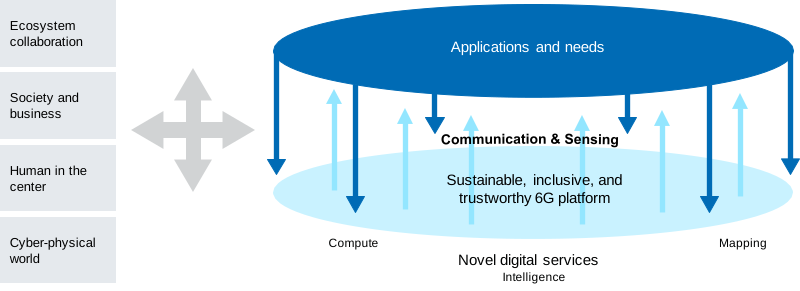
Source: Hexa-X II
Hexa-X-II will define and explore the applications and needs expected in the 2030s to explore how the 6G platform can combine communication and sensing as well as the novel digital services such as network computations, intelligence, or spatial mapping can be used to address future needs. At the same time, contributing to pre-standardization the project will have close interactions and collaborations with various regulatory and standardization ecosystems, as well as industry and society through an external expert group to be able to anchor the acceptance of the future mobile network across society.
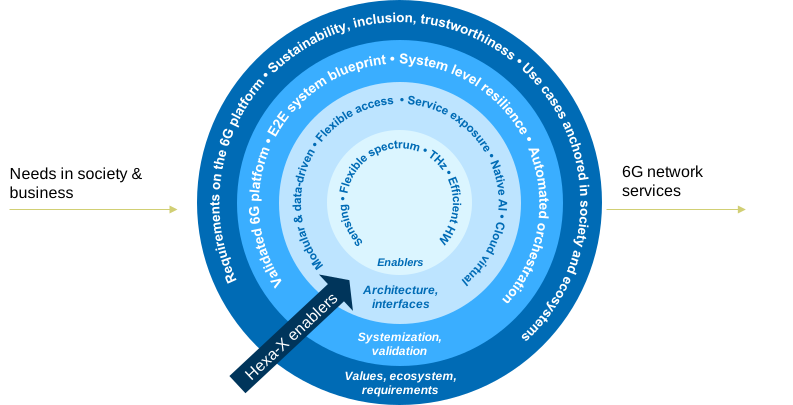
Hexa-X-II technical scope
Source: Hexa-X deliverable XX
As Hexa-X-II will take a holistic view of 6G system design, the project will consider aspects all the way from use cases and requirements on the 6G system, to developing key technological components, and remodeling the network architecture to develop the required interfaces. To tie it all together, Hexa-X-II will design a full end-to-end system blueprint which will be validated though a series of proof-of-concept demonstrators. The project will also evaluate the 6G services potential impact on industry and society.
For instance, with the expansion of the emergent 5G use cases, such as eXtended Reality (XR) and digital twinning, combined with novel technologies such as joint communication and sensing, integrated computational offloading and AI, as well as unsurpassed network performance and efficiency, the 6G platform of 2030 and beyond will provide unparalleled experiences and services by engendering the cyber-physical world.
With an abundance of data collected, along with capabilities and resources in the network to analyze and structure the data, coupled with novel devices that can visualize, experience, and interact with the virtual or augmented environments, the 6G platform has the potential to fundamentally alter the way we interact with each other and the world.
Taking the next step
The Hexa-X-II project commences in January 2023 and continues until June 2025. In the meantime, the Hexa-X pilot project will finalize in June 2023, providing a six month overlap of the two flagship projects which will ensure a smooth transition from exploratory research to systemization. This second phase of the 6G journey which focuses on systemization and pre-standardization will hand over to the global standardization and harmonization phase when finalized.
Today, January 24th, all partners of Hexa-X-II meet in Espoo, Finland, to kick off the work in the project and start collaborating towards the goal of designing the 6G platform, which will be an integral part and driver of the cyber-physical world of the 2030s. Starting the Hexa-X-II project is a major stepping-stone on the way there.
Further reading
Learn more about the Hexa-X project
Read more about Ericsson’s research journey to 6G
Read the press release: Hexa-X-II, the second phase of the European 6G flagship initiative
Explore the fundamentals of modern network architecture and how it is driving a new era of agile, cloud-native network operations.
Explore modern network management approaches that give you greater visibility and control across today's increasingly complex networks.