









Do you want faster and simpler 5G roll-out? Use self-tuning DWDM transceivers!

Customer Solution Sales Director, 5G Transport

Customer Solution Sales Director, 5G Transport
Customer Solution Sales Director, 5G Transport
C-RAN & Fronthaul
Centralized RAN or C-RAN improves radio performance while reducing network in hi-traffic, dense urban areas. (For more information on C-RAN see)
With co-located basebands in a C-RAN hub, we need a fronthaul network in “front” of the basebands to transport the remote radios signals back to the hub. To limit the number of fibers we need to deploy to each antenna site, one common strategy is to use dense wave division multiplexing (DWDM) to optically multiplex many hi-capacity radio signals onto a single fiber strand. (Another possibility is to use packet fronthaul).
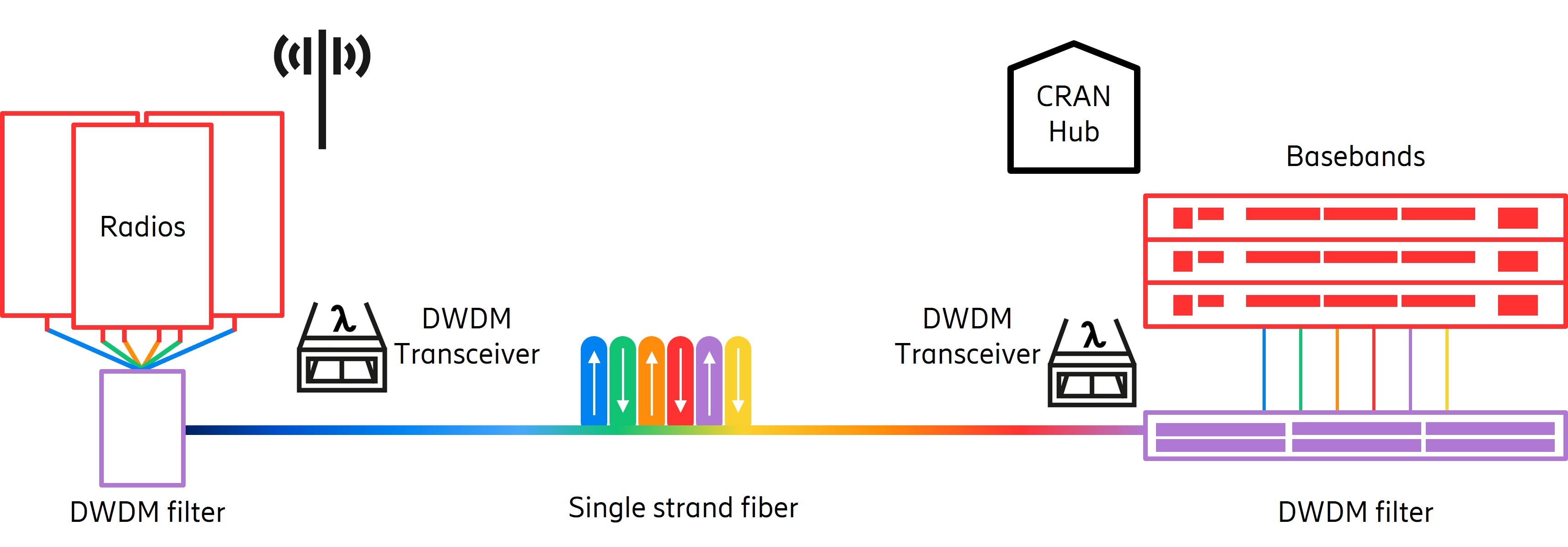
Figure 1: Passive fronthaul architecture
With passive fronthaul, you place the colored optics directly in the radios and basebands connected to passive DWDM filters in between. Passive fronthaul installations require you to carefully match the correct wavelength of the transceiver in the radio with the correct DWDM filter port wavelength.
Fixed DWDM transceivers
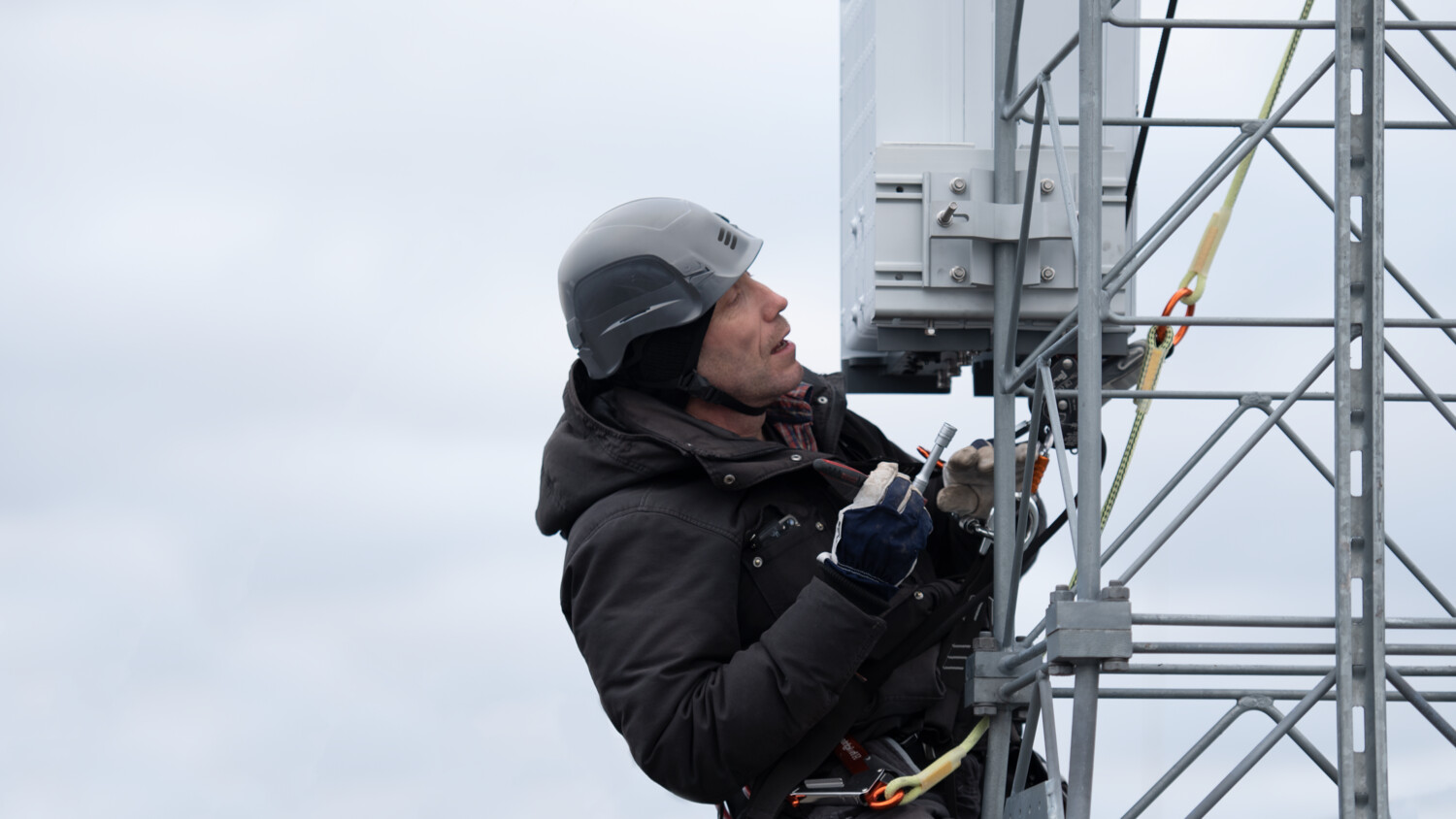
Fixed DWDM transceivers are both cost and power efficient. The challenge, however, is that you need a different variant for each wavelength you use. This implies that for a 48-wavelength system you need to manage and keep an inventory of 48 variants. The correct variants must be ordered in advance and the technician must also connect each transceiver to the correct channel port on the optical mux/demux filter, which can be complicated with poor fiber management or labeling errors. Any installation mistake could result in another two-week delay for a permit to go back to the site with a bucket truck and a two-man crew, easily running in $2,500-$3,500 extra costs. Or worse, imagine having to do a 200ft/60m tower climb because you put the wrong transceiver in the radio?
So, with fronthaul you have a superior radio performance and only need a single fiber strand. If there was only a way to reduce the number of transceiver variants and make the installation simpler?
Self-tuning DWDM transceivers to the rescue
Fortunately, technology keeps on evolving and improving, finally meeting the specific mobile deployment requirements.
Early tunable DWDM transceivers allowed technicians on-site to manually program the specific wavelength with an external device, reducing the number of variants they needed to have with them. This solved the inventory and sparing problem, but still required careful verification of the wavelength channel records and connection to the correct filter port.
The next evolution is the self-tunable DWDM transceiver, which automatically self-tunes to the correct wavelength without intervention by the field technician, radio, or baseband. You simply plug in the self-tunable transceiver, connect it to the DWDM filter and it will scan for the correct channel. This allows the field technicians to deploy DWDM connections in the same way they have been deploying grey optics. It is plug and play, reducing the potential for human error.
How does it work?
After plugging in a self-tunable transceiver, it will automatically start transmitting on a new wavelength one-by-one until it finds a match. The DWDM filter will block any transmitted wavelength which does not match with the filter port and will only allow the correct wavelength to pass. Once both sides find the correct wavelength, the handshake occurs and the transceivers at both sides of the link lock to their correct wavelengths and normal data transmission begins. After an equipment reboot or power failure the transceiver will automatically start with the last known correct wavelength. With a port move, the transceiver will automatically restart the scanning process after detecting a loss of signal.
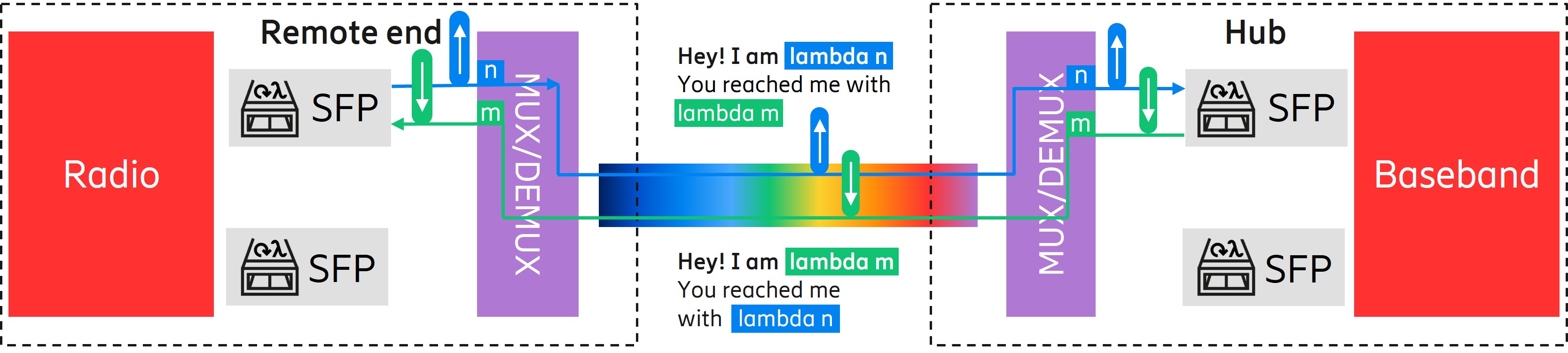
Figure 2: Self-tuning process
Optical transceivers for mobile applications
Why now? Early self-tuning transceivers consumed too much power, limiting deployment. Transceivers for mobile applications must meet different requirements compared to transceivers for datacenters. They must work across wide and harsh operating temperatures and consume as little power as possible with the highest reliability. Replacing a transceiver in a datacenter server is a lot easier than replacing a transceiver 200ft/60m above the ground. Ericsson certifies each transceiver type with different radio and baseband combinations under different environmental conditions to ensure it meets the specific mobile requirements and EMC, Safety, and related regulations. Ericsson is driving the industry via the Mobile Optical Pluggable (MOPA) initiative towards a common and shared view to secure that the right optical pluggables are available at the right time and at the right cost for the 5G buildouts.
New self-tuning transceivers simplify planning, ordering, and spare management by using only a single transceiver variant. It reduces the costs of managing an inventory of many DWDM variants to only a single variant. There is no need for obsessive wavelength record checking or manually programming the correct wavelength. The self-tuning capability allows for simple plug-and-play passive fronthaul deployment, resulting in faster 5G rollout. Self-tuning transceivers are set to become the de-facto-standard for passive fronthaul deployments.
More reading from Ericsson
For more information, please refer to the links below:
Exploring new centralized RAN and fronthaul opportunities
DWDM for optical RAN connectivity
How to pick the best Fronthaul technology for your C-RAN network