










Optical fronthaul: DWDM optics for high speed and RAN connectivity
Efficiently increase line capacity and minimize the fibers required in a reliable and flexible way. DWDM delivers increasing speeds and new models of RAN connectivity in a world where telecommunication capacity is increasing, and fiber availability is limited.
What is DWDM?
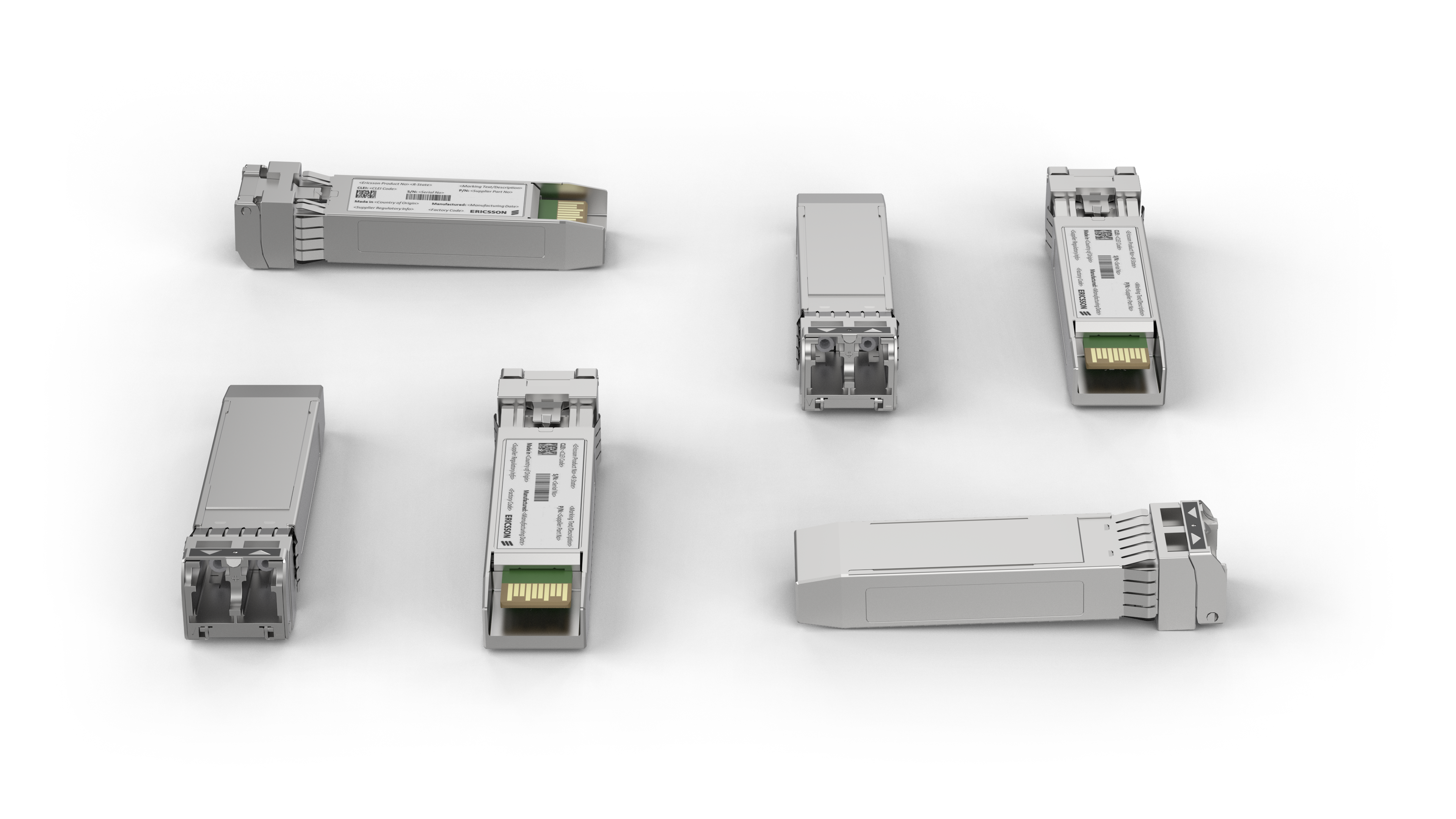
Dense Wavelength Division Multiplexing (DWDM) is a mature and well-established technology capable of improving fiber efficiency by multiplexing multiple wavelengths over a single fiber. It is based on colored optical modules, filters and optionally transponders that can be also used for grey to color conversion.
Utilizing DWDM in optical mobile transport systems reduces fiber cost and increases throughput. Up to 96 colored channels, also called lambdas, have been standardized by ITU-T specifications.
The figure illustrates the principle of a DWDM system in which each service results within two lambdas (one upstream and one downstream). This single fiber working (SFW) application allows a very efficient connectivity between the remote radio units (RRUs) and the baseband units (BBUs) as up to 24 services can be efficiently transported through 48 lambdas.
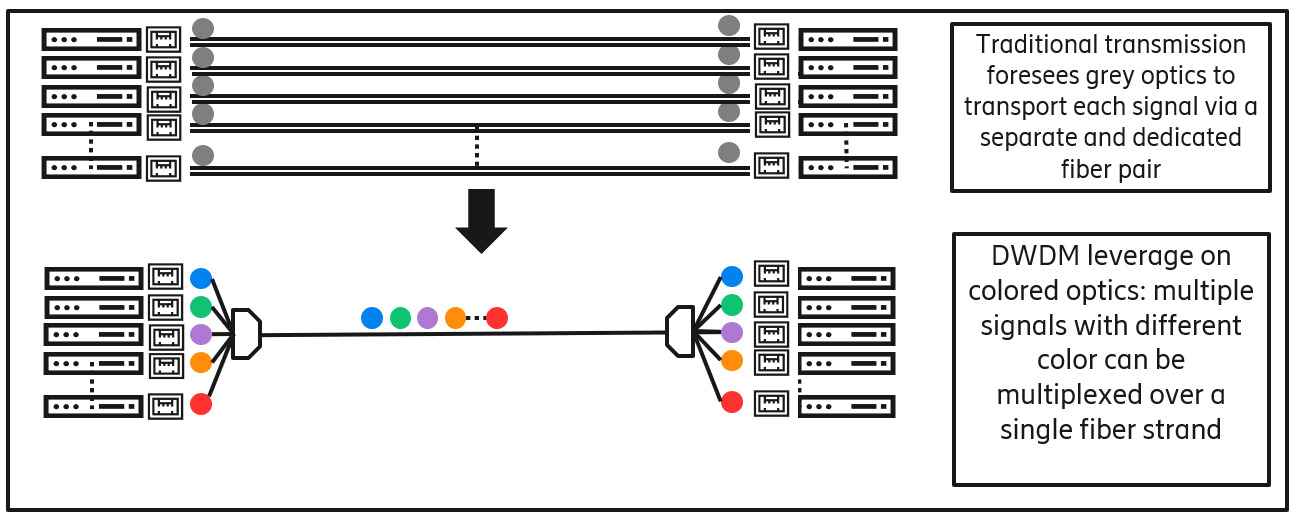
DWDM technology for optical transmission the principle
Key benefits

More capacity with less power
The passive optical fronthaul solution offers more capacity per fiber strand without any additional power consumption requirements.
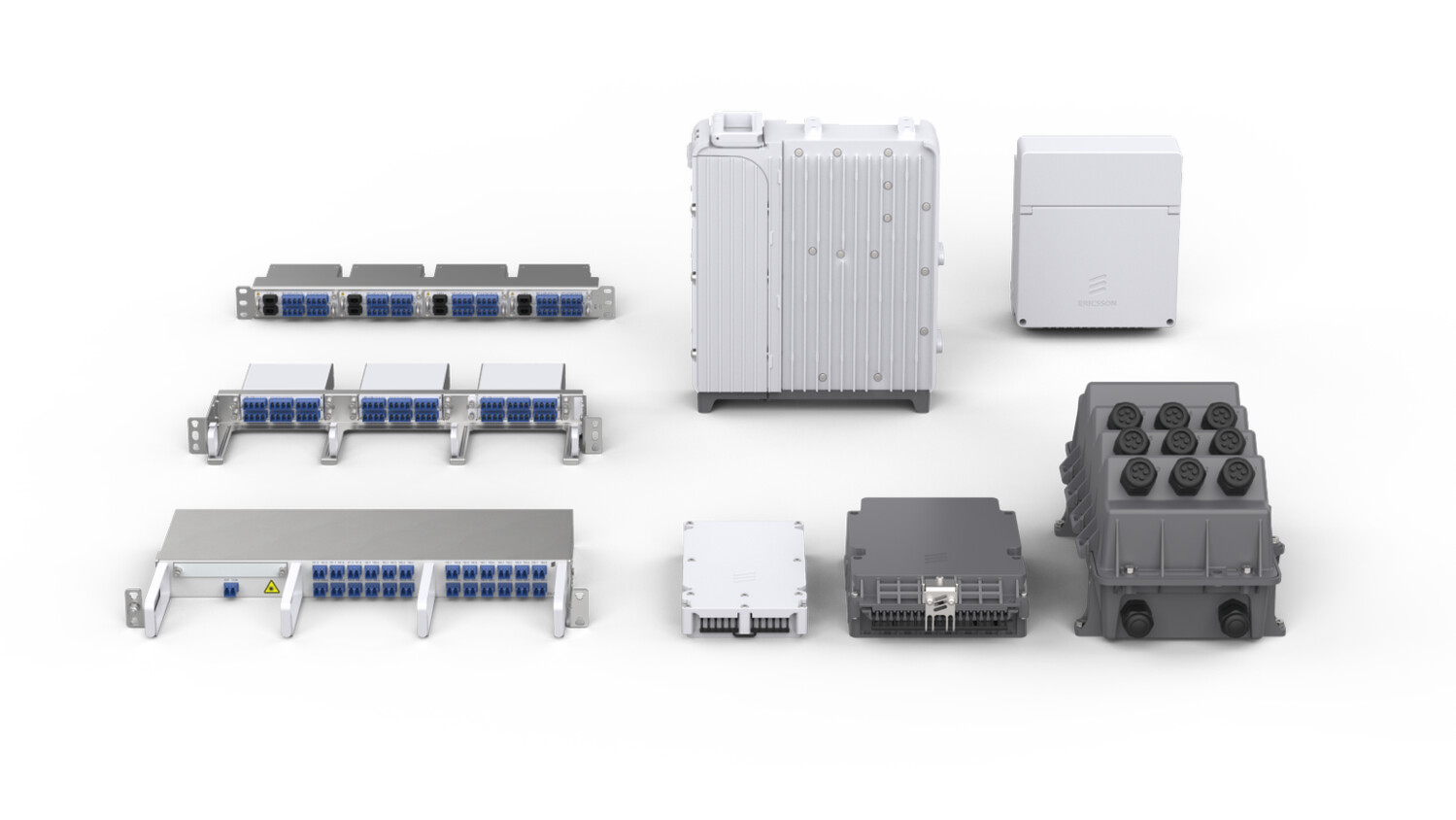
It is based on DWDM filters that can be installed either in: outdoor enclosures (next to Remote Radio Units) or indoor pizza-boxes (next to the Baseband). All Fronthaul 6000 filters are single fiber working (SFW) and provide transportation of up to 24 radio services over a single fiber strand. Each service is transported via two Wavelengths/Lambdas, one for uplink and one for downlink, up to a maximum of 48 wavelengths.
When all 24 services are based on 25 Gbps, this equates to a throughput of 600 Gbps per fiber strand.
Achieving such high capacity while in parallel having zero impact on power consumption contributes greatly to Ericsson’s commitment to deliver more energy efficient solutions.
Minimum footprint at any remote site
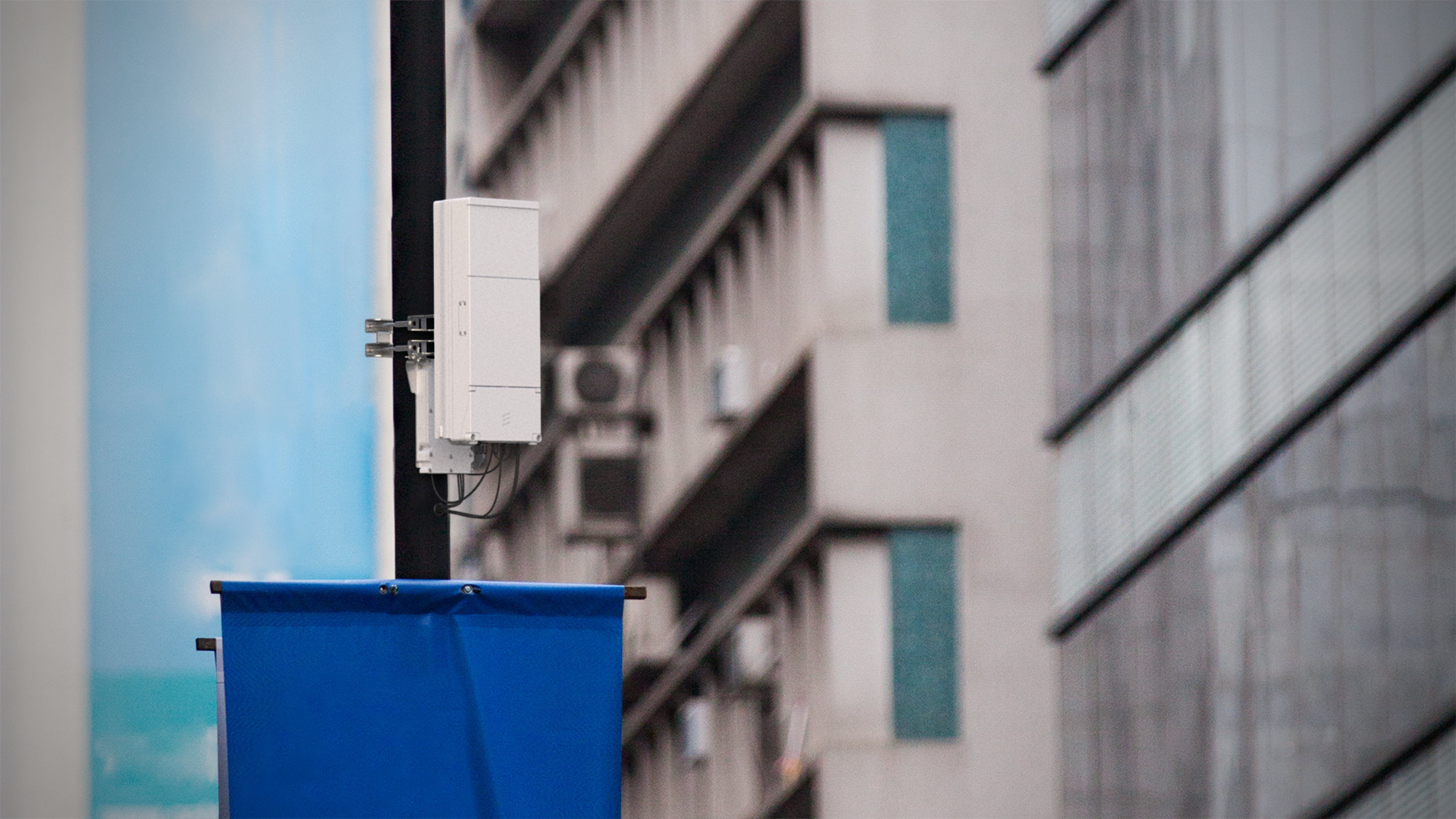
Fronthaul 6000 remote passive portfolio systems are available in a variety of dimensions and capacities: they can connect from 3 to 24 radio services to centralized baseband hotels. Their design has been optimized to ensure tight integration with Ericsson Radio solutions.
Outdoor variants include: enclosures that can be rail mounted together with RRU’s, compact units that can be equipped inside environment hardened housings or shrouds, & IP68 housings that can be installed in handholes.
Per service Fronthaul 6585 is the smallest remote passive unit on the market, able to collect up to 9 services and can be backpacked to Ericsson Street macro, this allows operators to densify areas with a fully integrated solution, where footprint is minimized and installation and commissioning time are dramatically reduced.
Our DWDM Products
Other related links
Papers and brochures
Public references
