










Advanced Traffic Steering in 5G: Why you can't live without it
- English
- 日本語
Strategic Product Manager, Business Area Networks
Senior Specialist, Development Area Networks

Sales Engagement Director, Business Area Networks
Senior Specialist, Development Area Networks
RAN Solution Manager, Business Area Networks
Strategic Product Manager, Business Area Networks
Senior Specialist, Development Area Networks
Sales Engagement Director, Business Area Networks
Senior Specialist, Development Area Networks
RAN Solution Manager, Business Area Networks
Strategic Product Manager, Business Area Networks
Senior Specialist, Development Area Networks
Sales Engagement Director, Business Area Networks
Senior Specialist, Development Area Networks
RAN Solution Manager, Business Area Networks

Press play on photo to watch the video
Do you want to listen to this videoepisode instead? Play the audio only.
Do you like ice cream?
Picture this: It is a hot summer day, and you are cooling off with a delicious ice cream on a busy town square, surrounded by others – businesspeople, students, families, all out enjoying the fine weather. In the background, the network is working tirelessly to find the best cells for everyone’s device to provide the best experience possible. In this blog you will learn how advanced traffic steering techniques in 5G can help service providers achieve up to 40 percent greater network capacity, so that you and all other users in that town square get the performance you all expect.
For most of us, the mobile device in our pocket is a modern wonder, but we seldom think about what it is actually doing at any given time – as long as it works when we pull it out and open it up to answer a call, put on a podcast or find out where we’re going, we’re not too bothered.
But switch it into flight mode where it loses all connectivity and suddenly, it’s not so wonderous – disconnected from the networks that surround us and its value plunges to zero.
Connectivity is vital, and throughout the day and into the night our devices seamlessly connect and disconnect to different cells and networks to ensure that they are working as we want them to, whether they are resting in our pocket or purse, or in use in our hand.
But we’re not the only ones looking to connect.
Managing the traffic
Imagine you’re driving in a big city as rush hour approaches – a stressful enough situation that many of us experience all too often. There is nothing more frustrating than seeing the lane beside you begin to move, so you turn on your indicator and edge out into that lane, only for it to immediately come to a standstill – just as the lane you left starts moving freely.
Now imagine that those controlling the traffic could see your dilemma and ensure that all lanes moved much more freely. By overseeing all the traffic, they can divert it or open new lanes to resolve the bottlenecks – and you’re probably breathing a sigh of relief just as you read this, while smiling.
We are never more conscious of connectivity than when we don’t have it, or when it is poor, and with more and more devices joining our networks every day, managing the ever-increasing traffic can quickly become a challenge for communications service providers (CSPs), just as it can be on our motorways.
Traffic steering helps CSPs to actively manage the various peaks and troughs, ensuring that no-one has to experience the frustration of sitting still and waiting for something to happen. In this blog we will explain what traffic steering in 5G is, why it matters, and how Ericsson’s innovative Multi-Layer Coordination software works, providing you and everyone else with the experience you all expect – no matter what the traffic conditions are.
5G traffic steering – in a New York minute
5G networks offer multiple frequency bands - low, mid and high-band - with different characteristics in terms of capacity and coverage, and they need to be able to deal with an ever-growing array of user equipment (UE) that connects to them. Though the lion’s share of the devices connecting to 5G networks are still personal ones such as cellphones, there is an increasing use of such networks for business and industrial applications.
These users and devices have different needs, and they are constantly changing - a user walking the dog early in the morning in New York’s Central Park needs a specific type of service to make a phone call; half an hour later as the rush hour begins, that same user might be using the map function in their smartphone to figure out the best way to get to their first meeting of the day, and when they have decided their route, they might want to watch a video in the back of a cab on the way there.
As the day wears on, the traffic in the Big Apple changes as quickly as people’s priorities, and towards evening the lines of cars are replaced by the lights from taxis and queues for Broadway shows and restaurants. The last dog-walk of the day ends up with an ice cream from a famous gelataria near Washington Square Park, and the next day it starts all over again.
Now consider how many people, businesses and services are active in Manhattan on any given day – add in the rapid changes in traffic as people move from one place and one task to another during business hours and on into the night, and you will quickly realize the size and complexity of the challenges facing the network to utilize its spectrum assets effectively.
Essentially, the network has to be prepared to deal quickly and seamlessly with the ebb and flow of that traffic, and to reallocate extra resources to those users and devices that demand it from those that are not using their full capacity at any particular moment.
Ericsson new radio (NR) Multi-Layer Coordination solution enables CSPs to make the best use of their entire range of spectrum assets to deliver the experience users expect. This is achieved by considering the network deployment, the cell configurations, the UE capabilities, and the cell load, when optimizing the network for the services used.
Put simply, 5G networks use traffic steering to make the most efficient use of all spectrum assets, and what does that do for you and me?
It gives us all the experience we expect.
Refreshing our memory - the basics of traffic steering
Before going into the deep technical view, let´s start with the basics. Traffic steering is nothing else than moving a device in the same geographical area between different frequency layers to achieve a specific goal. Typically, this goal is to maximize user throughput. However, it could be another goal as well like a particular service need, that is available in certain carriers.
On the other hand, mobility is when we try to keep the device connected, avoiding dropped calls and securing coverage. This is when you move between different geographical areas, when having a phone call while walking you dog. Traffic steering works on top and tries to optimize your dog-walk experience.
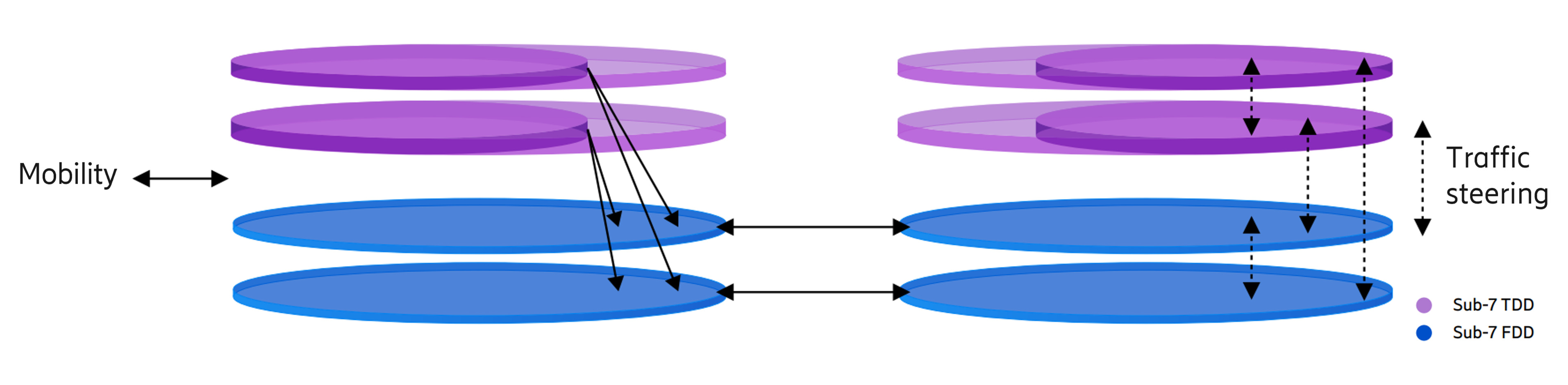
Figure 1: Refreshing the basics - Traffic steering vs. Mobility
Additionally, traffic steering is a vendor-specific solution, and it is not described in Third Generation Partnership Project (3GPP) how it should work, so vendors are invited to be creative and do some magic. Traffic steering is also used in 4G, but what is new in 5G? Is it more complex?
The clear answer is yes, so let’s explore the key drivers of complexity in a 5G network.
Drivers of complexity in 5G traffic steering
The diversity of cells with different capacities, coverage, and configurations, coupled with the diverse range of devices with different capabilities and services, poses a few complexities for 5G networks when it comes to optimizing both network performance and spectrum utilization.
The first of these is diversity in frequency bands - 5G is designed to work in different frequency ranges, and as the number of frequencies increases, so too does the importance of placing UEs in the best cells. This means that CSPs must consider multiple cells, or sets of cells, when selecting the most appropriate cells for each UE.
The second matter to be addressed is that not all UEs and services are created equal – some require huge capacity and throughput to function as desired and expected, while others are more dependent on things like low latency and low energy consumption, meaning that different levels of feature support are required.
Today, most devices are smartphones surfing the web and making phone calls, but in 5G we have also seen Fixed Wireless Access (FWA) take off - already for these two types of devices (and within each) we have different capabilities, and services - and we expect more variations such as augmented and virtual reality. For each device, we need to match what the device can do, and what the services need, to what the network can offer. Here additional aspects, such as slicing also come into play.
The next aspect to consider is that of carrier aggregation (CA), which makes it possible to configure a primary cell (PCell) - that carries traffic and signaling for UEs, and then add one or more secondary cells (SCell(s)), which are used to increase capacity or coverage to increase their downlink (DL) or uplink (UL) throughput.
The total UE throughput with CA is realized by the combination of the PCell and the SCell(s), instead of individual cells - but the number of combinations of PCell and SCell(s) to be aggregated could be huge. This means there could be a large amount of variation for different UEs depending on their capabilities and requirements, and it makes finding the best UE configuration for each network deployment much more complex.
The final factor we have to consider is load distribution. If all devices got the same set of PCell and SCell(s), then those cells would quickly become fully loaded. So, when networks start adding more cells than the devices can aggregate, traffic steering needs to consider the load on each individual cell and distribute the devices among the available cells. Traffic steering increases the utilization of each cell while improving the throughput for each device.
In short, there is no ”one-size-fits-all” solution – what is required is traffic steering that is flexible, agile, and responsive to needs that can change very quickly.
How Ericsson’s Traffic Steering works
So, what happens when we look under the hood? What does traffic steering look like in practice, and what goes into making it happen?
Given the complexity in 5G networks as described above, Ericsson has developed NR Multi-Layer Coordination for 5G Standalone (SA), a solution that includes an advanced Traffic Steering function that delivers spectrum optimization benefits for today’s 5G networks. It will also evolve, adapting to different service requirements and performance expectations in the future, and is built upon an advanced selection algorithm that considers input parameters and optimization objectives to deliver the best possible UE configuration. This process can be divided into three steps:
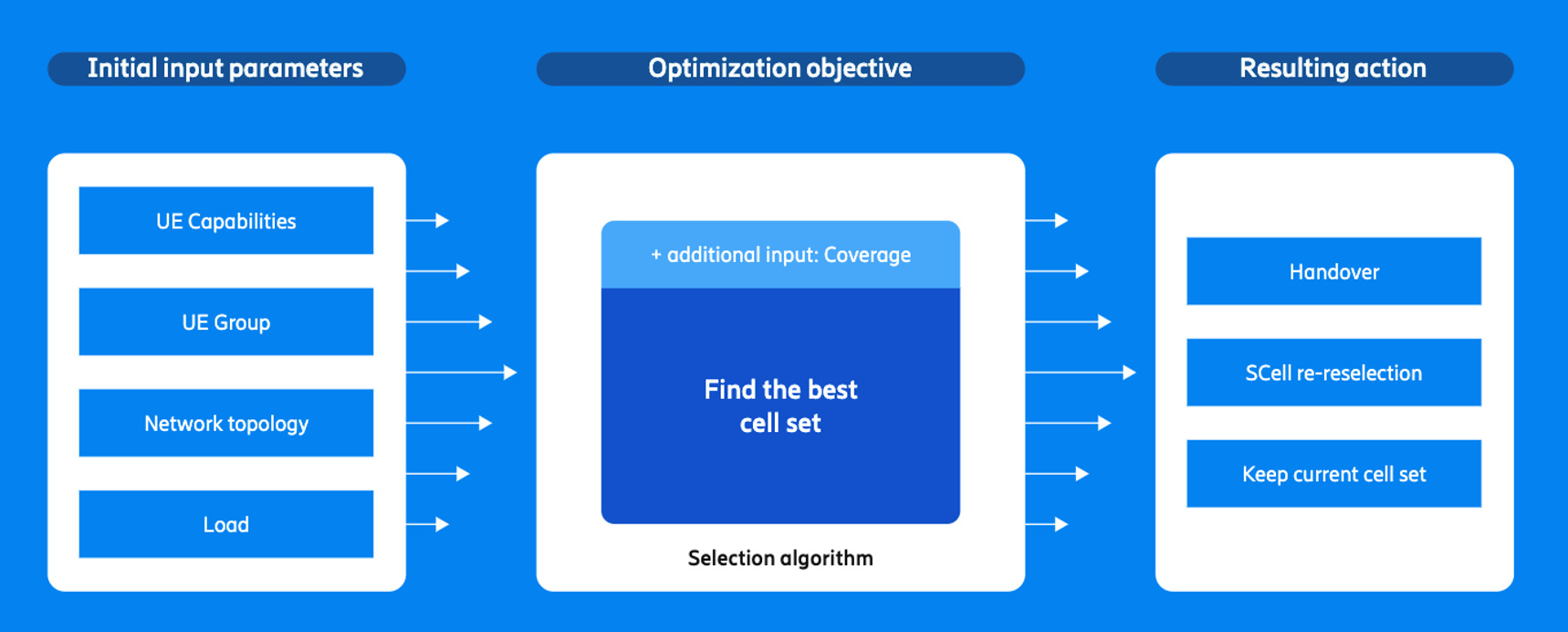
Figure 2: Traffic Steering for 5G Standalone powered by Multi-Layer Coordination framework – how it works
Initial input parameters: There are four initial input parameters in the process – the UE capabilities, the group the UE belongs to, the network topology, and the load. A fifth element that can be taken into consideration where possible is coverage information, which can be used to reduce the possible cell sets, excluding cells that are not in coverage.
When it comes to the UE groups, the Ericsson framework helps CSPs to define different ones and apply different traffic steering behaviors and observe the results of each group, such as specifying which frequencies a FWA (to maximize capacity) or a Voice over NR (to optimize coverage and reduce the risk of dropped calls) a user is allowed to use.
With those parameters in mind, the first iteration of the Ericsson solution will optimize for maximum DL throughput for any new device that enters a specific cell location. In the future it is envisioned that the framework will make it possible to adjust the optimization goal – for instance, for different service requirements such as maximum UL throughput, latency-sensitivity, slices or to energy efficiency without sacrificing end-user experience.
The optimization objective: The selection algorithm selects a cell set (PCell and one or more SCell(s)) that maximizes the optimization objective – a task that needs to be performed very quickly, as the base station must be able to handle a large number of users selecting cells, often concurrently.
With many frequencies and cells to choose from, the number of possible combinations that needs to be evaluated quickly increases. Our algorithm considers this complexity from the start, striking a balance between speed and precision to offer the best outcome.
In addition, our solution considers the whole cell set – PCell and SCell(s). Without considering the whole cell set, the UE might be steered to what seems to be a good PCell, but one that offers few SCell possibilities and poor total throughput for the device.
Resulting action: Once a best cell set has been provided, it is evaluated, and only if the best cell set is significantly better than the current cell set is it configured. This avoids unnecessary interruptions due to reconfiguration and can result in either a handover (HO) from a PCell to another, or a reselection of SCell(s).
Additionally, once the UE has been steered to a new cell set, we also keep it in place for the next session, with the use of cell reselection priorities when UE goes to idle or inactive mode.
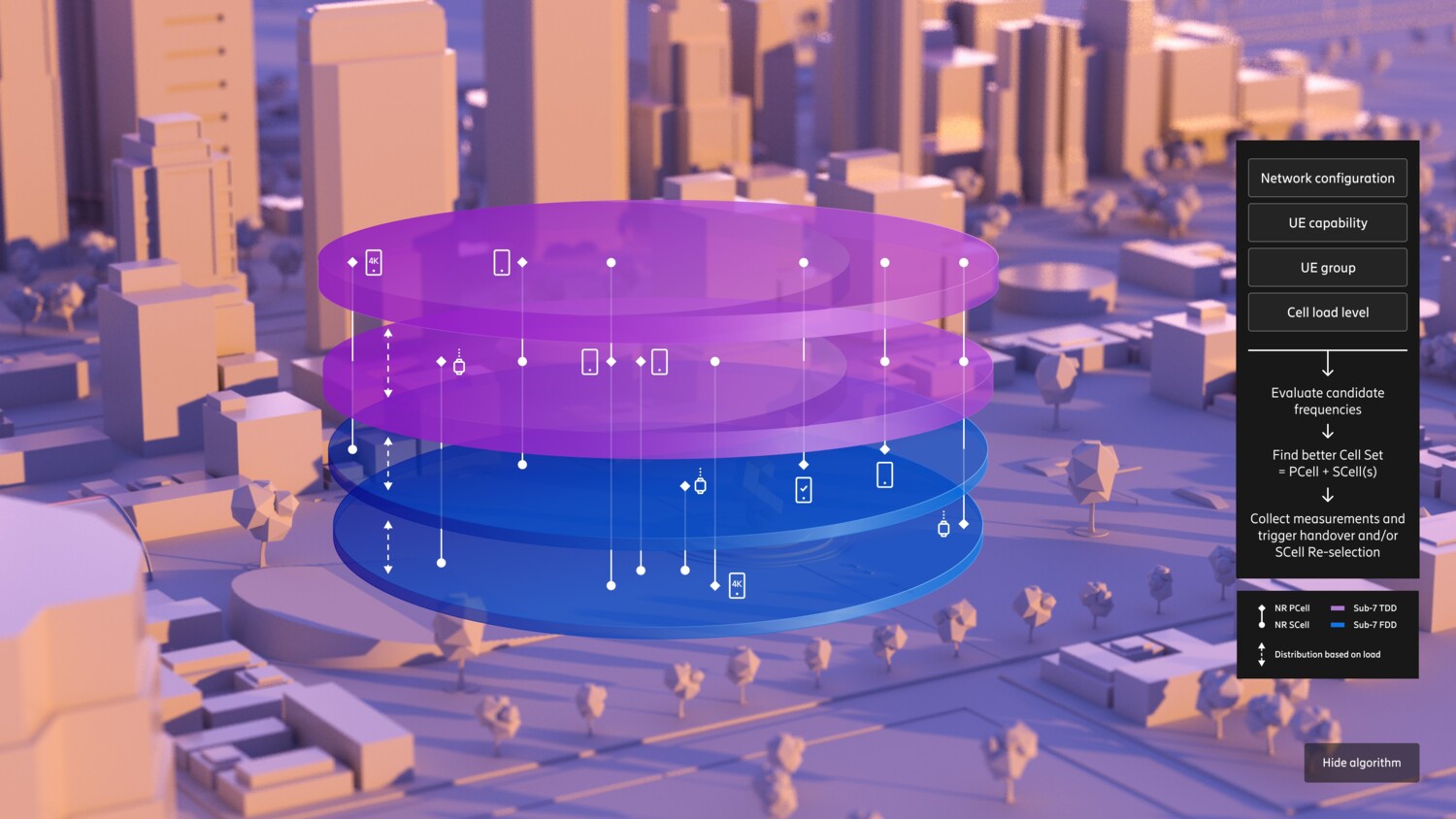
Figure 3: Play it in to see the Advanced Multi-Layer Coordination algorithm | 14 seconds
Advanced Multi-Layer Coordination in practice
Let´s see how Advanced Multi-Layer Coordination works to equally distribute the UE load in a particular and “simple” scenario, under the following assumptions:
- Four cell carrier (cc) network configuration, with 1cc, time division duplex (TDD) with 100 MHz, and 3cc, frequency division duplex (FDD) with 15 MHz, 20 MHz, and 10 MHz respectively, with different coverage areas.
- All the UEs are 3cc carrier aggregation capable, with support of Pcell in TDD.
- All UEs are static, no mobility has been considered, for simplicity.
As UEs are coming into the network, in different coverage areas, the animation below shows how Advanced Multi-Layer Coordination optimizes the spectrum utilization, so that all the cell carriers are equally loaded and making sure that no cell runs empty while others are overloaded.
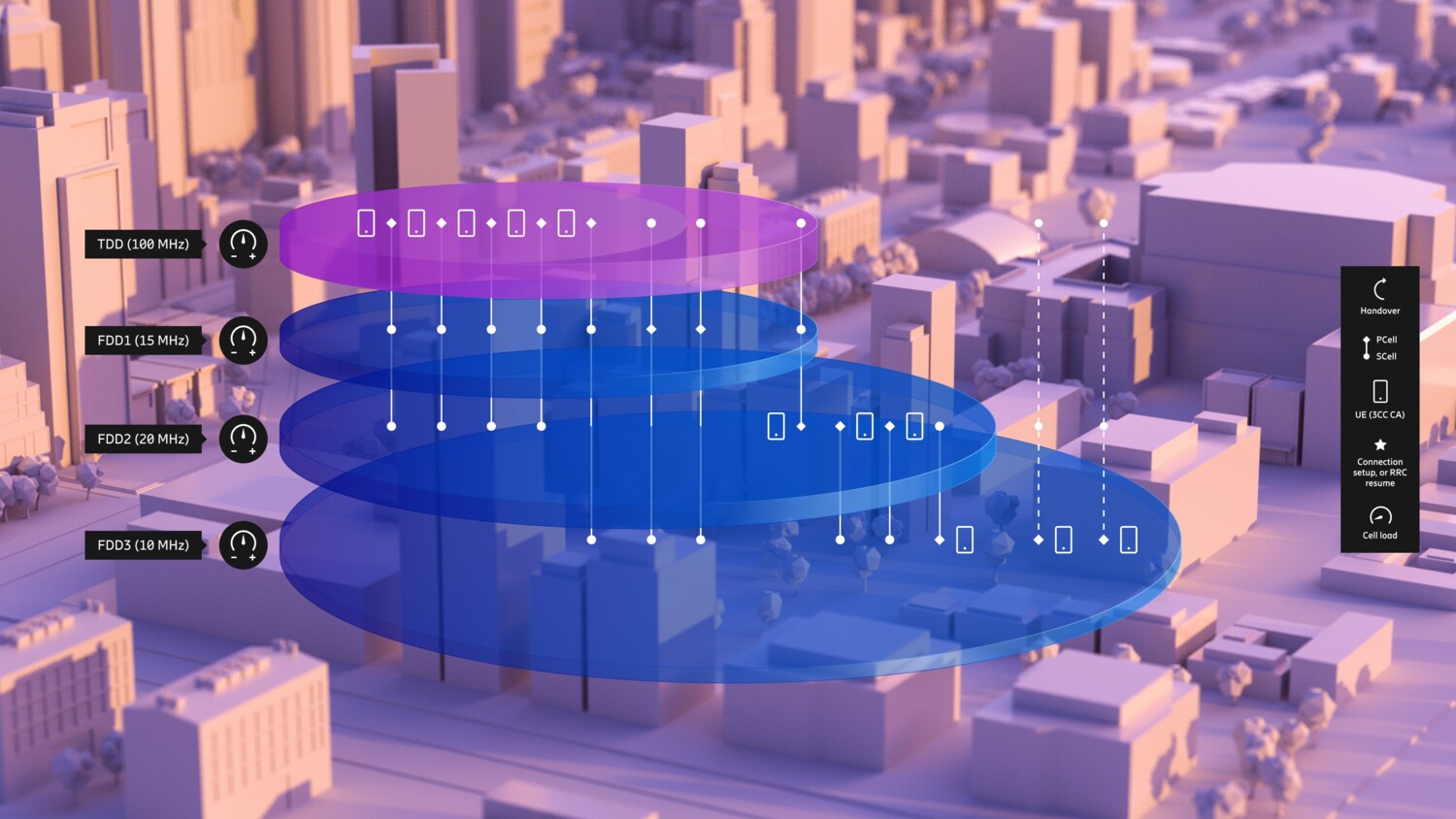
Figure 4. Play it in to see Advanced Multi-Layer Coordination in practice | 30 seconds
The five major benefits for CSPs
Traffic steering gives users the experience they desire and expect quickly and seamlessly. Everyone knows the value of a satisfied customer, but what advantages does it offer for CSPs?
The most obvious benefit is the potential gain in median user throughput. Ericsson NR Advanced Multi-Layer Coordination offers the largest gain when the network is highly loaded, with a capacity increase of between 10 and 40 percent, as shown in the figure below.
This capacity increase is based on a simulation of solid data from our labs, and we can say with confidence that, from a capacity point of view, the difference for the 5 percent of devices that performed the poorest is an improvement of between 10 and 40 percent, depending on the load, UE capabilities and network configuration.
One important aspect to note is that the gain will vary depending on the network configuration, the UE capabilities -e.g., how many cell carriers (cc) are supported for carrier aggregation-, and the traffic demand. If you have a high load, you will have better performance for the lowest 5 percent, and you can increase capacity and have a better throughput for those devices, giving the users a better experience. When you have low load, it is better to distribute on UE capability instead of cell load.
In simpler terms, Advanced Multi-Layer Coordination helps to increase the network capacity, so more users can be served with a maintained user performance, or switching the coin, it can offer a better user performance at a given capacity load, with a larger impact when the network is heavily loaded.
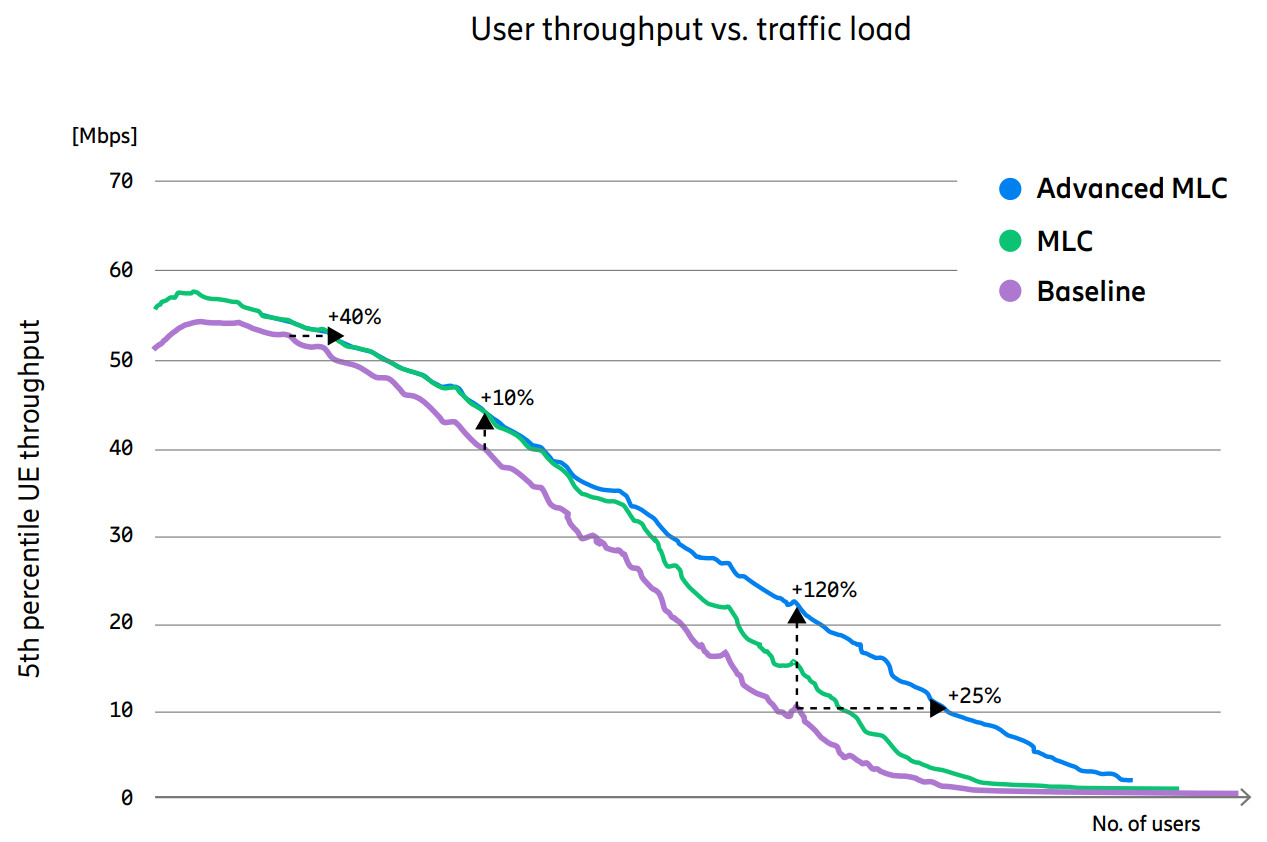
Figure 5: Increased UE throughput and network capacity with Advanced Multi-Layer Coordination
- Simulations show up to 40 percent capacity increase* with traffic aware Advanced Multi-Layer Coordination (MLC)** and up to 120% higher user throughput at high traffic load
- This simulation is based on 4cc, FDD and TDD, 15-60 MHz bandwidth, a mix of 1-2cc UE Carrier Aggregation capability and typical MBB traffic model
* Expressed as how many more users can be served with maintained 5th percentile (=5% worst) user throughput
** Advanced MLC takes cell load into consideration
Aside from that, we see five major benefits that cover both current and future needs in their 5G networks.
- Maximized return on spectrum investment – CSPs can make the most out of their spectrum resources, optimizing spectrum utilization at a high load, distributing spectrum usage over all cells, and making sure that no cell runs empty while others are overloaded.
- Increased UE peak DL throughput - By steering the UEs to where they can aggregate the most, CSPs can increase achievable throughput.
- Greater average revenue per user (ARPU) through 5G service differentiation, in combination with network slicing - Delivering UEs the best possible performance will further support CSPs in offering both premium pricing for 5G and customized user experiences such as speed-based tariff plans for fixed wireless access and cloud gaming.
- Support for energy saving – To achieve sustainability goals and protect against high energy prices, CSPs currently face the challenge of radically limiting energy consumption in their networks. Additionally, Multi-Layer Coordination adapts to the available spectrum and distributes UEs across those carriers that are not sleeping.
- Future-proof 5G SA networks – In the future, CSPs will have a network that is ready to support optimization for uplink throughput, latency, services, slices, and more advanced energy efficiency.
The bright future of traffic steering – flexible, powerful, future-proof
Ericsson’s generic and flexible Multi-Layer Coordination framework is a real star and a fundamental step in the beginning of the traffic steering journey in 5G Standalone multi-layer networks. The framework works with a multitude of UE capabilities, carriers, different service requirements, and multiple objectives powered by UE grouping. It also utilizes a powerful algorithm that draws on a vast amount of inputs to converge into one optimum cell set for best UE performance. The Ericsson solution considers the whole cell set and improves the performance and spectrum utilization by considering the cell load for the configuration of both PCell and SCell(s).
By tying all traffic steering features into the UE grouping feature with differentiated behavior for different users and services (e.g., FWA, Time-Critical Communications, Voice over NR), it allows the spectrum resources to be used optimally, delivering the exact experience that the user expects, no matter what the situation.
Thanks to the support for multiple frequency layers, the generic framework allows us to evaluate each UE capability and steer it to any cell in the network, regardless of how many frequencies there are.
Meeting tomorrow’s challenges today
As illustrated by the many and varied needs of our friend in Manhattan or even you in your favorite city square as you navigate your daily life with your smartphone, service providers are faced with the increasing challenge of maximizing the value of spectrum investment while providing superior and consistent user experiences. The complexity of more frequencies in 5G, diverse devices with different capabilities, and service requirements only add to that challenge, and this requires a capable traffic steering solution.
Ericsson’s Advanced Multi-Layer Coordination optimizes for maximum throughput, and we are constantly in conversation with CSPs to understand their needs and expectations. From these conversations we develop solutions that will lead to new service requirements and performance expectations.
With Ericsson Advanced Multi-Layer Coordination, service providers can make the most out of their spectrum investments while achieving 5G service differentiation, supporting energy savings and keeping your 5G Standalone networks future-proof.
So, the next time you are having your favorite ice cream in a sunny square on a summer day, think about all the work behind the scenes that Advanced Multi-Layer Coordination is doing to ensure you, your friend next to you and all the users around you get the best possible performance in your devices and applications.
Read more:
Explore the paper: Advanced Traffic Steering in 5G Standalone
Read the blog: The power of 5G Carrier Aggregation
In the end, it is all about people
As always, everything started with an idea – to make our star “Advanced Multi-Layer Coordination” shine.

An initial blank sheet of paper turned into a beautiful technical paper. After that, we went on tour to Mobile World Congress Barcelona. As we were continuously having a lot of fun, why not to show it in a Tech Unveiled blog and video. … and more and more to come 😉 Stay tuned!
Personal note by Raquel Herranz