










Power differentiated connectivity with uncompromised SLA integrity
- English
- 日本語
The 5G ecosystem is finally coming together - the network technology is ready and devices are on board, supporting required features. Strong partnerships are in place. Now the big question is - how do we turn all this into a real, sustainable business?

Senior OSS/BSS technical sales leader
Technical Product Manager and Chief Architect of Network Orchestration and Automation

Senior OSS/BSS technical sales leader
Technical Product Manager and Chief Architect of Network Orchestration and Automation
Senior OSS/BSS technical sales leader
Technical Product Manager and Chief Architect of Network Orchestration and Automation
Today, 5G is mostly used as a faster mobile broadband, and its powerful features like slicing, ultra-low latency, or guaranteed speeds aren’t being used to their full potential. In other words, we are only scratching the surface as of now, and we believe it’s time to move beyond merely selling basic mobile connectivity to developing new offerings based on 5G’s new capabilities.
To give just one example, developers tell us that the current mobile experience is too unpredictable to build new apps on, and if we think about mobile gaming - multiplayer games are already being played by more people simultaneously on phones. For example, recently Singtel and Tencent announced the launch of the Honor of Kings game using Singtel’s 5G network slicing technology, and this is only the beginning. A predictable experience is crucial for a smooth, responsive, and enjoyable game experience. Offering premium connectivity tiers for gaming is just one of many business opportunities available to service providers.
Other business opportunities for service providers are also expanding. Broadcasters are shifting from satellites to 5G while AI-powered apps, smart glasses, and intelligent assistants continue to emerge and evolve daily. All new emerging services are relying on fast, stable uplink performance.
Predictable performance is key to capturing new business opportunities
To support this, you need to offer predictable network performance, almost like a wired connection, and make it easy for developers to tap into it. That requires smarter operations, better visibility, and support of SLA observability. The future of 5G is about giving people and businesses not just connectivity, but the kind of performance they can build on. It’s a platform for innovation.
Service Level Agreements (SLAs) are critical contracts between service providers and their customers. From a business perspective, SLAs serve as a promise of quality and performance, establishing trust and accountability. Operationally, they define the parameters within which services are delivered, specifying metrics such as uptime, response time, and throughput. In standardization efforts such as those from the TM Forum (TMF), SLAs are accompanied by Service Level Specifications (SLS) and Service Level Objectives (SLOs), which provide detailed criteria and targets for service performance. Together with Key Performance Indicators (KPIs), these elements form a cohesive framework that guides service delivery, ensuring that both the provider and customer are aligned in their expectations and assessments of service quality.
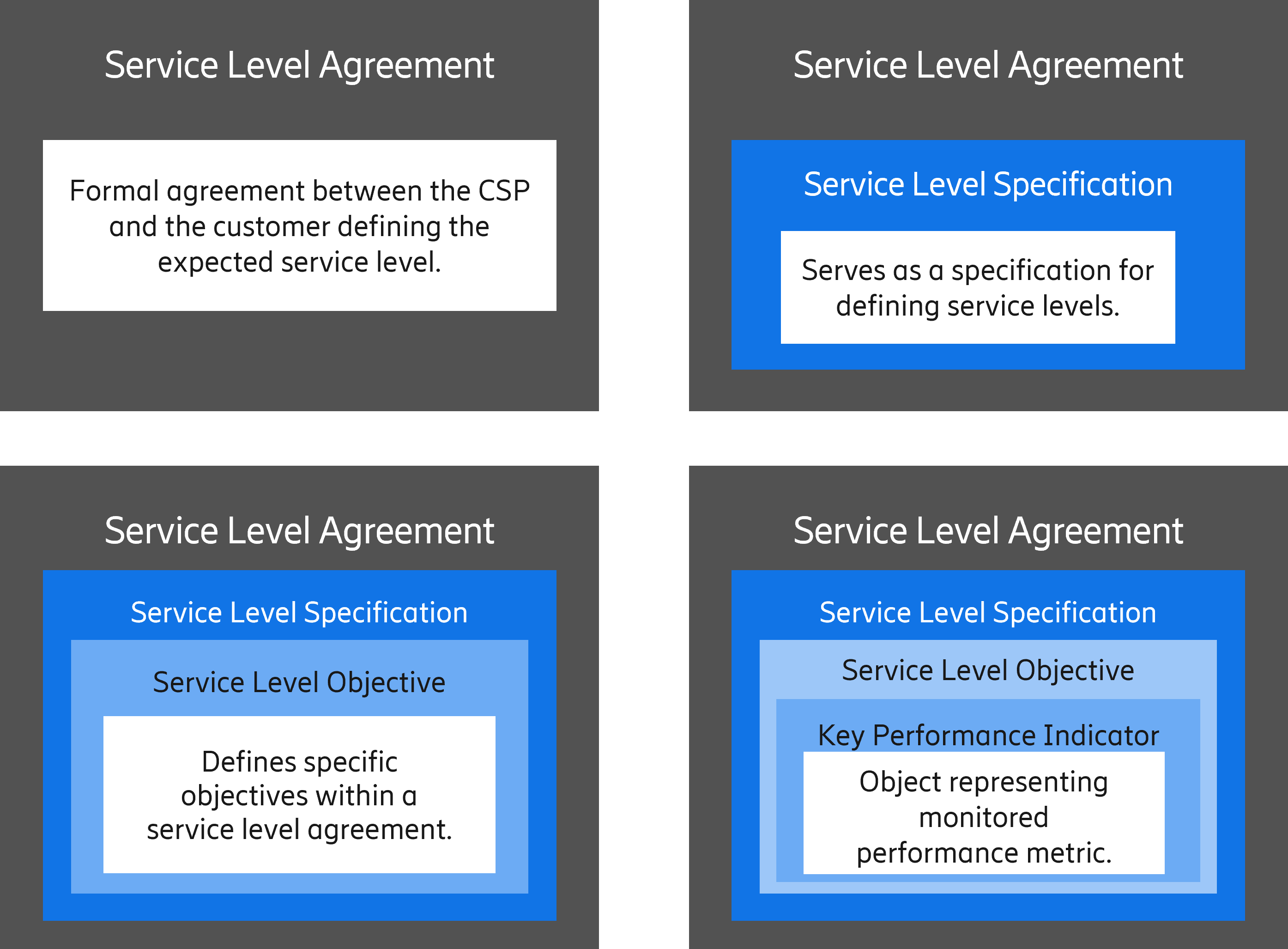
Figure 1. SLAs consist of KPIs, service level objectives, and specifications
With 5G, you can clearly specify the type of service (e.g., network connectivity, cloud hosting, 5G slicing) and define the performance metrics such as uptime, response time, and resolution time. These characteristics are guaranteed to the customer in an SLA.
Launching SLA-backed services creates new revenue opportunities. However, several challenges persist around introducing SLA-backed services, such as:
- Clear definition of measurable metrics like KPIs. It can be difficult to identify KPIs that accurately reflect service quality and customer value.
- SLAs may become outdated as business priorities and technologies evolve. Revising SLAs is often complex and time-consuming, especially if they are hard coded into legacy systems.
- Real-time visibility is impossible without real-time observability. Service providers may risk missing SLA breaches or being slow to react, which can lead to financial or reputational penalties.
Proactive monitoring and observability help CSPs deliver on promises
A key component of maintaining Service Level Agreement (SLA) integrity is proactive monitoring and observability, features central to modern service assurance systems. As differentiated connectivity services operate over network slices, it’s important to continuously monitor slice instance KPIs to ensure alignment with the stipulated SLAs. This real-time oversight enables service providers to detect and address potential issues before they impact service quality, thereby safeguarding the reliability promised to customers.
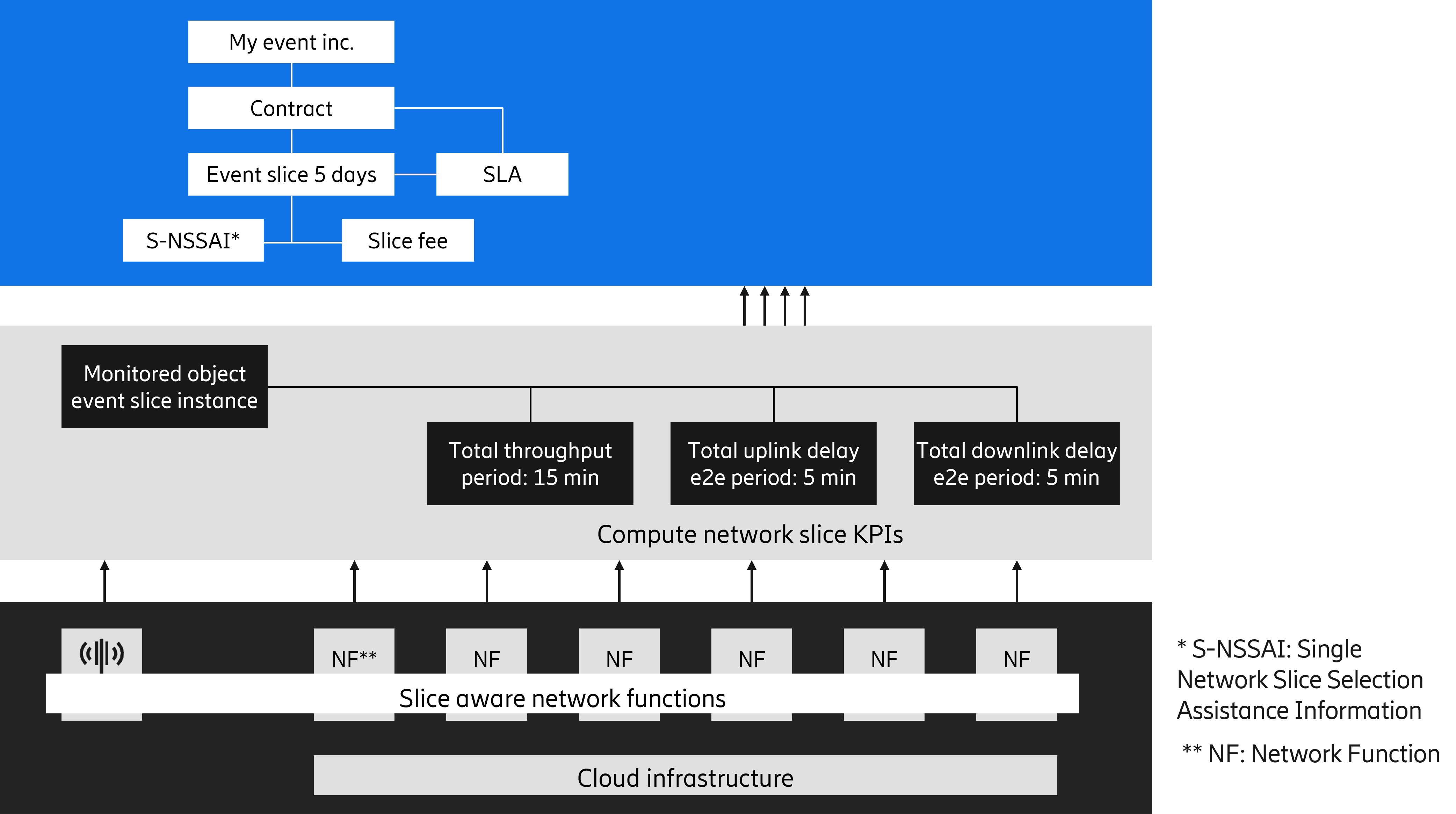
Figure 2. Assurance enables 5G monetization from network to commercial agreements
Service assurance ensures that digital and network services consistently meet their defined SLAs. It begins with service design, where specific KPIs, thresholds, and intents are modeled and embedded into templates for automated monitoring and control.
As services are deployed, the orchestration and assurance system automatically provisions observability rules, collecting real-time metrics from RAN, Core, Transport, and other domains. Performance data is continuously checked against defined SLOs (Service Level Objectives), and if thresholds are breached, policy-driven workflows trigger alerts or initiate automated remediation.
Closed loop automation allows the network to self-heal and adapt to changing demand or service degradation without human intervention. It is achieved through topology-awareness, which means the assurance layer understands resource-to-service relationships, improving the accuracy and speed of root-cause analysis. Discovery and reconciliation routines keep inventory and topology models synchronized with live network changes, ensuring the assurance logic always acts on up-to-date information. Advanced analytics aggregate nodal counters into service-level KPIs, visualized in customizable dashboards for both real-time and historic troubleshooting.
This approach to service assurance ensures that the network is ready for intent-driven (declarative) autonomous operations, supporting scalable and automated service SLA management.
Read more:
Orchestration and assurance
Ericsson OSS/BSS - Sell. Deliver. Get paid