










Beam-specific power backoff feature enhances satellite coexistence
- A new beam-specific power backoff feature in 3GPP Rel-19 limits the amount of power radiated skyward to prevent interference with satellite uplink receivers at frequencies in the upper 6 GHz range.
- The feature helps network operators meet regulatory requirements when deploying large arrays of antennas in cm-wave bands in places where mobile networks coexist with fixed satellite services.

Researcher, Standardization

Master Researcher, Antenna Systems

Senior Researcher, Radio
Researcher, Standardization
Master Researcher, Antenna Systems
Senior Researcher, Radio
Researcher, Standardization
Master Researcher, Antenna Systems
Senior Researcher, Radio
3GPP Rel-19 includes a new beam-specific power backoff feature that enables the network to signal different power backoff values for different beams, allowing finer control in situations where beams could potentially cause interference above the horizon. This enhancement resolves the pre-Rel-19 limitation where beam-specific power reductions could not be applied without performance degradation if the signaling for these parameters was absent.
The mobile industry’s access to the upper 6 GHz range between 6425 and 7125 MHz requires proactive measures to prevent interference with satellite systems, as a recent Ericsson blog post on satellite coexistence in 6 GHz explained. In short, if the aggregated power coming from a large number of base stations were to exceed certain limits, it could degrade the sensitivity of a satellite’s uplink receiver and the satellite could experience loss of service. Action is needed because even the most advanced antennas today generate side lobes that transmit some RF power toward the sky, as shown in Figure 1.
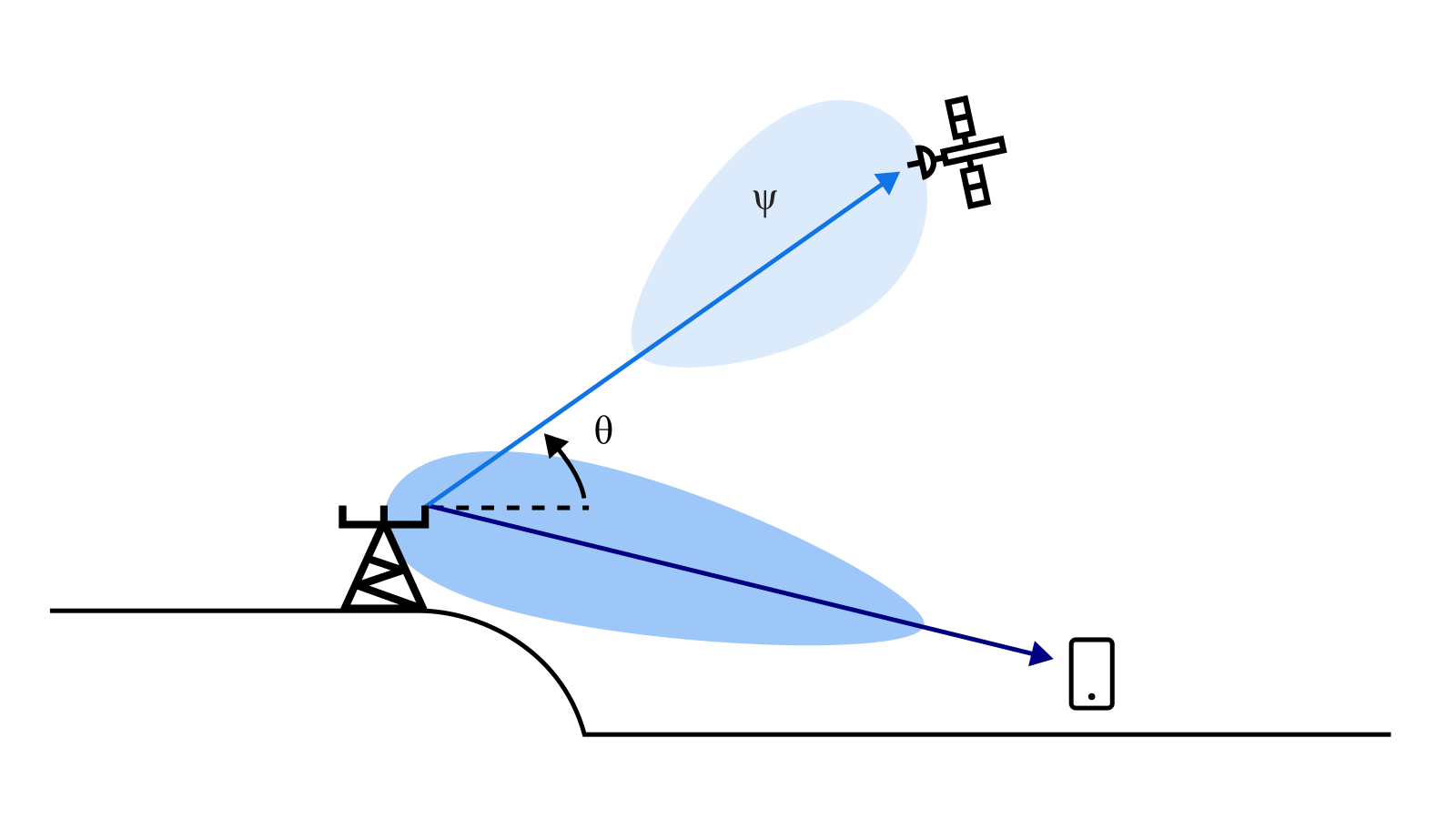
Figure 1: Example illustration of potential interference towards satellite systems.
In this blog post, it is assumed that the base station transmits CSI-RS per antenna port and that the CSI-RSs transmitted are non-precoded.
Three (suboptimal) approaches to compliance using power backoff and beam restriction
The International Telecommunication Union’s World Radio Conference 2023 (WRC-23) introduced limits on the amount of power (more precisely, the product of transmit power and antenna gain) that base stations are allowed to radiate above the horizon. This requirement poses particular challenges for base stations equipped with large antenna arrays. Without mitigation measures, there are two common situations in which the limit may be exceeded:
- When the main beam, during beamforming, is pointing above or close to the horizon.
- When beamforming occurs below the horizon, but grating lobes (unwanted strong secondary beams) extend above it.
Power backoff and beam restriction are two methods that can be used at the base station to fulfill the WRC-23 requirement. They can be applied either through network implementation or by using NR specifications supported up to Rel-18. Figure 2 presents three examples of channel state information (CSI) feedback based on power backoff and beam restriction that can be achieved with pre-Rel-19 NR specifications. The UE performs channel estimation on the antenna ports and applies different beams from a codebook before selecting the best beam from the codebook and reporting it back to the base station as part of CSI feedback. It should be noted that since CSI-RS is transmitted per antenna port, it is not possible in these examples to apply the beam-specific power back-off during the CSI-RS transmission. However, by implementation, the base station can apply a power backoff when it performs a data transmission.
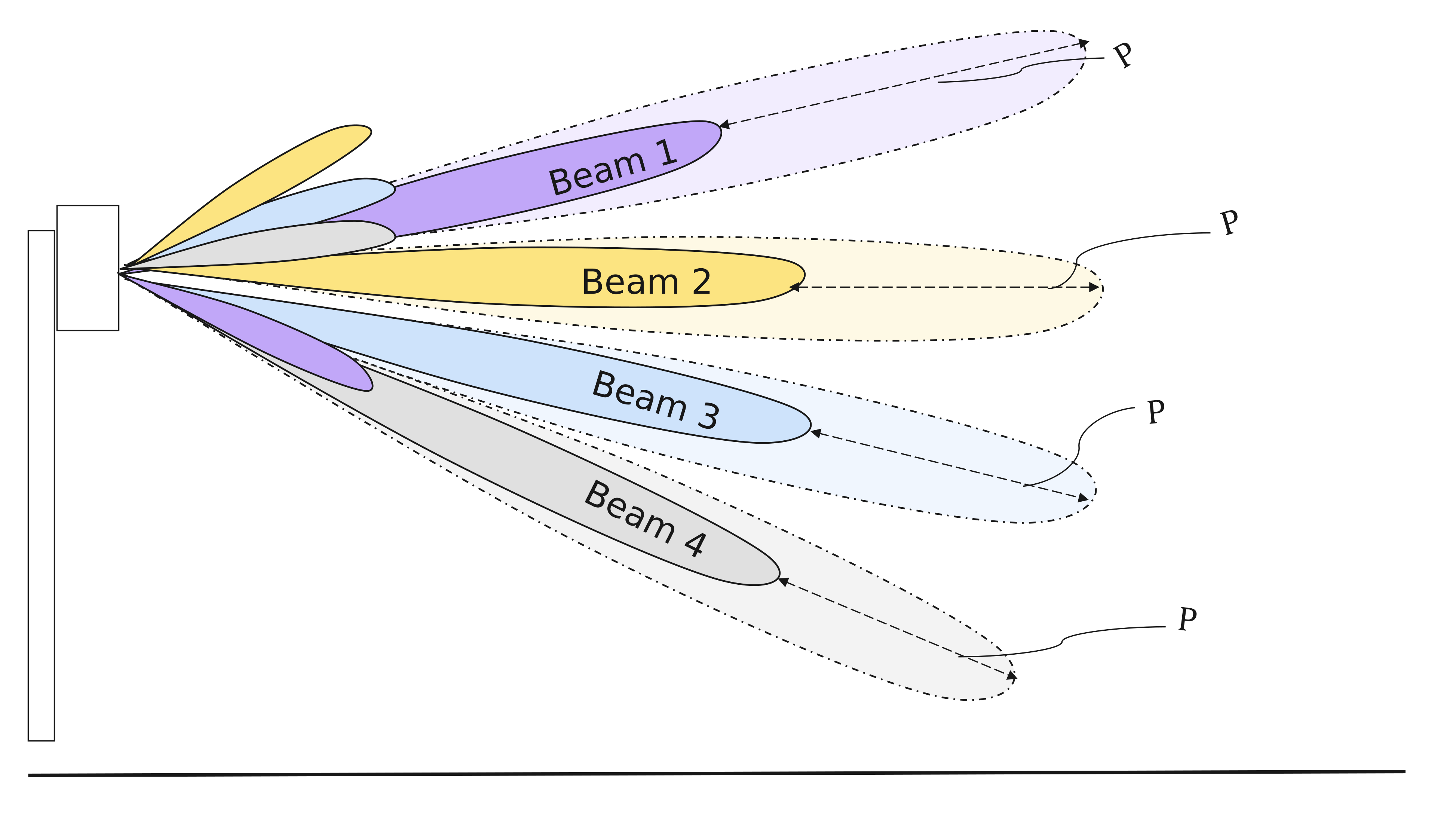
Figure 2(a) illustrates an example of a common power backoff factor P applied to all beams at the base station.
In the approach shown in Figure 2(a), the base station can signal the common power backoff factor P to the user equipment (UE) using NR specifications up to Rel-18, which means that the UE is aware of the common power backoff. This solution generally delivers poor performance as the signal to interference plus noise ratio (SINR) might become too low for beams whose main lobe or side lobes do not cause much interference above the horizon.
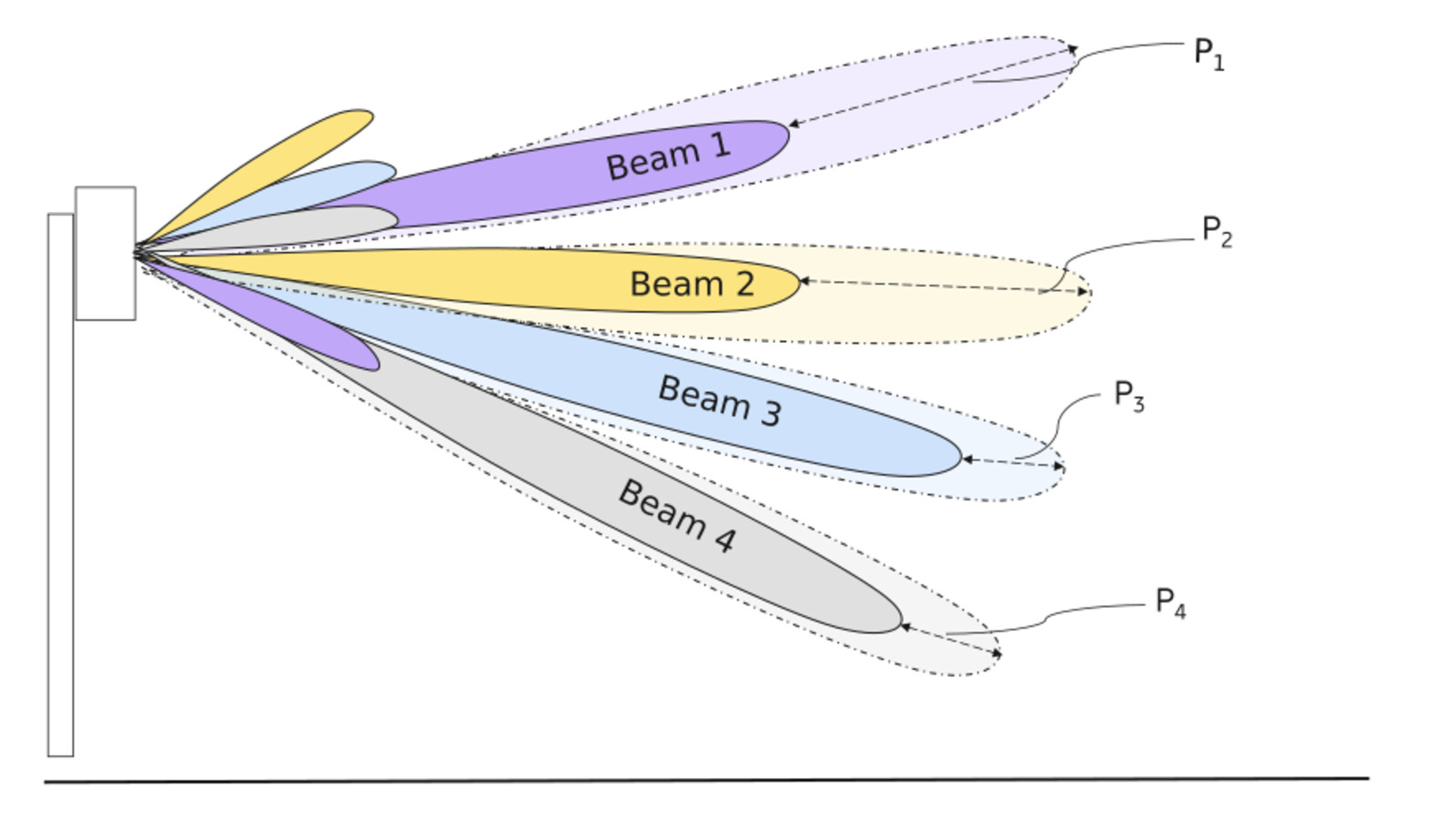
Figure 2(b) illustrates an example of beam-specific power backoff factor applied to the beam at the base station.
In the approach shown in Figure 2(b) (when the UE is configured to report CSI/precoder/beams based on non-beamformed reference signals/CSI-RS), the UE is not aware of the beam-specific power backoff factor as NR specifications up to Rel-18 do not allow signaling of such beam-specific backoff factors to the UE. By implementation, the base station can apply a beam-specific power backoff when it performs data transmission. However, this solution yields suboptimal performance as the UE is not aware of beam-specific backoff factors when it performs CSI estimation and the UE may select suboptimal beam(s) as part of CSI feedback.
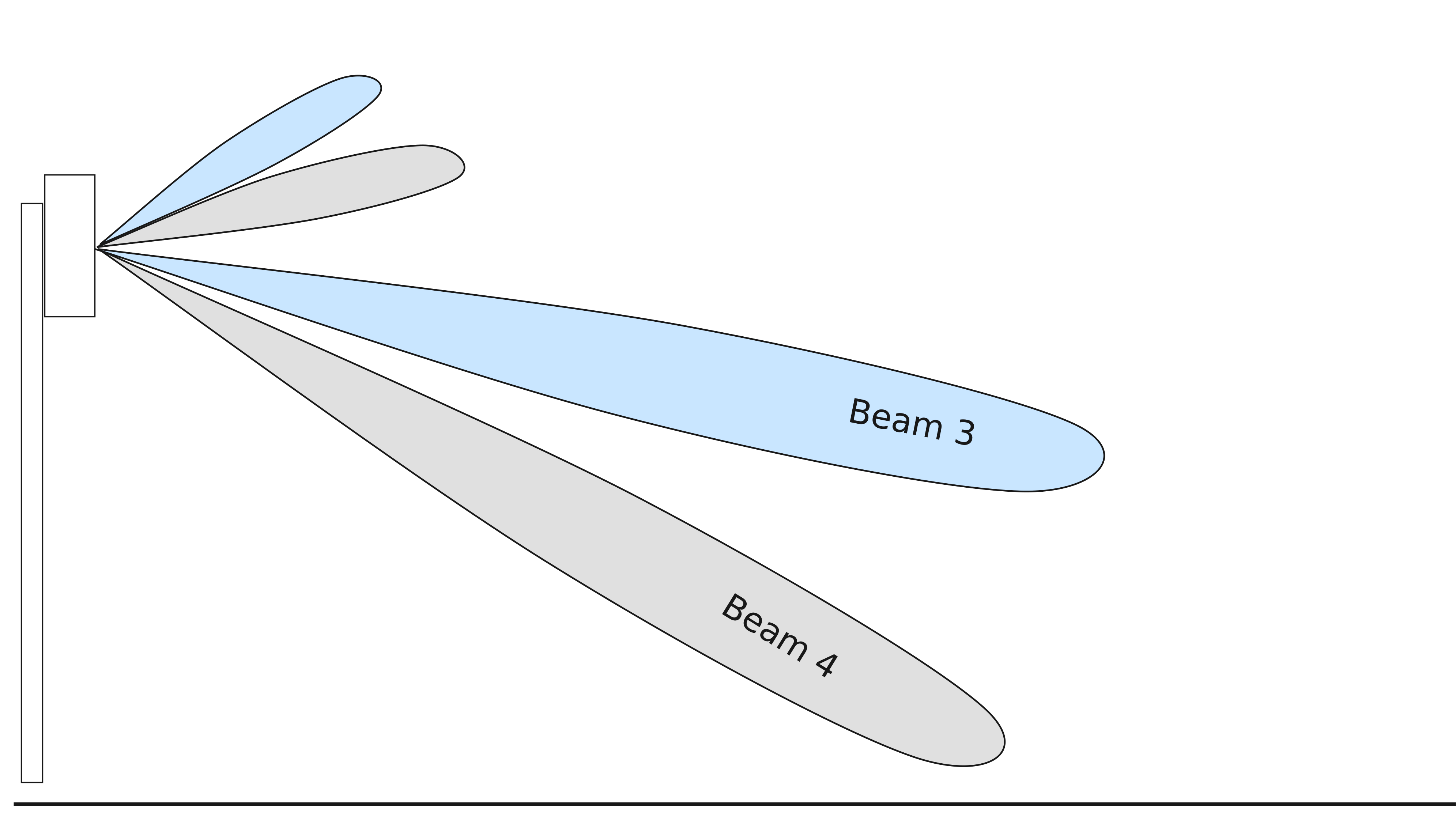
Figure 2(c) illustrates an example of beam restriction, a solution in which the base station does not use certain beams.
In the approach shown in Figure 2(c), beams 1 and 2 are restricted; only beams 3 and 4 are allowed to be transmitted. The UE is aware of which beams are restricted as NR specifications up to Rel-18 allow signaling of such beam restriction to the UE. This solution obviously delivers suboptimal performance (because some beams are restricted by the base station) and the received SINR can be low for the UE in these beam directions.
An optimized approach: Introducing the new beam-specific power backoff feature in Rel-19
To overcome the drawbacks of the approaches described above, Ericsson drove the development of a new feature for signaling-beam-specific power backoff in 3GPP RAN1 that was subsequently specified in NR Rel-19. In the new Rel-19 feature, signaling of beam-specific power backoff values Pi (i = 1, 2, …) is introduced from the base station to the UE, and the UE takes the signaled power backoff values Pi (i = 1, 2, …) into account when computing CSI.
Figure 3 presents a simplified example showing beams in two dimensions with associated power backoff values.
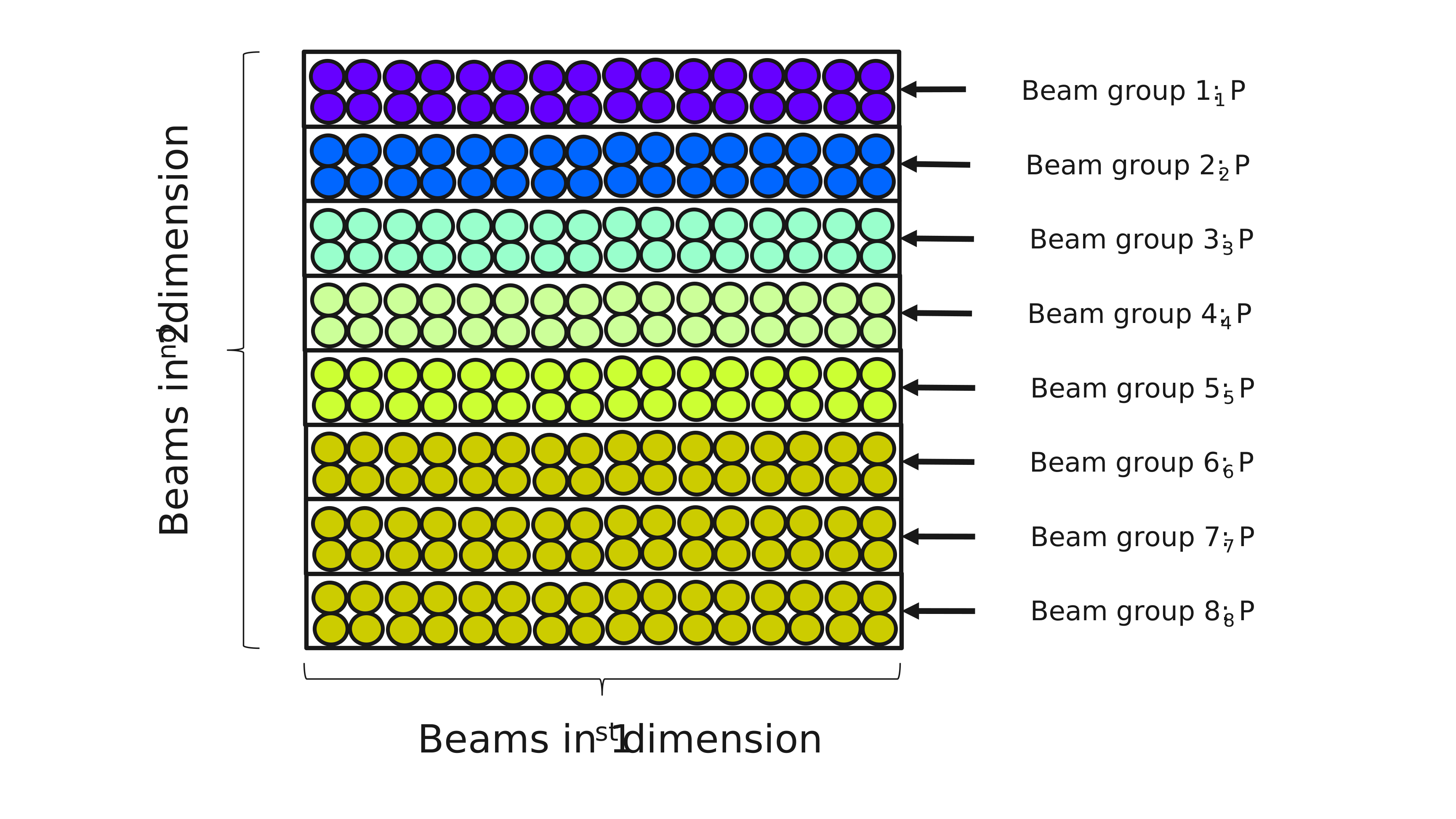
Figure 3: Example illustration of beam groups and associated power backoff values.
Note that although the power backoff values can be signaled for specific beam group sizes in Rel-19, the simplified example shows signaling of power backoff values per group of beams for a two-dimensional array with 2D beams with beam group size of 2x16 for illustrative purposes. In the simplified example, the network signals power backoff value Pi for beam group i, meaning that the power backoff value Pi applies to any beam within beam group i.
Figure 4 shows a comparison of how the new Rel-19 beam-specific power backoff signaling impacts beam selection compared to the case where beam-specific power backoff values are not signaled to the UE.
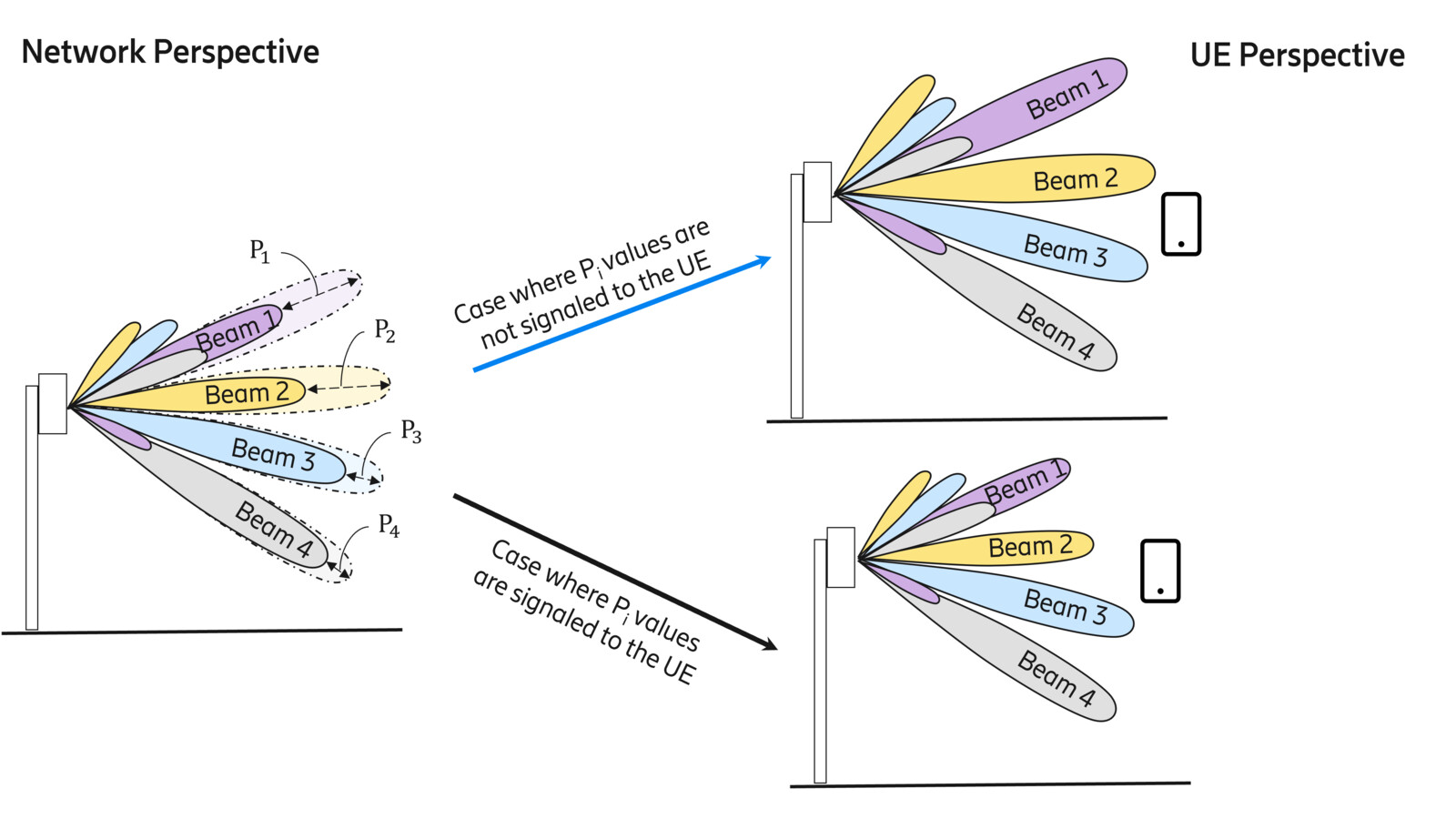
Figure 4: Comparison between the cases with and without signaling of beam specific power backoff values.
The left side of the figure illustrates the application of beam-specific power backoff values from the network perspective. The top right part of the figure illustrates the case where the beam-specific power backoff values are not signaled to the UE, from the UE perspective. In this case, the UE is unaware of the beam-specific power backoff values and it may choose beam 2 during CSI determination, which would result in suboptimal beam selection since beam 2 will have reduced power compared to beam 3.
In the bottom right part of the figure, the case where the beam-specific power backoff values are signaled to the UE is shown from the UE perspective. In the latter case, the UE is aware of the beam-specific power backoff values and takes them into account while selecting beams. As a result, the UE selects beam 3 – the optimal choice in this scenario.
Evaluating the performance benefits of the new feature
Figure 5 presents the evaluation results of the Rel-19 beam-specific power backoff signaling feature, demonstrating significant performance benefits.
The solution where the UE is unaware of beam-specific power backoff factors is used as the baseline in evaluations and a value of 100 in the figures corresponds to baseline performance. These results correspond to a 3GPP urban macro scenario with 500 m inter-site distance at 6.5 GHz carrier frequency and 128 port CSI feedback. In the figure, results are shown for resource utilization (RU) values of 50 percent and 70 percent. Note that RU represents the fraction of time-frequency resources utilized throughout the simulations.
The results show that the Rel-19 beam-specific power backoff signaling feature provides up to ~14 percent mean user throughput gain and ~60 percent cell edge throughput gain over the solution where the UE is unaware of beam-specific power backoff factors. The Rel-19 beam-specific power backoff signaling feature also significantly outperforms other implementation-based solutions.
Key takeaways
The WRC-23 requirement that limits the amount of power radiated above the horizon poses real constraints on directional beamforming in NR. As we explained above, current Rel-18 solutions cannot fully address these constraints in all beamforming scenarios. To overcome this challenge, Ericsson drove the introduction of a new beam-specific power backoff feature in Rel-19 – a flexible and efficient mechanism that ensures the UE selects only beams allowed by regulatory limits and applies the correct power reduction when needed. This new feature achieves regulatory compliance while minimizing performance degradation, making it a key enabler for practical upper 6 GHz deployment.
The new beam-specific power backoff feature greatly reduces the power radiated in certain directions above the horizon. The mechanism is both flexible and scalable, facilitating compliance without degrading performance more than necessary. Simulations confirm that the Rel-19 enhancements reduce unnecessary power backoff and improve throughput.
On top of the new feature, it should also be noted that 3GPP has developed an over-the-air (OTA) test methodology for band n104 that will help network operators deal with the regulatory situation for this band in certain countries, which has the potential to lead to commercial opportunities in future.
Read more
- How we reached a common vision on the architecture for 5g non-terrestrial networks in 3GPP rel-19
- RedCap and eRedCap – standardizing simplified 5G devices for the Internet of Things
- ITU World Radiocommunication Conference 2023 (WRC-23) Final Acts, Resolution 220
- Using 3GPP technology for satellite communication