










New 3GPP requirement ensures protection for fixed satellite systems
- To ensure the protection of fixed satellite systems from mobile systems in the upper 6 GHz band, 3GPP has developed a new performance metric and innovative test procedures to measure over-the-air (OTA) spatial emissions, in line with International Radio Regulations.
- A new requirement for base stations limits the amount of power radiated upward to prevent interference with fixed satellite uplink receivers at frequencies in the upper 6 GHz range.

Principal Researcher, Microwave systems

Standardization manager, Radio

Researcher standardization, Radio and spectrum
Principal Researcher, Microwave systems
Standardization manager, Radio
Researcher standardization, Radio and spectrum
Principal Researcher, Microwave systems
Standardization manager, Radio
Researcher standardization, Radio and spectrum
The “upper 6 GHz” range between 6425 and 7125 MHz is one of the widest New Radio (NR) operating bands available for mobile communications, making it one of the most interesting frequency bands for 5G NR, leading to 6G. However, Fixed Satellite Service (FSS) systems already utilize a large part of this spectrum (from 6425 to 7075 MHz) for backhaul, broadcast and other uplink purposes. As a result, the mobile industry’s access to this spectrum range requires proactive measures to prevent interference with satellite systems.
Ensuring interference-free co-existence with satellites
5G NR base stations are primarily intended to connect mobile terminals on the ground but they frequently transmit some RF power toward the sky as well. While it is often unintentional, this is considered normal behavior because even the most advanced antennas today generate side lobes that point toward the sky.
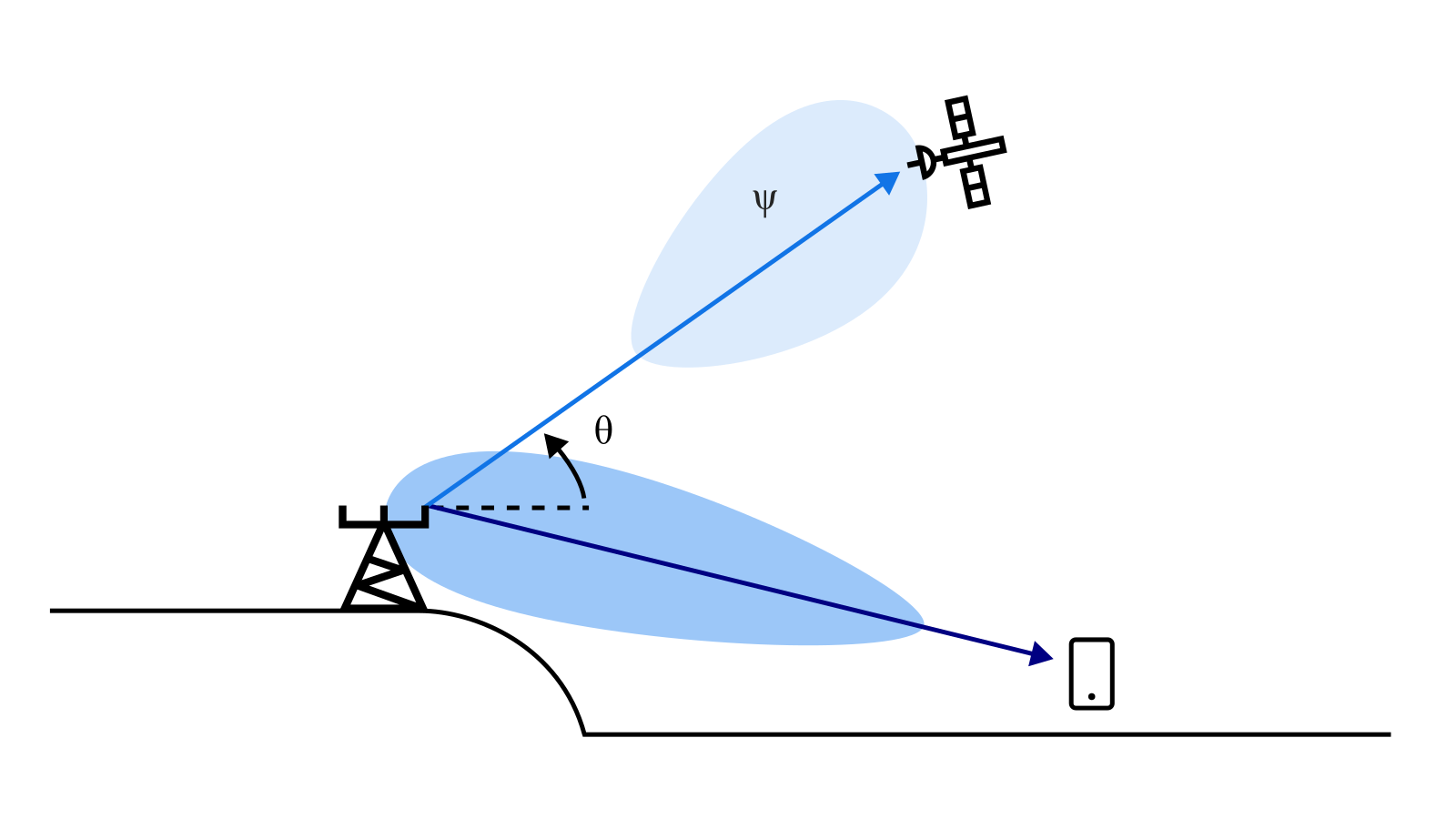
The issue that arises is that if the aggregated power coming from a large number of base stations were to exceed certain limits, it could degrade the sensitivity of a satellite’s uplink receiver and the satellite could experience loss of service. For this reason, the International Telecommunication Union’s World Radio Conference 2023 (WRC-23) established regulations that limit the amount of power base stations can radiate above the horizon in the frequency band 6425-7075 MHz (see Resolution 220 (WRC-23). However, unlike a traditional requirement that sets a cap on the transmitter power, this new metric developed by the ITU-R, with the active participation of Ericsson, allows for a high degree of flexibility in beamforming configuration and power settings.
3GPP Release 19: OTA spatial emission
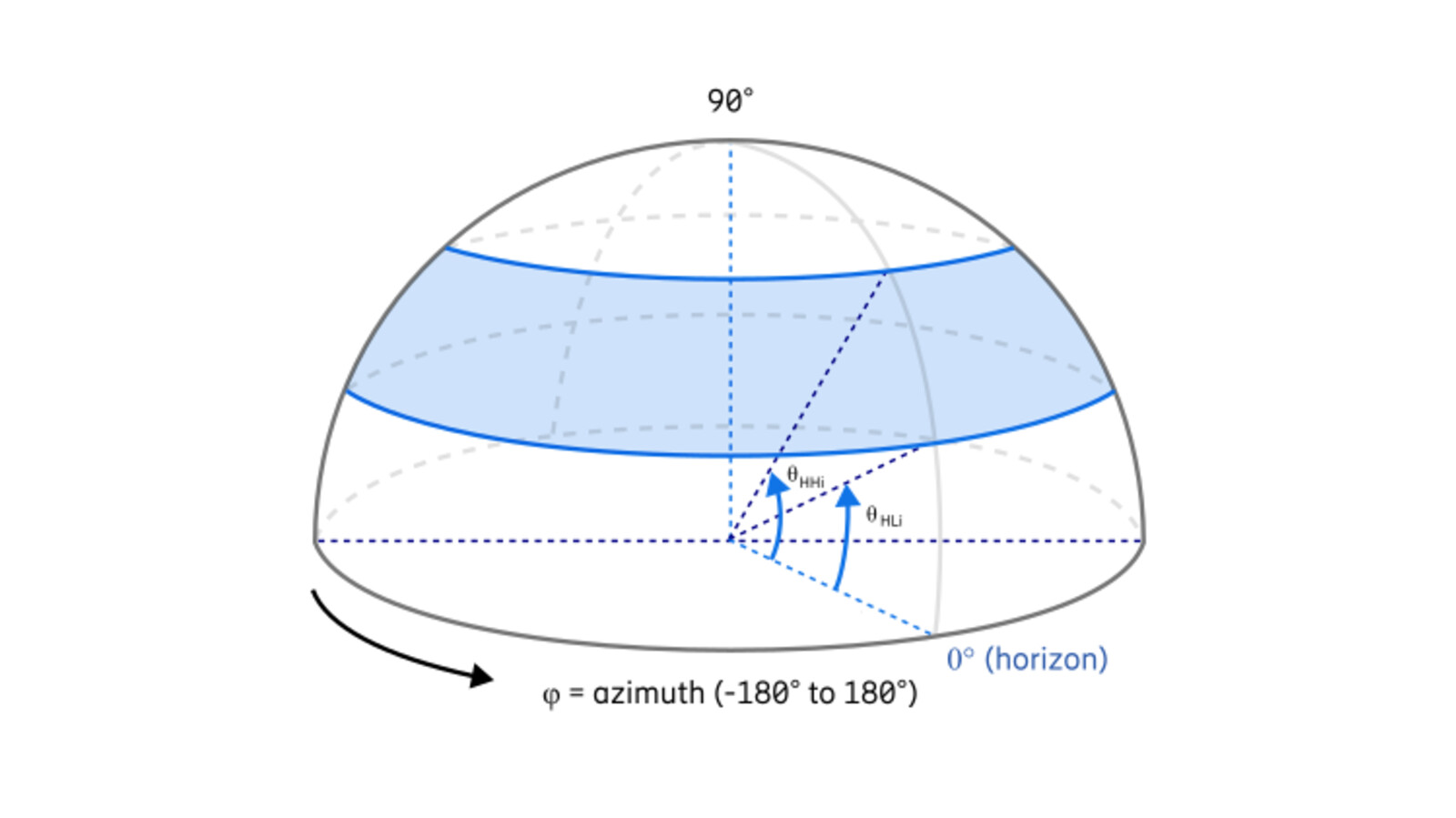
The implication of the new regulation agreed at WRC-23 was that spatial characteristics of base station antenna radiation would need to be included in 3GPP standards for the first time. A new performance metric called “expected EIRP (equivalent isotropically radiated power)” – EEIRP – has been standardized for this purpose in line with the Annex to Resolution 220 (WRC-23). EEIRP is calculated by averaging the emissions above the horizon while considering specific limits at different elevation angles. 3GPP has also developed a base station RF requirement and corresponding test methodology for Massive-MIMO-capable base stations that is designed to support different types of base stations tailored to fit specific coverage scenarios.
The 3GPP group responsible for radio performance and protocol aspects implemented the new requirement and developed an appropriate over-the-air (OTA) test methodology in the relevant technical specifications (TS 38.104 and TS 38.141-2). The new requirement was released in specification version 19.0.0, which became available in March 2025. The technical background information, including description, simulation results and measurement uncertainty evaluation, is available in a technical report (TR 38.908).
The new 3GPP requirement is called OTA spatial emission. Since this is a completely new type of requirement that includes spatial characteristics, it does not fit into the original structure. As a result, the specifications were extended with a new clause dedicated to OTA spatial emission.
The OTA spatial emission requirement specifies the maximum allowed radiated power toward the satellite systems expressed in dBm/MHz, while providing communication to user equipment in the terrestrial network. The requirement is presented as a set of seven limits for seven different elevation angular ranges. It is important to note that the limit applicable for emissions close to the horizon is higher than the emission level for an elevation angle pointing straight up.
The EEIRP test approach
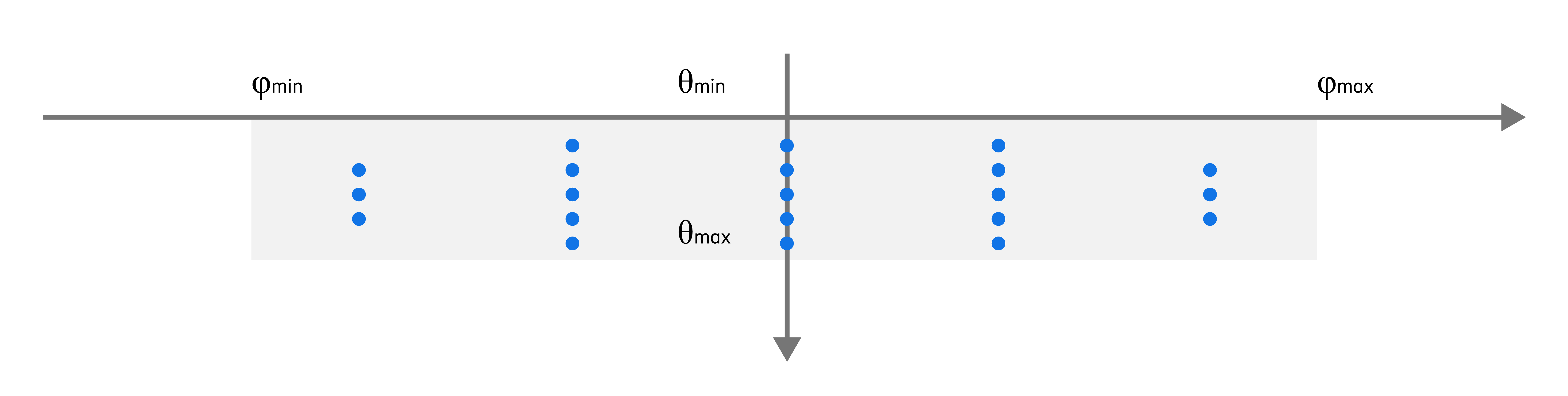
Compliance with the OTA spatial emission requirement is assured using a completely new and innovative test concept that determines a base station’s ability to suppress emission generated upward toward satellites, while transmitting a set of test beams within the supported steering range. The test beam constellation consists of 21 beams, all of them configured for the highest supported directivity, uniformly distributed within the intended steering range (the coverage area) supported by the base station. A base station can support several steering ranges tailored to different coverage situations utilizing different power capabilities.
Testing is performed in an anechoic chamber where the EIRP radiation pattern is evaluated for each test beam. The EIRP measurement can be set up in such a way that the 21 test beams are looped through in sequence for each OTA chamber positioner location. This method reduces the total test time significantly because it takes much more time to move the positioner than it does to change the beam direction.
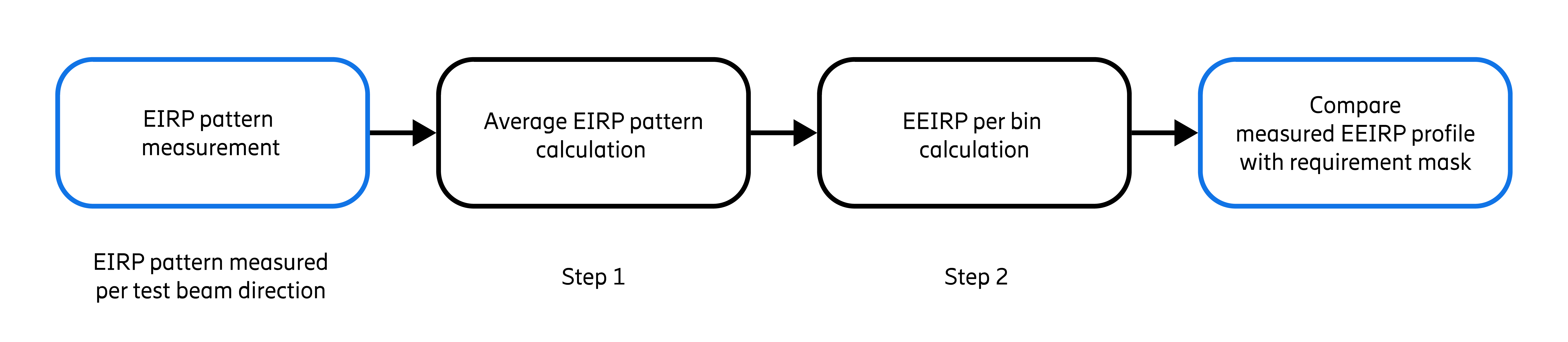
In the first averaging stage the average radiation pattern over the 21 test beams is calculated. If a configuration considering mechanical tilt is considered, the average radiation pattern is rotated with respect to the mechanical tilt setting.
In the second averaging stage, the EEIRP is calculated for seven elevation angular ranges. Then the measured EEIRP is compared to the requirement levels. If all measured levels for a given configuration are below the requirement limits, the base station meets the protection requirement.
The test specification includes instructions on how to configure the base station for testing , along with guidelines for calculating EEIRP based on the measured EIRP patterns for each beam in the test beam set. All the technical details related to the measurement of OTA spatial emission, measurement of radiation pattern for each test beam, data post processing and test object configuration can be found in TS 38.141-2.
The base station test procedure was designed to model the antenna’s ability to suppress unintended spatial emission toward satellites in the sky. With this update, 3GPP WG4 base station RF specifications provide the industry with a harmonized and standardized test methodology, including test object configuration and a complete description of criteria for compliance to the limits.
Deployment aspects
The new requirement provides a reliable method for measuring a base station’s ability to suppress emissions toward a satellite for a defined set of test beams for a declared steering range. When a base station is installed at a site in a live network, it is essential that the configuration of the steering range complies with the limits that were evaluated during testing.
Control over a number of other parameters is necessary to guarantee a base station’s compliance with all EEIRP limits. The base-band processing unit needs to monitor how much power is being transmitted above the horizon, in every beamforming instance, as well as on average over many instances. In the event EEIRP limits may be exceeded due to beamforming operation, mitigation techniques would be activated to ensure compliance.
A significant step forward
The introduction of OTA spatial emission requirements in 3GPP Release 19 marks a significant step forward in ensuring the safe and efficient coexistence of terrestrial 5G networks and fixed satellite services in the frequency bands in the upper 6 GHz range. By standardizing the new metric, EEIRP, and defining a comprehensive test methodology, the industry now has a standardized framework to measure, verify and control emissions directed toward the sky. This development not only safeguards the performance of critical fixed satellite systems but also gives mobile operators the flexibility they need to deploy advanced 5G networks in one of the most promising frequency ranges.
Ultimately, the new requirement is an example of how collaboration between various Ericsson teams, and across international bodies, regulation and standardization groups enables innovation while protecting existing services – paving the way for a more reliable and sustainable use of spectrum resources.
Read more
- How we reached a common vision on the architecture for 5g non-terrestrial networks in 3GPP rel-1
- RedCap and eRedCap – standardizing simplified 5G devices for the Internet of Things
- ITU World Radiocommunication Conference 2023 (WRC-23) Final Acts, Resolution 220
- Using 3GPP technology for satellite communication