










Adding multi-band to MINI-LINK
- We continue celebrating 50 years of MINI-LINK by looking at another interesting and valuable innovation area – Multi-band.
- Multi-band microwave solutions represent one of the most significant innovations in the ongoing quest for higher capacity, greater availability, and lower total cost of ownership.

Portfolio Manager
Portfolio Manager
Portfolio Manager
I began my career at Ericsson more than 31 years ago, working with microwave radio design. It has been an amazing journey and such a privilege. I’ve had the opportunity to work with so many passionate and brilliant people who helped make microwave backhaul a great success and made so many innovations possible.
Many of the colleagues I met on my very first day at Ericsson are still working on MINI-LINK today, although now in more senior positions. That says something about both the technology and the people behind it.
MINI-LINK forever!
For more than half a century, microwave backhaul has been one of the fundamental building blocks of mobile communication networks. While radio access technologies have often captured the spotlight, from GSM to 5G and now toward 6G, the evolution of transport networks has been equally important in enabling each new generation. Behind the scenes, microwave backhaul has undergone an equally remarkable transformation.
Microwave backhaul has continuously reinvented itself, adapting to dramatic increases in traffic demand, new service requirements, and evolving spectrum opportunities. What began as a technology for transporting just a few voice channels has evolved into a sophisticated, multi-gigabit packet transport platform capable of delivering fiber-like performance. Along the way, advances in microwave technology, signal processing, system architectures, product integration and design have repeatedly pushed the boundaries of what microwave backhaul can achieve.
Over the decades, I have had the privilege of being a part of many of these technological leaps, helping guide innovations from early insights and concepts to mainstream products. One of the most important and fascinating parts of this journey has been identifying future needs early and finding new ways to meet them.
I am particularly proud of the work we have done in this area over the years. I have also greatly enjoyed sharing our insights and outlooks through numerous articles and through the annual, industry-unique Ericsson Microwave Outlook.
One example of this combination of insight and innovation is multi-band microwave solutions. In 2011, we introduced the concept as part of the microwave capacity evolution to gigabit backhaul. And in 2016 we launched the Multi-band Booster solution. Today, multi-band microwave has become one of the most significant innovations in the ongoing quest for higher capacity, greater availability, and lower total cost of ownership.
Understanding how we arrived at this point provides valuable insight into the future direction of wireless transport.
Mobile communications became the main growth driver
The rapid expansion of cellular communications throughout the 1990s fundamentally changed the role of microwave transport. As mobile operators expanded network coverage, they faced the challenge of connecting increasing numbers of base stations. Deploying new fiber infrastructure to every site was often expensive and time-consuming, particularly in rural areas or rapidly growing urban environments. Microwave backhaul provided a fast and cost-effective alternative.
The explosive growth of mobile networks transformed microwave backhaul from a niche transmission technology into a strategic component of telecommunications infrastructure. Networks became larger, more complex, and more geographically diverse. Operators required equipment that was easier to deploy, simpler to manage, and capable of supporting a wider range of network topologies.
This period also marked the beginning of another important trend that would continue for decades: the industry’s migration toward higher frequency bands.
The journey to higher frequencies
Historically, most microwave systems operated below 20 GHz because these frequencies offered long transmission distances and excellent propagation characteristics. However, as mobile networks expanded and traffic volumes increased, spectrum resources in these bands became increasingly congested, particularly in metropolitan areas.
To address this challenge, microwave backhaul began expanding into higher frequency bands during the 1990s, such as 23 GHz, 26 GHz, 38 GHz, and eventually 28 GHz, 32 GHz and 42 GHz.
This migration represented a major turning point in microwave evolution. Higher frequencies offered access to significantly larger spectrum resources and enabled greater frequency reuse. The tradeoff was that links became more sensitive to atmospheric effects, such as rain attenuation and the transmission distances generally became shorter.
Nevertheless, the benefits outweighed the challenges. The move to higher frequencies allowed Communication Service Providers (CSPs) to dramatically increase network capacity while continuing to meet growing traffic demands.
This pattern would repeat itself several times over the following decades. Whenever capacity requirements exceeded what existing spectrum resources could support, we responded by developing technologies capable of operating efficiently at even higher frequencies.
Entering the gigabit era
The first deployments of 4G LTE in 2010 marked the beginning of another major transformation. Traffic growth accelerated dramatically as smartphones, video streaming and cloud applications became mainstream. Sites that once required tens of megabits per second backhaul suddenly needed hundreds of megabits or even multiple gigabits.
To address these requirements, MINI-LINK introduced a range of new capabilities, including wider channel bandwidths, higher order modulation, adaptive modulation, polarization multiplexing with Cross-Polarization Interference Cancellation (XPIC), and Radio Link Bonding. The latter is one of the most important innovations in today’s high-capacity networks and was discussed in a previously published blog.
Around 2010, a new wave of backhaul innovation also arrived with the introduction of millimeter wave (mmW) equipment in the 70 GHz and 80 GHz ranges of the E-band. Ericsson launched the MINI-LINK PT 6010, followed later by the MINI-LINK 6352. E-band represented a significant milestone because it offered approximately 10 GHz of spectrum—orders of magnitude more than traditional microwave bands. This abundance of spectrum enabled microwave systems to move into the multi-gigabit era, towards and eventually beyond 10 Gbps.
For the first time, microwave backhaul could realistically deliver performance approaching that of fiber in many deployment scenarios and was well prepared for the introduction of 5G in 2019.
The rise of Multi-band
Although E-band provided unprecedented capacity, it also introduced new challenges. Signals at these frequencies are more susceptible to rain attenuation and generally support shorter transmission distances than lower-frequency microwave bands.
Our response was the development of the Multi-band Booster solution in MINI-LINK.
The concept was both simple and powerful: combine a lower-frequency microwave carrier with a higher-frequency carrier and manage them as a single transport resource with our incredibly effective Radio Link Bonding.
The lower-frequency layer provides:
- Long transmission reach
- High availability
- Strong weather resilience
The higher-frequency layer provides:
- Massive capacity
- Wide channel bandwidths
Our Radio Link Bonding intelligently distributes traffic, using every bit of radio spectrum as efficiently as possible, and the overall multi-band connection gets the best combined latency, throughput and resilience.

Figure 1: Efficient use of microwave backhaul spectrum with multi-band
Multi-band backhaul fundamentally changed transport network design, as illustrated in Figure 1. Rather than choosing between reach and throughput, CSPs could optimize for both simultaneously. This solution can be applied to advantage in all geographical areas, although different frequency bands are appropriate depending on the desired hop distance.
The initial interest was very much about extending the reach and capacity of E-band by combining it with a frequency band in the 18-32 GHz-range for milder climates, or in the 13-23 GHz-range for more severe climates. There has also been a growing use of our multi-band solution for longer ranges by combining frequency bands in the 6-8 GHz range, with a frequency band in the 11-18 GHz range. Scattered spectrum resources is a growing challenge for CSPs, and the multi-band solution is also used for combining frequency bands within the same range, such as 6 GHz with 7-8 GHz.
In the past, the use of multiple frequency bands would mean using several antennas, creating higher site rental cost, or that there might just not be any space left for an additional antenna. Multi-band antennas were introduced to allow several frequencies over the same antenna eliminating these problems. Today, we have a range of single and dual polarized Multi-band antennas, with sizes of 0.3-0.6 m for the higher frequency combinations, and 1.2-2.4 m for combining lower frequencies. See an example of a multi-band configuration in Figure 2.
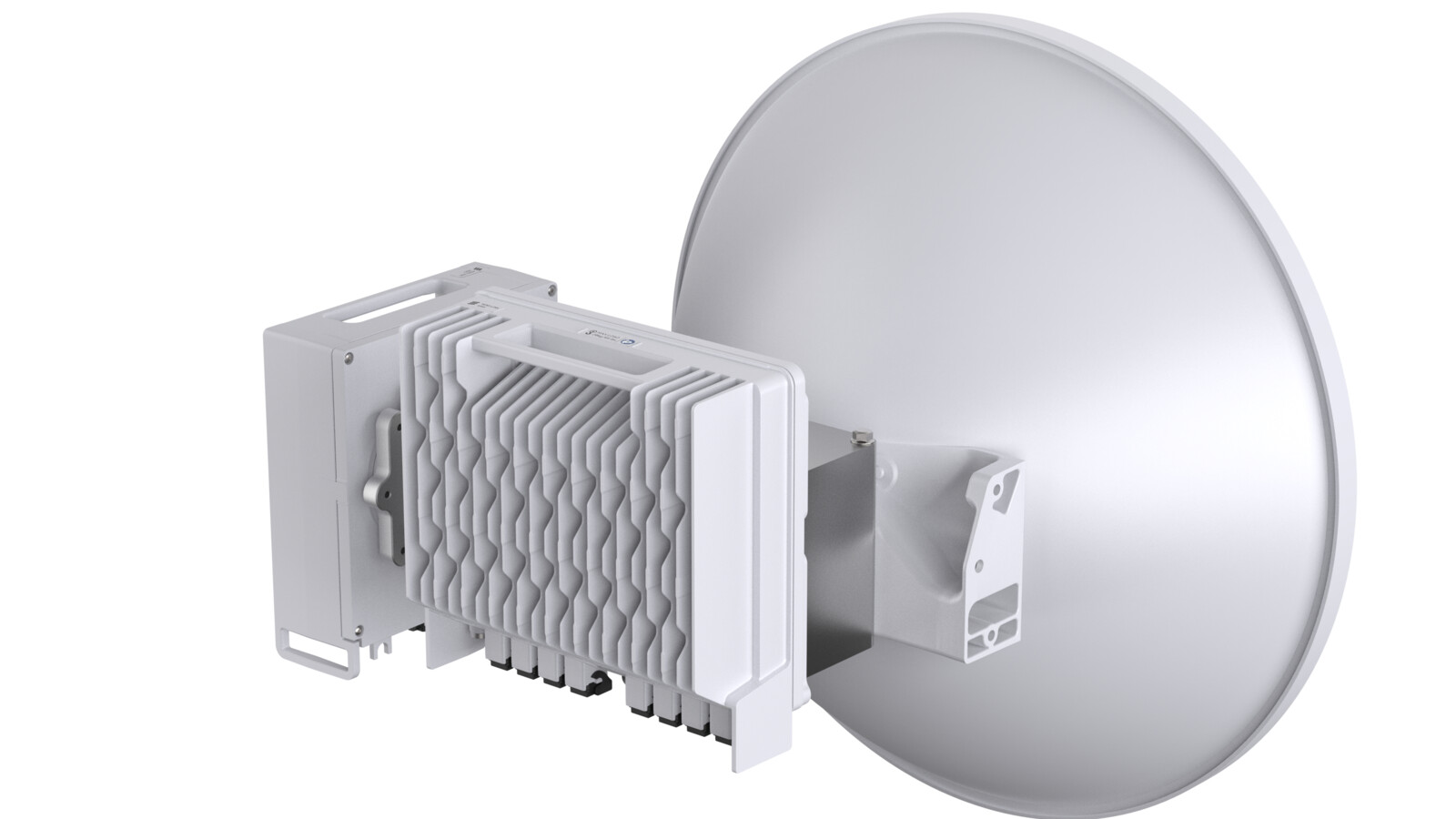
Figure 2: A multi-band configuration with MINI-LINK 6356, MINI-LINK 6321 and a Multi-band antenna.
Looking beyond
Microwave backhaul will remain a critical component of telecommunications infrastructure. As we move towards 6G and beyond, the same forces that have driven our innovation for 50 years will continue shaping the future of MINI-LINK. A constant cycle of insights, challenges, ideas, improvements and innovations - powered by all the brilliant and passionate people working with MINI-LINK.
An efficient use of the available spectrum resources, often scattered, will be even more important in the future. Today, we have a very powerful toolbox covering dual polarization with XPIC, carrier aggregation, multi-band and radio link bonding. This will be further innovated, enhanced and improved in the future to meet new demands. In addition to this, we add the power of AI/ML for planning, deployment and management, but more about that in the next blog.
The journey to higher frequencies will continue in the future as well. The E-band has been on a remarkable journey over the last decade and is now extensively used as a 5G backhaul band. Research and development efforts are increasingly focused on frequencies beyond 100 GHz, including W-band (92–114 GHz) and D-band spectrum (130–175 GHz). These frequency ranges offer enormous contiguous bandwidth resources capable of supporting capacities measured in tens or even hundreds of gigabits per second. Today, there are regulatory recommendations on channel arrangements, equipment standardization and pre-commercial wireless backhaul equipment available for trials in the W-band.
I would like to conclude by thanking all the legendary MINI-LINK people who paved the way before my time, and the brilliant people who will continue to shape the future.