









Telco edge: the secure sweet spot for edge AI inference
- Research shows that a majority of organizations run their own AI inference – communication service providers (CSPs) operate the distributed infrastructure needed to host the critical parts of it securely, at low latency and at scale.
- The telco edge offers network intelligence, performance tradeoffs, and data sovereignty that public cloud can’t match, and Ericsson’s open platform means operators aren’t locked into a single AI stack.

Expert, Edge computing

Principal Researcher, Network-compute convergence

VP Emerging Technologies
Expert, Edge computing
Principal Researcher, Network-compute convergence
VP Emerging Technologies
Expert, Edge computing
Principal Researcher, Network-compute convergence
VP Emerging Technologies
Today, a large fraction of organizations operates part of their artificial intelligence (AI) inference workloads themselves rather than relying solely on public cloud services. This indicates that AI moves from centralized training toward distributed inference. The question of where that inference runs is thus becoming a strategic decision that CSPs are uniquely positioned to answer.
CSPs currently operate approximately 100,000 distributed network data centers worldwide, spanning regional hubs, central offices and mobile switching environments, with enough spare capacity to offer more than 100 gigawatts of new AI compute power over time. These sites aren’t isolated compute nodes: they’re part of an integrated telecom system that supports deterministic connectivity, service quality guarantees and network-level policy enforcement. This infrastructure is already in place, connected and trusted.
Mobile networks already embed AI and machine learning capabilities to support network automation and optimization and are evolving toward 6G capabilities such as network sensing and integrated sensing and communication (ISAC), further strengthening their role as a distributed intelligence layer. The opportunity for CSPs now is to complement and extend this layer to monetize it as a platform for AI inference services before the window closes.
Where telco stands out and excels
The case for the telco edge rests on three structural limitations – intelligence, performance tradeoffs, and security – that neither public cloud nor on-device compute can overcome at scale.
Intelligence: network context makes AI smarter
Unlike generic cloud infrastructure, the telco edge is integrated directly into the mobile network, giving it the ability to expose real-time network and environmental context such as radio conditions, device positioning, mobility patterns and sensing data to AI applications running at the edge. This creates a form of network-native intelligence that hyperscale cloud providers cannot replicate without deep integration into telecom infrastructure and radio access networks.
As a result, AI applications can adapt dynamically to network conditions – adjusting inference frequency, model selection or data resolution based on connectivity and location context. The network edge becomes a local center for contextually enriched AI processing, with the guarantee that local information stays local.
Performance: balance compute-energy-latency trade-offs
The rise of physical AI – autonomous robots, drones, connected vehicles and smart glasses that perceive, reason and act in the physical world – is creating applications that can’t tolerate the latency of a round trip to centralized cloud infrastructure. Our research has shown that mobile devices typically suffer from power limitations related to battery capacity, form factor and thermal constraints – particularly relevant to wearables like smart glasses – as well as limits in computational capability. Vision-Language-Action (VLA) models represent the next frontier of embodied AI: systems that integrate visual perception, language understanding and physical action into a single neural architecture and that must operate at control frequencies of 10–20 Hz, responding within less than 100 milliseconds for safe real-time interaction with the physical environment.
Research suggests that achieving general-purpose robotic capabilities will require models in the range of 10–100 billion parameters, yet current on-device AI accelerators are 200–300 times too slow for real-time execution of state-of-the-art VLA models. The bottleneck is not raw compute power but on-chip memory bandwidth, a constraint that limits how quickly large models can be served regardless of compute capacity. Public cloud, while powerful, is constrained by network round-trip latency for tight real-time control loops. Here, the relevant latency metrics are not only median RTT, but very importantly also low jitter (stable p99 latencies with bounded tail latencies). The telco edge resolves this by placing inference close to the device without needing to cross the public internet, while maintaining access to distributed, higher-capacity compute resources across the network.
Many physical AI devices – autonomous vehicles and industrial robots in particular – also have hardware update cycles far longer than mobile phones, meaning on-device compute will fall progressively further behind fast-evolving AI algorithms. For these applications, reliable offload to a trusted, low-latency edge is not a convenience but a long-term architectural necessity.
Figure 1 illustrates the compute-speed ceiling for physical AI, projected from 2026 to 2030, showing how edge offloading expands what is achievable today and what becomes possible as 6G infrastructure matures.
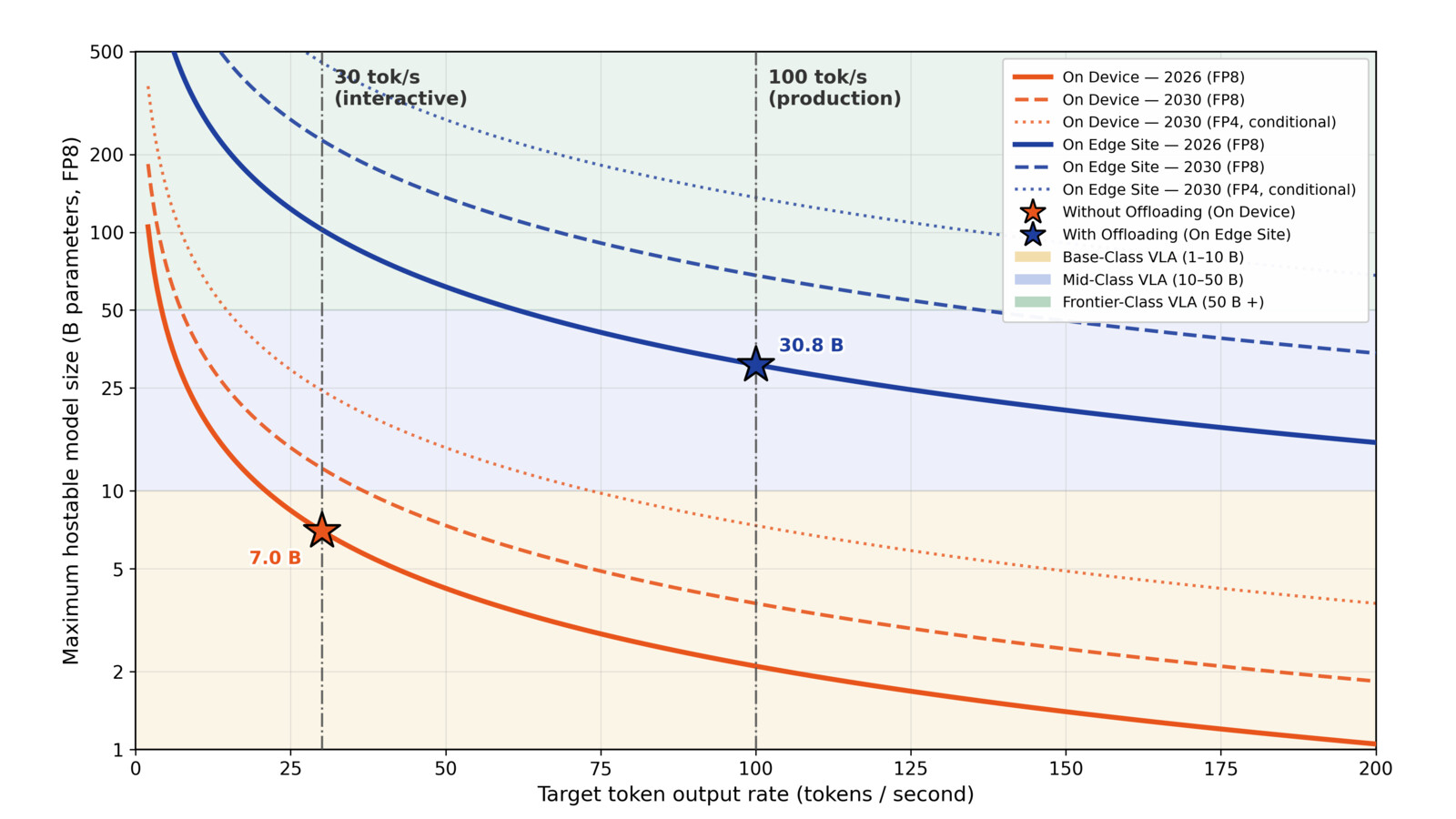
Figure 1: The compute-speed ceiling: today and projected to 2030
Security: data stays local with verifiable integrity
Physical AI systems generate continuous streams of high-value data – such as video, geolocation and operational telemetry – that are often subject to strict privacy, sovereignty and regulatory constraints. Sending this data to centralized cloud infrastructure introduces compliance and trust challenges that many enterprises, particularly in regulated industries, cannot accept.
The telco edge enables a different architectural model. In a recent collaboration with a global truck manufacturer and an SME specialized in confidential compute, Ericsson demonstrated a solution that virtually extends the on-board vehicle compute capacity into the telco edge. Our solution offers confidential computing on the telco edge, ensuring that neither the CSP nor other co-located workloads can access the data or proprietary algorithms. Such environments enable a “digitally blind” processing model, where infrastructure providers offer compute capacity without visibility into the content being processed. This capability is also catering for shared edge infrastructure across multiple stakeholders. Connected devices can contribute data and rely on common edge resources without requiring direct trust relationships.
Figure 2 illustrates how connectivity and confidential compute interact to provide a secure telco edge service to mobile devices by enterprises or end users. Select the + icon to view more information.
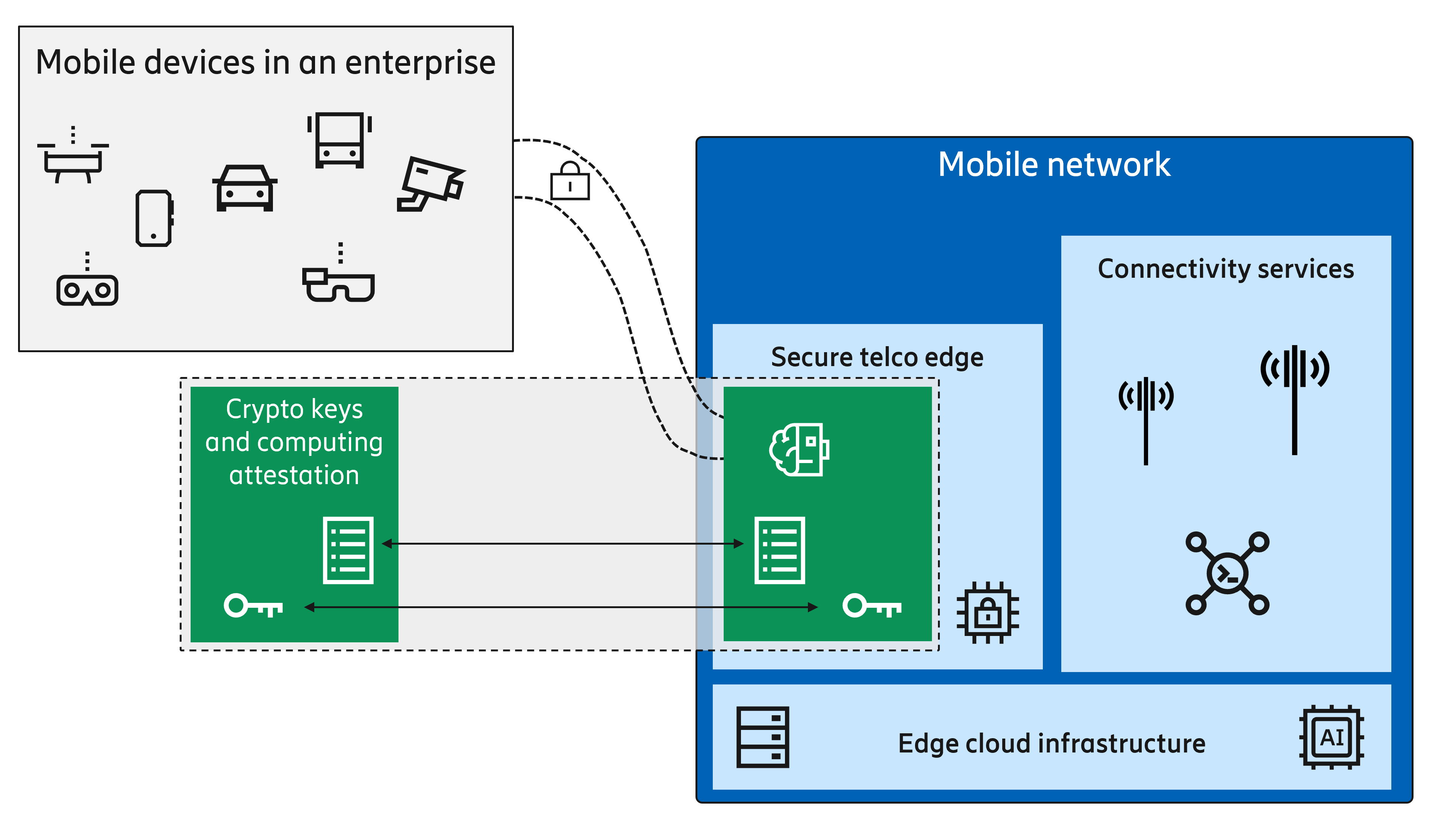
Figure 2: Interaction between connectivity and confidential compute in a secure telco edge service
This approach was assessed as part of a regulatory innovation sandbox program in Sweden and confirmed as compliant with current data protection regulations, provided that user-controlled compute attestation and key management are in place. In practical terms, enterprises can process privacy-sensitive data at the telco edge without taking on additional data processing responsibilities beyond defined regulatory and attestation frameworks.
The model also enables shared infrastructure across multiple stakeholders. Municipalities and enterprises can contribute data and rely on common edge resources to build shared applications – such as urban digital twins or logistics optimization platforms – without requiring direct trust relationships between participants and while remaining compliant with personal data protection regulations.
Telco edge AI: flexible, open and built to integrate
Rather than a single technology stack or a closed platform, Ericsson envisions an orchestration and infrastructure framework designed to work across AI platforms, inference engines and partner ecosystems that best fit a CSP’s or enterprise’s needs. This reflects a shift from vertically integrated platforms toward more flexible, multi-domain orchestration approaches, where workloads can be deployed and managed across different infrastructure environments while maintaining service assurance and policy control.
Flexible multi-domain orchestration
Effective edge AI deployment requires coordinated management across network and compute domains simultaneously. This includes:
- dynamic network configuration, including Quality of Service and Quality on Demand capabilities
- compute placement across distributed edge sites based on latency, capacity and workload requirements
- secure device-to-application connectivity with policy enforcement
- continuous service monitoring with closed-loop performance optimization.
Ericsson has demonstrated that workloads can be placed, monetized and assured by CSPs on different kinds of edge cloud infrastructure. The cloud platform is built on cloud-native technology that integrates with third-party hardware acceleration while providing a telecommunications-grade, data-policy-secure runtime environment. This means operators are not locked into today’s AI stack and can evolve their infrastructure as inference technology develops.
Trusted data exchange
Edge AI also requires secure aggregation and coordination of data across multiple stakeholders. Ericsson’s context-driven local edge data agents broker data collected and produced by the network alongside data from enterprise and consumer applications, in a data-sovereign, secure and regulatory-compliant way, without requiring direct trust relationships between the parties involved. This is what makes genuinely multi-stakeholder edge applications viable – not just technically, but legally and commercially.
Together, these two capabilities add up to a converged platform where connectivity and compute are jointly managed, assured and monetized – whilst not necessarily sitting on the same hardware. Figure 3 illustrates how orchestration, connectivity and compute services come together in this model.
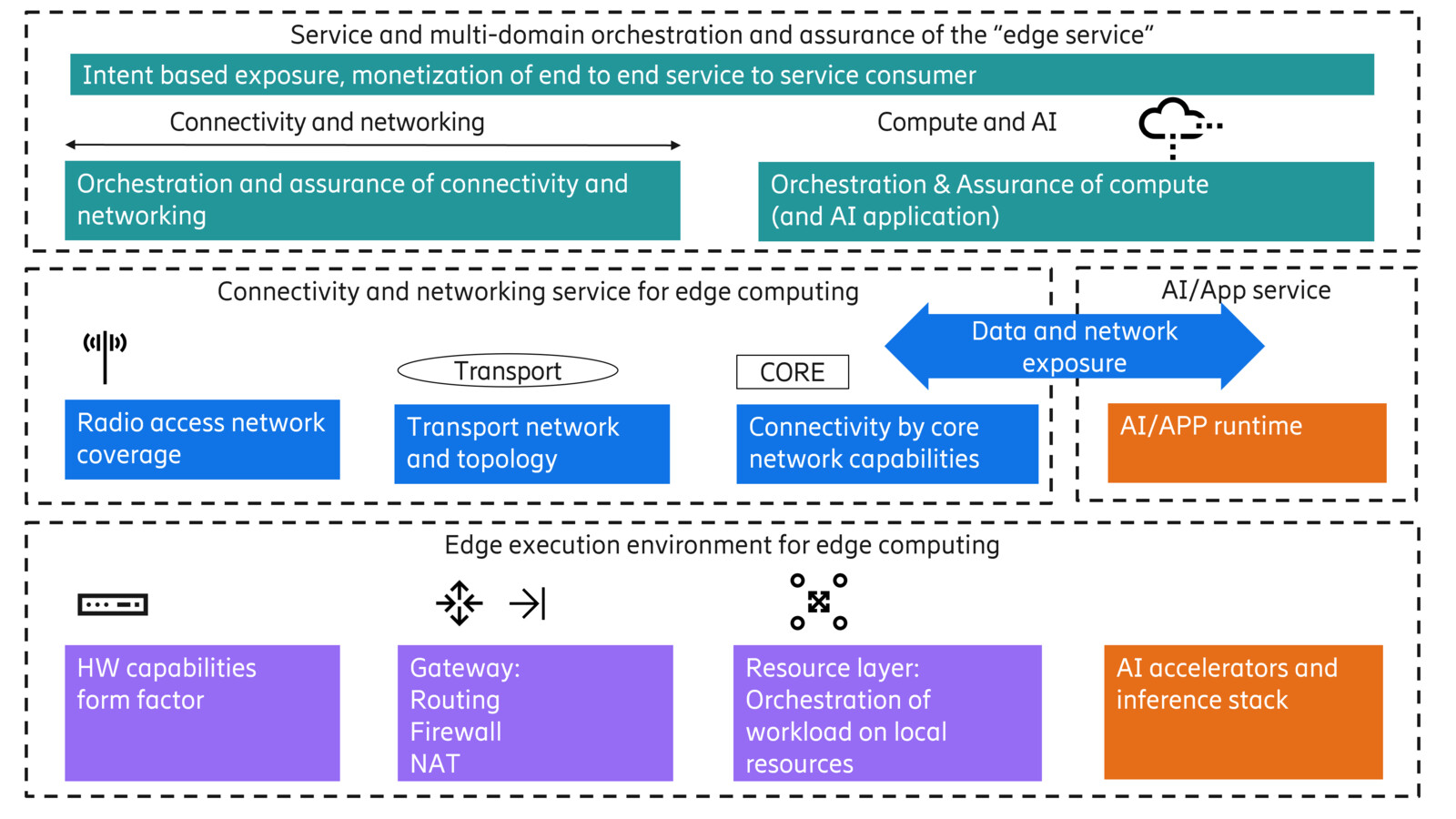
Figure 3: A converged connectivity-and-compute platform
Looking ahead to 6G
The 6G timeframe will determine which CSPs successfully make the transition from connectivity providers to AI infrastructure providers. Our expectation is that the majority of new edge AI services, particularly in the early phases, will be delivered by specialized AI providers operating on top of telco infrastructure rather than CSPs building proprietary AI from scratch. In this model, the key value shifts toward orchestration across distributed infrastructure, exposure of network capabilities via APIs and end-to-end service assurance across connectivity and compute.
The convergence of network AI and enterprise AI creates innovation opportunities that go beyond what either can achieve independently. Realizing them requires a secure, regulated and context-rich data-sharing environment that only a telco edge architecture with integrated orchestration, strict policy control and secure workload isolation can provide. In this environment, network functions and AI workloads are co-located, jointly orchestrated and underpinned by a technology stack designed to meet stringent regulatory and security requirements.
For CSPs willing to move now, the infrastructure is available starting with 5G. The question is how quickly they can build the services layer on top of it.