










-
Massive IoT solutions were originally designed for infrequent, lightweight communication, but real-world deployments tend to be characterized by far more frequent, data-intensive and interactive traffic patterns.
-
As 6G standardization begins, massive IoT must evolve beyond LTE-M and NB-IoT assumptions, simplifying the architecture while supporting modern bidirectional and bursty traffic.

Expert and Chief Architect SW Technology

System Architect, Business Area Cloud Software and Services

Principal Researcher, RAN massive IoT

Expert, Mobile networks architecture and signaling
Expert and Chief Architect SW Technology
System Architect, Business Area Cloud Software and Services
Principal Researcher, RAN massive IoT
Expert, Mobile networks architecture and signaling
Expert and Chief Architect SW Technology
System Architect, Business Area Cloud Software and Services
Principal Researcher, RAN massive IoT
Expert, Mobile networks architecture and signaling
With 3GPP Release 20 now underway, the mobile industry has entered the study phase of 6G standardization. This phase is particularly important because early architectural decisions tend to persist for decades. For massive Internet of Things (massive IoT), 6G represents a rare opportunity to reassess past assumptions that were made under very different technical and market conditions.
The evolution of massive IoT
LTE for Machine-Type Communications (LTE-M) and Narrowband Internet of Things (NB-IoT) are the two 3GPP technologies designed for massive IoT. Both were introduced between 2015 and 2017 to address the emerging need to connect very large numbers of low-cost, battery-powered devices over wide areas. Since then, these technologies have scaled globally to include billions of deployed devices and hundreds of millions of new connections each year. According to the latest Ericsson Mobility Report, 240 million massive IoT connections were added globally in 2025 alone. The emergence of Non-Terrestrial Networks has also contributed to the expansion of the market for these IoT technologies.
Real-world deployments of massive IoT have evolved in ways that were difficult to predict when the original 3GPP specifications were defined back in the mid-2010s. Devices communicate more frequently and exchange larger payloads than anticipated, and increasingly depend on reliable, bidirectional, transaction-based communication with application servers. Firmware updates, security patches, group communication and tighter integration with cloud-based applications have all become routine rather than exceptional.
As a result, many mechanisms that were introduced to optimize early massive IoT use cases now add complexity without delivering proportional benefits. If 6G simply carries forward all existing features, it risks becoming unnecessarily complex for low-end devices while placing unnecessary load on control-plane network functions. In this blog post, we argue that 6G massive IoT should not be a simple extension of LTE-M and NB-IoT. Instead, we advocate for a simplified, experience-driven evolution, grounded in real deployment learnings and aligned with modern traffic behavior.
Massive IoT in 4G and 5G: what worked (and what didn’t)
The success of LTE-M and NB-IoT rests on a small set of fundamental design principles that remain valid today:
- Low device and operating costs that enable high-volume deployments.
- Long battery lifetime, often measured in years.
- Strong end-to-end security, including encryption and integrity protection.
- Application-network interaction that allows applications and networks to influence each other’s behavior.
To meet these requirements, 3GPP introduced a growing set of 4G and 5G features over time, including:
- Extended Idle state discontinuous reception (eDRX)
- Power-saving modes that enable user equipment (UE) deep sleep (Power Saving Mode, PSM, and Mobile-Initiated Connections Only, MICO)
- Connection release assistance mechanisms (RAI)
- Control Plane data transfer (Data over Non-Access Stratum, DoNAS), connection suspend and resume procedures, as well as wake-up signaling enhancements (Wake-Up Signal, WUS, and Wake-Up Receiver, WUR).
Each of these features addressed a specific constraint at the time of introduction. However, the cumulative result is a fragmented and complex feature set that is increasingly difficult to justify given today’s traffic patterns and device capabilities. For 6G, the key question is not how to preserve every existing optimization, but how to retain the benefits while reducing overall complexity.
Key learnings from real-world massive IoT deployments
Years of commercial deployments across industries such as utilities, asset tracking, smart cities and industrial monitoring have produced a consistent set of observations. These learnings are critical when deciding which mechanisms should be retained, prioritized or phased out in 6G.
- Control plane and user plane IoT optimizations deliver comparable power savings.
One of the original motivations for Control Plane data transfer in massive IoT was energy efficiency. Avoiding the establishment of a full User Plane connection was expected to significantly reduce signaling and device power consumption. In practice, large-scale deployments show that Control Plane and User Plane optimizations deliver similar results in terms of battery lifetime and signaling reduction. Enhancements such as fast connection suspend and resume procedures and the introduction of Inactive connection states in 5G have reduced the overhead of User Plane communication to the point where the difference is marginal for many use cases. This challenges the assumption that Control Plane data transfer should remain a cornerstone of future massive IoT designs. - eDRX often outperforms PSM.
Core-network-configured downlink unavailability mechanisms (PSM and MICO) that enable UE deep sleep are well suited for devices that only initiate uplink communication and have no requirements for downlink reachability. However, many modern massive IoT use cases require regular downlink communication, acknowledgements or remote configuration. Support for long eDRX cycles enables devices to remain reachable for downlink traffic without periodic registration signaling. In deployments with downlink requirements, eDRX cycles often provide better energy efficiency and significantly lower signaling load than power-saving modes that require periodic network interaction. It is notable that even in the uplink-only reporting scenario for which PSM was originally developed, an eDRX cycle of three hours can provide similar energy savings. - Connected-state power saving is underutilized.
A significant number of massive IoT devices do not use Connected-state power-saving techniques, even though these features have been available for many years. As a result, devices remain fully active during connected sessions, consuming unnecessary energy. In deployments with frequent but short data exchanges, the energy consumed during Connected-state activity can dominate overall battery usage. Proper use of Connected-state power-saving can therefore have a substantial impact on device battery lifetime. - Network exposure interfaces could enable application-network integration.
Today’s massive IoT solutions often treat mobile networks simply as “bit pipes,” leaving many of the network’s advanced capabilities unused. Although 3GPP standards offer powerful APIs — such as notifying applications about device connectivity events, triggering devices to connect, or optimizing network behavior based on the application’s traffic patterns — these features remain underutilized. The main barrier is complexity: using these APIs requires deep expertise in cellular technology, which most IoT application developers don’t have. As a result, enterprise IoT solutions rarely benefit from the full potential of the network. Making these capabilities easier to use is key to unlocking more efficient, scalable and intelligent massive IoT deployments.
Use case evolution and new traffic models
Early massive IoT traffic models assumed a small number of unidirectional uplink messages per device per day, with limited need for acknowledgements or downlink interaction. That assumption no longer reflects reality, however. Modern massive IoT deployments increasingly involve frequent, reliable and bidirectional communication, with application-level acknowledgements, predictable periodic traffic and occasional but highly data-intensive sessions.
It is also essential to move beyond per-device traffic assumptions and instead consider aggregate behavior. While the traffic generated by a single massive IoT device is negligible, the synchronized behavior of large device populations can produce substantial and highly concentrated load.
We believe the following representative real-world traffic patterns should be explicitly considered when rethinking massive IoT in 3GPP standardization:
- Smart metering – Smart meters generate periodic reports, either autonomously or in response to polling by backend systems. In many deployments, data must be collected from all meters within a narrow time window, resulting in highly synchronized and bursty traffic.
- Local group or peer communication – Next-generation grid monitoring and industrial automation increasingly rely on communication between devices within a neighborhood area. These use cases generate significantly more traffic than early massive IoT assumptions and place new demands on uplink and group communication capabilities.
- Event-driven asset tracking – Asset tracking devices often generate traffic in response to physical events such as temperature changes, threshold crossings or geofencing. This traffic is inherently unpredictable and can occur in bursts across large device populations
- Downlink command and actuation – Remote control and configuration use cases, such as smart street lighting, precision agriculture and micromobility, require bounded downlink latency and reliable delivery.
- Firmware and software updates – Firmware updates are infrequent but dominate overall data volume. Even a single update campaign can temporarily exceed the cumulative traffic generated by months of routine reporting.
Together, these traffic patterns illustrate why massive IoT support in 6G must be designed for aggregate behavior, burstiness and bidirectional communication rather than isolated, low-duty-cycle devices.
Modernization opportunities for 6G massive IoT
Based on real-world experience and emerging requirements, we recommend the following six design principles for 6G massive IoT:
- Steer all application payloads to the User Plane.
As massive IoT traffic volumes increase, carrying application data over the Control Plane becomes increasingly inefficient. User Plane handling scales better, supports traffic management and policy enforcement and avoids excessive load on core control functions. In 6G, application payloads should be handled exclusively via the User Plane, with Control Plane signaling reserved for its primary purpose. - Make wake-up signaling a widely adopted first-class feature.
Wake-up signaling combined with ultra-low-power receivers enables substantial reductions in both Idle- and Connected-state power consumption. The device can remain in a sleep state to conserve energy until communication is required. 6G massive IoT should treat wake-up signaling as a foundational capability rather than an optional enhancement. - Mandate support for eDRX cycles for all massive IoT devices.
eDRX cycles decouple downlink monitoring from data transactions and enable long deep sleep periods without additional signaling. Making this capability mandatory for IoT simplifies device design and provides consistent energy savings across use cases. - Make Connected state a power-saving state.
If the 6G Connected state becomes a power-saving state, UEs could remain connected for longer periods, minimizing control overhead from state transitions and reducing energy consumption for frequent traffic. All 6G massive IoT devices should support and use this capability to minimize battery drain during connected sessions. - Retire legacy power-saving mode and release assistance procedures.
Several earlier mechanisms add complexity without delivering clear benefits under modern traffic conditions. Phasing out power-saving modes tied to periodic registration update and legacy release assistance mechanisms would simplify both device and network implementations. - Strengthen application-network integration.
Closer integration between IoT applications and the cellular network enables better traffic predictability and resource utilization. Enhanced and developer-friendly network exposure APIs and IoT messaging services allow applications and networks to cooperate rather than operate independently.
To illustrate the architectural implications, Figure 1 summarizes how each proposed principle could affect key 6G network functions.
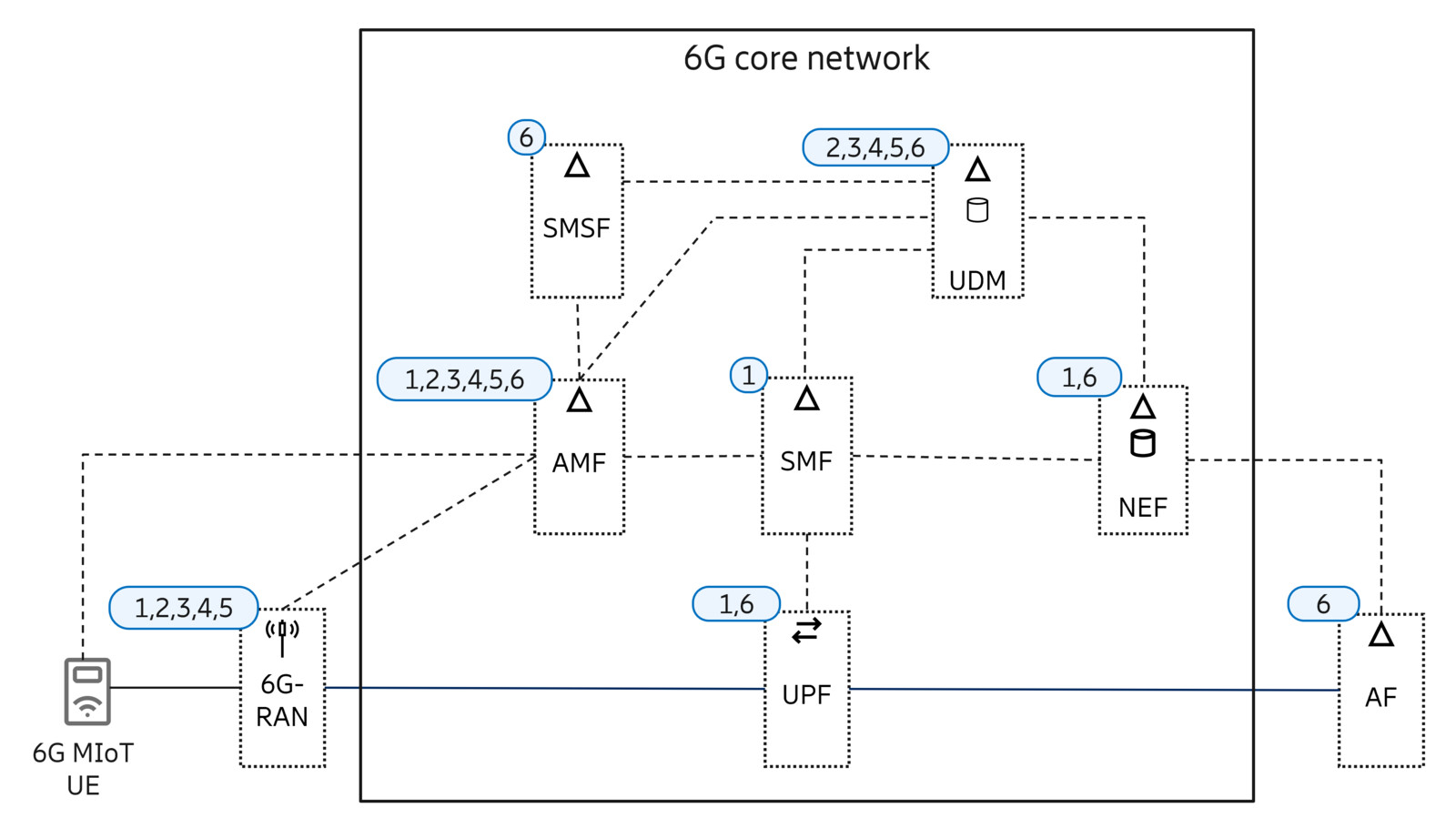
Figure 1: Impact of the proposed improvements on the 6G network functions
Conclusion
The global success of LTE-M and NB-IoT provides a strong foundation for massive IoT in 6G. At the same time, real-world deployments have revealed traffic patterns and operational realities that differ significantly from earlier assumptions. 6G offers a unique opportunity to simplify massive IoT design, remove legacy complexity and better align network behavior with modern IoT use cases. By prioritizing User Plane data transmission, wake-up signaling, extended Idle state discontinuous reception and tighter application-network integration, 6G massive IoT can deliver greater efficiency, scalability and long-term sustainability.