










Europe’s 6G edge: Collaboration, standardization, and trials
- With 6G standardization ramping up, the European 6G research can now enter its next phase, transitioning from defining the fundamentals of 6G, towards exploring deployment strategies and monetization opportunities, and charting the course for long-term research beyond 6G day-1.
- This blog post outlines a direction for the 6G research ahead, including both technology and research financing principles.

Master Researcher, Technical lead Hexa-X 6G project
Master Researcher, Networks

Director of Industry Engagements & Research
Master Researcher, Technical lead Hexa-X 6G project
Master Researcher, Networks
Director of Industry Engagements & Research
Master Researcher, Technical lead Hexa-X 6G project
Master Researcher, Networks
Director of Industry Engagements & Research
Europe has historically led research across every mobile generation, from NMT, GSM, and 3G, through 4G and 5G, and now 6G. Ericsson has played a key role in developing these systems. The European Union (EU) and the European private sector have supported a wide range of research projects throughout the evolution of these generations. The European 6G flagship projects Hexa-X and Hexa-X-II have laid the foundation for the 6G standardization, which is now underway.
Similarly, previous generations of mobile networks were built on the findings of seminal European flagship projects such as METIS, WINNER, FRAMES, and CODIT, spanning nearly four decades.
The telecom research ecosystem in Europe fosters collaboration between industry, academia, and small and medium enterprises (SMEs). In addition, these projects maintain strong ties with research activities in other regions, providing pre-standardization alignment. As standardization of the first release of 6G is now moving at full speed, the focus of European telecom research should look beyond 6G day-1 and concentrate on the possibilities and opportunities for 2035 and beyond.
Ericsson is well positioned to lead this research on mobile networks, together with overall ecosystem and key partners.
Standardization outlook
In standardization, the focus is on defining the fundamental functionalities that lay the foundation for the new generation. 6G is expected to be commercially available from 2030, and the first release of the 6G standardization is expected in 2028. As the typical lead time for research projects spans several years, the window to affect the first releases of 6G has passed. However, by raising its sights beyond those initial releases, Europe can maintain its lead in telecom research by focusing on the future releases of 6G and beyond. Compared to the timeline set by previous generations, 6G Advanced is likely to begin standardization in Release 24 (Rel-24) around 2032, as can be seen in Figure 1.
With the initial research of 6G currently closing through the ongoing 3rd Generation Partnership Project (3GPP) standardization, and the next round of European research funding, known as the multiannual financial framework (MFF) comprising the next framework program (FP), is expected to start in 2028, it is highly relevant to lay the foundation for 6G Advanced. It is high time to consider which technologies and research questions are most relevant to study during this timeframe.
While maintaining the long-term perspective, they can also contribute to demonstrations, testbeds, and pre-commercial deployments through close collaboration with industry leaders such as Ericsson, thereby bridging research and practice.
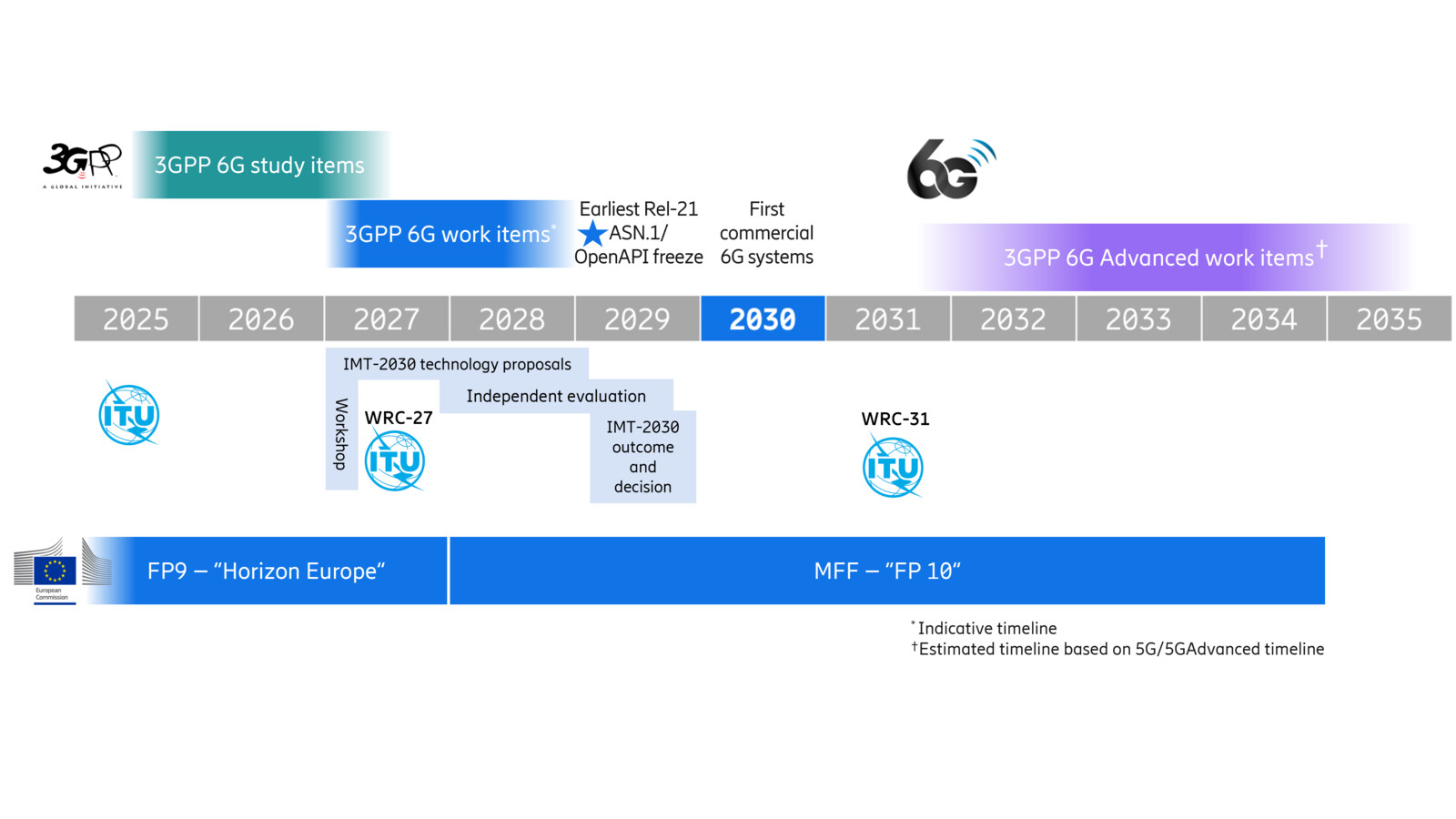
Figure 1: Estimated timeline for 6G Advanced and European research
Future direction for European research
As 6G research progresses, several priority areas are emerging that will shape Europe’s role in the next generation of connectivity.
From Ericsson’s perspective, strengthening global collaboration will be essential. Expanding cross-regional research partnerships, particularly with Asia and North America, can help pre-align key concepts early and support a more cohesive path toward 6G Advanced standardization.
Looking ahead to the final phase of the current EU work program, Horizon Europe, Ericsson recommends that research activities from 2027 to 2030 follow a structured three-tier approach:
- Develop trials and pilots of initial 6G deployments across different vertical segments, using high Technology Readiness Level (TRL), to showcase the benefits and potential of 6G and provide lessons and learnings for further development.
- Scope 6G Advanced and evaluate prospective concepts and technologies with mid-range TRLs, targeting 3GPP Release 22 and beyond scope, while also considering other standards development organizations and the AI-driven evolution. To foster this, a 6G Advanced lighthouse project that defines and explores these technologies and consolidates the 6G Advanced concept before the standardization begins could be beneficial.
- Explore future technology components with low TRLs, such as AI and semantic impact on networks, novel network topologies and subnetworks, or self-synthesizing, protocol-less or standard-less networks, which have the potential to significantly impact the way mobile networks operate and are deployed in the future.
It is crucial that the projects continue the cooperation with other regions to foster a global 6G ecosystem, leveraging external insights as well as anchoring European research on a global scale.
Looking further ahead into MFF and the next EU work program FP 2028-2034, Ericsson believes that the digital connectivity and telecommunications sector must be prioritized, based on the following main pillars and cross-sector synergies:
- R&D pillar: to support the fundamental technologies such as wireless, optical and non-terrestrial communications, cybersecurity, telecom cloud architecture, system sustainability, and advanced connectivity.
- Experimental pillar: to enable large-scale testing and validation of promising technologies, and the creation of software and services ecosystems.
- Pre-deployment and market uptake pillar: to ensure a sustainable valorization and scaling of technologies, supported through programs such as the Connecting Europe Facility and Digital Europe Program.
- Cross-partnership synergies: to strengthen synergies with related joint undertakings or initiatives, for example, chips JU, high-performance computing, AI, cloud, and quantum.
Legacy of European telecommunication research
Europe has a long history of research on mobile communication starting from NMT, GSM, and 3G, with major European projects defining the foundation of each subsequent generation, from CODIT and FRAMES projects for 3G, WINNER projects for 4G, the METIS projects for 5G, and the Hexa-X projects for 6G.
Each of these projects has featured large participant consortia with representations from network vendors, device vendors, network operators, system integrators, industrial partners, academia, research and technology organizations (RTO), and many SMEs. Ericsson has held significant leadership roles throughout these projects, including project coordinator, technical manager, work package lead, task lead, and made significant contributions to many of the technical deliverables and publications.
These projects have been funded under the EU FPs. Within the FPs, selected flagship projects occurred in the lead-up to the inaugural 3GPP releases of the technical specification for each generation of mobile networks, providing a proving ground for long-term research into explorative ideas and opportunities to develop pre-commercial demonstrations that showcased the technological viability of the new generations.
In addition, these projects have acted as vibrant forums for pre-standardization alignment, both within the projects and as a counterpart in alignment on a global scale.
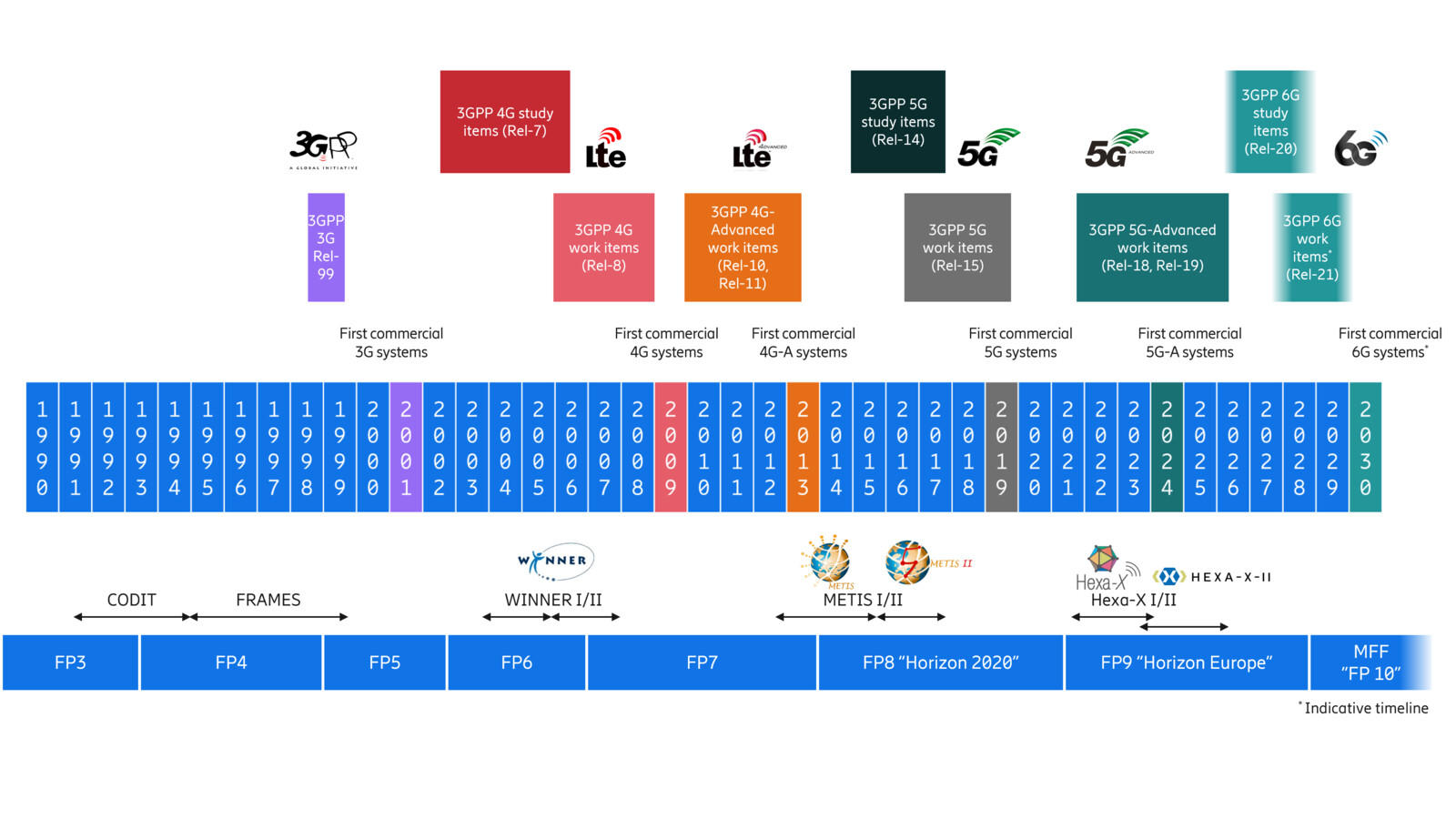
Fig 2: Approximate timeline of 3GPP standardization of 3G-6G and corresponding European flagship research projects
The ongoing Horizon Europe Framework Programme 9 (FP9) is EU’s key funding program for research and innovation, of which a small portion is dedicated to research on Smart Networks and Services (SNS), primarily focused on 6G.
Current European framework program
One of the European partnerships within FP9 is the SNS JU, a public-private partnership where the European Commission (EC) represents the public side and the 6G Smart Networks and Services Industry Association (6G-IA) represents the private side. Both sides contribute up to EUR 900 million, combining EU funding with industry in-kind and financial contributions.
The primary objective of 6G-IA is to strengthen Europe’s leadership in SNS, including 6G research and innovation. The 6G-IA association is governed by a Governing Board (GB) where Ericsson has held key roles such as vice-chair, board member, and treasurer positions.
The SNS itself is governed by a separate governing board composed of EC representatives and the private members represented by selected 6G-IA GB members. Ericsson has been an active member of this board since 2021. The board is responsible for the JU’s strategic and operational decisions, including the preparation of the work programs and funding decisions for research and innovation activities under Horizon Europe.
Correspondingly, during FP8, the 5G Public Private Partnership (5G-PPP) was between the EC and the former 5G-IA. The work in the SNS and the previous 5G-PPP has been conducted through the funded projects.
Under SNS, the projects are separated into five different categories or streams, with Stream A focusing on 5G evolution, Stream B focusing on 6G, Stream C focusing on experimental infrastructure, Stream D on large scale trials and pilots, and finally the last category called Coordination and Support Action.
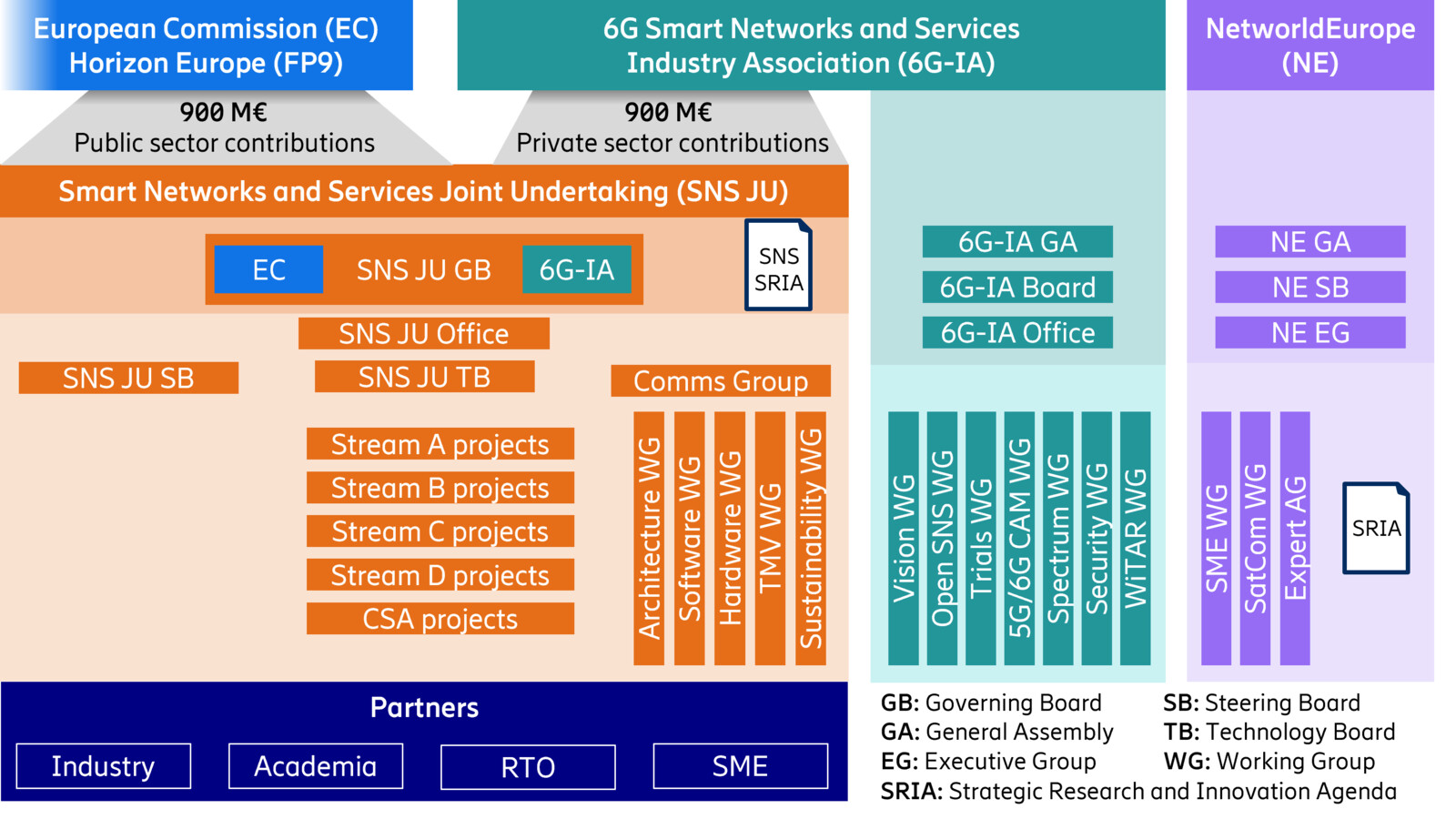
Fig 3: Relation between European Commission, SNS-JU, 6G-IA, and NetworldEurope
To coordinate the work across the SNS projects, the SNS Steering Board, chaired by Ericsson, brings together the coordinators of all ongoing SNS projects regularly to decide on common actions and initiatives. In addition to the individual goals of each project, the program also fosters collaboration among projects to ensure 5G and 6G industrial leadership for Europe. Similarly, the SNS Technology Board, comprising the technical managers of all ongoing projects discuss the potential synergies between the projects.
To complement this work, the European Technology Platform for communication networks and services known as NetworldEurope, gathers input from leading experts from academia and industry to regularly produce a Strategic Research and Innovation Agenda (SRIA). This SRIA outlines a technology roadmap to guide future information and communications technology (ICT) research. Based on this SRIA, the 6G-IA creates a separate SNS SRIA aimed at guiding specific research in SNS.
In addition to the SNS projects, the SNS, the 6G-IA, as well as the NetworldEurope, organize specific complementary working groups (WGs), for example, the 6G Architecture, or Sustainability WG or the Ericsson-led Vision and Societal Challenges WG. The WGs focus on aligning the views of the respective members and participating SNS projects to formulate common standpoints and to disseminate their findings through, for example, white papers and workshops, with participation from industry and academia alike. With Ericsson’s high engagement through leading roles across the European research ecosystem, we shape the future research programs together with our partners from leading academia, research institutes, and industries.
To extend the global reach, the 6G-IA has signed a number of memoranda of understanding with, for example, Next G Alliance in the USA, IMT-2030 (6G) Promotion Group in China, XGMF in Japan, Bharat 6G in India, 6G Platform Germany, and TAICS in Taiwan, opening up possibilities for joint collaborations between Europe and other regions creating global alignment on the scope and use of 6G technology. To achieve this, several technical joint workshops have been conducted.
The unique setup and composition of the European telecom research projects, comprising leading industrial and academic partners, offer an efficient vehicle to consolidate forward-leaning academic research with market-adjacent industrial research from all aspects of the value chain. In addition, a strong commitment to including SMEs fosters means to test and commercialize the solutions. Further, the projects do not only have goals of their own but also join forces on program level as well to ensure broader success.
The European telecom research system has been a valuable tool to ensure European influence and global alignment, and going forward, it will be an essential tool to shape the future. Ericsson is committed to continuing crucial research and development together with the community and key partners to define and develop the coming generations of mobile networks.
Further reading
Learn more about 6G
5GPPP in review 2023 (pdf)
6G SNS: Interactive map of SNS projects
Books: