










How Singtel is creating pioneering services with 5G Standalone
Highlights
Singtel has completely shifted their portfolio from volume-based to performance-based offerings. The company has received numerous accolades for its dedication to 5G innovation and is paving the way for other service providers. By doing this Singtel is increasing the value of connectivity by creating personalized services meeting different performance needs from consumer and enterprise applications. This will create new business opportunities for Singtel and its partners alongside driving up customer loyalty.
Singtel is utilizing the power of 5G Standalone (SA) and other network capabilities such as network slicing, User Equipment Route Selection Policy (URSP), advanced RAN features, and OSS/BSS to offer differentiated connectivity services for consumers and across various industries.

Singtel’s network slicing journey, leading the commercialization of network slicing.
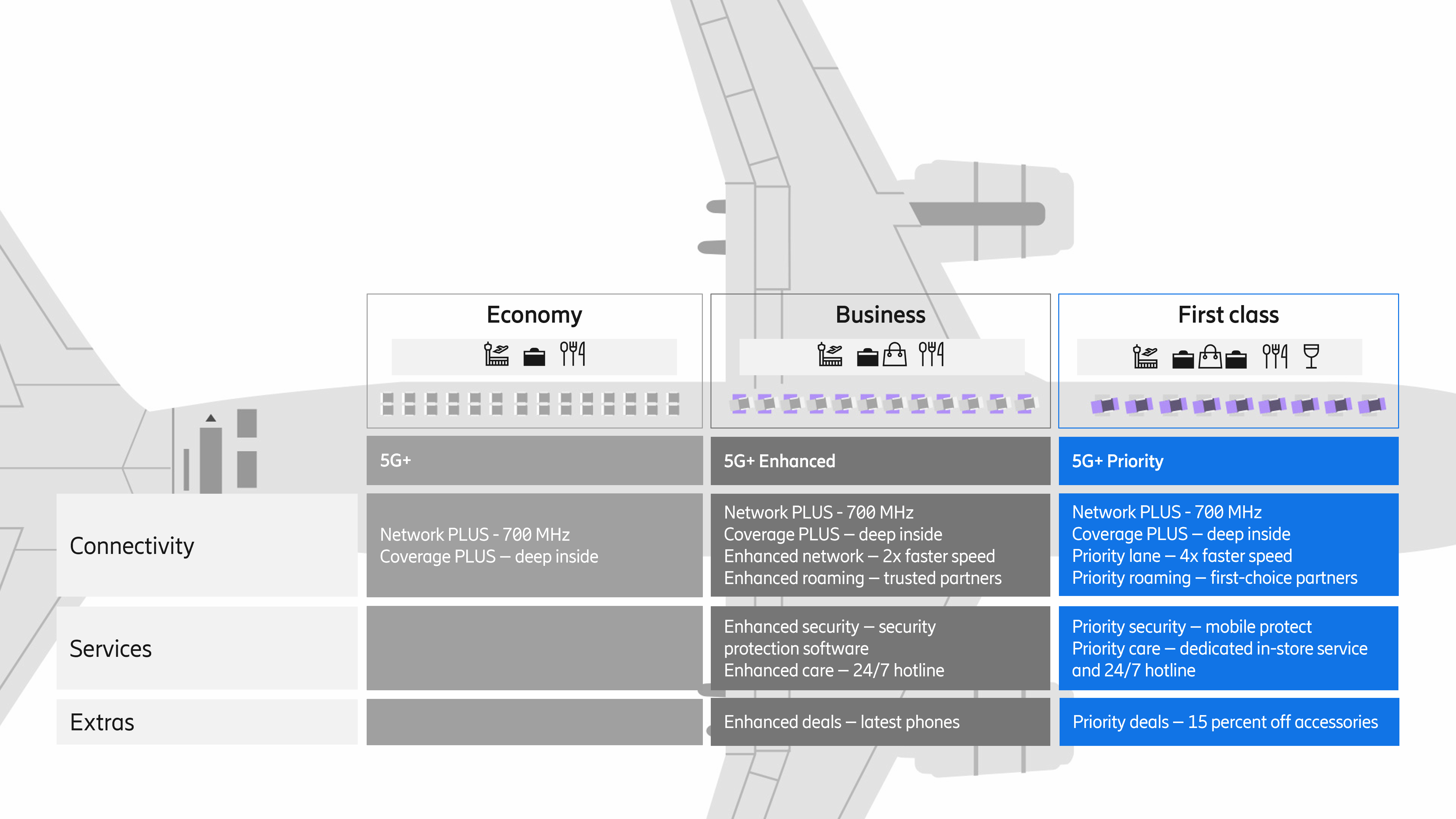
Singtel’s new offering structure for differentiated performance

Transforming the business model for connectivity
The promise of premium experiences is one of the many driving forces behind the rollout of 5G Standalone, but as these experiences become more immersive, using 4K video and Artificial Intelligence-based applications, the demand on networks increases, putting a potential strain on application performance and network resources.
Beyond premium experiences, service provider’s customers have also increased their requirements for better performance, reliable experience and service innovation. One way to effectively achieve this is though differentiated connectivity.
For more than a decade, communication service providers’ main offering has been the data bucket, with the volume of data representing the key value proposition. However, as the buckets have gradually increased in size, the traditional model is losing applicability in this new reality.
However, Singtel faced challenges in exploring how the capabilities of 5G Standalone, network slicing and other advanced technologies could support their business targets, understanding the needs of their customers, and marrying the two to create a solution.
Throughout the journey, Singtel achieved higher understanding of how features such as priority lanes, enhanced security, and premium support create tangible benefits that consumers can perceive and value. This additional value creates opportunities for upselling and consumer acquisition.
Delivering premium predictable performance
In 2025, Singtel took the next step to commercialize user experiences with the launch of a tiered offer structure under the Singtel 5G+ brand. These offers are designed to provide consumers with clear and differentiated performance classifications to fit a diverse range of needs. This approach allows consumers to select a level of service that matches their needs and willingness to pay. This business model transformation is covered in the part II of this case study.
Singtel journey started in 2022, experimenting with network slicing in 2022 by offering differentiated experiences to spectators during the Singapore Grand Prix.
In the following years Singtel scaled the solution during the National Day Parade using Ericsson’s Priority Based Admission Control (PBAC) feature, to ensure that subscribers and prioritized users, such as public safety and crowd control officers, had guaranteed access to reserved network connections throughout the whole event.
Network slicing technology divides a mobile network into separate virtual networks on the same physical infrastructure, each catering to different application needs like security, reliability, and performance. From a network capability perspective, Singtel continued their journey with the adoption of additional capabilities for differentiation like User Equipment Route Selection Policy (URSP), allowing devices to switch between slices based on the application they are using. This requires core domain essential functions, such as Access and Mobility Management Function (AMF), the User Plane Function (UPF) and the Policy Control Function (PCF). These achievements were covered in the part I of this case study.
Differentiated offerings to consumers and enterprises

Navigating where to start on the journey to differentiated connectivity was never going to be easy, but with numerous accolades and awards for their dedication to 5G, Singtel has continued to commit to innovating and maximizing the potential of 5G Standalone and network slicing. Singtel is in a fantastic position to differentiate its offerings beyond connectivity, to consumer services and enterprise solutions.
“The work we’ve done in Singapore is so important,” explains Zsolt Kormanyos, CTO, Global Customer Unit, Singtel at Ericsson. “I see others not on this journey yet, and they don’t realize the things that we’ve already done, which for us, are now just the obvious next steps to take. There is a huge opportunity, and we are paving the way for the rest of the market who can use our journey as their learning.”