Skip navigation
""

Deliver powerful, optimized and profitable user experiences

Enter a new era of business innovation enabled by differentiated connectivity

Differentiated connectivity: Turn 5G SA capabilities into unique user experiences

Deliver connectivity services with consistent performance, designed to meet distinct and varied needs of emerging consumer and enterprise applications, when and where needed.

One network meeting diverse needs

What is differentiated connectivity?

Differentiated connectivity refers to the capability of service providers creating multiple levels of connectivity over a common network infrastructure to deliver deterministic performance at scale, matching the needs of diverse applications at consistent levels of quality and enabling service providers to capture the full value of emerging business.

Today’s consumers, enterprises and public sectors expect more from their connectivity than ever before. New mobile applications such as cloud gaming, extended reality and remote operations place new performance, resilience and predictability demands on networks. Traditional best-effort mobile broadband connectivity cannot deliver to this need, impacting subscriber’s service experience and limiting service providers ability to innovate and grow revenue.

This is made possible by 5G standalone network capabilities such as network slicing, User Equipment Route Selection Policy (URSP), advanced RAN features, and OSS/BSS and API exposure capabilities. Through network slices that are designed and configured to serve a defined purpose – and are dynamically orchestrated across the networks end to end – diverse experiences can be delivered at specific times and locations over the same physical infrastructure with performance levels that meet service level agreements (SLAs). This means that network resources could be optimized to meet a wider range of applications, while unlocking new revenue opportunities enabled by performance-based business models.

Person using mobile phone in busy urban street.

Benefits and opportunities

Grow revenue through enhanced user experiences

Differentiated connectivity enables service providers to plan, build, package and sell services in new ways, providing more reliable and enhanced experiences anchored by service-level agreements (SLA) that targets varied needs of emerging consumer and enterprise applications.

Move into performance-based and platform-based business models

Based on standardized network APIs, platform business models will more dynamic pricing based on when, where and how much a network capability is used, including. Such models will grow in coming years leveraging new possibilities to monetize network investments across global developer markets.

New revenue streams and innovation

Additionally, differentiated connectivity allows service providers to capitalize on exposing APIs related to differentiated connectivity to application developers and aggregators. This not only opens new customer segments but also drives innovation and sets new industry standards.

Get the latest insights on differentiated connectivity

Chapter 3: Performance levels: from theory to practice

This third chapter of the Differentiated Connectivity Handbook will provide you actionable guidance for implementing differentiated connectivity, focusing on the planning and design of performance levels to align technical capabilities with commercial objectives. It also exemplifies how to build the performance levels leveraging a toolkit of capabilities. Moreover, learn from real-world experiences and how commercial services differentiation is accelerating worldwide.

Key learnings include:

  • translating application requirements into network configuration
  • structure process to build and configure the network
  • Ericsson’s toolkit for performance levels and practical examples
  • real-world success stories from leading service providers
Download the handbook

Customer success stories

“We believe it offers unparalleled opportunities for our customers, enabling the development of tailored services and dedicated resources with optimized performance.”

Shilpa Aggarwal, Vice President, Product Marketing-Commercial at Singtel

Unleash differentiated connectivity with Ericsson

""

Our three-stage blueprint to get started

Leveraging expertise acquired through collaborations with the majority of early 5G SA pioneers, Ericsson has identified a proven cyclical framework for accelerated progress while realizing the value of differentiated connectivity along the way.

Build your knowledge with a live “sandbox” deployment and an open mind. Identify one or more use cases that can be explored in relatively confined segments of your network, ensuring that your wider network remains unaffected.

A small-scale, real-world deployment that offers consumers a choice of connectivity levels will provide clearer, defined value propositions for each target segment as part of your future go to market strategy.

The challenge here is striking the balance between providing the required efficiency for the use cases served by differentiated connectivity without impacting any commercial service to the existing network users, all while navigating the network’s conditions and resource availability.

Effective monetization begins during exploration. From the outset, business support systems (BSS) capabilities allow CSPs to define and manage product offerings, bundle services, and establish eligibility rules for different customer segments. This ensures that differentiated connectivity can generate revenue from initial deployments.

The primary focus is on achieving a significant return on investment as enterprises and consumers realize their CSP can deliver connectivity which meets their precise needs, and that they can start paying accordingly for its value. Offer a service that the market needs, and the customers will follow.

The scene is now set for growth. The initial wins in the exploration and monetization stages will have built a foundation of confidence and knowledge. At this point, the focus is on scaling up deployments in a controlled way to a wider location and multiple target user groups.

The scaling phase means starting to offer multiple connectivity options with differing characteristics to address specific audiences, locations and/or use cases with optimized network resources.

So, CSPs must build on the differentiated service offerings implemented in the previous phase, broadening its coverage, extending its usage to other similar locations, and/or increasing its user base.

Differentiated Connectivity Handbook

Chapter 1: The journey toward differentiated connectivity

Explore, monetize and scale – discover our proven three-stage blueprint to transform your 5G SA networks into a launchpad for unique and premium experiences, all while optimizing network resource utilization.

Download the handbook

Chapter 2: Unlock the value of differentiated connectivity

Learn the steps to realize differentiated connectivity service offerings, its essential network capabilities and go-to-market alternatives to transition from proof-of-concepts and trials to scalable, long-term profitability.

Download the handbook

Chapter 3: Performance levels: from theory to practice

Find actionable guidance for planning, building and applying performance levels, and learn from real-world success stories demonstrating how concepts translate into measurable business outcomes.

Download the handbook

Essential building blocks

Differentiated connectivity comprises capabilities and end-to-end resources on a 5G SA network, along with associated devices and applications. Together, they enable dynamic and flexible network configuration and management, driving an optimal connectivity experience.

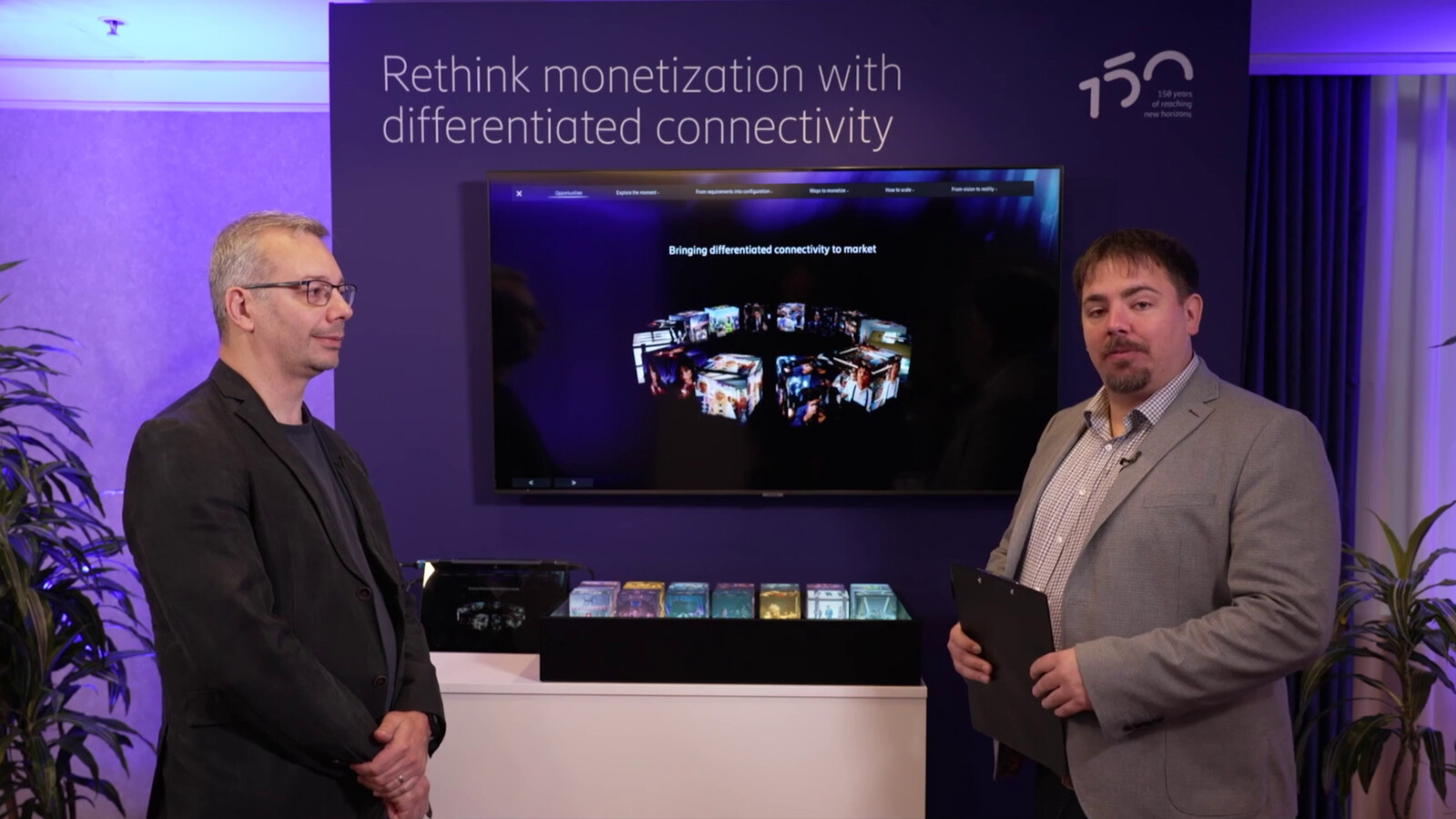
Bringing differentiated connectivity to market requires seamless integration with business and operations support systems, enabling service orchestration, billing, charging, customer relationship management, and analytics.

Our comprehensive portfolio of products and services spans from RAN and Core networks to support systems and service exposure platforms. This enables service differentiation with end-to-end key performance levels geared toward SLAs and monetization in the broader ecosystem.


RAN capabilities

Features to support multiple slices and traffic types, such as priority-based admission control (PBAC) relative priority scheduling (RPS), rate-controlled scheduler (RCS) and latency improvements.

Transport capabilities

Quality of Service (QoS) management and traffic steering principles is required to support multiple deployment paths. Domain-specific software-defined networking (SDN) controllers and transport orchestrator is required to enable effective network slice creation, deployment, resource mapping and delivery of SLAs.

5G Core capabilities

User equipment route selection (URSP) functionality supports devices switching between slices on an application basis. Access to network slicing and different QoS categories, routing principles and charging parameters need to be configured on the user control planes and the data management elements.

OSS/BSS capabilities

SLA-based assurance requires monitoring capabilities to optimize network performance in real time using feedback from users and applications, while also considering the network conditions. Multi-domain service orchestration, dynamic network slicing support, and assurance capabilities can be implemented, and continue to evolve in succeeding stages.

Moments of hope, desire, or unease make people's willingness to pay suddenly skyrocket, these moments represent an untapped market opportunity for the telecom industry. Explore the business value of moments for consumers and businesses.
 

Explore the moments

Step into what is next

Welcome to the next wave of mobile

The next wave of mobile will take mobile deeper into traditional industries, unleashing new innovations and network value. Are you ready to capture the value?

Network evolution for the next wave of mobile

The era of traditional mobile is over. The breakthrough of high-performing  and programmable network capabilities is unleashing a new era of business innovation built around differentiated connectivity and network APIs, opening up new revenue streams. This is not just a network evolution, it’s an industry-wide revolution that will transform what mobile services can enable and how they are monetized.

Open network APIs

Evolve into dynamic business models, generating diverse revenue and innovation opportunities for a global ecosystem of developers, service providers and enterprises.

5G Advanced

Upgrade to 5G Advanced and unlock powerful new network capabilities including enhanced automation, energy optimization and new services such as RedCap.

Further reading