




Skip navigation
Previous searches
    Suggested searches

      Ericsson Charging and Billing Evolved by Appledore Research

      Telco monetization systems — encompassing billing and charging — occupy a uniquely critical position within the telecommunications operational framework. As the functional engines responsible for converting network usage and services into revenue, these systems underpin the commercial viability of an industry that generates well over $1.5 trillion annually on a global basis. Their performance, accuracy, and adaptability are central to how operators sustain and grow their businesses in a highly competitive and rapidly evolving landscape.

      Report
      OCT 9, 2026

      Introduction

      The modernization of telco monetization is being accelerated by several converging pressures. Legacy monetization systems carry significant operational cost burdens, while their architectural rigidity limits CSPs ability to support emerging use cases easily and efficiently. The lack of agility also slows down innovation cycle and impedes CSPs’ ability to participate in emerging value chains. 

      Although monetization is typically grouped within the broader BSS domain, its evolution has been notably distinct from the rest of BSS. Moreover, even within monetization, billing and charging have followed different maturity paths, shaped by separate functional demands, architectural shifts, and business priorities. 

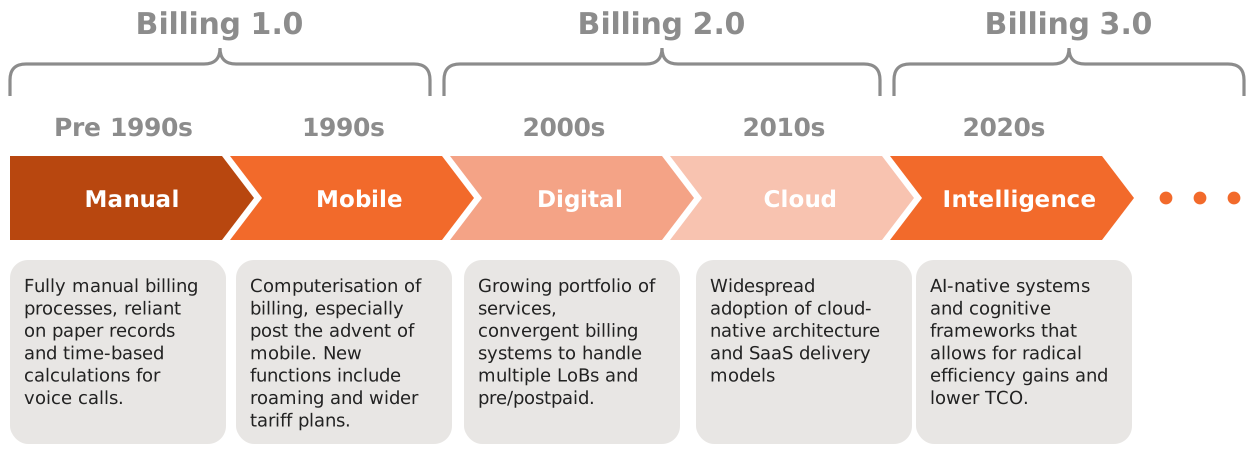
      Telco billing systems have evolved (figure 1) significantly since the dawn of telephone services, moving from manual processes to computerized solutions in the 1980s, then expanding rapidly through the 1990s mobile boom with the addition of roaming, SMS, and complex tariff plans. 

      charging and billing evolved by Appledore

      Commissioned by Ericsson

      Figure 1: Evolution of billing system

      Figure 1: Evolution of billing system, Source: Appledore Research
      The 2000s drove a shift toward unified billing platforms to manage diverse digital service portfolios, though this came at the cost of numerous customized integrations that added operational complexity. The cloud era pushed CSPs to modernize legacy architectures in pursuit of better TCO and efficiency, drawing inspiration from cloud-native, microservices-based approaches pioneered by digital native companies. The 2020s is set to mark a major overhaul thanks to the emergence of Billing 3.0 defined by unified platforms, intelligent automation, and unprecedented levels of agility and operational performance.

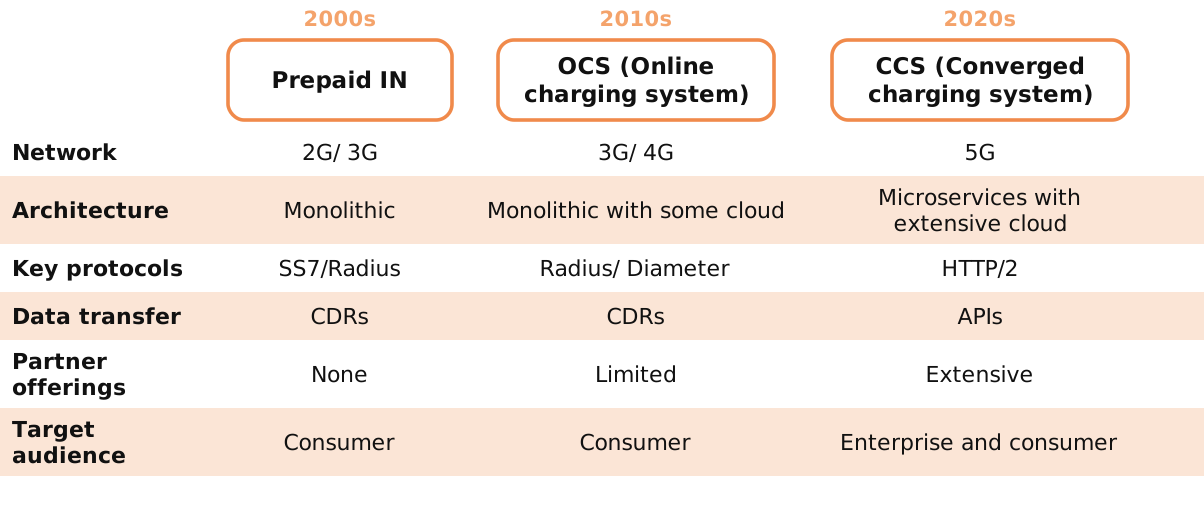
      Telco charging engines have undergone three major generational shifts (figure 2): the early 2000s prepaid boom introduced Intelligent Network (IN) systems for real-time voice charging, primarily delivered by network equipment providers (NEPs). The 2010s brought Online Charging Systems (OCS), enabling converged real-time charging for both prepaid and postpaid from a single platform. The 
      advent of standalone 5G triggered the most significant generational leap yet — replacing CDR-based models with API-driven, HTTP/2-native charging engines that offer flexible, configurable parameters capable of supporting new and hybrid charging models. 

      Figure 2: Evolution of charging system

      Figure 2: Evolution of charging system, Source: Appledore Research

      Telco monetization systems are on the cusp of a profound paradigm shift, as decades-old billing and charging architectures give way to a new generation of intelligent, real-time platforms built for the complexities of tomorrow's revenue models. The convergence of AI, 5G, and cloud-native design is reshaping how CSPs capture, manage, and optimize value — moving beyond traditional usage based models toward dynamic, hybrid monetization frameworks that can adapt at machine speed.  

      CSPs planning to upgrade their billing and charging systems should carefully consider these four factors:  

      CSPs should prioritize partners that deliver a unified, end-to-end monetization stack, where real-time charging and billing are handled seamlessly. The best-of-breed approaches of the past have left operators with sprawling integration points that are costly and cumbersome to maintain. A consolidated stack also becomes a material advantage in the context of AI. Scaling AI capabilities across a homogeneous solution is fundamentally more tractable than doing so across a fragmented, multi-vendor environment.

      Early AI deployments in telco monetization, such as those related to anomaly detection, bill presentment and intelligent bill explanation have quietly become table stakes, normalizing AI-driven efficiency across billing operations. The next phase, however, will be far more transformative: AI that actively shapes pricing decisions, predicts revenue risk, automates complex mediation, and personalizes monetization at scale. CSPs should favor partners with a coherent vision for AI across the full monetization stack underpinned by the right data access and semantic models, to ensure their monetization investments remain future-proof. 

      CSPs should prioritize network-grade monetization systems, particularly given how charging has moved closer to the network in the 5G era. Monetizing network resources effectively — which will only become more critical as standalone 5G gains ground — requires monetization systems that can interoperate seamlessly with telco core network functions. 

      Regulatory and security demands on telco monetization systems are becoming increasingly stringent given that these platforms have are now classified as critical infrastructure, processing billions in real-time transactions, and exposing APIs across complex enterprise ecosystems. This makes them prime targets for cyber threats, fraud syndicates, and regulatory scrutiny. CSPs should identify and favor solution partners with proven regulatory and security credentials who prioritize sovereign data localization, cyber-resilience, API security, and fraud prevention as architectural defaults. 

      Ericsson monetization portfolio

      Ericsson has a full stack monetization portfolio that is tightly integrated with its Core Commerce capabilities (figure 3) and is designed to support complex and telecom specific consumer and enterprise business and revenue models.

      intent driven monetization

      Figure 3: Overview of Ericsson Core Commerce and Monetization portfolio
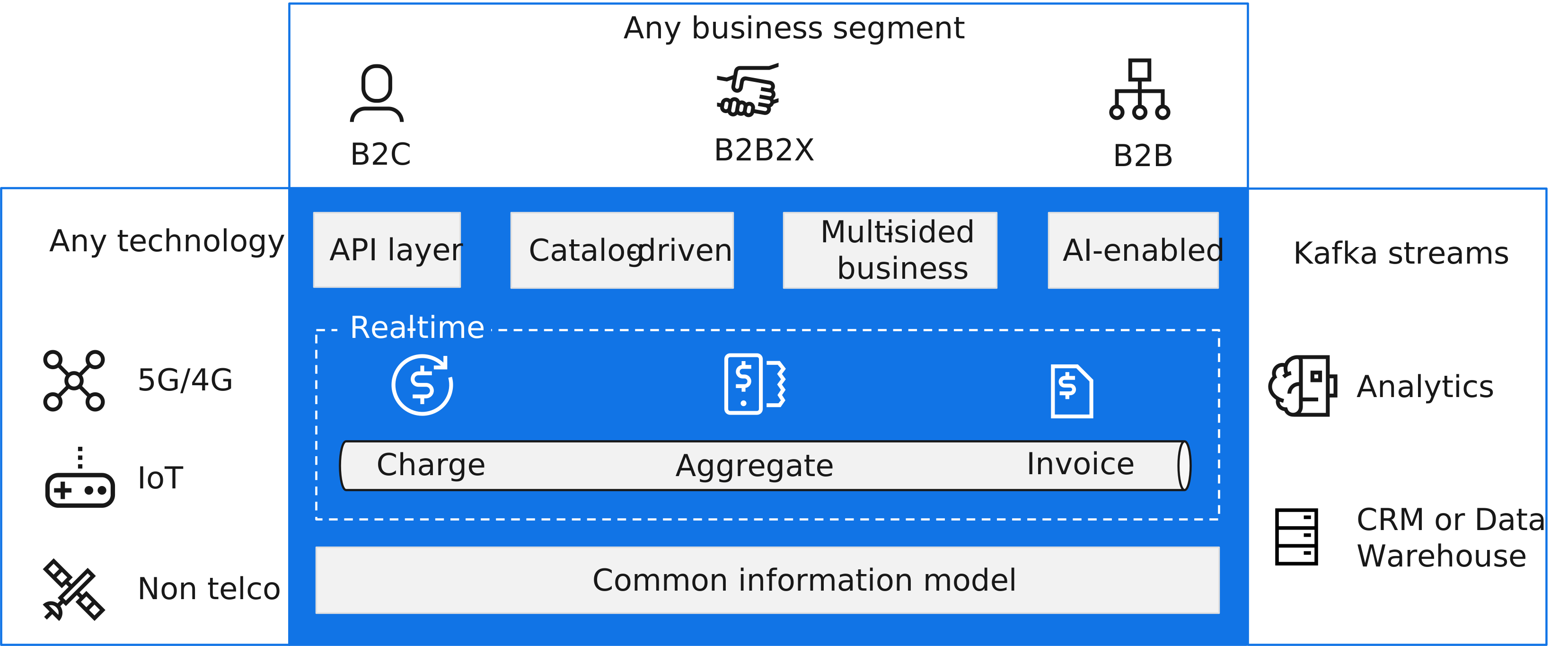
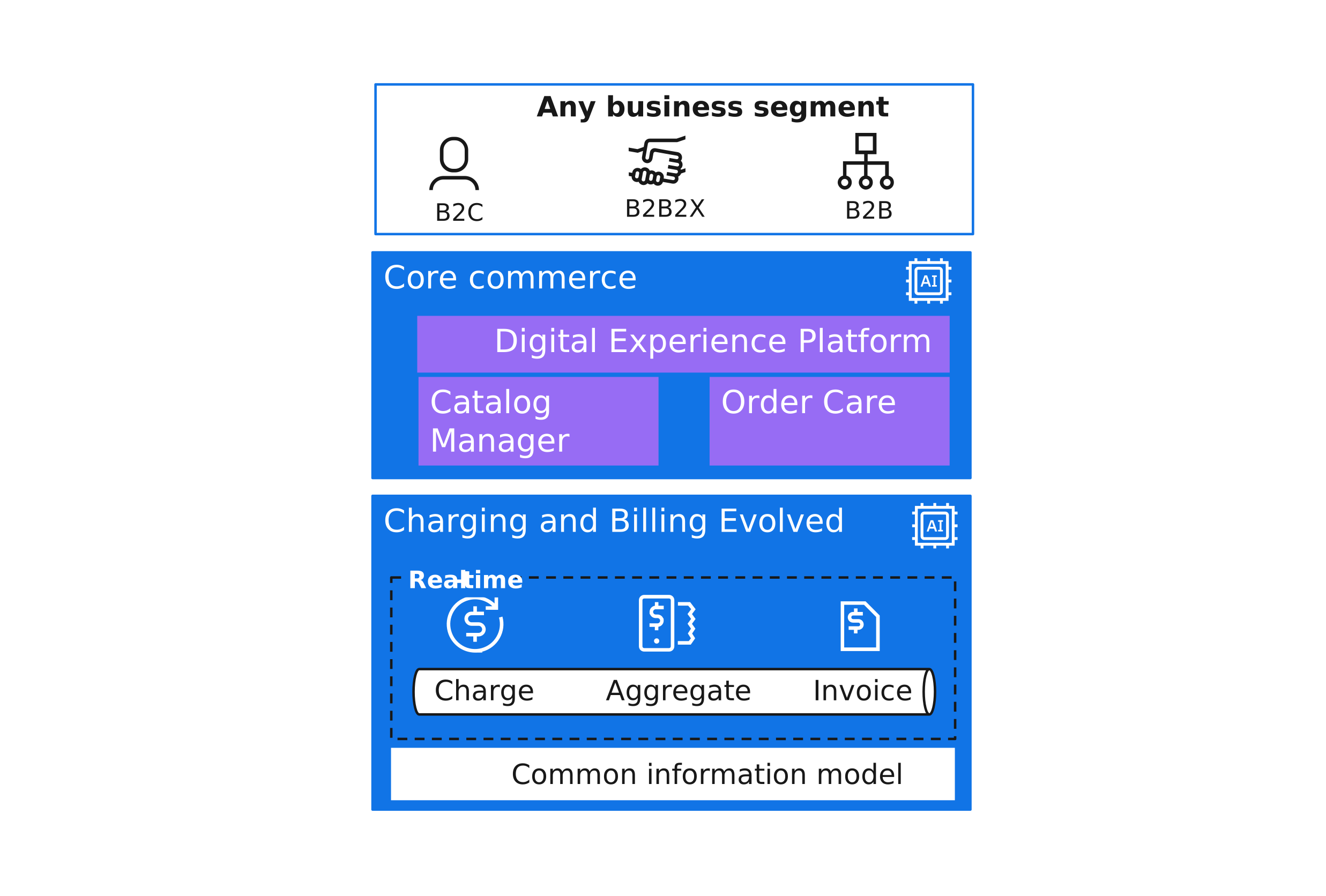
      Ericsson’s primary monetization offering is Charging and Billing Evolved (figure 4), a cloud-native monetization system designed to handle real-time charging and billing in mission-critical telecom environments. The main objective of Ericsson's converged monetization approach is to reduce TCO through pre-integrated charging and billing systems operating on a common information model, while simultaneously improving the agility and competitiveness that operators need in an evolving services landscape. 

      Charging and Billing Evolved is designed to support new service monetization across consumer and enterprise segments, including B2B and B2B2X business models in a single end-to-end package. It supports a range of deployment models including private cloud, public cloud, and on-premises.

      billing and charging involved

      Figure 4: Overview of Ericsson Charging and Billing Evolved
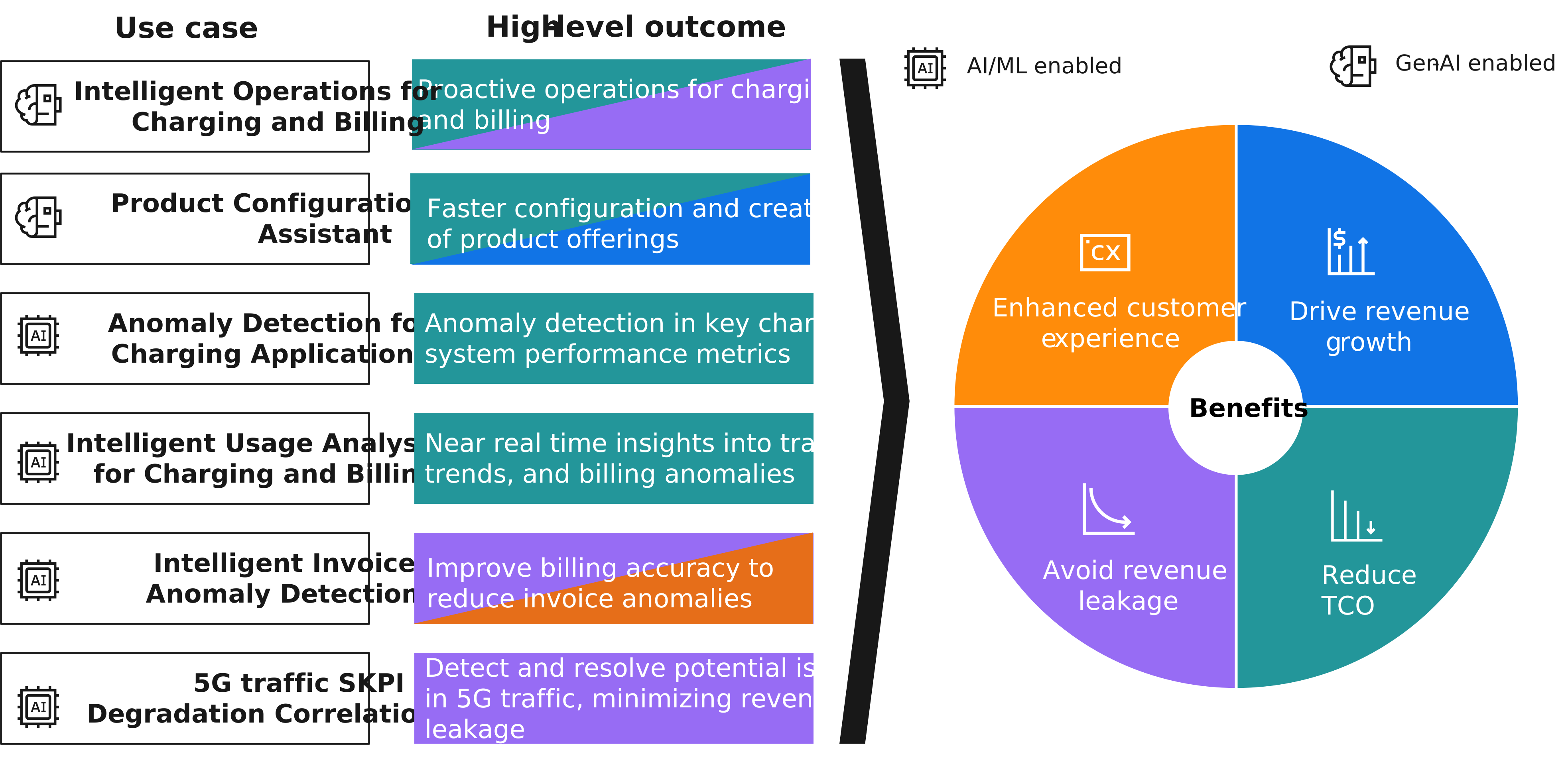
      Charging and Billing Evolved represents a ground-up architectural departure from Ericsson's prior monetization approach. The system unifies charging and billing on a single platform and is designed to better support emerging 5G and B2B2X models that legacy systems were not designed to handle by enabling identifier-based charging across devices, users, network slices, APIs, partners etc. It also offers a no-code/low-code configuration layer and built-in AI capabilities to reduce operational overheads and time-to-market. Ericsson Charging and Billing Evolved is aligned with 3GPP and TMF APIs and supports multi-vendor interoperability. 

      Central to the architecture of Charging and Billing Evolved is a common information model that functions as a single source of truth across the platform. It consolidates all business and operational data into a unified database, eliminating the duplication of plans and configuration that has historically been a pain point in multi-system monetization environments. Online and offline event data is available in real time across the platform, enabling live analytics and data exposure without additional integration overhead. The layer scales across service types and payment models without requiring re-architecting and is underpinned by built-in replication, redundancy, and assurance mechanisms. It adopts an API-first design approach and is compliant with TM Forum SID and 3GPP integration standards. 

      Ericsson also offers standalone deployment options for its charging and billing solutions, which have already been successfully deployed across various telco environments:  

      1. Ericsson Charging is a modular, scalable, open and 5G-ready Online Charging System (OCS) built on industry-standard protocols. It supports real-time convergent charging, policy control, and service creation across traditional telecom services, digital services, 5G, and IoT. Ericsson Charging is designed to integrate with the broader BSS stack and can support multiple network types and service categories. 
      2. Ericsson Billing is a convergent, end-to-end billing system that supports mobile, fixed-line, broadband, TV, digital, and OTT service providers. Built on an open, modular architecture, it offers a broad set of capabilities out-of-the-box and is highly configurable to support specific telco requirements. The system is designed to serve both greenfield and large-scale CSPs with complex IT environments and high subscriber volumes.  

      Ericsson's Monetization portfolio spans more than 280 deployments globally, making it one of the most widely adopted monetization platforms in the telecom sector. The company estimates that over 25% of the world's total subscriber base is processed through its charging infrastructure. 

      AI in monetization

      AI-readiness is a priority within Ericsson's monetization portfolio. The solution includes pre-built AI applications that are available out of the box and have been deployed at multiple CSPs worldwide. Ericsson supports multiple adoption models for AI across its monetization portfolio, ranging from a managed service option where Ericsson enables and operates AI capabilities on behalf of the CSP, to a self-managed model where operators deploy and run those capabilities independently. 

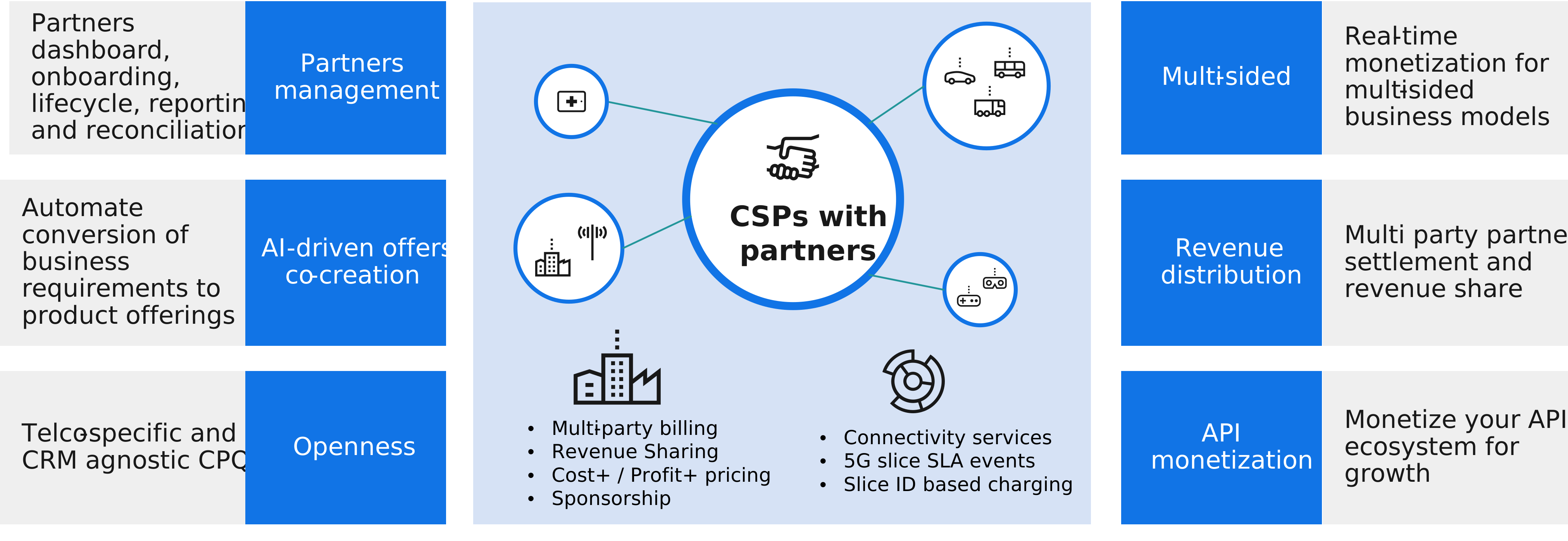
      Some early examples include a gen-AI powered product configuration assistant that automates the translation of business requirements into product configurations across charging, billing, and product catalog systems, and an intelligent operations application that enables engineers to simulate and predict the impact of system changes before applying them in production — reducing operational risk in mission-critical environments. Other out-of-the-box AI use cases are captured in figure 5. 

      appledore intent driven monetization

      Figure 5: Selected AI use cases for Ericsson Charging and Billing Evolved solution
      Differentiated experience

      Charging and Billing Evolved is designed to support complex enterprise revenue flows and partner ecosystems across an end-to-end monetization process. This is particularly relevant in the context of differentiated connectivity, where pricing may be tied to customer value, service level agreements, or experience-based metrics — or a combination of all three. The solution supports monetization of slice-based services through unified real-time charging and billing with granular control across network domains. Complex enterprise structures are accommodated through customer hierarchy management, enabling accurate cost distribution across departments, subsidiaries, and business units. Partner management capabilities automate revenue sharing and settlement based on consumption and performance agreements across all involved parties.

      Intent driven monetization

      Figure 6: Overview of Ericsson’s approach to ecosystems and partnerships
      The system is also capable of supporting charging based on API consumption volume and type, enabling operators to bill aggregators, enterprise customers, and partners for exposed API usage. It is designed to handle the high volume of concurrent charges that typically arise against shared resources in API-driven business models.

      Intent-driven monetization

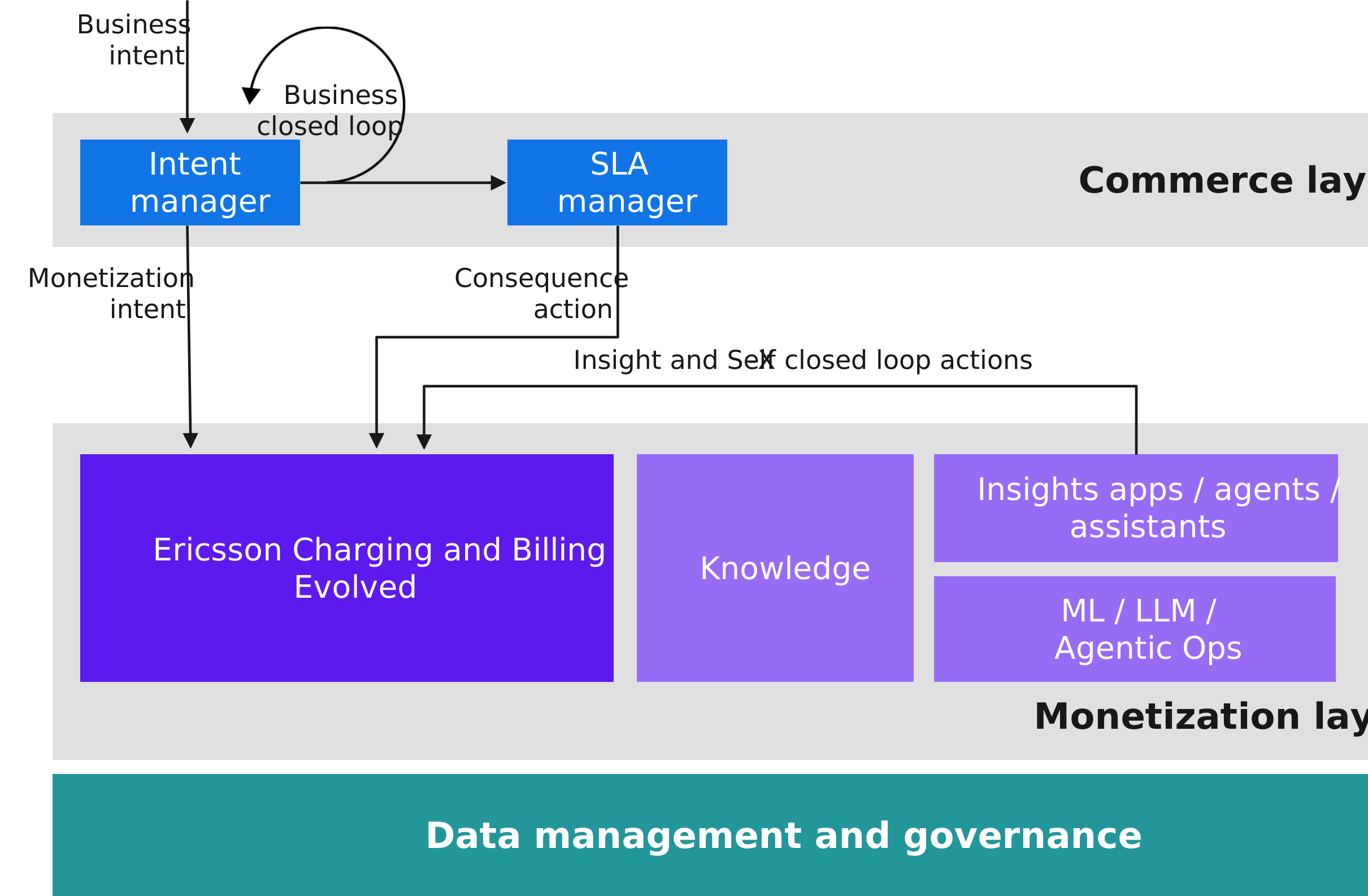
      Ericsson also offers an intent-driven monetization capability aligned with autonomous network operations, enabling a closed-loop flow from business intent to assured revenue outcomes. While the full flow depends on the broader stack including core commerce, the monetization layer plays a central role across three key functions. The commercialization engine transforms business intent into revenue-generating offers and supports product go-to-market launches. End-to-end revenue control manages charging and invoicing from service activation through to termination. Revenue protection prevents leakage, enforces pricing logic, and enables performance-based charging and billing. 

      The monetization stack supports a broad range of commercial constructs including subscription pricing, event and recurring charging, credits and adjustments, discounts and promotions, and commitments and penalties. It also handles SLA breach scenarios, using performance data to feed signals back into core commerce, charging, and billing systems.

      intent driven monetization

      Figure 7: Overview of intent driven monetization
      Cloud-native compliance and scaling

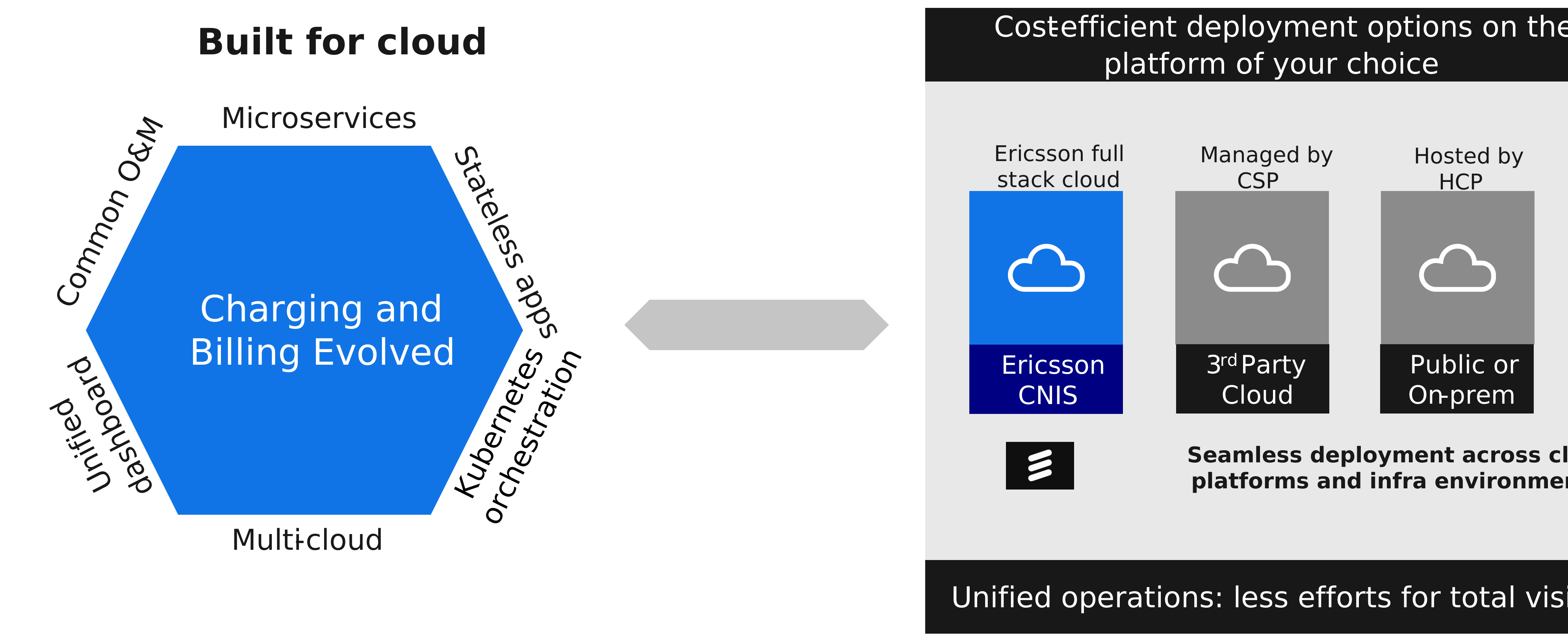
      Ericsson Charging and Billing Evolved is built cloud-native from the ground up (figure 8) — leveraging microservices, stateless applications, Kubernetes orchestration, and multi-cloud architecture to ensure deployment flexibility across Ericsson's own cloud infrastructure, third-party clouds, or public and on-premises environments. This cloud-native foundation is significant given that cloud-native readiness continues to be a primary driver of operator spending in the monetization segment. Unified operations across all deployment models further reduce operational overhead and provide consistent visibility regardless of where the solution runs. 

      intent driven monetization

      Figure 8: Overview of Ericsson’s cloud-native compliance

      The same cloud-native architecture directly addresses the availability and scaling demands of mission-critical charging environments. Elastic microservices, automated testing, and in-service software upgrades enable operators to add capacity, onboard new tenants, and introduce services such as 5G and IoT without scheduled downtime or disruptive maintenance windows — allowing the charging core to process billions of real-time events while remaining continuously upgradable. Over time, this translates into reduced operational risk, protected revenue, and a lower total cost of ownership. 

      Ericsson has embedded security as a foundational pillar of Charging and Billing Evolved — with advanced encryption standards, strong identity and access controls, and continuous threat monitoring built into the core architecture. The solution is designed to align with key regulatory requirements, including GDPR and SOX, giving CSPs the compliance footing needed to operate seamlessly in a rapidly evolving regulatory environment. 

      Selected recent wins in monetization domain

      Customer Description
      T-Mobile,
      USA
      T-Mobile USA is expanding its charging capabilities with Ericsson Charging Evolved to dynamically monetize services based on customer experience, network context, and service quality, enabling faster rollout of new 5G and future 6G revenue models.
      MasOrange,
      Spain
      MasOrange Spain is deploying Ericsson Charging and Billing Evolved to accelerate 5G monetization, consolidating charging processes onto a single platform to reduce time-to-market for new 5G offerings and also to simplify the end-user experience. The solution is deployed on Google Cloud.
      Vodafone Idea (Vi),
      India
      Vi has expanded its partnership with Ericsson to deploy cloud-native Ericsson Charging across its postpaid subscriber segment, extending an existing relationship that already covers hundreds of millions of prepaid subscribers. The deployment modernizes Vi's charging capabilities from offline to real-time rating, while also introducing a suite of AI applications for anomaly detection, capacity forecasting, and intelligent usage analysis.
      Magenta Telekom,
      Austria
      Magenta Telekom has deployed Ericsson Billing in a cloud-native setup, running on Red Hat OpenShift on Magenta's private cloud infrastructure. Ericsson provided end-to-end systems integration and migration services alongside the billing solution, and ensured a seamless transition with no customer impact. The deployment has enhanced the speed, scalability, and cost-efficiency of Magenta's billing operations, while also improving software lifecycle support and enabling automation.

      Appledore analysis

      The monetization segment sits at the core of telecom software, commanding $11.6 billion in combined billing and charging expenditure in 2025— a figure projected to grow to $12.5 billion by 2030 according to Appledore Research’s Digital Enablement Systems Market Forecast 2026-2030. 

      Billing systems represent some of the most complex and mission-critical technology in the industry, and it is precisely this complexity that sustains spending. Modernization has been underway for over a decade, yet the industry remains less than one-third of the way through full cloudification. The gap between public messaging and actual transformation progress is significant — a reflection of the genuine architectural challenges involved. Compounding this, most modernization roadmaps were designed before AI emerged as a strategic imperative, meaning CSPs must now retrofit AI considerations into programs that were never built to accommodate them. The result is a sustained, long-cycle spending environment with no near-term ceiling in sight. 

      Charging systems tell a related but distinct story. Robust investment continues despite ongoing delays in 5G standalone deployment, underscoring the segment's resilience. AI's potential to reshape charging architectures is well acknowledged, even though its impact here is expected to materialize more gradually than in billing. In the near term, AI will sharpen the revenue assurance capabilities already embedded in charging platforms, enabling more precise anomaly detection and surfacing leakage patterns that traditional systems routinely miss. Further along, real-time behavioral analysis may lead to adaptive pricing, which will require dynamic charging for individual usage patterns, market conditions etc. rather than applying static rate structures.

      Additionally, intent-based charging represents a potentially paradigm-shifting development for charging system architecture. This model fundamentally reorients the monetization philosophy away from traditional resource consumption metrics—data volumes, call minutes, message counts—toward the actual outcomes and experiences customers seek to achieve. 

      Ericsson holds a distinctive position in the telecom monetization segment, built on a combination of long-standing customer relationships, a broad portfolio, and a heritage in network-layer charging that continues to carry relevance as the industry evolves. Its standing as the only Western NEP with a full-stack monetization portfolio — spanning both charging and billing — sets it apart from network-focused peers and gives it a credible claim across the entire monetization transformation agenda. 

      Ericsson's involvement in prepaid mobile charging in the early 2000s continues to carry significance both in legacy installed base and also in architectural familiarity. Charging, which began as a network function before migrating toward IT and BSS domains over the following decade, is now moving back toward the network layer with 5G standalone deployments. Ericsson's experience on both sides of this shift — and its 5G-ready Charging system — gives it a degree of technical grounding that gives it an edge over vendors who entered charging primarily from the IT or software side. 

      On the billing side, Ericsson operates one of the more widely deployed platforms in the industry, with over 110 operator customers. In a segment defined by long procurement cycles, deep system integration, and significant switching costs, that installed base provides the company deep penetration into the telco monetization landscape. It also represents a point of genuine differentiation within the Western vendor landscape — other NEPs have not maintained billing offerings of comparable scale, leaving Ericsson without a direct network-heritage peer in this part of the market. 

      As CSPs continue their modernization of legacy monetization infrastructure — a process that, across the industry, remains in relatively early stages — the availability of a single vendor with expertise in telco networks and capable of addressing both charging and billing within a coherent modernization framework has practical appeal. Whether CSPs pursue consolidation or maintain a multi-vendor approach, Ericsson's portfolio breadth ensures it remains a relevant participant across most monetization transformation decisions.

      SWOT analysis

      Strengths

      • Well entrenched in telco networks where Ericsson’s broad portfolio has been deployed across leading CSPs worldwide. This also provides them leverage in the influential CTO group. 
      • Highly regarded in monetization, particularly given its early credentials from the days of real time charging for prepaid mobile along with integrated policy
      • A large and geographically diverse customer base spanning multiple CSP tiers gives Ericsson broad visibility into operator strategies and priorities, while also creating extensive opportunities to cross-sell and upsell its monetization portfolio. 

      Weaknesses

      • Ericsson's network-first identity means its BSS portfolio is frequently perceived as a secondary priority 
      • Ericsson has historically been less vocal than peers in articulating its monetization capabilities, meaning its broad portfolio is not always fully recognized in the market. 

      Opportunities

      • Growing pressure on CSPs to modernize legacy infrastructure and reduce total cost of ownership, combined with shifting business models, is driving sustained demand for monetization modernization 
      • Ericsson is the only NEP with a full stack monetization and unrestricted access to Western markets. 
      • AI is generating new monetization requirements — from token-based and outcome-driven charging models to scenarios that fall outside traditional parametrized frameworks which will expand the scope of applications. 

      Threats

      • Incumbents retain distinct advantage in mid and large monetization modernization projects
      • Economic and AI related uncertainty may impact telco investment plans 

      Conclusion

      The monetization segment sits high on the strategic agenda for most operators, with sustained investment expected as cloudification and AI readiness continue to reshape infrastructure priorities. Ericsson is well positioned to capitalize in this environment, bringing a combination of assets that few competitors can match — a full-stack portfolio spanning both charging and billing, deep network-layer heritage, and a large installed base across CSP tiers and geographies. A combined monetization customer base of over 280 operators across charging and billing underscores the scale and reach of its presence in the segment.  

      Ericsson’s early role in prepaid charging and the ongoing shift of charging back toward the network domain with 5G further reinforces its technical relevance. The cloud-native architecture underpinning Charging and Billing Evolved adds another dimension, enabling CSPs to scale charging capacity dynamically and process billions of real-time events without service disruption. On the billing side, a deployed base of over 110 operators and an absence of comparable Western NEP alternatives gives Ericsson a durable competitive position. Taken together, the breadth of its portfolio means Ericsson is capable of participating across most monetization transformation decisions with the ability to offer telcos a credible single-vendor path for end-to-end modernization. 

      About the author

      John Abraham

      With over 18 years’ experience in the telecom industry, John Abraham leads Appledore’s Digital Enablement program. Previously he was at Analysys Mason for 11 years where, as Principal Analyst, he led the Digital Experience research segment. He has experience working with a varied client base on topics ranging from digitisation benchmarking and procurement for CSPs; strategy and go-to market for vendors and commercial and technical due diligence for financial institutions.

      Earlier as a consultant at a BSS vendor, he led implementation of BSS projects at multiple tier-1 telcos in Asia and Europe. John holds a bachelor’s degree in computer science from Anna University (India) and an MBA from Bradford University School of Management (UK).


      Suggested content