








Wi-Fi’s global impact and Ericsson's legacy
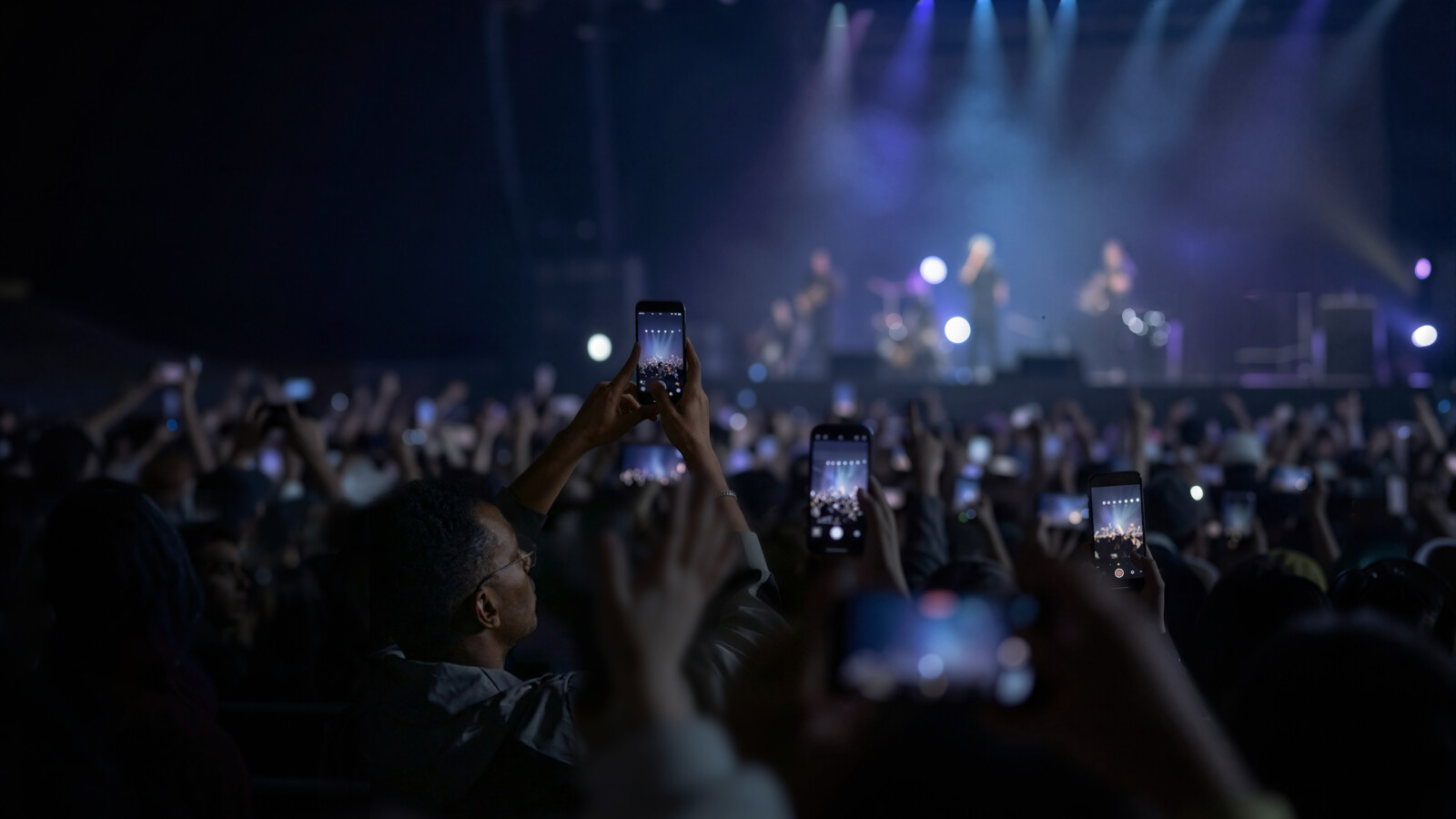
Wi-Fi has become one of the most widely used technologies for wireless local area networking (WLAN). It supports everyday digital experiences such as streaming, gaming, video calls, and connected home services. As an example, for a smart TV to provide high-quality video streaming in the home, reliable indoor connectivity is paramount. In many cases, Wi-Fi provides that vital last link between the internet and the device.
Today, Wi-Fi carries more than half of all internet traffic. This follows from how people live. We spend around 90 percent of time indoors, precisely where Wi-Fi is most commonly deployed.
The scale of Wi-Fi is significant. In 2025, 23.3 billion Wi-Fi devices were in active use, with 3.9 billion shipped globally. According to Wi-Fi Alliance, Wi-Fi contributed nearly 4.9 trillion USD to the global economy in 2025.
While Ericsson is widely known for cellular connectivity, our pioneering research has long advanced wireless communication more broadly. Ericsson experts have a rich history of participation in standardization activities within the Institute of Electrical and Electronics Engineers (IEEE). IEEE develops the IEEE 802.11 standard, which defines how WLANs communicate. Wi-Fi is the Wi-Fi Alliance trademark for the underlying WLAN technology, while Wi-Fi CERTIFIED is the trademark for products certified against that standard.
This paper describes Ericsson’s significant contribution to the development of Wi-Fi technology and Ericsson’s corresponding Wi-Fi patent portfolio.
Wi-Fi evolution within IEEE
Within IEEE, the IEEE 802.11 Working Group develops and maintains the IEEE 802.11 family of standards on which Wi-Fi is based. The group brings together leading experts in communication engineering from across the industry. Work on IEEE 802.11 began in 1990, with the first standard published in 1997. This initial version supported wireless data transmission at up to 2 Mb/s using the license-exempt 2.4 GHz spectrum.
Since then, IEEE 802.11 has evolved through successive amendments that have significantly improved speed, efficiency, spectrum use, range, reliability, and device capacity. These include IEEE 802.11ax (Wi-Fi 6), published in 2021, and the most recent generation IEEE 802.11be (Wi-Fi 7), published in 2025.
Ericsson’s long-term Research and Development (R&D) strategy
Ericsson’s Wi-Fi innovations are built on decades of wireless technology expertise. Our success is rooted in forward-looking internal research, strategic acquisitions, and sustained contributions of Ericsson engineers to IEEE 802.11.
In the early years of IEEE 802.11 standardization, Nortel and Bell‑Northern Research (BNR) were key contributors to foundational Wi‑Fi technologies. When Ericsson acquired Nortel Networks’ wireless business in 2009, this deep R&D heritage was integrated into Ericsson.
In 2012, Ericsson further strengthened its Wi‑Fi capabilities by acquiring BelAir Networks, a carrier‑grade Wi‑Fi company that originated from Nortel Networks. This brought together seasoned IEEE 802.11 contributors and Ericsson Research specialists.
Since then, Ericsson experts have remained continuously active in IEEE 802.11 through technical contributions, research activities, and official positions, as described in the following sections.
Collaborative participation and contribution to core solutions
Ericsson engineers have supported IEEE 802.11 development through official leadership positions and by contributing to core solutions.
The official positions include roles such as secretary, vice-chair, and co-chair across key IEEE 802.11 groups. These included IEEE 802.11ax (Wi‑Fi 6), IEEE 802.11ba (Wake-Up Radio), IEEE 802.11bf (Wi‑Fi sensing), and IEEE 802.11be (Wi‑Fi 7). Serving in these leadership roles requires sustained commitment: leading discussions, preparing technical material, organizing meetings, and building industry consensus.
Additionally, experts from Ericsson have made contributions in areas critical to Wi-Fi. One relevant area is coexistence. Because Wi-Fi must share the spectrum with other technologies operating in license-exempt bands, coexistence mechanisms are increasingly essential:
- Cellular & Wi-Fi Coexistence: Ericsson has helped develop mechanisms allowing Wi-Fi and cellular technologies to share license-exempt spectrum fairly and efficiently. These efforts include LTE in the 5 GHz band and 5G NR-U, in both the 5 GHz and 6 GHz bands. A key mechanism is listen-before-talk, where a device checks whether a channel is already being used before transmitting. While this mechanism was already present in Wi-Fi, the question was how to align such mechanism across LTE/5G and Wi-Fi, considering their unique characteristics. In this context, one important area was the energy detection threshold used by devices to determine whether a channel is busy before initiating a transmission. Ericsson engineers contributed to the development of a common maximum energy detection threshold as the preferred approach for coexistence. Ericsson was among the companies leading 3GPP work on LTE Licensed Assisted Access, with fair Wi-Fi coexistence as a fundamental design goal.
- Bluetooth and Wi-Fi coexistence: Ericsson experts are actively shaping current industry discussions on bringing Bluetooth into the license-exempt 6 GHz band. In this domain, Ericsson researchers developed Secondary Channel Deferral, a key protocol method enabling Bluetooth to share spectrum with Wi-Fi more effectively. This method helps Bluetooth consider whether relevant spectrum is already occupied before transmitting, reducing unnecessary conflicts with Wi-Fi.
Solutions in the Wi-Fi Alliance Certification Program domain
Wi-Fi Alliance certification programs are also pivotal to the Wi-Fi ecosystem. Certification helps ensure that devices implement selected features consistently. One example is the encryption requirements. Besides this, the Wi-Fi Alliance develops its own specifications covering additional technologies. Ericsson researchers have contributed technologies relevant to several of these specifications:
- Miracast is a technology that enables users to establish an ad-hoc WLAN network to efficiently display or mirror multimedia content between devices. For example, a user can mirror a smartphone or laptop screen on a television without using a cable. In this regard, Ericsson has developed (patented) technologies relevant to wireless multimedia transmission and device connectivity.
- Wi-Fi Passpoint is a certification program that enables devices to connect automatically and securely to trusted Wi-Fi networks, supporting roaming between participating networks. Users can connect at participating universities, hotels, airports, and other venues, without repeatedly entering credentials. Ericsson's Wi-Fi expertise has also been reflected in this area. In the past, Ericsson/BelAir access points were used in Passpoint certification testing to support interoperability and compliance with the specification.
- Optimized Connectivity Experience improves how devices discover, select, and move between Wi-Fi networks, particularly in dense or congested environments. It can reduce connection delays and improve roaming. This permits devices to remain connected to the most suitable access point. Ericsson initiated this work with Broadcom and Qualcomm as founding partners in the Wi-Fi Alliance effort.
- Wi-Fi Agile Multiband assists the network to steer devices toward the most suitable frequency band, channel, or access point as network conditions change. This can improve connection quality, balance traffic, and support smoother mobility across a crowded Wi-Fi environment. Ericsson researchers contributed a feature that can help move traffic from Wi-Fi to cellular when Wi-Fi resources are congested. For example, an overloaded access point can indicate that service quality may be limited, prompting compatible devices to use a cellular connection instead. This helps maintain a more reliable user experience.
Advanced simulation and practical testbeds
Extensive evaluation, stress testing, and hardware validation are critical to ensure wireless features operate reliably under real-world conditions. Researchers from Ericsson have contributed significantly to this work within IEEE 802.11. These efforts are reinforced by Ericsson’s internal research, advanced simulation capabilities, and collaborations with academic institutions.
Simulation is especially important in standardization because proposed features must be evaluated before they can be deployed at scale. It allows experts to compare competing ideas under consistent conditions and measure their impact on performance, reliability, efficiency, and coexistence. Within the IEEE 802.11 standardization process, technical proposals are therefore frequently supported by simulation studies.
These studies often involve detailed system-level models, substantial computing resources, and deep wireless expertise from Ericsson engineers. Ericsson researchers can draw on outstanding internal simulation infrastructure and specialist knowledge to test technical contributions. Results can reveal weaknesses, guide design changes, and provide evidence for choosing between alternative technical approaches. This creates a continuous cycle of proposing, testing, refining, and validating ideas throughout the standardization process.
Examples of this work span several IEEE 802.11 task groups:
- Integrated mmWave: Ericsson researchers have studied channel-access mechanisms and propagation characteristics.
- Ambient Power Communication: Engineers from Ericsson have evaluated uplink random-access and system-performance enhancements.
- Coexistence Standing Committee: Researchers from Ericsson have analyzed coexistence mechanisms for operation in shared spectrum.
Hardware validation helps confirm that simulation results hold under real-world conditions. For the analysis of real Wi‑Fi hardware, Ericsson has a standing collaboration with Carleton University in Ottawa, Canada. The partnership involves the practical evaluation of Wi‑Fi technologies on real devices and test platforms.
The collaboration with Carleton University resulted in research published as IEEE conference papers, exploring practical Wi‑Fi performance based on real-world hardware testbeds. [1] This work directly contributes to simulation-based research and a deeper understanding of Wi‑Fi system behavior.
Internally, Ericsson researchers also use simulation to test Wi-Fi performance, for instance, in a dense apartment building scenario. The tool demonstrated that larger channel bandwidth does not always mean better performance. While wider channels can raise throughput, they can also increase interference among access points. Hence, researchers recommend optimizing dense deployments with suitable channel bandwidths and modern Wi-Fi features, rather than relying solely on raw spectrum.
Ericsson’s Wi-Fi 6 patent portfolio
Throughout the years, Ericsson researchers have made fundamental advances in Wi-Fi technology. As a result, Ericsson has built a strong portfolio of patents essential to the Wi-Fi 6 standard. While some solutions stem from Ericsson’s broader wireless research, many patents in our Wi-Fi 6 portfolio cover key Wi-Fi-specific capabilities. These technologies make modern Wi-Fi more efficient, reliable, and better suitable for increasingly connected environments. Key examples from our Wi-Fi 6 portfolio include:
- BSS Coloring: A basic service set (BSS) Coloring is a Wi-Fi-specific feature introduced with Wi-Fi 6. A BSS includes an access point and the devices connected to it. BSS Coloring in addition helps devices distinguish their own BSS from nearby Wi-Fi networks using the same frequencies. This can allow networks to use available spectrum more efficiently. This technology is particularly valuable in crowded environments, such as apartment buildings, offices, and homes with multiple access points.
- Target Wake Time (TWT): Target Wake Time is a key Wi-Fi-specific feature that helps connected devices save power. It enables an access point and a device to agree on when the device needs to be active. The device can remain in a low-power state at other times, reducing energy consumption. This is especially relevant for battery-powered products, including sensors, wearables, and other connected devices.
- Beamforming: Beamforming uses multiple advanced antennas to direct more wireless energy toward the intended device. The antennas send coordinated signals that reinforce each other in that device’s direction. This can create a stronger, cleaner connection without simply increasing overall transmit power. As a result, beamforming can improve data speeds, reliability, and performance farther from the access point.
- OFDMA (Orthogonal Frequency-Division Multiple Access): OFDMA is a core Wi-Fi 6 technology that permits several devices to share a Wi-Fi channel more efficiently. It divides the channel into smaller frequency resources that can be allocated to different users. This is valuable in dense environments, where many devices need to send or receive data.
- MU-MIMO (Multi-User, Multiple-Input, Multiple-Output): MU-MIMO uses multiple antennas and different radio paths to communicate with several devices at the same time. Without MU-MIMO, devices may have to take turns using the network. By serving several devices simultaneously, MU-MIMO can increase network capacity and make Wi-Fi networks efficient in busy environments.
Together, these technologies demonstrate how Wi-Fi performance depends on sophisticated engineering. Our engineering has improved performance, increased capacity, enhanced reliability, and reduced power consumption.
The virtuous cycle of innovation
Wi-Fi is the result of continuous research, standardization efforts, collaboration, and rigorous testing. This process requires sustained investment and yields innovations protected by patents. When patented technologies are incorporated into standards, licensing provides implementers access to those technologies. At the same time, licensing rewards innovators for their contribution to the standard. This, in turn, helps sustain the cycle of innovation that makes future wireless technologies possible.
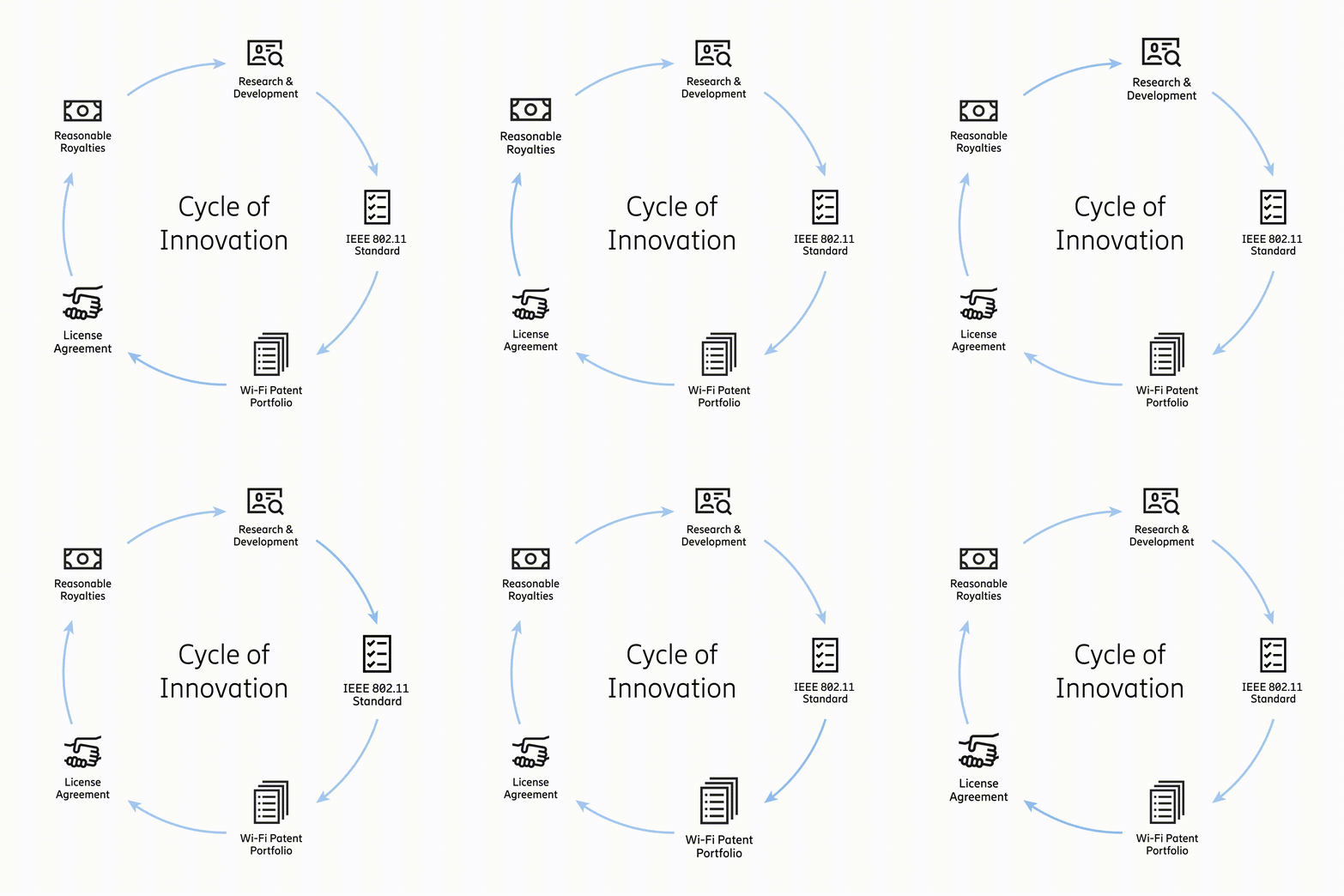
Reflecting a sustained commitment to advancing wireless technologies, Ericsson invests approximately $5 billion annually in R&D. The results of this dedication can be seen in Ericsson’s robust patent portfolio, which includes more than 60,000 active patents granted across multiple technology domains. Wi-Fi is one of the key technology areas represented in this portfolio.
Conclusion
Wi-Fi supports billions of active devices across a wide spectrum of consumer, enterprise, and industrial applications. Wi-Fi continues to evolve through sustained research, technical validation, standardization, and industry collaboration.
Ericsson researchers are contributing to this evolution through ongoing R&D, active participation in IEEE 802.11 standardization, and advanced evaluation and testing activities. Together, these efforts have yielded a strong patent portfolio covering core Wi-Fi solutions. Licensing plays a critical role in this ecosystem by enabling access to standardized technologies while sustaining the continuous cycle of innovation.
Demand for wireless connectivity continues to grow. Continued investment in Wi‑Fi innovation will, thus, remain indispensable. Only then will we enable new applications, elevate user experiences, and address the complex connectivity challenges of tomorrow. Through continued innovation, Ericsson remains committed to leading in this existing future.
[1] S. Liu, I. Lambadaris, S. Max, D. Sugirtharaj and J. Bailey, "Wi-Fi's Energy Detection: A Study of Regional Regulations on Clear Channel Assessment," 2024 IEEE International Instrumentation and Measurement Technology Conference (I2MTC), 2024, available at: Wi-Fi's Energy Detection: A Study of Regional Regulations on Clear Channel Assessment | IEEE Conference Publication | IEEE Xplore; another example: J. Bailey, S. Liu, I. Lambadaris, S. Max and D. Sugirtharaj, "Survey of Commercial Wi-Fi Devices’ Energy Detection Mechanism," 2024 IEEE International Conference on Consumer Electronics (ICCE), 2024, available at: Survey of Commercial Wi-Fi Devices’ Energy Detection Mechanism | IEEE Conference Publication | IEEE Xplore