











By Thomas Choi, Vice President Licensing
End-to-end video streaming experience is built on Ericsson innovation
Behind every seamless video stream lies an invisible world of innovation. Most viewers expect a video to start instantly, remain sharp, and continue without interruption the moment they press play. However, delivering that experience to millions of users across different countries, devices, and times is far from simple. It requires highly advanced digital infrastructure.
The challenge becomes even greater during major live events such as the FIFA World Cup, when millions worldwide join simultaneously, creating massive traffic surges. Streaming infrastructure must handle not only high traffic volumes, but also sudden variability, peak-load stress, and growing expectations for consistent quality. Keeping streaming services reliable and efficient at that scale depends on sophisticated technologies. These include redundancy, failover systems, load balancing, and dynamic resource allocation. These eliminate single points of failure, distribute traffic intelligently, and allocate computing resources dynamically as demand changes. They also help maintain availability, reduce buffering, maintain low latency, and preserve video quality during periods of heavy demand. With video streaming driving most global network traffic, these technologies power the digital economy.
This article explains how media delivery, smart software, and cloud scaling work together in streaming, as well as the role of Ericsson’s patent portfolio and our licensing practices in making this possible.
Understanding the technologies at stake: The video ecosystem
The modern multimedia landscape is built by three complementary dimensions that work in harmony to deliver the digital experiences we enjoy today. The first dimension is the software layer, which directly shapes the viewer experience by managing video quality, user interfaces, personalized recommendations, and other intelligent features. Zooming out, the second dimension is media delivery, a critical pipeline. It enables video streams to be distributed efficiently across content delivery networks and global internet protocol (IP) infrastructure, from content providers to end users. Expanding further, the third dimension is the cloud and compute infrastructure. It provides the underlying processing, storage, and scaling capabilities that allow streaming platforms to dynamically allocate resources and serve millions of simultaneous viewers.
To succeed at this scale, streaming platforms must adapt continuously to fluctuating network conditions, diverse screen sizes, and varying device capabilities while maintaining an uncompromised user experience. Consequently, these systems must operate with absolute consistency across highly fragmented hardware and software ecosystems.
Together, these dimensions underlie the architecture that powers modern multimedia services.
Ericsson’s leadership in the multimedia vertical
While Ericsson is well-known for developing cellular standards, which plays a key role in media delivery, it has also played a major role in the other dimensions of multimedia innovation. In fact, Ericsson’s media history is defined by nearly a century of innovation. It began with the 1933 radio and television heritage of Tandberg Television and evolved into leadership in modern media codecs and video streaming standards. This technological evolution reflects a clear shift from traditional broadcast models to managed Internet-based television and ultimately to cloud-native media services.
To date, Ericsson’s patent portfolio covers the entire video streaming ecosystem, divided into eight critical areas:
- Video and audio codecs and video streaming standards: Our media codecs portfolio benefits from more than 40 years of research and development. Tandberg Television, acquired by Ericsson in 2007, brought core video coding expertise and superior compression performance with its Emmy award winning iPlex solution. Moreover, as a key contributor to HEVC, Ericsson received the Technology and Engineering Emmy Award in 2017, representing the JCT VC and VCEG standardization organizations. Beyond codecs, Ericsson became a pioneer in the development of adaptive video streaming standards such as the MPEG-DASH, building a strong and established patent portfolio. MPEG‑DASH enables the adjustment of video quality in real time to match network conditions and device capabilities during streaming. This standard has driven the industry transition toward efficient, adaptive bitrate streaming over HTTP.
- Video streaming infrastructure: This category includes patents related to the virtualization, cloud storage, and software platforms required to deliver video services at global scale. Following the acquisition of Mediaroom in 2013, Ericsson expanded its IPTV capabilities with a next generation on-premises platform adopted by major operators such as AT&T and Bell Canada. Ericsson further strengthened these capabilities through the acquisition of Fabrix Systems in 2014. Fabrix was the first platform capable of efficiently handling the immense streaming requirements for cloud-based video recording, paving the way for future large-scale video delivery services.
- Video security: These patented technologies cover encryption and authentication to secure the content throughout the streaming lifecycle. Through the acquisition of Azuki Systems in 2014, Ericsson enhanced its expertise in Digital Rights Management (DRM) technologies for OTT streaming across fragmented device ecosystems.
- Video streaming delivery: This part of Ericsson’s portfolio focuses on caching, content delivery, and geofencing solutions designed to ensure predictable performance across networks. Azuki Systems pioneered Adaptive Bitrate Streaming via HTTP Live Streaming (HLS) conversion technologies for OTT services across fragmented device ecosystems. The acquisition of Envivio in 2015 further reinforced Ericsson’s capabilities in cloud video delivery, enabling operators to launch and scale software-based OTT television services.
- Video ad technology: This specialized area includes Ericsson patented technologies focused on the complex engineering required to monetize modern media. These technologies manage the entire lifecycle of an advertisement, from server side ad insertion (SSAI) to real time tracking systems. By enabling seamless transitions between content and commercials, these innovations prevent the buffering or "black screens" that often occur during ad breaks.
- Video user experience: These patented innovations related to search, navigation, and device synchronization to create a seamless viewing experience for the consumer. The Mediaroom platform solidified these capabilities by supporting video-on-demand and Digital Video Recorder (DVR) services, including time-shifted viewing functions such as pausing and rewinding live television.
- Networking infrastructure: Our patented networking infrastructure innovations enable operators to manage video, voice, and data traffic globally. The patent portfolio covers innovations in data routing, per user traffic management, and quality assurance. In mobile environments, Ericsson's patented packet core and traffic steering technologies dynamically prioritize and route video content. This is critical when integrated with edge computing and content delivery networks to ensure predictable Quality of Service (QoS).
- Cloud orchestration: Our patented cloud orchestration infrastructure technologies provide the control layer needed to deploy and scale media workloads across distributed networks. The patent portfolio covers innovations in workflow coordination, automated failover resilience, and dynamic capacity expansion during peak live events. These patented technologies ensure secure isolation between customer domains while scaling to millions of concurrent viewers. Additionally, Ericsson's operational expertise, reinforced by the 2014 acquisition of Red Bee Media, informs a patent portfolio with a foundation built for high volume live and on demand content preparation. These solutions protect reliability, consistent quality, and strict data separation across cloud computing environments.
Cycle of innovation in the multimedia space
Ericsson has contributed to both standardized and implementation technologies in the multimedia ecosystem. We create innovations that, once incorporated into standards, become widely accessible and enable deployment at scale across markets. At the same time, seamless video delivery also relies on highly innovative engineering solutions protected by implementation patents. Although these innovations are not included in formal standards specifications, they deliver scalability, reliability, and user experience in real-world streaming systems.
These technologies support functionalities that remain relevant across multiple generations of products and services, ensuring a clear connection between innovation and real-world implementation as products mature.
Ericsson’s multimedia portfolio is strategically distributed across the eight pillars defined in this paper. This comprehensive coverage supports every technical stage of the video journey, from content delivery to the end-user experience.
Our ability to develop these solutions is supported by decades of significant R&D investments, which reached SEK 48.9 billion, or around USD 4.9 billion, in 2025. This long-term commitment has resulted in a high-quality patent portfolio of more than 60,000 patents across all technologies.
Licensing sustains this cycle of innovation by enabling fair returns that encourage continued investment in next generation technologies. These include advanced media delivery, resilient networking, and cloud platforms capable of supporting immersive technologies and AI-driven services.
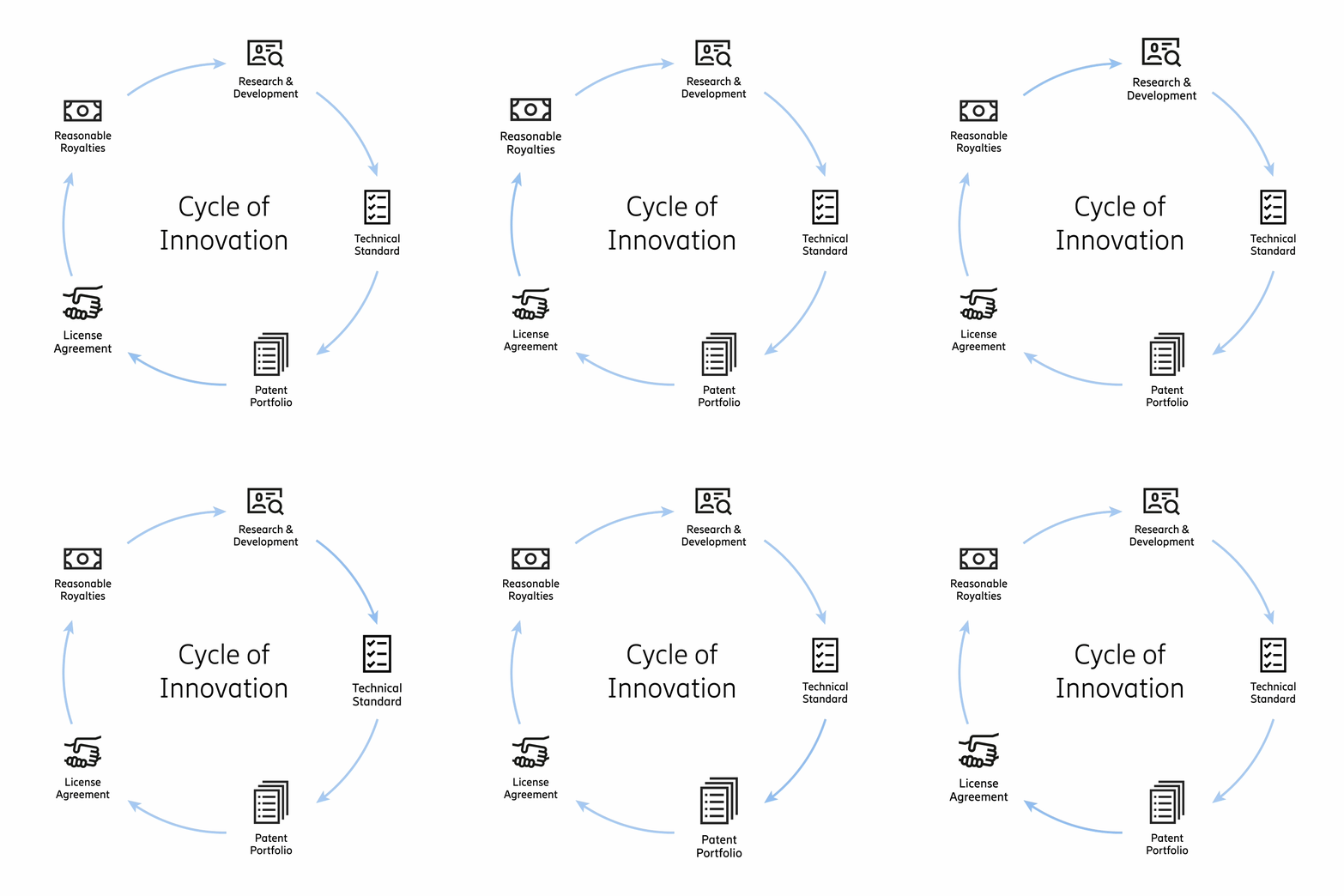
Licensing often occurs through bilateral agreements, which allow tailored solutions, including cross‑licensing and multi‑year partnerships. Patent pools, such as those used in video licensing, can also provide efficiency and scale in fragmented markets.
Together, these models help ensure broad access to proven technologies while sustaining the incentives needed to keep innovation moving forward.
Conclusion
Modern digital services depend on a complex and interconnected technology ecosystem. While cellular standards provide the connectivity backbone, seamless video streaming also relies on innovations in media compression, delivery, security, cloud, networking, and user experience.
Ericsson’s portfolio of multimedia patents reflects decades of leadership across these domains. It includes both standardized technologies and non-standardized implementation solutions. Through licensing, these technologies can be widely implemented across the industry, while royalties help drive continued investment in the next generation of digital infrastructure.
This cycle of innovation supports more resilient, efficient, and scalable services for business, consumers, and the broader digital infrastructure.